A fence can have quality materials and still fail early if the posts are spaced poorly. This guide to fence post spacing explains how to plan a fence that stays straight, supports its weight, and handles the weather, soil, and daily use common across Western Arkansas and Eastern Oklahoma.
Post spacing is not simply a matter of dividing the fence line into equal sections. The right distance depends on the fence material, height, terrain, wind exposure, gates, and the purpose of the enclosure. A privacy fence that needs to block a backyard view has different demands than a chain link perimeter around a commercial property or a decorative iron fence along a driveway.
Why Fence Post Spacing Matters
Posts are the structural backbone of any fence. They carry the rails, panels, fabric, gates, and hardware, then transfer that load into the ground. When posts are too far apart, rails can sag, panels may flex, and the fence becomes more vulnerable to wind pressure. When posts are placed too close together, the project uses more materials and labor than necessary without always adding meaningful strength.
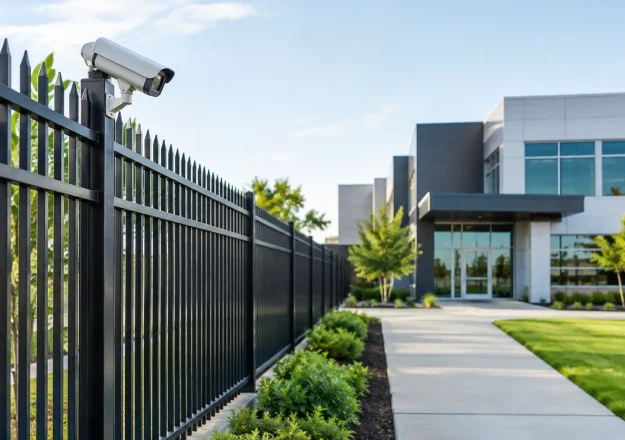
Proper spacing also affects the finished appearance. Consistent bays create clean lines and make a fence look professionally planned rather than pieced together. This matters for a front-yard ornamental fence, but it matters just as much for a business perimeter where security and first impressions go together.
The goal is a layout that balances strength, appearance, budget, and the requirements of the chosen fence system. There is no one spacing measurement that works for every property.
Standard Fence Post Spacing by Material
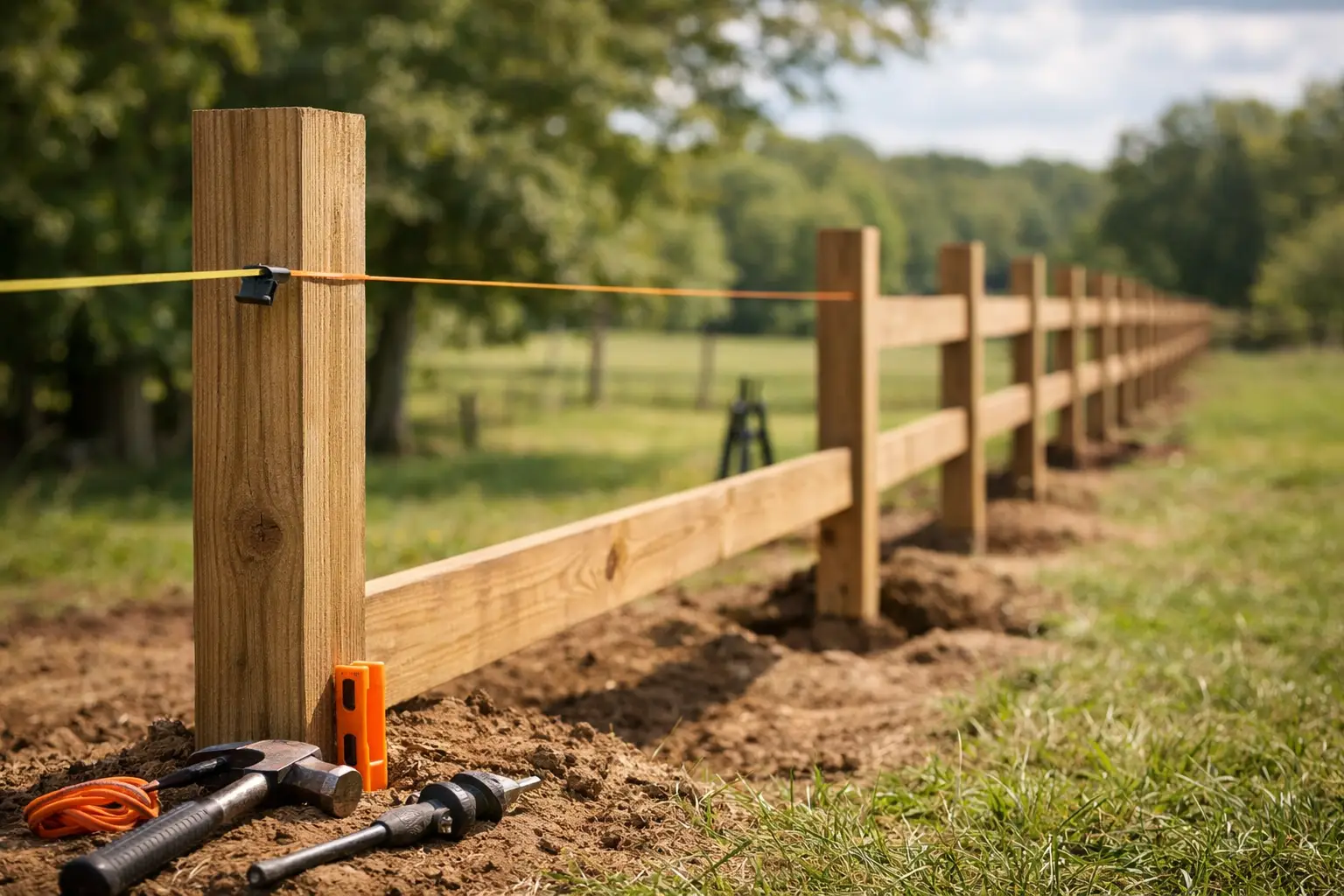
Most residential wood fences use posts spaced 6 to 8 feet apart, measured from center to center. Eight-foot spacing is common for standard 6-foot privacy fences because lumber, rails, and picket layouts are often designed around that dimension. In high-wind areas, on uneven ground, or for taller and heavier wood fences, 6-foot spacing can provide a sturdier result.
Vinyl fencing usually follows the manufacturer’s panel dimensions. Many vinyl sections are made for 6-foot or 8-foot spans, and the posts must be set precisely for the rails to lock into place correctly. Trying to stretch or compress a vinyl section to fit an irregular distance can create alignment problems and may affect its long-term performance.
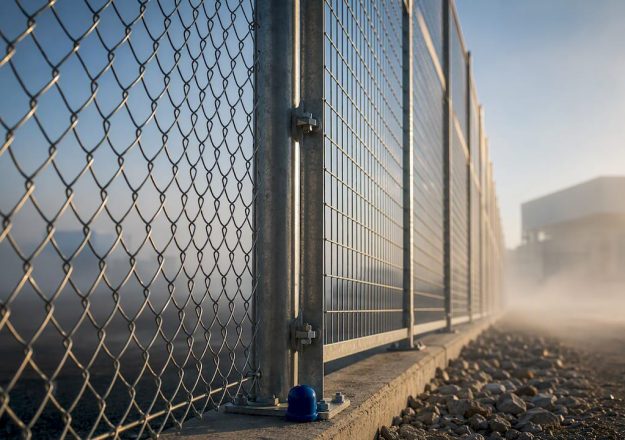
Chain link fence line posts are often placed 8 to 10 feet apart. The appropriate interval depends on fence height, fabric gauge, windscreen use, and the site’s security needs. A tall commercial chain link fence with privacy screening places far more wind load on the structure than an open residential chain link fence, so closer spacing and stronger posts may be necessary.
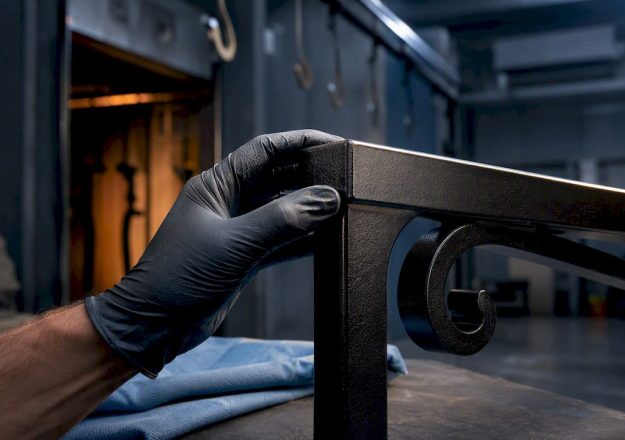
Ornamental iron and aluminum fencing are typically based on pre-manufactured panel widths, often 6 or 8 feet. As with vinyl, panel dimensions guide the post layout. Custom metal fencing can offer more flexibility, but the framework still needs to be engineered around the weight of each section and the conditions on site.
For any material, corner, end, and gate posts are different from ordinary line posts. They carry concentrated loads and need more substantial setting and bracing. A fence may have properly spaced line posts and still perform poorly if these critical posts are undersized or not installed to the proper depth.
A Guide to Fence Post Spacing Starts With the Layout
Before setting a single post, establish the exact fence line. Confirm property boundaries, identify easements, locate utilities, and account for any local requirements that apply to the project. A few minutes spent verifying the layout can prevent a costly adjustment after concrete has been poured.
Start at the corners and endpoints, since these fixed locations determine the remaining bays. Measure the distance between them, then divide it by a target spacing that works for the selected material. The result rarely falls into a perfect whole number. Instead of forcing one extra-wide final section, adjust each bay slightly so the spacing remains even and stays within the acceptable range for the fence system.
For example, a 65-foot wood fence run does not need one 1-foot section after eight 8-foot spans. A better approach may be to create nine bays of roughly 7 feet 2 inches each. The difference is barely noticeable, and every section receives consistent support.
On a fence with panels, work from the panel manufacturer’s exact measurements. On a custom wood fence, the installer has more flexibility, but the rail lengths, picket pattern, and desired finished look should still guide the layout.
Conditions That Can Change the Ideal Spacing
Fence Height and Wind Exposure
The taller the fence, the more leverage wind has against each post. A 4-foot open-picket fence and an 8-foot solid privacy fence should not be treated the same way. Solid fences act like sails during strong storms, especially when built along open lots, hilltops, or commercial sites with little wind protection.
Closer post spacing can reduce rail deflection and spread wind loads across more supports. Stronger posts, deeper holes, quality concrete work, and properly attached rails matter just as much. Spacing alone cannot compensate for a weak foundation.
Soil, Drainage, and Terrain
Soil conditions can change dramatically from one property to the next. Loose soil, saturated ground, rocky areas, and clay-heavy conditions all affect how securely a post can be set. Poor drainage is especially hard on wood posts because standing moisture can accelerate decay over time.
Sloped yards require additional planning. Stepped fencing uses level sections that change elevation at each post, while racked fencing follows the contour of the grade. Either method can affect section lengths and post placement. Shorter spans are often helpful on steep changes in elevation because they make it easier to maintain a clean, controlled line.
Gates and Access Points
Gate posts should never be treated like regular line posts. A swinging gate creates repeated stress every time it opens and closes, and a double drive gate adds significant weight and leverage. Gate posts generally need larger dimensions, deeper settings, and hardware selected for the gate’s size and use.
Plan gate openings before establishing the spacing for the rest of the fence. A last-minute gate location can leave awkwardly narrow bays or force changes to a layout that was otherwise balanced. For commercial properties, consider vehicle access, emergency entry, access control equipment, and the clearance needed for deliveries or service vehicles.
Common Spacing Mistakes to Avoid
One common mistake is measuring from the edge of a post instead of its center. Fence plans and panel specifications are generally based on center-to-center measurements. A small measuring error repeated across a long run can leave the final section noticeably out of alignment.
Another is assuming every span must match an 8-foot lumber length. Wood rails may come in standard lengths, but that does not mean every property line is suited to a strict 8-foot layout. It is better to plan the spacing thoughtfully than to create an unsupported extension or a visibly uneven final bay.
Property owners also sometimes focus only on the distance between line posts and overlook corners, ends, and gates. These are the high-stress points of the fence. Investing in proper post size, depth, concrete, and bracing at those locations protects the entire installation.
Finally, avoid setting posts before confirming utility locations and property boundaries. Fence repairs are inconvenient. Moving an entire line because it crosses an easement or sits on the wrong side of a boundary is far more expensive.
When Professional Planning Is Worth It
A simple, level backyard fence may be manageable for an experienced do-it-yourself installer. Even then, accuracy during layout and post setting determines whether the fence looks good years later. Projects become more complex when they involve slopes, retaining walls, long runs, heavy gates, security requirements, custom metalwork, or mixed materials.
Professional installers bring more than equipment to the job. They recognize where soil, drainage, grade, and gate loads require a different approach. They can also coordinate a layout that works with the actual dimensions of the selected fence material, rather than relying on a one-size-fits-all rule.
Modern Fence Company has served property owners since 1950, and our team understands that a fence is only as dependable as the structure beneath it. For homeowners, businesses, and contractors in the Fort Smith area, a clear on-site assessment can turn uncertain measurements into a fence plan built for lasting security and curb appeal.
Before choosing a post interval, look at the full job: the material, the fence height, the land, the weather exposure, and how the property will use the gates. A well-planned layout may be invisible once the fence is finished, but it is what keeps that finished fence standing straight when it matters.