
Maintenance agreements
An automatic entrance may operate hundreds or thousands of times between noticeable problems. Every cycle involves the gate, operator, hardware, and access equipment working together — and when one part begins to change, the first sign is usually slower or inconsistent operation.
Service the entrance before it interrupts the property
Modern Fence Company offers ongoing maintenance and annual service agreements for qualifying gate and access-control systems throughout Western Arkansas and Eastern Oklahoma.
Agreements may cover entrances that include
- Gate operators
- Keypads
- Card readers
- RFID access
- Telephone entry
- Intercom systems
- Automatic swing gates
- Sliding gates
- Cantilever gates
- Vehicle access gates
- Pedestrian access gates
The exact maintenance scope depends on the equipment and the property. We do not assume every access-control system needs the same service plan.
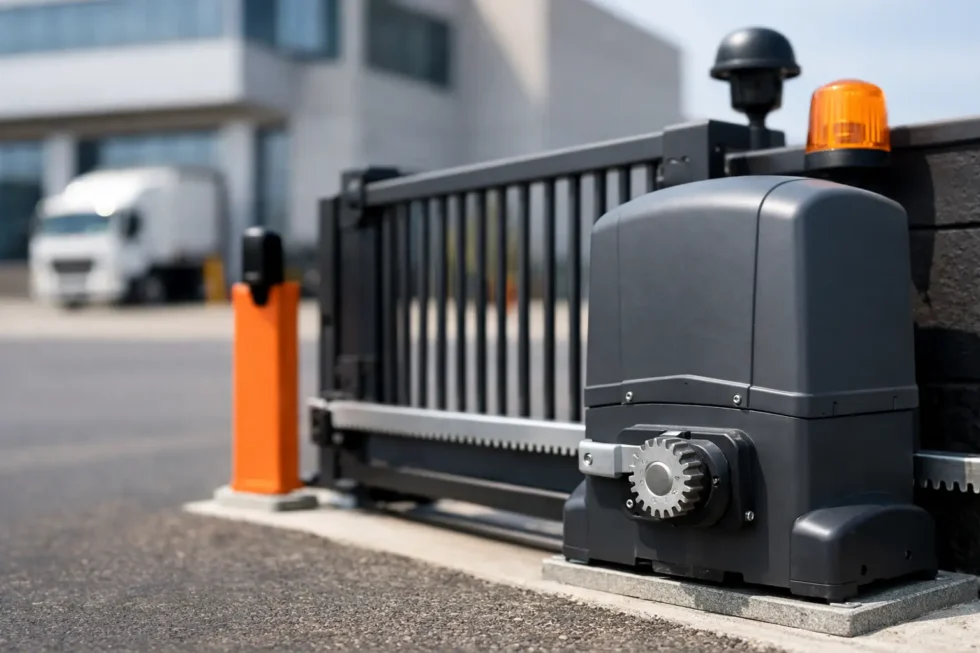
Simple for the user. Several things behind the scenes
Enter a code, present a credential, and the gate opens. Behind that, the access equipment must recognize the request, the operator must respond, and the physical gate must move freely through its intended path while hinges, rollers, and supports stay in workable condition.
A gate that begins dragging places additional demand on the operator. An alignment problem can look like an operator problem, and an access device can look like the cause when the real issue is elsewhere.
A change in one part of the system affects another. Planned service creates an opportunity to look at the system before a small change becomes a larger interruption.
Not every gate needs a plan. Some depend on one
A lightly used residential entrance may simply need service when a problem becomes noticeable. A property that depends on its gates every day is different — residents, employees, visitors, contractors, delivery vehicles, and customers rely on the entrance throughout the day.
When it stops working, the problem affects more than convenience. It interferes with the normal flow of people and vehicles through the property.
Particularly useful for
- Apartment communities
- Warehouses
- Industrial properties
- Storage facilities
- Commercial properties
- Employee entrances
- Managed parking areas
- Municipal properties
- Other high-use controlled entrances
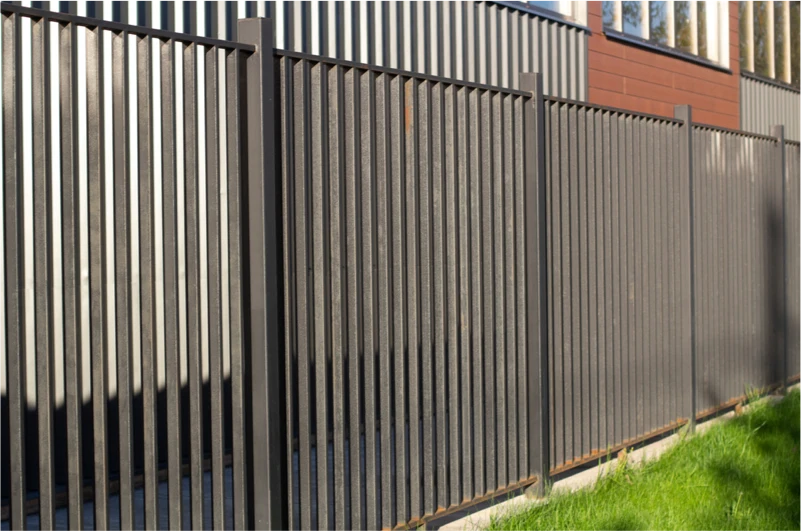
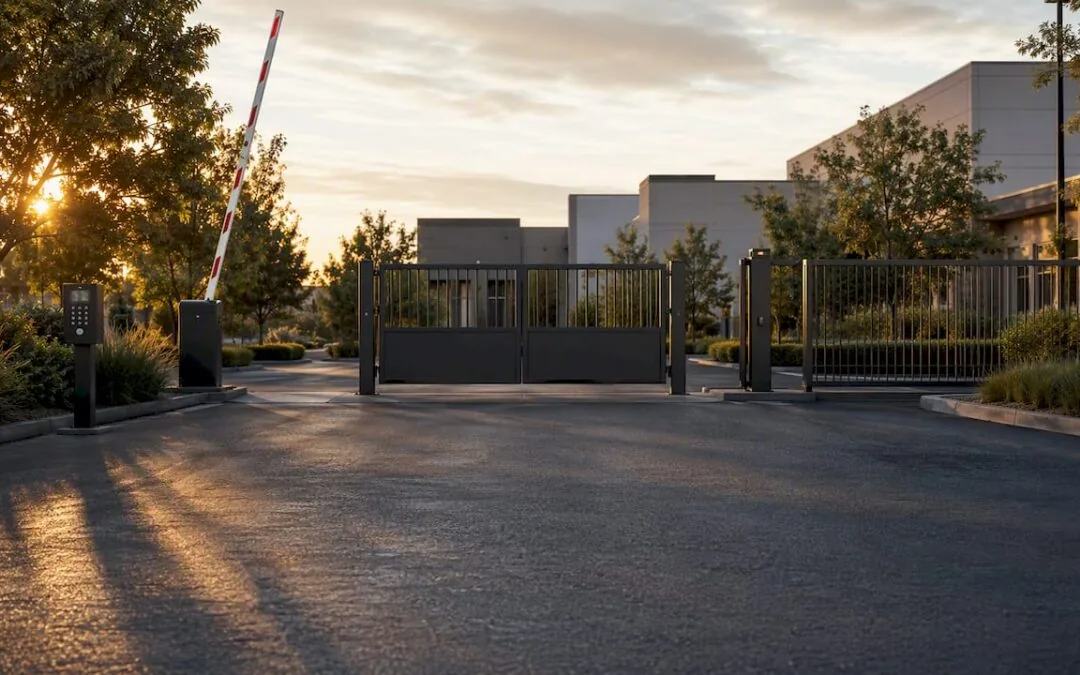
Four parts of the entrance, serviced together
Gate operators
The operator should not be evaluated in isolation. If the gate drags, shifts, or binds, the operator works harder — correcting the gate may matter as much as servicing the equipment.
Keypads, cards and RFID
Access devices are used far more often than managers realize — employees several times a day, residents coming and going, vendors on a separate method, pedestrians on another reader entirely.
Telephone entry and intercoms
An apartment community can have working resident credentials and still have a serious access problem if visitors cannot communicate through the entry system.
The physical gate
Maintenance should not stop at the electronics. The gate moves every time the system operates, and alignment, hinges, rollers, and posts change over time.
Where specialized networking, communications, or other systems fall outside our service scope, additional coordination may be required.
Tell us what the users are experiencing
- Intermittent entry problems
- Certain access methods behaving differently
- Equipment that has become difficult to use
- Physical damage to a reader or keypad
- Changes in gate operation after an entry request
Problems involving user administration or credentials differ from physical equipment problems, so it helps to describe exactly what users are experiencing.
What a service visit looks for
- Gate dragging
- Uneven movement
- Changes in ground clearance
- Gate leaves no longer meeting as they once did
- Bent components
- Visible impact damage
- Changes in sliding or cantilever movement
A maintenance visit does not mean every gate needs mechanical work. It provides an opportunity to notice conditions that deserve closer attention.
Planned service on a system that works
Repair begins when something is already malfunctioning, damaged, or no longer operating as expected. Maintenance is planned service on a system that is generally operating.
An agreement cannot guarantee that equipment will never fail. Automatic gates operate outdoors and are affected by wear, weather, vehicle contact, ground movement, and equipment age. The advantage of planned service is that obvious changes can sometimes be identified before the property is dealing with a complete interruption.
A rural gate and an apartment gate are not doing the same work
One may open a handful of times a day. The other opens repeatedly as residents, employees, visitors, delivery vehicles, and contractors come and go.
That does not mean every high-use entrance needs the same schedule. It means the property’s operating demands should shape the plan — the agreement should fit the actual entrance rather than a one-size-fits-all schedule.
One organized plan instead of unrelated service calls
Some properties have more than one access point — a primary vehicle gate, a secondary vehicle entrance, a pedestrian gate, an employee entrance, a service gate, or separate entry and exit gates. Each may have different equipment and different operating demands.
A qualifying service visit may review
- Physical gate condition and movement
- Gate operator
- Visible gate hardware
- Keypad or credential equipment
- Telephone or intercom equipment
- Other access components in the agreement
Rather than publishing a checklist that may not apply to every entrance, we define the scope for the individual property. If we identify a condition outside the planned scope, we explain what additional evaluation or repair may be appropriate — keeping routine maintenance separate from larger repairs or upgrades.
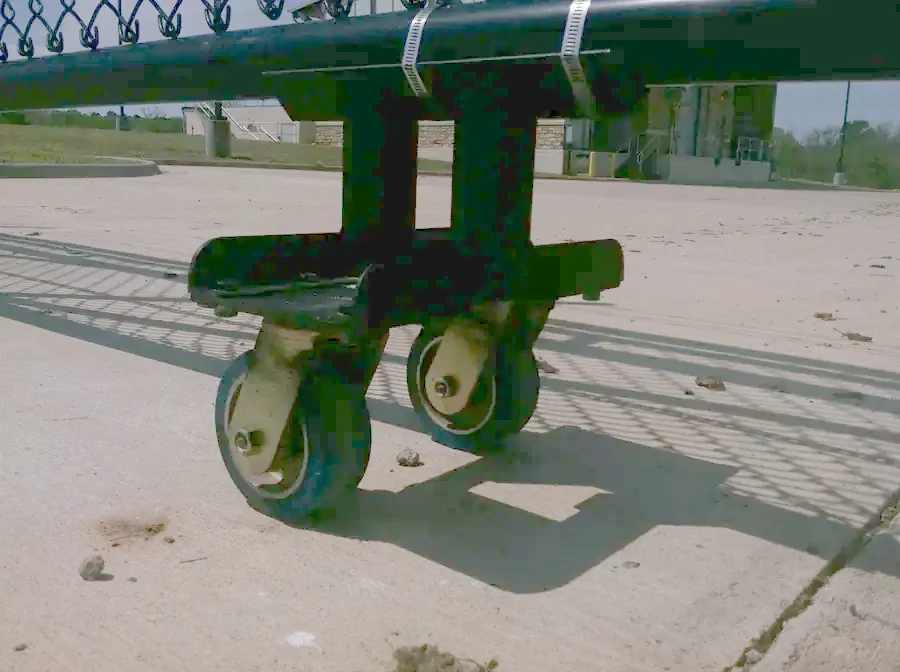
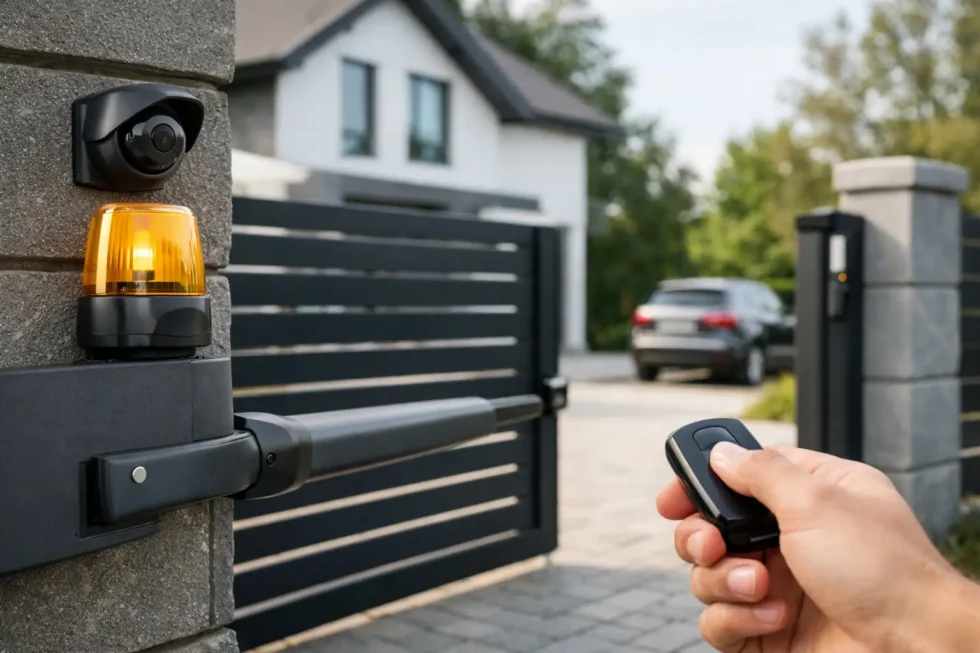
Do not wait for the next visit if the entrance changes
An agreement should not encourage a property to ignore a developing problem. Contact us when the entrance begins behaving differently.
- Gate movement changes noticeably
- Users report intermittent access
- Gate stops before completing movement
- Physical gate starts dragging
- A keypad or reader has visible damage
- One access method stops working
- The gate is struck by a vehicle
- Equipment is damaged during other property work
Early information is useful. Tell us what changed, when it began, which entrance is involved, and whether all users are affected — that helps determine whether the situation belongs under planned maintenance or requires a separate repair visit.
Our maintenance agreement process
1
Review the property
We identify the entrances and access-control systems the property wants included.
2
Understand how the gates are used
We discuss property type, operating demands, users, and any known concerns.
3
Evaluate the existing systems
Qualifying gate and access equipment may need to be reviewed before an agreement is recommended.
4
Define the service scope
We identify which systems are included and what planned service applies to the property.
5
Schedule ongoing service
Service is arranged according to the agreed maintenance plan.
6
Identify additional needs
If a visit reveals work outside the agreement, we explain the recommended next step so larger problems are addressed separately.
After a repair, on an older system, or on day one
After access-control repairs
A property often calls first because the gate is already having problems. Once the system is repaired and operating normally, an agreement makes sense if the entrance is important to daily operations.
We do not recommend a maintenance agreement as a substitute for correcting an entrance that still has significant unresolved issues.
On older systems
Age alone does not mean the entire system must be replaced — older equipment can remain useful with appropriate service. But property needs change: a gate once used by a small business may now serve a much larger operation.
Maintenance visits are also an opportunity to discuss whether the existing entrance still fits how the property is used.
On new gate systems
Planning can begin when a new system is installed, and we provide applicable maintenance or care information for access-control work.
The decision should consider property type, gate usage, number of entrances, access equipment, how important the gate is to daily operations, and property-management preferences.
Fencing, fabrication, mechanical movement and access technology
- 01
One company across the entrance
An automatic gate combines fencing, fabrication, mechanical movement, and access technology — we work across all four.
- 02
Custom gates in-house
We fabricate gates in our own shop, which matters when a problem crosses from the electronics into the gate itself.
- 03
Repair-only work too
We perform repair-only projects as well as ongoing maintenance and annual service agreements for qualifying systems.
- 04
Vehicle and pedestrian access
Our access-control work covers both vehicle entrances and controlled pedestrian gates.
- 05
Serving the region since 1950
Modern Fence Company has worked on entrances across this region since 1950.
- 06
Licensed and insured
Modern Fence Company is licensed and insured for the work we perform.
Access control maintenance across
Western Arkansas & Eastern Oklahoma
We provide qualifying access-control maintenance in these communities and the surrounding areas.
Entrances under planned maintenance
Maintenance agreement questions
Visit our fencing and access control FAQ for more answers.
Do you offer access-control maintenance agreements?
Yes. We offer ongoing maintenance and annual service agreements for qualifying systems.
What equipment can be included?
Depending on the property and agreement, qualifying gate operators, automatic gates, keypads, card or RFID access, telephone entry, intercoms, and related access equipment may be considered.
Are maintenance agreements only for commercial properties?
No. Residential systems may also qualify, although agreements are often especially useful for higher-use or managed properties.
How often will you service the system?
The appropriate schedule depends on the property, equipment, and agreement. We do not use one frequency for every entrance.
Will maintenance prevent every gate failure?
No. Planned service can help identify visible changes and maintenance needs, but it cannot eliminate every equipment failure, accident, weather event, or mechanical problem.
What if you find something that needs repair?
We explain the condition and recommend additional repair or evaluation when the work falls outside the maintenance scope.
Can you maintain apartment gate systems?
Yes. Qualifying apartment vehicle and pedestrian access systems may be included in a maintenance plan.
Do you maintain gate operators?
Yes. Gate operators may be included depending on the installed system and agreement.
Can a maintenance agreement include several gates?
Potentially. We can review the property’s qualifying entrances and define the service scope accordingly.
Do you also provide repair service?
Yes. Repair service is available when a gate or access-control system is already malfunctioning.
A more organized way to maintain the entrance
Tell us what type of property you manage, how many automatic entrances you have, what access equipment is installed, roughly how frequently the gates are used, whether you currently have any known problems, and whether vehicle and pedestrian gates are both involved.