
Keypad & card access systems
An automatic gate needs a reliable way to determine who should be able to open it. For a private driveway that may be a keypad. At an apartment community, individual cards or RFID credentials make a larger group of users easier to manage.
Credentials for the people who use the property
Modern Fence Company installs keypad, card, and RFID access systems for qualifying automatic vehicle and pedestrian gates throughout Western Arkansas and Eastern Oklahoma.
Our access options may include
- Keypad entry
- Cellular keypad systems
- Card access
- RFID access
- Remote gate access
- Vehicle access credentials
- Pedestrian gate access
- Integration with automatic gate systems
The right choice depends on who uses the property, how often users change, how visitors are handled, and how much control the owner or manager needs.
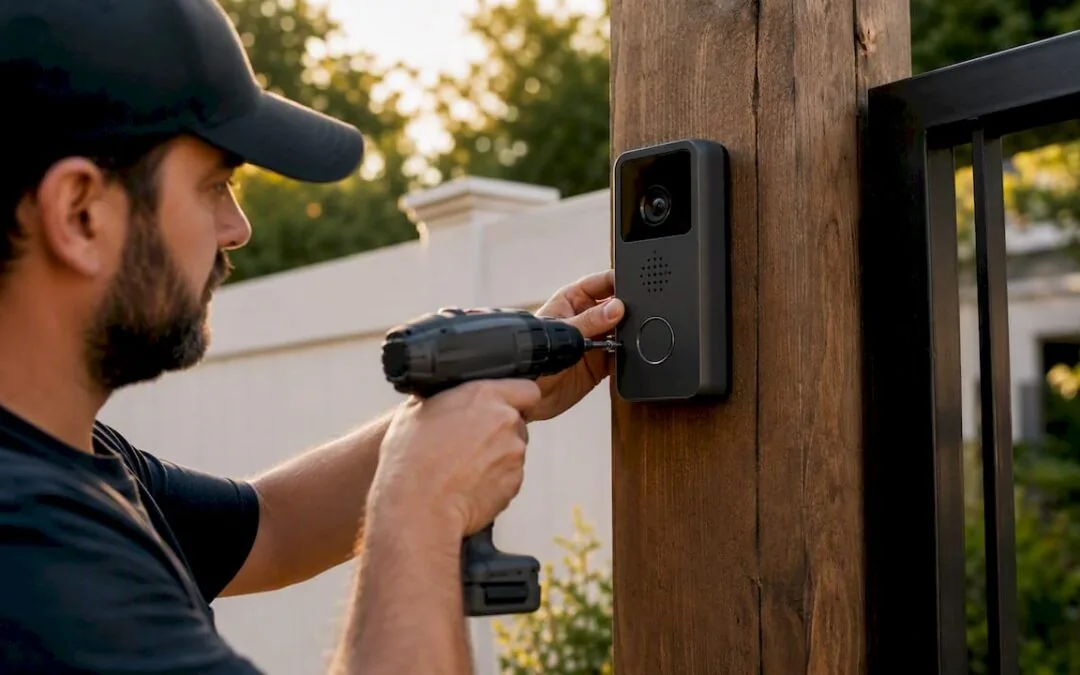
Two ways to solve the same problem
A keypad is simple and convenient: authorized users enter a code at the gate to request access. A card or RFID system provides a separate credential for each user, which is more practical when a property has many residents, employees, or tenants.
Neither option is automatically better. Our broader access control systems service coordinates the access method with the physical gate and the entrance itself.
The right system depends on questions such as
- How many people need regular access?
- Do users change frequently?
- Will several people share the same access?
- Does the property need separate vehicle and pedestrian entry?
- Do contractors or service providers need temporary access?
- How will visitors enter?
- Who will manage the system?
Codes, cards and credentials
Keypad entry
The user approaches the entrance, enters an authorized code, and the equipment communicates with the gate system. Suited to residential driveways, estate and ranch entrances, small businesses, employee gates, apartment communities, service entrances, and controlled pedestrian gates.
Cellular keypads
Available for qualifying gate applications where the selected equipment uses cellular connectivity as part of its operation or management. Suitability depends on property location, gate system, available cellular service, number of users, and equipment compatibility.
Card access
A separate credential for each authorized user, depending on the selected system. Useful for apartment communities, commercial facilities, industrial properties, employee entrances, storage facilities, managed parking, and controlled pedestrian gates.
RFID access
An RFID credential communicates with a compatible reader to request entry — for residents, employees, tenants, vehicle entrances, pedestrian gates, and managed commercial properties. Reader, credential, gate system, and management needs all have to be compatible.
The simplicity of a shared code is also its main limitation. If one code is shared among many people, it becomes difficult to control who still knows it — the owner or manager should have a clear process for changing codes when access needs change.
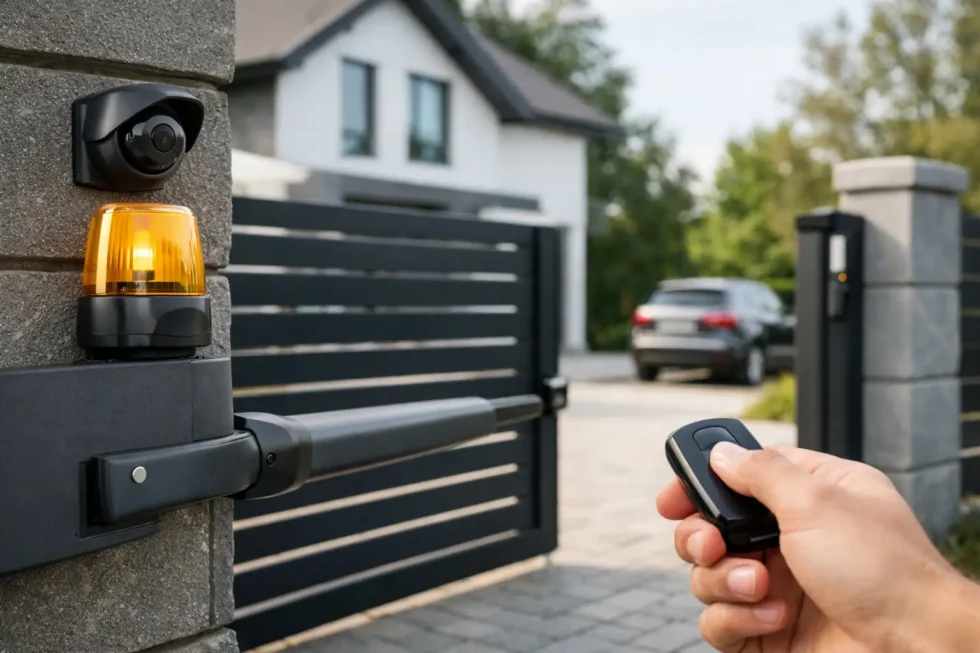
Placement matters as much as the electronics
A homeowner may want a keypad so family members can enter without carrying a separate remote, and so trusted visitors or service providers have an entry method when appropriate.
A residential keypad can be considered for
- Automatic driveway gates
- Estate entrances
- Rural homes
- Ranch entrances
- Shared private drives
If the keypad is too close to the moving gate, too far from the driver’s window, or set at an awkward angle, the system becomes inconvenient even when the electronics work correctly. We consider the driveway and gate layout along with the access equipment.
Commercial keypads and employee credentials
Keypad systems at smaller properties
Code entry works well at smaller commercial properties and controlled service entrances — employee parking, equipment yards, storage properties, service entrances, commercial gates, and restricted pedestrian entrances.
A business with a small, stable group of authorized users may not need individual cards for everyone. As the number of users grows, sharing one or two codes becomes harder to manage, and individual credentials start to make more sense.
When individual credentials help
- The workforce changes
- Several departments use the entrance
- Multiple gates are involved
- Employees need regular access
- A shared keypad code would be difficult to manage
The access system should fit the way the business actually operates. We help evaluate the practical difference rather than recommending a more complex system automatically.
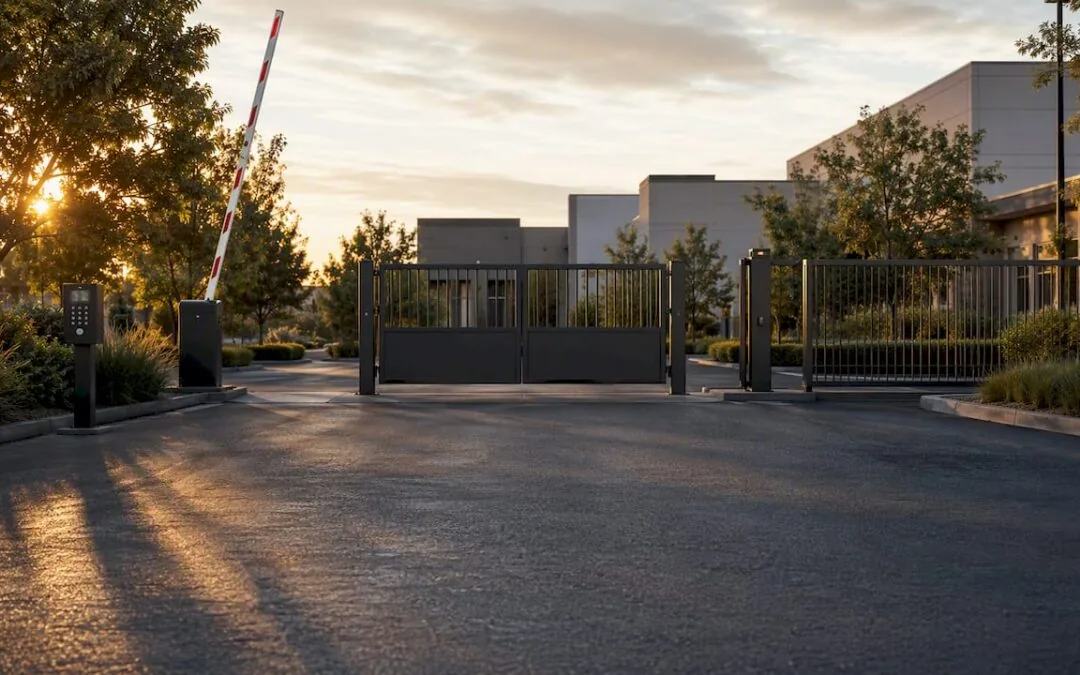

One community, several kinds of user
A single property may need to serve residents, property managers, maintenance personnel, contractors, visitors, delivery drivers, and vendors — each with different needs.
Residents may need regular vehicle and pedestrian access, while visitors need a different way to request entry.
A community can use individual resident credentials alongside a separate visitor-entry system. That is easier to manage than giving the same gate code to everyone. For visitors, telephone entry and intercom systems are often more appropriate than permanent credentials.
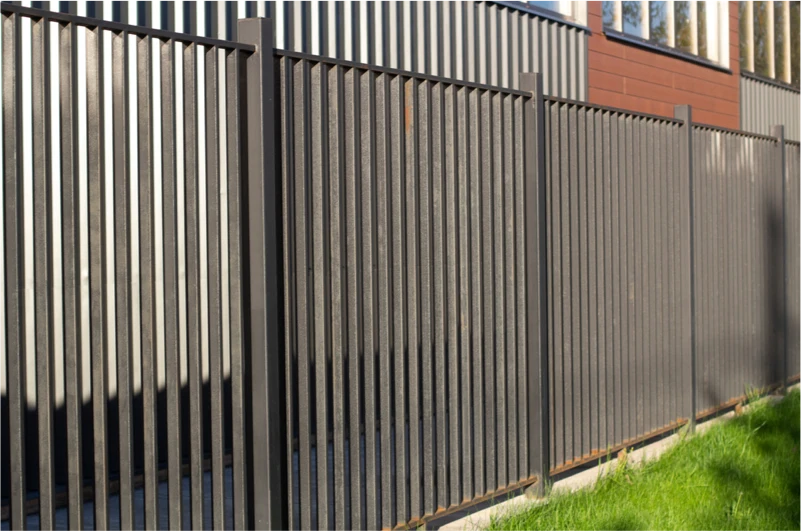
Vehicle and pedestrian access
A resident may drive through an automatic gate but also need access through a separate walk gate; an employee may enter a lot by vehicle and later use a controlled pedestrian entrance. Compatible credentials can be considered for different access points.
Pedestrians should have a practical route that does not require them to walk through an operating vehicle gate simply because the access system was designed around cars first.
A good device in the wrong place is still frustrating
For vehicle entry, we consider how the driver actually approaches the device.
- Driveway width
- Road width
- Vehicle size
- Turning angle
- Gate setback
- Distance from the gate
- Driver position
- Vehicle stacking
Large pickup trucks, trailers, delivery vehicles, and commercial trucks approach differently from passenger cars. Commercial properties should identify the largest vehicles that regularly use the entrance before the access layout is finalized.
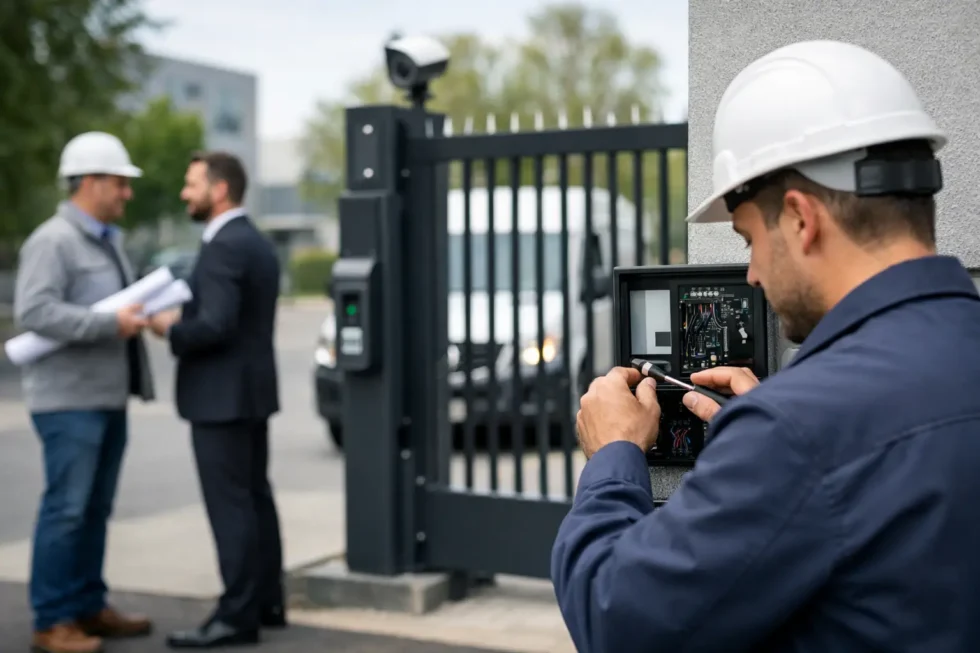
Planning the keypad at the same time as a new automatic gate lets us consider gate location, driveway approach, driver reach, equipment position, vehicle stacking, pedestrian access, gate movement, and available power together — see automatic gates.
The system is only as organized as the process behind it
Card and RFID access make it easier to treat each regular user separately. The property manager can establish procedures for issuing credentials, replacing lost ones, recovering them where possible, removing access when a user leaves, and keeping user records current.
Even good technology becomes difficult to administer if credentials are issued without a consistent procedure. The technical management options depend on the system selected — we do not assume every card system provides the same features.
Replacing a keypad will not correct a gate
An older keypad or card system may eventually need to be replaced or updated. Before changing the access equipment, we review the surrounding gate system.
An upgrade may involve
- Existing keypad or reader
- Automatic operator
- Physical gate
- Equipment location
- Power
- User-management needs
A failed entry attempt does not mean a failed reader
The problem may involve the access equipment, gate operator, physical gate, connected components, or available power. The physical gate may also be dragging or out of alignment.
Useful details when you call
- No users can enter
- Only one credential is affected
- The gate responds intermittently
- The operator works through another access method
- The physical gate is moving differently than usual
- The issue started after another change or repair
The cause should be identified before equipment is replaced.

Maintenance for managed access systems
Properties that rely on their gate every day benefit from periodic service — especially apartment communities, industrial properties, commercial facilities, storage properties, and managed residential entrances. Maintenance is an opportunity to identify visible gate, operator, or access-equipment concerns before they cause a larger interruption.
Our keypad and card access process
1
Understand the users
We determine who needs regular access and how frequently those users change.
2
Review the entrance
We evaluate the physical gate, operator, driveway or walkway, and possible locations for access equipment.
3
Select the access method
We discuss whether keypad, card, RFID, or another supported method fits the property.
4
Plan visitor access
When visitors need entry, we discuss how that should work rather than assuming the regular-user system handles every situation.
5
Define the project
The proposal identifies the approved equipment and the major installation scope.
6
Install and coordinate
We install the approved access equipment and coordinate it with the qualifying automatic gate system.
7
Review the system
We review the installed equipment and provide applicable operating or care information.
An entry problem does not always begin at the keypad
- 01
Serving the region since 1950
Modern Fence Company has worked on entrances across Western Arkansas and Eastern Oklahoma since 1950.
- 02
Fence, gate and access together
Our access-control work is supported by our fencing, gate fabrication, automatic gate, and gate-service capabilities.
- 03
One evaluation, whole entrance
We can evaluate the physical gate, operator, and access equipment together and determine which part needs attention.
- 04
Gates fabricated in-house
When the gate itself is the problem, we can fabricate a custom replacement in our own shop.
- 05
Repair-only work welcome
We provide repair-only projects, ongoing maintenance, and annual service agreements for qualifying systems.
- 06
Licensed and insured
Modern Fence Company is licensed and insured for the work we perform.
Installation and service across
Western Arkansas & Eastern Oklahoma
We install and service qualifying keypad, card, and RFID gate access systems in these communities and the surrounding areas.
Entry devices on real projects
Keypad & card access questions
Visit our fencing and access control FAQ for more answers.
Is a keypad or card system better?
It depends on the property. A keypad may be suitable for a smaller, stable group of users. Individual credentials may be easier to manage when users change frequently.
Can you install a keypad on a residential driveway gate?
Yes. Keypad access may be used with qualifying automatic residential gates.
Do you offer cellular keypad systems?
Cellular keypad options may be available depending on the entrance, property, and selected equipment.
Do you install card access?
Yes. Card access is available for qualifying vehicle and pedestrian gate systems.
Do you install RFID readers?
Yes. RFID access is among the systems we can provide for qualifying projects.
Are these systems suitable for apartment communities?
Yes. Keypad, card, RFID, telephone, and intercom systems can be considered depending on the community’s access requirements.
Can employees have individual credentials?
Compatible card or RFID systems may support individually managed credentials. The exact capabilities depend on the selected equipment.
Can a card reader be used on a pedestrian gate?
Yes, depending on the gate and access-control system.
Can you replace an existing keypad or card reader?
Yes. We can evaluate existing access equipment and determine whether replacement or other service is appropriate.
Do you repair access-control systems?
Yes. We provide qualifying access-control service and repair.
Daily entry should be easier to manage, not more complicated
Tell us the type of property, whether an automatic gate already exists, whether access is for vehicles or pedestrians, roughly how many regular users need entry, whether those users change often, how visitors currently enter, which access method you are considering, whether existing equipment needs replacement, and any problems with the current gate or operator.