A railing does more than fill an open edge. It protects people on a porch, stairway, balcony, ramp, or elevated walkway while becoming one of the most visible architectural details on the property. This guide to custom metal railings explains how to make decisions that look right, meet the demands of the space, and hold up for years in Western Arkansas and Eastern Oklahoma.
Custom work is especially valuable when a standard panel will not fit the site. Sloped yards, uneven concrete, nonstandard stair angles, historic homes, commercial entrances, and large outdoor living areas often need more than an off-the-shelf solution. The right fabrication and installation plan turns those challenges into a finished railing that feels intentional.
Start With the Railing’s Job
The best railing design begins with its purpose. A front porch railing may need to balance curb appeal and fall protection. A poolside or balcony railing may require a more open view without compromising safety. At a business entrance, the priorities may include accessibility, traffic flow, security, and a professional appearance.
Think about who will use the space every day. Young children, older family members, customers, employees, and visitors all affect the design. Handrails need to be comfortable to grip. Openings between balusters need to be sized for safety. Gates, if included, need dependable latches and hardware that suit the location.
For commercial properties, railing systems are often part of a larger access plan. They can guide visitors toward an entrance, define loading areas, protect elevated walkways, or work alongside gates and access-control equipment. Planning these elements together avoids the patched-on look that can happen when safety features are added later.
Choose a Metal That Fits the Setting
Custom metal railings can be fabricated from several materials, and each has a different balance of appearance, maintenance, cost, and long-term performance.
Steel and Wrought-Iron Style Railings
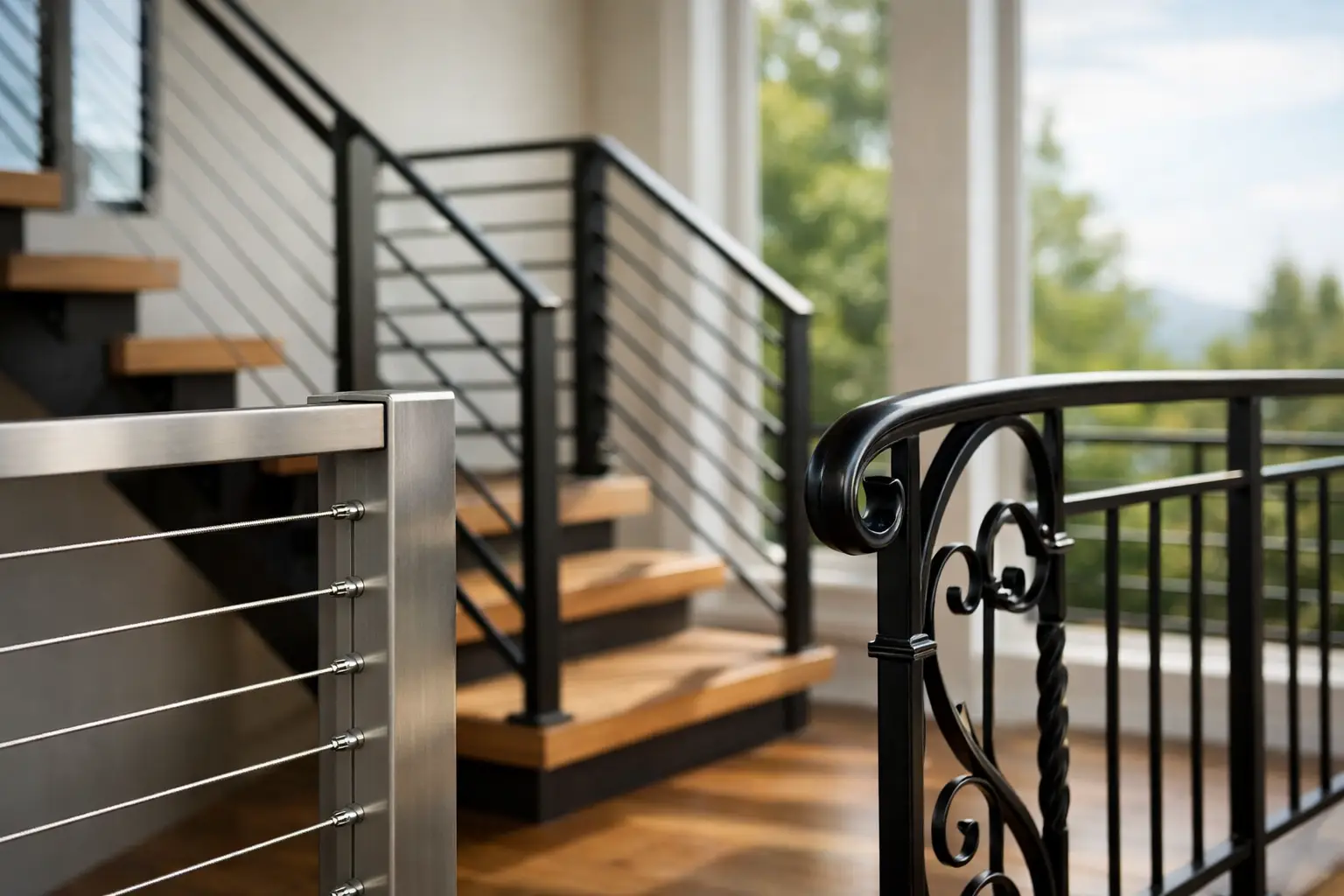
Steel railings offer strength and design flexibility. They can be formed into clean horizontal lines, traditional pickets, decorative scrollwork, geometric patterns, and custom gate panels. Many homeowners choose a wrought-iron style railing when they want a classic look with substantial presence at an entry, porch, or stairway.
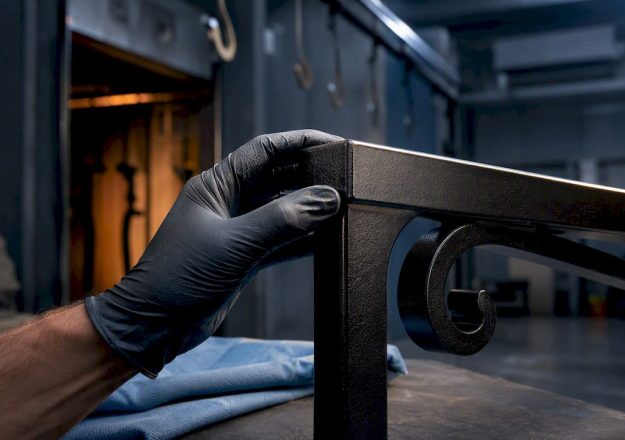
Steel needs a quality protective finish, particularly where moisture collects around steps, planters, and ground-level posts. A properly prepared and coated railing can provide many years of service, but chips and scratches should be addressed before corrosion spreads. This is a worthwhile trade-off for property owners who want a highly customized design and durable structural support.
Aluminum Railings
Aluminum is a practical choice for many exterior applications because it resists rust and is lighter than steel. It works well for decks, patios, pool areas, and other places exposed to rain and humidity. Its clean lines fit contemporary homes and commercial properties alike.
The trade-off is that aluminum generally does not have the same weight or fabrication flexibility as steel. If the project calls for elaborate custom details, exceptionally long spans, or a heavier architectural statement, steel may be the better fit. For low-maintenance performance in a straightforward design, aluminum can be an excellent option.
Stainless Steel and Specialty Options
Stainless steel delivers a modern appearance and strong corrosion resistance, making it a good fit for select high-visibility projects. It is often paired with cable, glass, or simple horizontal components where an open, contemporary look is the goal.
It can also raise the project cost. For that reason, stainless steel is usually best reserved for projects where its appearance and resistance to weather justify the investment. A local fabrication professional can help compare it with powder-coated steel or aluminum before a final decision is made.
Design for Safety Before Style
A custom railing should look like it belongs on the property, but safety requirements must guide every design choice. Rail height, spacing, handrail shape, post placement, and mounting methods are not cosmetic details. They determine whether the system performs as intended.
Requirements can vary based on whether the railing serves a residence, apartment community, retail property, office, public space, or industrial site. Stair railings and guardrails also have different functions. A handrail gives people something secure to hold as they move up or down stairs. A guardrail helps prevent falls from a raised surface.
This distinction matters. A decorative metal feature may look like a railing but still fail to provide the height, strength, or spacing needed for its location. Experienced installers review the site and intended use before fabrication so the completed work supports applicable building requirements.
Do not overlook mounting conditions. A railing is only as secure as its connection to the structure. Concrete, wood framing, masonry, steel, and composite decking each call for different fastening approaches. If an existing porch or stair structure is weak, damaged, or poorly constructed, it may need repair before a new railing is installed.
A Guide to Custom Metal Railings for Real Properties
Measurements are the point where a good idea becomes a buildable project. Custom railings are not simply ordered by linear foot. The fabricator needs to account for slope, stair rise and run, landings, turns, post locations, gate openings, and the condition of the mounting surface.
On a level concrete porch, the layout may be relatively simple. On a staircase that turns at a landing or follows a changing grade, small measurement errors can become obvious quickly. Posts may appear out of alignment, pickets may not follow the slope correctly, and handrails may be uncomfortable to use.
For this reason, site measurement should happen before final fabrication. The contractor can also identify practical concerns that are easy to miss in a sketch, such as downspout locations, door swing clearance, drainage patterns, existing utilities, and areas where mowing equipment or vehicles may contact the railing.
If the project includes a gate, allow room for the gate to open fully and for people to move through it comfortably. A gate at the top of stairs, near a pool, or along a commercial access route requires extra attention to latch placement, hinges, and safe operation.
Pick a Finish You Can Maintain
Black remains a popular choice for metal railings because it works with brick, stone, siding, wood, and many exterior color palettes. It also creates a clear visual edge without pulling attention away from landscaping or architectural details. Bronze, gray, white, and custom colors can work well when they match existing trim, fencing, or storefront features.
Powder coating is often chosen for its consistent appearance and durability. Like any exterior finish, it benefits from routine care. Wash the railing occasionally to remove dirt, pollen, and residue. Check joints, fasteners, bottoms of posts, and areas near sprinklers for signs of finish wear. Prompt touch-ups are far easier than waiting for rust or deterioration to take hold.
The setting should influence the finish decision. A shaded side yard with regular moisture may need more attention than a covered front porch. Railings near busy parking areas should be positioned and protected with the possibility of vehicle contact in mind. Good design considers how a property is actually used, not just how it will look on installation day.
Know When Custom Fabrication Is Worth It
Prefabricated railing panels can work for simple, straight runs. They may be a sensible choice when the dimensions are standard, the grade is level, and the desired style is readily available. Custom fabrication becomes more valuable when the project has unusual geometry or when appearance is a major priority.
It is often the right choice for curved steps, split-level decks, angled stairs, distinctive entrances, mixed-material designs, and properties where the railing needs to coordinate with a custom gate or metal fence. Custom work also gives owners more control over picket patterns, top rails, post caps, decorative elements, and proportions.
The initial cost may be higher than a basic ready-made system. However, forcing standard parts onto a nonstandard site can create awkward gaps, improvised transitions, and future maintenance problems. A railing that is measured, fabricated, and installed for the property can provide better value over its lifespan.
Work With an Installer Who Sees the Whole Project
A reliable railing project depends on more than welding or fastening metal in place. It requires clear communication, accurate field measurements, sound fabrication, proper anchoring, and attention to the finished details. The contractor should be able to explain the material options, recommend a layout suited to the site, and set realistic expectations for timing and maintenance.
Modern Fence Company brings more than 70 years of local experience to custom metal fabrication and perimeter projects. For homeowners, property managers, and commercial operators, that experience matters when a railing must perform safely while fitting the character of the property.
A well-built custom metal railing becomes part of the way people experience your space every day. Request a site evaluation before choosing a design, and you can move forward with a railing that is secure under hand, appropriate for the setting, and built to keep looking right long after installation is complete.