
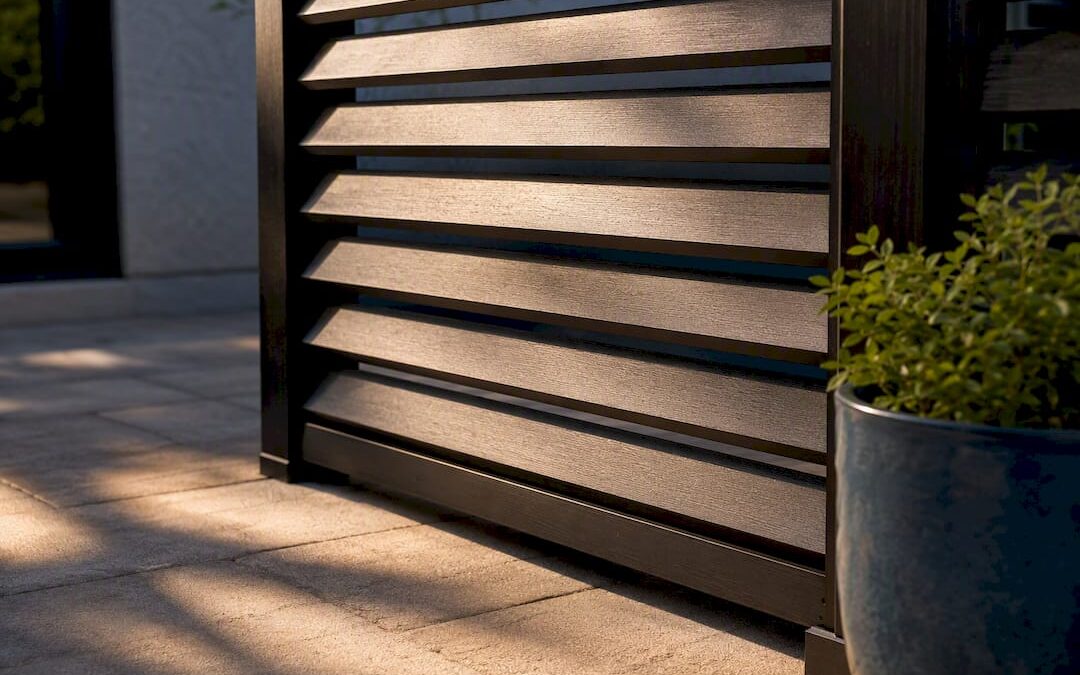
A louvered privacy fence uses angled slats to block sightlines while preserving airflow and a modern look. It fits backyard privacy, pool screening, and equipment concealment where a solid wall would feel heavy or trap wind. Choose aluminum or steel for low upkeep, wood for warmth you’re willing to maintain, and a contractor when spans are long, wind exposure is high, or a gate needs to line up right.
TL;DR:
- Aluminum and galvanized steel fences require less maintenance and are better suited for coastal or high-humidity environments, while wood needs regular re-staining.
- Vertical slats work better on sloped ground and shed debris efficiently, whereas horizontal slats can visually widen narrow yards and are less effective on uneven terrain.
- Costs vary based on material, with aluminum and steel generally more expensive upfront but more durable, and site-specific factors like slope and permits can significantly increase installation time and expenses.
- Adjustable louvers offer the benefit of controlling airflow and privacy but add hardware maintenance and higher initial costs compared to fixed slats.
- Louvered fences mainly provide visual privacy and wind permeability, but they are less secure than solid barriers against forced entry, so additional security measures are recommended for protection.
Table of Contents
- What Is a Louvered Privacy Fence?
- Aluminum, Steel, Wood, or Vinyl: Which Material Holds Up?
- Horizontal or Vertical Slats: Which Orientation Fits Your Yard?
- What Does a Louvered Privacy Fence Cost, and How Long Does It Take?
- DIY Kit or Professional Installation: How Do You Decide?
- How Do You Keep a Louvered Fence Looking Good for Years?
- What Should You Check Before Hiring a Fence Contractor?
- What Building Codes and Zoning Rules Apply to Louvered Fences?
- Do Louvered Privacy Fences Provide Real Security?
- How Do You Match a Louvered Fence to Your Home’s Style?
- How Does a Louvered Fence Compare to Solid Panels or Lattice?
- What Do Installers Wish Homeowners Knew Beforehand?
- Get a Louvered Fence Estimate from Modern Fence Company
- Sources
What Is a Louvered Privacy Fence?
A louvered privacy fence works by hanging angled slats between posts so each board overlaps the next when viewed straight on. That overlap blocks the direct sightline through the fence while gaps between slats still let air pass through. A solid panel fence stops both sight and air; a horizontal slat fence without angle often leaves gaps you can see straight through at close range. Louvers solve that by tilting the boards, so privacy holds even though the fence isn’t sealed.
Most residential panels run several feet tall, built from slats set into a top and bottom rail, then hung between posts spaced several feet apart. Common uses include:
- Backyard perimeter privacy where neighbors overlook a patio or pool
- Screening for trash cans, HVAC units, or pool equipment
- Modern front-yard or courtyard fencing where a solid wall would look too heavy
- Wind-permeable pool enclosures that still meet a visual barrier requirement
Aluminum, Steel, Wood, or Vinyl: Which Material Holds Up?
Material choice decides how much time you’ll spend maintaining the fence over the next decade. Aluminum and galvanized steel louvered systems resist warping, fading, and rotting, and generally require far less upkeep than wood, according to design analysis from House Digest. Powder-coated finishes hold their color for years without repainting, which matters most in coastal or high-humidity climates where wood and raw metal both take a beating.
- Aluminum: rust-proof, lightweight, holds powder-coat finishes well; higher upfront cost, dents rather than bends back
- Galvanized steel: stronger than aluminum, good for high-wind zones, often sold with matching gates and warranties; heavier to install
- Wood: warm, customizable, easy to stain or paint to match a house; needs re-staining every 2 to 3 years and is prone to rot or warp in wet climates
- Vinyl: low-maintenance and DIY-friendly, sold as prebuilt screen panels for concealing equipment; limited color choices and can become brittle in extreme cold
Pro Tip: If you live somewhere with hard freezes or salt air, skip wood and vinyl for structural framing and put your budget into aluminum or galvanized steel instead. You’ll spend more once and nothing again for years.
Horizontal or Vertical Slats: Which Orientation Fits Your Yard?
Orientation changes more than the look. Design professionals note that horizontal slats visually widen a narrow yard or frontage, while vertical slats handle sloped ground and shed falling debris more effectively, according to House Digest’s comparison of louver fence types. If your lot slopes, vertical orientation avoids the stair-stepped gaps horizontal slats create when a fence has to follow uneven grade.
You’ll also choose between fixed angled slats and adjustable louvers. Fixed slats cost less and have nothing to break, but you commit to one privacy angle. Adjustable louvers let you tilt slats open for airflow or closed for full privacy, useful for pool areas that need ventilation in summer, though the hardware adds cost and one more moving part to maintain.
- Slat widths commonly range from about 38 to 100 millimeters, with gap settings from near-solid to open screening
- Wider slats set at modest gaps tend to screen better with fewer pieces and a cleaner shadow line
- A shutter louver angle guide explains how tilt angle shifts the balance between light, airflow, and visibility, a principle that carries over directly to fence slats
Pro Tip: Test the actual gap on-site, not from a catalog photo. A slat spacing that looks completely solid from 10 feet away can be see-through at 3 feet, which is exactly the distance a nosy neighbor stands at.
What Does a Louvered Privacy Fence Cost, and How Long Does It Take?
Budgets vary widely based on material, site prep, and the number of gates; vinyl and wood panels tend to cost less initially, while aluminum and galvanized steel with powder coatings generally cost more upfront but may save money on maintenance over time. A breakdown of privacy fence installation costs covers the variables in more detail if you’re pricing out a specific yard.
Several factors push costs higher than a base estimate suggests:
- Concrete footings for posts are often needed, especially on sloped or rocky ground
- Permit fees and HOA compliance reviews, which can add weeks before work even starts
- Retaining walls or grading may be needed to level the site before fence posts go in
- Site-access issues, like a narrow side yard that limits equipment and adds labor hours
Timeline often runs several weeks from measurement to finished installation for a typical residential job. A simple, level, gate-free run can move faster; long spans, multiple gates, or permit delays stretch that out. Get a written fence installation guide or estimate before you commit to a start date, so you’re not guessing at how site conditions will affect the schedule.
DIY Kit or Professional Installation: How Do You Decide?
The right choice depends on the site, not just your comfort with tools. Here’s how to think it through:
- Go DIY if you have a short, level run with prebuilt panels, basic post-hole digging tools, and a level. Step-by-step build guides cover the assembly sequence well, but they generally skip site-specific engineering like wind load and footing depth.
- Hire a contractor for long spans, sloped or rocky ground, gates that need to swing cleanly, or any site in a high-wind zone where post footings have to be sized correctly.
- Expect professional installation to include post layout, concrete footings sized for your soil and wind exposure, permit paperwork where required, and gate hardware integration so everything opens and closes without binding.
How Do You Keep a Louvered Fence Looking Good for Years?
Maintenance needs track directly with the material you picked. Aluminum and galvanized steel need little beyond an occasional rinse and a yearly check of hardware and welds. Wood needs re-staining or repainting roughly every 2 to 3 years to fight fading and moisture damage. Vinyl needs almost no upkeep but can show stress cracks in extreme cold.
- Darker finishes absorb more heat and can fade faster in direct sun; lighter or powder-coated finishes hold up better long-term
- Walk the fence line each spring and fall, checking for leaning posts, loose slats, or gaps that have widened
- Rust streaks on steel, soft or splitting wood, and posts that wobble when pushed are all signs a section needs repair before the next storm season
What Should You Check Before Hiring a Fence Contractor?
A little homework before the first estimate saves you from expensive surprises mid-project. Start with your own site assessment, then move to vetting the contractor.
- Walk the fence line at the actual sightlines you care about, not from the middle of the yard
- Check the slope across the run; note where footings will need extra depth
- Assess wind exposure, especially for open lots or hilltop properties
- Decide your privacy priority: full screening versus filtered light and airflow
- Pick a material that matches your climate and maintenance tolerance
Ask any contractor these five questions before signing anything:
- Are you licensed and insured for the county where I live?
- Can you provide references from a similar job, ideally a louvered or slatted fence?
- What warranty covers materials and labor, and for how long?
- What does site prep include, and who handles permit applications?
- What’s the estimated timeline, and how are change orders handled if conditions change?
Pro Tip: Ask to see or touch a sample panel at your actual property line before signing. Shadow lines and slat gaps read completely differently in a showroom than they do against your own siding and landscaping.
A residential fence installation checklist is worth reviewing alongside any written contract, particularly the sections on inspection sign-off and permit reminders.
What Building Codes and Zoning Rules Apply to Louvered Fences?
Height limits are the rule you’ll hit first. Most residential zoning caps backyard fences at moderate heights and front-yard fences lower, varying by city and county. A louvered fence that reaches typical backyard heights is usually fine, but the same height at the front property line often isn’t.
Setback requirements matter just as much as height. Local codes frequently require a fence to sit a set distance from the property line or sidewalk, and corner lots often carry extra visibility rules near intersections so drivers aren’t blocked. Homeowners associations layer on their own restrictions, sometimes dictating approved materials, colors, or even slat spacing, separate from what the city allows.
Permits are typically required once a fence exceeds a certain height, sits on a shared property line, or involves poured concrete footings. Some jurisdictions also require an inspection before or after installation to confirm setback and height compliance. Skipping this step doesn’t just risk a fine. It can mean tearing the fence down and starting over if a neighbor or inspector files a complaint later.
Before you order materials, call your local building or zoning department and ask directly about height limits, setback distance, and permit requirements for your address. Rules differ enough between neighboring towns that guessing based on what a neighbor did is a common and costly mistake.
Do Louvered Privacy Fences Provide Real Security?
A louvered fence provides a visual and light barrier more than it provides a hard physical barrier. The angled slats block sightlines effectively, discouraging casual looky-loos and adding a sense of enclosure around a pool or patio. That’s a real security benefit: most opportunistic intrusions start with someone scoping out a property, and a fence that blocks that view removes an easy target signal.
Where louvered fences fall short is resistance to forced entry. Slats, especially wood or vinyl ones, can be pried, kicked through, or climbed more easily than a solid masonry wall or a tightly spaced iron fence. Height helps, but a determined intruder with tools isn’t stopped by angled boards the way they might be by a monitored gate or an access-controlled entry point.
If security is your primary concern rather than a secondary bonus, pair a louvered fence with other layers: a locking gate, motion-activated lighting, or an access control system at entry points. Comparing property security fence options side by side helps clarify where a privacy-focused design ends and a security-focused one begins, since the two goals don’t always point to the same material or height. Louvered fencing does its best work as the privacy layer in a broader plan, not as the sole line of defense.
How Do You Match a Louvered Fence to Your Home’s Style?
Slat color and finish carry more visual weight on a louvered fence than on a solid panel one, because the angle creates a shadow pattern that changes with the time of day. A dark powder-coated aluminum fence against a light stucco house reads as sharp and modern. The same fence in a natural wood tone against a craftsman-style home feels warmer and more traditional. Pick the finish to match the house first, then adjust slat width for the look you want.
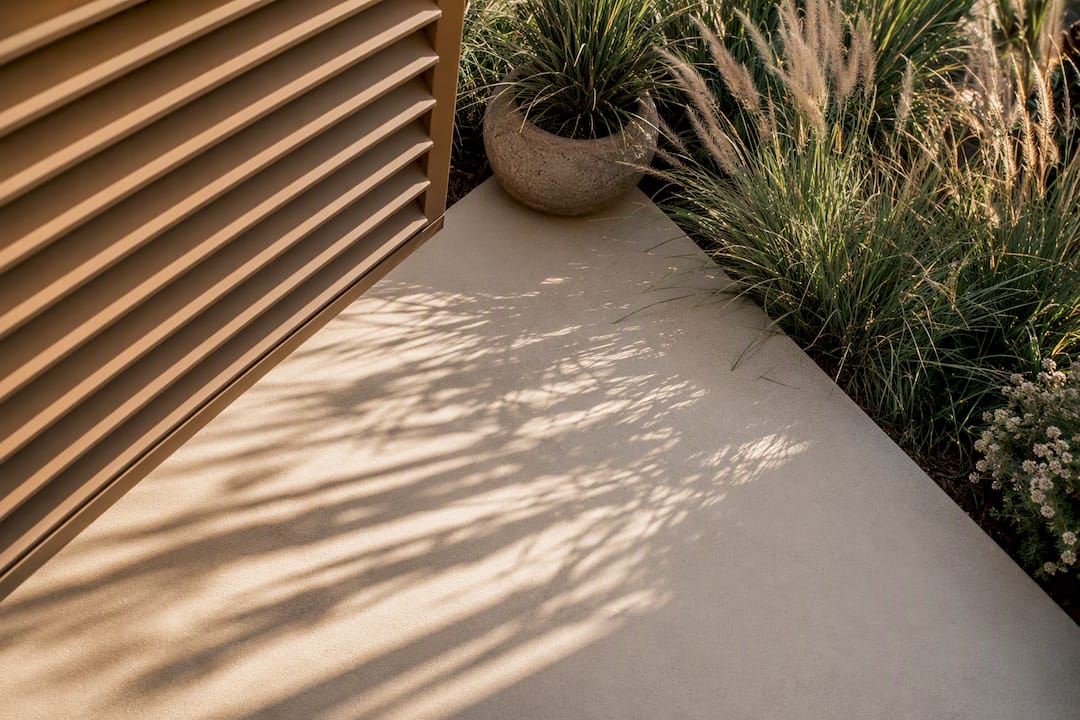
Slat width and spacing affect the fence’s visual weight as much as its privacy performance. Wide slats with tight gaps look substantial and solid from a distance, well suited to a contemporary or minimalist yard. Narrower slats with more visible gap create a lighter, more airy look that pairs well with garden or cottage-style landscaping where you don’t want a heavy visual wall.
Landscaping choices around the fence matter too. A louvered fence backed by tall grasses or layered plantings softens its lines, while a fence standing alone against a bare lawn reads more industrial. Gate placement and hardware finish should match the fence’s metal tone rather than being an afterthought, since mismatched black hardware on a bronze-toned aluminum fence is a detail that stands out more than homeowners expect. Reviewing current fence design trends can help narrow finish and slat-width choices before you request quotes.
How Does a Louvered Fence Compare to Solid Panels or Lattice?
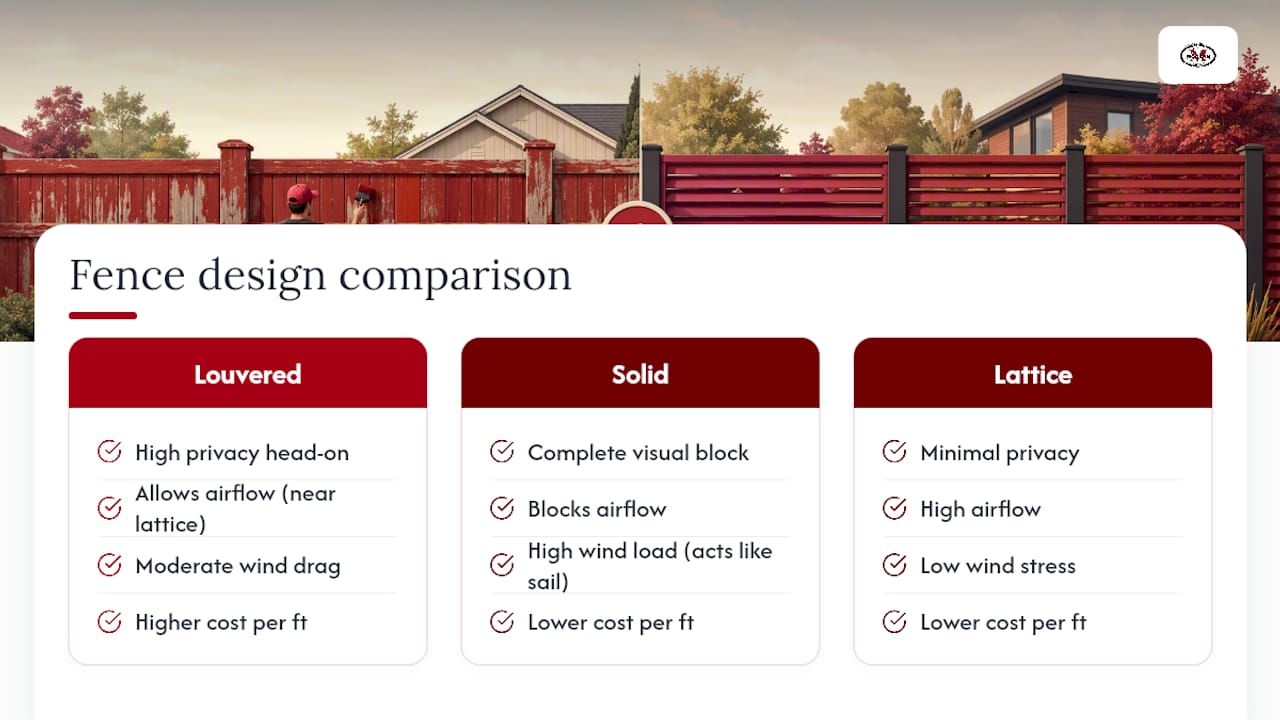
Solid panel fencing blocks both sight and airflow completely, which makes it the strongest option for total visual privacy but also the option most likely to catch wind like a sail. In high-wind areas, solid panels put more lateral stress on posts and footings, sometimes requiring deeper or more frequent post spacing than a louvered design needs for the same run length.
Lattice sits at the opposite end. It lets in plenty of light and air and works well for climbing plants, but the open crosshatch pattern offers minimal privacy on its own. Most homeowners who choose lattice are prioritizing a decorative or garden-support function over screening, then adding lattice as a fence topper rather than the main privacy structure.
A louvered privacy fence lands in the middle: airflow passes through at a rate closer to lattice, while the angled slats deliver sightline-blocking privacy closer to a solid panel when viewed head-on. The trade-off is that a louvered fence generally costs more per linear foot than a basic solid wood panel or lattice section, because the angled slat construction takes more material and more precise assembly. For most yards that need genuine privacy without turning the yard into a wind tunnel, that added cost buys a real functional advantage the other two designs can’t match at once.
What Do Installers Wish Homeowners Knew Beforehand?
The most common mistake is picking a slat gap from a photo instead of checking it at the real sightline. The second is undersized posts on long runs, which loosens the fence within a year. The third is skipping a center support on spans over 8 feet. Adjustable louvers earn their premium mainly around pools, where airflow control actually gets used.
— mark
Get a Louvered Fence Estimate from Modern Fence Company
If you’ve decided a louvered privacy fence fits your yard, the next step is getting numbers specific to your property, not a national average. A local, licensed, and insured contractor with long experience serves the region with residential and commercial fence installation, including wood, aluminum, and steel privacy systems.
An on-site estimate covers exactly what this guide flagged as the variables that matter: slope, wind exposure, gate placement, and the material that fits your maintenance tolerance and climate. You’ll get a written scope before any work starts, so footing depth, permit handling, and timeline are settled up front instead of negotiated mid-project. Browse the privacy fencing overview for examples of finished projects, or request a free estimate directly through Modern Fence Company to get a quote built around your actual lot.
Sources
For slat-width and finish specs, review galvanized louvered fence systems and vinyl screen panel dimensions. For design inspiration, browse louvered fence idea boards before finalizing your material and slat choice.
- Wood louver fence types and privacy outcomes — House Digest
- How to build a louvered project (the easy way) — EZLouver
- Louvered Metal Fence ATLAS | Galvanized Privacy Fence — Ferro Gates
- 48" x 48" white outdoor vinyl louvered screen — Fence Depots