
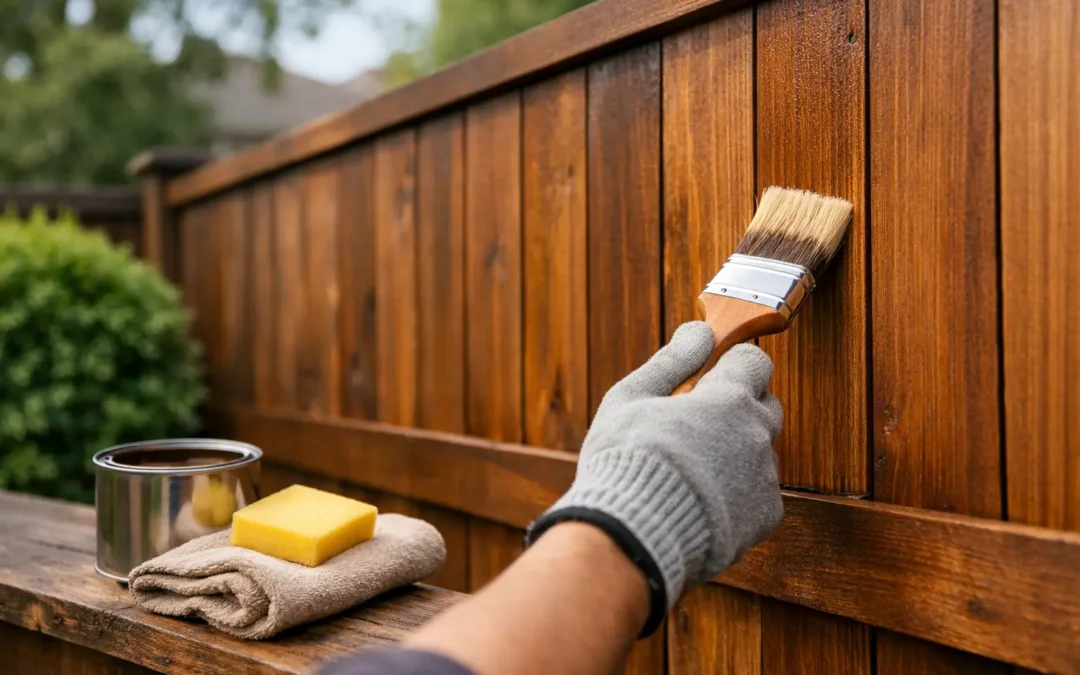
A newly stained wood fence looks finished, protected, and built to last. Then come the hard rains, humid summers, falling leaves, sprinkler overspray, and strong sun common in Western Arkansas and Eastern Oklahoma. To maintain stained wood fence panels well, treat maintenance as a regular part of property care – not a repair project you start after boards have already grayed, warped, or softened.
A quality stain is more than color. It helps limit moisture absorption, slows sun damage, and makes the fence easier to clean. It cannot permanently stop weathering, though. A simple routine of inspection, gentle cleaning, and timely recoating protects the investment you made in both the fence and its appearance.
Start With the Right Maintenance Schedule
Most stained wood fences should be inspected twice a year: once in spring after winter weather and once in fall before the wetter, colder months. Walk the full fence line and look closely at the lower sections, gates, shaded areas, and panels near landscaping. These are usually the first places to show moisture-related wear.
How often a fence needs a new coat of stain depends on the product, the wood species, the amount of direct sun, and how much moisture the property receives. In many cases, a semi-transparent stain needs attention every two to three years. A solid-color stain may last longer, but it can eventually peel or crack if moisture gets behind the coating.
Do not rely on the calendar alone. If water no longer beads on the surface, the color is fading unevenly, or bare wood is beginning to show, it is time to plan maintenance. Addressing those signs early is usually far easier and less expensive than restoring a neglected fence.
Keep Dirt, Mildew, and Debris Off the Wood
Dirt does not just affect curb appeal. A buildup of soil, leaves, pollen, and grass clippings can hold moisture against the fence. In shaded locations, that damp surface can encourage mildew and algae growth, leaving black, gray, or green discoloration behind.
Clean the fence when it looks dirty or before applying a maintenance coat of stain. Start by trimming back vines, shrubs, and grass that touch the boards. Wood needs airflow to dry after rain, and plants pressed against the fence create a consistently damp environment.
Use a garden hose and a soft-bristle brush for routine cleaning. A wood-safe fence cleaner can help with mildew or stubborn grime. Work in manageable sections, follow the cleaner’s directions, and rinse thoroughly so residue does not interfere with future stain adhesion.
Pressure washers can be useful, but they require restraint. Too much pressure or holding the spray tip too close can scar the wood, raise the grain, and force water deep into the boards. If you use one, choose a low-pressure setting and keep the spray moving in the direction of the wood grain. For fences with heavy staining, aged coatings, or visible wood damage, professional cleaning is often the safer option.
Inspect the Fence Before Small Problems Spread
A stained fence should be checked for more than fading color. Stain protects best when the fence structure is sound. Look for loose fasteners, leaning posts, cracked pickets, split rails, sagging gates, and boards that stay dark or damp long after rainfall.
Pay special attention to the bottoms of pickets and posts. Soil contact, standing water, and mulch piled too high against the fence can speed up rot. Keep mulch and soil slightly below the bottom of the boards whenever possible, and correct drainage problems that leave water collecting along the fence line.
Gates deserve their own inspection. Because they move and carry their own weight, gates can become misaligned before the rest of the fence shows trouble. Tighten hardware as needed, confirm the latch closes properly, and watch for rubbing that may wear through the stain. Repairing a loose board or a shifting gate early protects the fence’s function as well as its finished appearance.
Know When to Recoat Stained Wood Fence Panels
A maintenance coat works best before the existing stain has completely failed. The goal is to refresh protection, not cover up damage. Test a few areas by sprinkling water on the surface. If it beads or sits briefly on top, the fence may still be protected. If it immediately darkens the wood and soaks in, the stain is likely losing its water resistance.
Before recoating, the fence must be clean and dry. Washing and staining on the same day is rarely a good idea. Moisture trapped in the wood can prevent proper penetration or adhesion, leading to an uneven finish and a shorter service life. Allow adequate drying time based on the cleaner used, recent weather, humidity, and the stain manufacturer’s guidance.
Lightly sand rough patches, peeling edges, or raised wood fibers before staining. Replace rotten or severely split boards rather than trying to stain over them. If you are switching from a solid stain to a semi-transparent product, or if the current coating is badly peeling, additional preparation may be necessary. These situations often call for a more thorough stripping or restoration process.
Apply stain in dry, moderate weather rather than during extreme heat, direct afternoon sun, or when rain is expected too soon. Brush, roller, and sprayer methods can all work, but the important part is even coverage. Avoid overapplying. Excess stain can remain tacky, dry unevenly, or create shiny patches that do not match the rest of the fence.
Choose Products That Fit Your Fence and Exposure
The best stain is not always the darkest one or the one with the longest promise on the label. The right choice depends on the condition of the wood and how the fence is exposed.
Semi-transparent stains allow more wood grain to show and are a popular choice for newer wood fences. They provide a natural look, but sun-facing sections may require more frequent upkeep. Semi-solid and solid stains offer stronger color coverage and can help create a more uniform look on older fences with variation in the boards. The trade-off is that opaque coatings can make peeling more visible when maintenance is delayed.
Oil-based and water-based products each have benefits. Oil-based stains often penetrate deeply and can be a good fit for weathered wood. Water-based stains generally dry faster and may hold color well, but surface preparation is especially important. When maintaining an existing finish, using a compatible product is the safest approach. Mixing incompatible coatings can lead to adhesion problems that are difficult to correct later.
Protect the Areas Around the Fence
Good fence maintenance includes what happens next to the fence. Redirect sprinkler heads so they do not repeatedly soak the same boards. Keep firewood, patio furniture, trash bins, and stacked materials from resting against the wood. These items trap moisture and can leave dark marks or prematurely wear down the stain.
If one side of the fence faces a neighbor’s yard, coordinate maintenance before cleaning or staining. Clear communication helps protect gardens, vehicles, and outdoor surfaces from overspray. Cover nearby plants and hardscapes when appropriate, but remove coverings promptly so plants are not left without airflow or sunlight.
For commercial properties and managed communities, build fence checks into routine grounds maintenance. A perimeter fence is part of the property’s security, presentation, and daily operations. A consistent inspection schedule makes it easier to identify damaged sections before they become a larger access or liability concern.
When Professional Fence Care Makes Sense
Homeowners can handle many routine fence-care tasks, especially light cleaning and visual inspections. Professional help is valuable when the fence has widespread peeling, persistent mildew, structural damage, drainage concerns, or a large surface area that needs a consistent finish.
Experienced fence professionals can evaluate whether the issue is limited to the stain or whether boards, rails, posts, or gate hardware need repair first. That distinction matters. Applying fresh stain to failing wood may improve the color briefly, but it will not solve the underlying problem.
Modern Fence Company has served property owners across the Fort Smith area for decades, and proper fence staining is one way to protect the craftsmanship and value of a wood fence long after installation. Whether your fence needs a careful refresh or more involved repair work, an estimate can clarify the condition of the wood and the practical next step.
A well-maintained stained fence does not need constant attention. It needs timely attention. Give the wood a chance to stay clean, dry, and protected, and it will continue to provide privacy, security, and a strong finished look for years to come.