

Budget roughly $25–$70 per linear foot for most residential iron-style fences, installed. A typical 100-foot project runs between $3,000 and $8,000, with a national average near $5,100. That range covers factory-made ornamental steel and aluminum panels at the lower end, and heavier powder-coated steel or decorative ornamental iron at the upper end. True hand-forged wrought iron sits well above that window, with $70 per foot as an entry point for this premium type.
Here is what to plan for before you call contractors:
- Low end ($12–$25/ft): Standard aluminum ornamental panels, 3–4 ft tall, minimal ornamentation, no gate
- Mid-range ($30–$60/ft): Factory steel or powder-coated steel ornamental panels, 4–5 ft tall, one walk gate included
- High end ($70–$90+/ft): Heavy ornamental steel or true wrought iron, custom scrollwork, 5–6 ft tall, one or more gates
- 100-ft project total: roughly $3,500–$7,000 installed for mid-grade steel panels
- 200-ft project total: roughly $6,500–$14,000 depending on finish, height, and gate count
Totals move above the high range when you add automated driveway gates, custom hand-fabricated ornamentation, difficult terrain requiring extra footing work, or permit and survey fees. The sections below break each of these line items down so you can compare bids accurately and ask the right questions before signing anything.
Table of Contents
- How much does iron fence cost per linear foot by material?
- What does a full iron fence installation actually cost, line by line?
- What drives iron fence prices up, and how can you bring them down?
- Sample project estimates: low, average, and high totals by fence length
- How long does an iron fence last, and what does maintenance cost?
- Is iron fencing cheaper than wood, vinyl, or aluminum?
- How to get an accurate iron fence quote from a contractor
- Why Modernfence is a trusted source for iron fence installation
- Key Takeaways
- The honest contractor take on iron fencing
- Get a written iron fence estimate from Modernfence
- Useful sources and a note on local variation
How much does iron fence cost per linear foot by material?
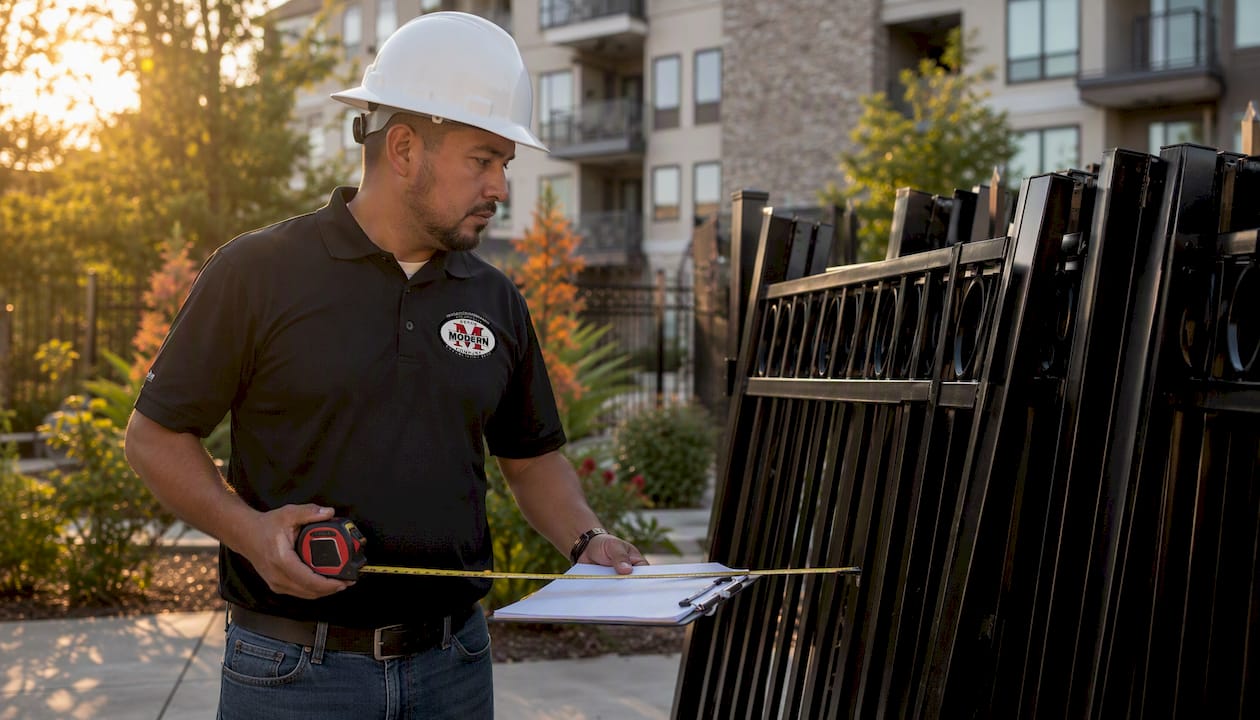
The label “wrought iron fence” covers several distinct products in today’s market, and the material you choose is the single biggest lever on per-foot cost. Most fences sold as wrought iron are actually factory-made steel or aluminum panels. True hand-forged wrought iron is a premium, rare category with a different maintenance profile and a much higher installed price.
| Material / Style | Low ($/ft) | Average ($/ft) | High ($/ft) | Best For |
|---|---|---|---|---|
| Aluminum ornamental panels | $12 | $20 | $30 | Budget-conscious residential, coastal climates |
| Factory ornamental steel panels | $25 | $40 | $60 | Most residential installs, curb appeal |
| Powder-coated heavy steel | $35 | $55 | $70 | Security, commercial-grade residential |
| True hand-forged wrought iron | $70 | — | $200+ | Historic restoration, luxury custom work |

Height adds cost at every tier. Moving from a 4-ft panel to a 6-ft panel typically adds 20–35% to the material line. Decorative add-ons like finials and spear tops are usually priced per post or per panel, not per foot, so a fence with 40 posts and decorative caps can add several hundred dollars before labor is factored in.
Aluminum runs the lightest per-foot cost for residential runs, while wrought iron and heavy steel command higher prices because of fabrication complexity and finishing requirements. For most homeowners who want the classic iron look without the premium price, powder-coated steel panels offer the best balance of appearance, durability, and installed cost. If you are considering the full picture of whether ornamental iron is worth the investment, the ornamental iron fence review at Modernfence walks through the trade-offs in detail.
Pro Tip: Galvanized steel panels cost slightly more upfront than bare steel but resist rust far longer. Pair galvanizing with a powder-coat finish and you reduce repainting frequency significantly, which lowers your 10-year ownership cost even if the day-one price is higher.
What does a full iron fence installation actually cost, line by line?
Understanding the line items on a quote is how you compare bids fairly. A contractor who omits site prep or disposal from the estimate is not giving you a lower price; they are giving you an incomplete one.
Common line items you should see on any written estimate:
- Materials (panels, posts, rails): The largest single line; varies by material type and height
- Post footing concrete: Each post requires a concrete footing; depth and diameter depend on soil and local code
- Labor: Typically billed at $30–$80 per hour depending on complexity and region
- Gates: Walk gates and driveway gates are priced separately from fence runs
- Hinges, locks, and hardware: Often bundled with gate cost but worth confirming
- Powder coat or finish: Confirm whether panels arrive pre-finished or are coated on-site
- Site prep: Clearing vegetation, grading minor slopes, marking utility lines
- Disposal: Removal and hauling of old fence material if applicable
- Permits: Required in most municipalities; cost varies by jurisdiction
Here is a sample line-item breakdown for a 200-ft ornamental steel fence, 4 ft tall, one walk gate, flat terrain, pre-finished panels:
| Line Item | Estimated Cost |
|---|---|
| Materials (panels, posts, rails) | $3,000–$8,000 |
| Concrete for post footings | $350–$700 |
| Walk gate + hardware | $350–$700 |
| Permit (varies by city) | $70–$300 |
| Project Total | $6,500–$14,000 |
National average installation cost for metal fencing sits around $5,100, with a typical range of $3,000–$8,000. Larger projects, taller panels, or custom work push well past that ceiling. Labor often represents a substantial share of the total, and ornamental detail and gate fabrication are the steps that push projects to the high end of market pricing.
What drives iron fence prices up, and how can you bring them down?
Several factors move a quote significantly in either direction. Knowing which ones apply to your project helps you have a more productive conversation with contractors.
Primary cost drivers:
- Fence height: Each additional foot of height increases material and labor cost
- Ornamentation and custom detail: Scrollwork, custom finials, and hand-fabricated elements add labor-intensive steps; custom hand fabrication can multiply the material cost of a section several times over
- Gate count and automation: A single walk gate adds $350–$700; a double driveway gate adds $800–$2,500+; automated gate systems add further cost for motors, wiring, and controls
- Terrain and access: Slopes require additional footing work and labor; rocky or concrete substrates may require core drilling
- Permit and survey fees: Required in most jurisdictions; a property survey alone can run several hundred dollars if property lines are unclear
- Regional labor rates: Bureau of Labor Statistics data shows construction labor costs vary meaningfully by metro area; urban markets in the Northeast and West Coast run higher than the South and Midwest
- Finish type: Bare steel is cheapest upfront but requires more maintenance; powder coat and galvanizing cost more initially and save money over time
Realistic ways to reduce cost without sacrificing structure:
- Choose aluminum or factory steel panels over custom fabrication for standard runs
- Limit decorative ornamentation to gate sections or entry points rather than the full fence line
- Reduce the number of gated openings
- Prepare your yard before the crew arrives to reduce billable site-prep time
- Get three written, itemized estimates before committing
Pro Tip: The lowest bid is rarely the best deal. Proper iron fence installation requires accurate post spacing, correct footing depth, and sometimes welding. A bid that looks 20% cheaper often omits concrete allowances, disposal, or uses a thinner-gauge panel. Ask every contractor to confirm gauge, finish spec, and footing depth in writing.
Sample project estimates: low, average, and high totals by fence length
These estimates use factory ornamental steel panels, 4 ft tall, one walk gate per project, flat terrain, pre-finished powder coat, and no fence removal. Permit costs are excluded because they vary by municipality. Scale linearly for your actual footage.
| Project Size | Low Total | Average Total | High Total | Per-Foot (avg) |
|---|---|---|---|---|
| 50 linear ft | — | — | $5,100 | — |
| 100 linear ft | $3,000 | $5,100 | $8,000 | $30–$80 |
| 200 linear ft | $6,500 | $10,000 | $14,000 | $50 |
Per-foot cost tends to drop slightly on longer runs because mobilization and setup costs spread across more footage. The wrought iron fence installation cost range of $1,420–$5,129 reflects smaller or simpler projects; larger or more detailed installations exceed that ceiling.
Regional adjustment: If you are in a high-cost metro area (major Northeast or West Coast cities), add 20–30% to the average column. In lower-cost regions like the South and Midwest, the low column is often achievable for standard installs.
These estimates do not include fence removal (add $3–$6/ft for old fence disposal), property surveys (add $300–$700 if needed), or custom ornamentation. Any project involving slopes, rock substrate, or core drilling into concrete should be quoted separately with a site visit.
How long does an iron fence last, and what does maintenance cost?
Lifespan is where iron fencing earns its reputation. Factory ornamental panels typically last several decades with proper finish and upkeep, while true wrought iron with regular maintenance can last indefinitely. The finish you choose at installation determines how much maintenance work you will do over that lifespan.
Routine maintenance tasks and rough frequency:
- Annual inspection: Check for rust spots, loose posts, and damaged panels; address immediately to prevent spread
- Touch-up painting or coating: Every 3–5 years for painted steel; less frequently for quality powder-coated panels
- Full repaint: Every 7–10 years for painted steel; powder-coated panels may go longer before needing attention
- Weld repairs: As needed; minor cracks or broken welds should be addressed before rust sets in
- Cleaning: Annual wash with mild detergent removes debris and salt buildup that accelerates corrosion
For low-maintenance fence materials, powder-coated aluminum or steel panels are the practical choice for most homeowners. They resist rust better than bare or painted steel and require less frequent intervention.
Lower-grade finishes can meaningfully increase 10-year ownership costs. A fence installed with a basic paint finish instead of a quality powder coat may need full repainting twice in the same period a powder-coated fence goes untouched, adding labor and material costs that close the gap between the cheaper and more expensive initial options.
Pro Tip: When reviewing quotes, ask specifically whether the powder coat is applied before or after fabrication. Post-fabrication powder coating covers cut edges and weld points, which are the first places rust appears. Pre-coated panels leave those points exposed.
Is iron fencing cheaper than wood, vinyl, or aluminum?
Iron is not the cheapest option upfront, but it often wins on a cost-per-year basis when you account for lifespan and maintenance. Here is how the four main residential materials compare:
| Material | Installed Cost ($/ft) | Typical Lifespan | Maintenance Level | Best Use Case |
|---|---|---|---|---|
| Ornamental iron/steel | $25–$70 | 30–50+ years | Low-moderate | Curb appeal, security, open-view perimeter |
| Wood | $25–$35 | 10–20 years | High | Privacy, traditional aesthetics |
| Vinyl | $20–$40 | 20–30 years | Very low | Privacy, low-maintenance residential |
| Aluminum ornamental | $12–$30 | 20–40 years | Low | Budget ornamental, coastal areas |
When iron makes more sense:
- You want a fence that lasts 30–50 years without full replacement
- Curb appeal and a classic look matter more than privacy
- Security is a priority and you need a fence that is difficult to breach or climb
When wood or vinyl may be more budget-friendly:
- Your primary goal is privacy and you have a tighter upfront budget
- You are fencing a large area where the per-foot cost difference adds up quickly
- You plan to sell the property within 5–10 years and want to minimize capital outlay
For a direct comparison of iron against chain link on cost and security, the chain link vs. iron fence breakdown at Modernfence covers the trade-offs clearly.
How to get an accurate iron fence quote from a contractor
Getting three written, itemized estimates is the baseline. What separates a useful estimate from a vague one is the detail each contractor includes.
Before the site visit, prepare:
- Measure your fence line (total linear footage) and note any corners or grade changes
- Photograph the area, including any existing fence to be removed
- Locate your property lines; have a survey on hand if lines are unclear
- Decide on approximate height, style, and finish preference
- Note the number and location of gates you need
- Gather design samples or photos of styles you like
What must appear in a written estimate:
- Total linear footage and number of posts
- Panel specifications: material, gauge, height, and finish type
- Post footing depth and concrete allowance per post
- Gate scope: size, hardware, hinges, locks, and whether automation is included
- Site prep and cleanup/disposal
- Permit responsibility: who pulls the permit and what the estimated fee is
- Contractor’s license number and proof of liability insurance
- Warranty terms for both materials and labor
- Payment schedule and project timeline
Red flags in a bid:
- Scope described in vague terms (“install fence as discussed”) with no specifications
- No mention of permits or footing depth
- No proof of insurance or license number provided
- Labor line that seems unusually low relative to the project size
- No warranty statement on workmanship
A contractor who cannot or will not provide a line-item written estimate is a contractor worth skipping. Verbal agreements and handshake deals on fencing projects routinely lead to disputes over scope and finish quality.
Why Modernfence is a trusted source for iron fence installation
When you are comparing contractors, verifiable proof points matter more than marketing language. Modernfence brings specific credentials to every iron fence project:
- Over 70 years in business serving Western Arkansas and Eastern Oklahoma
- Licensed and insured for both residential and commercial fence installation
- Full-service iron fence capability: supply, installation, and custom metal fabrication for gates, finials, and architectural metalwork
- Service area: Fort Smith, AR and surrounding communities across Western Arkansas and Eastern Oklahoma
- Scope beyond installation: access control, fence cleaning, maintenance, and temporary fencing
For custom or historic-restoration projects, Modernfence’s in-house fabrication capability means you are not waiting on a third-party shop to produce custom gate panels or decorative elements. That shortens lead times and keeps accountability with one contractor.
When requesting an estimate from Modernfence, include:
- Total linear footage and property address
- Desired height and style (photos help)
- Finish preference (powder coat, galvanized, painted)
- Number and type of gates
- Notes on terrain (slopes, existing fence to remove, proximity to concrete or pavement)
For more on what a quality iron fence installation involves from site prep to final inspection, Modernfence’s installation guide covers the full process.
Key Takeaways
Most residential iron-style fences cost $25–$70 per linear foot installed, with a typical project total between $3,000 and $8,000 depending on material, height, ornamentation, and gate count.
| Point | Details |
|---|---|
| Per-foot cost range | Most residential installs run $25–$70/ft; aluminum panels start lower, true wrought iron runs higher. |
| Typical project total | A 100-ft project averages $5,100; a 200-ft project averages — for standard ornamental steel. |
| Top cost drivers | Height, custom ornamentation, gate count, terrain, and finish type move quotes up or down most. |
| Maintenance matters | Powder-coated steel or aluminum reduces long-term spend; low-grade finishes add repainting costs over time. |
| Modernfence | Licensed, insured, and serving Western Arkansas and Eastern Oklahoma for over 70 years with iron fence installation and custom fabrication. |
The honest contractor take on iron fencing
Iron fencing is one of the few residential investments where the upfront cost argument actually holds up over time. A well-installed, powder-coated steel ornamental fence installed today will likely still be standing in 40 years with routine maintenance. Wood fences in the same period will have been replaced at least once, sometimes twice.
That said, homeowners consistently underestimate two things: gate hardware and finish quality. Gates take more abuse than any other part of a fence. Hinges, latches, and automation components are where cheap installs fail first, often within five years. Specifying commercial-grade hinges and a quality latch on even a basic walk gate adds $50–$100 but eliminates the most common early repair call.
On finish: powder coat is not all equal. Ask your contractor for the mil thickness of the coating and whether it is applied after fabrication. A thicker post-fabrication coat on a galvanized substrate is the combination that genuinely extends service life. Anything less is a compromise you will pay for later.
Realistic timeline from quote to completion: most standard residential iron fence projects run 2–4 weeks from signed contract to installation, assuming materials are in stock. Custom fabrication adds 2–6 weeks depending on complexity. Permit processing varies by municipality and can add 1–3 weeks to the schedule.
Get a written iron fence estimate from Modernfence
Modernfence gives homeowners in Western Arkansas and Eastern Oklahoma a straightforward path from budget question to installed fence. The difference from a national estimating service is simple: a local crew that knows regional permit requirements, soil conditions, and material lead times, backed by over 70 years of installation experience.
Services relevant to your iron fence project include on-site survey and measurement, ornamental steel and aluminum panel installation, custom gate fabrication, access control and gate automation, and post-installation maintenance. Every written estimate from Modernfence includes a line-item scope, material specifications, and a clear project timeline.
Ready to move from budget research to a real number for your property? Request a free local estimate from Modernfence and get a written quote that covers every line item discussed in this guide.
Useful sources and a note on local variation
All figures in this article are U.S. national estimates. Actual costs vary by region, local labor rates, permit requirements, and site conditions. Verify permit fees and survey requirements with your local municipality before finalizing a budget. Homeowners in Western Arkansas and Eastern Oklahoma can contact Modernfence directly for a locally accurate estimate.
Sources referenced in this article:
- How Much Does Metal Fence Installation Cost? — Angi
- How Much Does Wrought Iron Fence Installation Cost? — Angi
- Wrought Iron & Ornamental Fence Cost 2026 — FenceCalc
- Cost of Wrought Iron Fencing — Remodeling Expense
- Wrought Iron Fence Cost — Bob Vila
- Occupational Employment and Wage Statistics — U.S. Bureau of Labor Statistics
A note on local variation: Permit costs, survey fees, and labor rates differ meaningfully between cities and states. The ranges in this article reflect national norms. A contractor familiar with your local jurisdiction will give you the most accurate all-in number.