
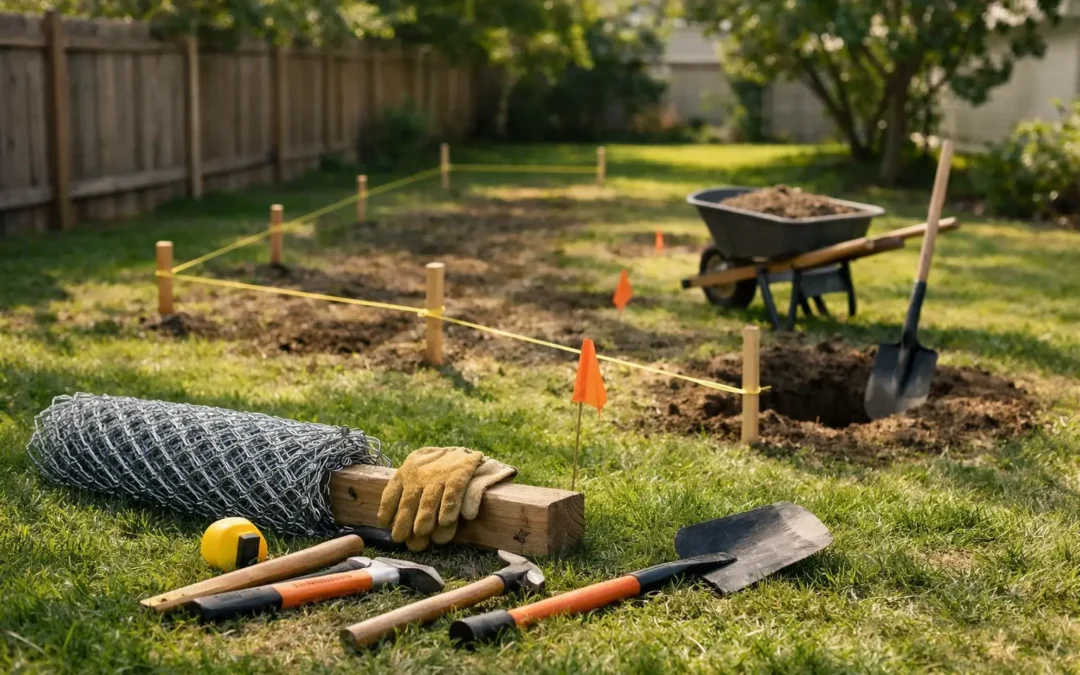
A fence installation can move quickly once crews arrive, but the work done before the first posthole is dug often determines whether the project stays smooth. To prepare your yard for a fence project, focus on the conditions that affect safety, access, layout, and the finished fence line. A little planning protects your property, avoids costly delays, and helps your new fence look intentional from every angle.
Whether you are adding backyard privacy, securing a business perimeter, containing pets, or replacing a worn-out fence, preparation gives your installer a clear path to do quality work.
1. Confirm Where Your Property Begins and Ends
Do not rely on an old fence, a neighbor’s opinion, or a rough estimate of where the property line runs. Existing fences are not always installed on the boundary, especially in older neighborhoods and rural properties. Installing a new fence in the wrong location can create expensive disputes and may require portions of the fence to be moved.
Start by reviewing your survey, plat, or property documents. If corners are unclear, hidden by landscaping, or questionable, consider having the boundary identified by a licensed surveyor. This is especially worthwhile when the fence will sit near a neighboring structure, driveway, easement, drainage area, or commercial lot line.
It is also wise to speak with adjacent neighbors before work begins. You do not need their approval to build on your property, but a brief conversation can prevent surprises. Let them know the planned timing, fence style, and whether crews may need temporary access near the shared line.
2. Check Local Rules, Easements, and HOA Requirements
A fence that looks great can still become a problem if it violates a neighborhood rule or blocks a utility easement. Before selecting a height, material, or gate location, check the requirements that apply to your property. Cities, counties, homeowners associations, and commercial property managers may have rules about fence height, setback distance, visibility at driveway corners, and acceptable materials.
Easements deserve particular attention. Utility, drainage, access, and shared-drive easements may cross part of a yard. A fence may be allowed in some cases, but it could need to include a removable section, wider gate, or a different alignment. Utility companies may also need access to equipment within an easement, and repairs can affect fencing installed there.
For commercial properties, verify fire access, delivery routes, dumpster access, and required emergency exits. A security fence should improve control of the property without creating obstacles for daily operations.
3. Call 811 Before Any Fence Posts Are Installed
Fence posts go below ground, which makes utility locating one of the most important parts of site preparation. Call 811 several business days before digging is scheduled so participating utility companies can mark the approximate location of buried lines. This can include electric, gas, water, sewer, communications, and cable services.
Paint and flags are not an invitation to dig without caution. They identify approximate locations, and hand digging may still be needed near marked lines. Private lines, such as irrigation pipes, propane lines, landscape lighting wires, invisible pet fences, or power running to a detached building, may not be included in a standard utility locate.
Walk the property and identify anything you know is underground. Tell your fence contractor about sprinkler heads, septic components, drainage pipes, private utilities, and previous construction. Clear information before installation is far easier to manage than a damaged line after a post is set.
4. Clear the Fence Line Without Over-Clearing the Yard
Your installer needs room to measure, set posts, stretch material, and move equipment safely. Remove loose items from the planned fence path, including patio furniture, planters, toys, hoses, garden decorations, firewood, and movable storage. Trim back low branches, vines, and shrubs that extend into the work area.
There is a balance here. Do not remove mature trees or major landscaping features until the fence layout has been confirmed. A small shift in the fence line or a planned gate adjustment may save a plant, tree, or hardscape feature you want to keep.
Roots are one common complication. Large tree roots can make postholes difficult and may influence where a post can safely be placed. Trees close to the fence can also cause long-term issues as trunks and roots grow. Discuss these areas early so the design can account for them rather than forcing a last-minute decision on installation day.
5. Plan for Slopes, Drainage, and Uneven Ground
Western Arkansas and Eastern Oklahoma properties often have slopes, rolling yards, and drainage changes that deserve more thought than a flat lot. A fence can follow the contour of the ground, step down in sections, or use a combination of approaches depending on the material, grade, and desired appearance.
Walk the proposed line after rainfall if possible. Watch for standing water, washouts, soft soil, and areas where runoff naturally crosses the yard. A fence should not trap water against a home, redirect drainage toward a neighbor, or block a swale that carries stormwater away.
Minor grading may be helpful before installation, particularly where there are deep holes, severe ruts, or abrupt changes in elevation. However, major grading should be coordinated with the fence plan. If the ground level changes significantly after posts are installed, fence panels can end up too high, too low, or uneven along the bottom.
6. Make a Clear Plan for Gates and Daily Access
A well-built fence is only as convenient as its gates. Think through how people, vehicles, lawn equipment, trash bins, deliveries, and pets will move through the property after the project is complete. A gate that seems large enough on paper may be too narrow for a riding mower, utility trailer, or service vehicle.
For a backyard, a standard walk gate may be all you need. For side-yard access, pool equipment, or larger equipment, a wider double gate may make more sense. Businesses may need cantilever gates, controlled access points, or separate pedestrian entrances to manage traffic safely.
Before installation, make sure gate locations are free of obstructions. Check the swing path for parked vehicles, retaining walls, air-conditioning units, steps, and landscaping. If your driveway has a slope, discuss it with the installer. Gate clearance and hinge placement may need adjustment to prevent dragging or a large gap beneath the gate.
7. Protect Pets, Children, and the Work Area
Fence installation is an active construction process. Open postholes, equipment, materials, and workers moving in and out of gates create conditions that are not safe for unsupervised children or pets. Arrange for dogs to stay indoors, with a neighbor, or in another secure area while crews are working.
If your existing fence is being removed, plan for the period when your yard may not be enclosed. This matters most for pets, but it can also affect pool safety, play areas, and commercial security. Ask about the expected sequence of removal and installation so you can make appropriate arrangements.
Keep children away from the work zone and avoid moving stakes, string lines, flags, or layout marks. Those small markers help establish straight runs, gate openings, and accurate placement on the property.
8. Create Access for Crew, Equipment, and Materials
Fence materials are heavy, long, and awkward to move by hand. Posts, rails, panels, concrete, chain link rolls, and fabricated gates need a practical route from the street to the installation area. Before the project begins, identify where trucks can park and where materials can be staged without blocking traffic or damaging sensitive landscaping.
Move vehicles from driveways and unlock side gates if crews need access through them. If access is narrow, tell the contractor in advance. Tight spaces, steep side yards, retaining walls, and limited street parking do not make a project impossible, but they can affect labor needs, equipment choices, and scheduling.
For commercial jobs, coordinate delivery timing with business hours, employee parking, customer traffic, and loading operations. Temporary fencing and phased work may be useful when a site must remain secure throughout construction.
What to Share With Your Fence Contractor Before Work Starts
A professional estimate is more accurate when the contractor understands the conditions of your property. Share your property survey if you have one, along with photos of difficult areas, gate needs, drainage concerns, HOA guidelines, and any known underground features. Mention whether pets need containment during construction and whether there are access limits for crews or delivery vehicles.
This conversation is also the right time to discuss the purpose of the fence. Privacy fencing, ornamental iron, vinyl, chain link, and custom metal fencing each respond differently to terrain, security requirements, maintenance expectations, and budget. The best choice is not always the one that looks best in a photo. It is the one that fits how you use the property and how long you expect it to perform.
Modern Fence Company has served property owners across the Fort Smith area since 1950, and careful site preparation is one of the simplest ways to help a quality installation stay on schedule. Walk your property with the finished fence in mind, address concerns before materials arrive, and you will be ready for a fence built to serve your home or business for years.