
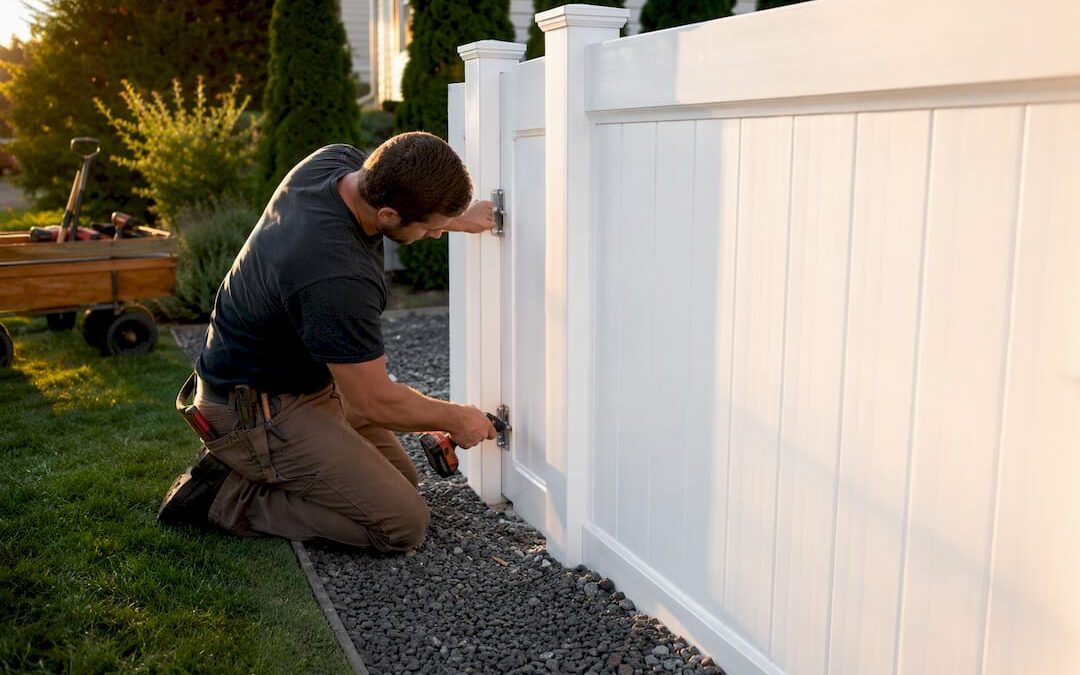
A well-installed vinyl fence lasts 20 to 30 years on average, and premium installs can push past 50. The single biggest cause of early failure isn’t the panel material at all. It’s what’s happening below ground at the posts and footings, along with hardware wear at the gates. Three factors decide where your fence lands on that spectrum:
- Material quality — wall thickness and UV protection built into the vinyl itself
- Installation craftsmanship — post depth, footing volume, and how the frame is set
- Site and climate — freeze-thaw cycles, sun exposure, and wind load in your yard
Get those three right, and vinyl fence lifespan becomes more predictable.
Key Takeaways
Vinyl fence lifespan depends less on the panel you pick and more on the post depth, concrete practice, and wall thickness a contractor actually delivers.
| Point | Details |
|---|---|
| Baseline lifespan | Expect 20 to 30 years typically, with 30 to 50+ years possible for premium installs. |
| Wall thickness matters | Look for roughly 0.120 inches on premium profiles; thinner panels crack and fatigue sooner. |
| Posts fail before panels | Frost heave and shallow footings, not panel defects, cause most early failures. |
| Climate shapes your risk | Freeze-thaw cycles, intense sun, and wind load all push a fence toward the low end of its range. |
| Modernfence approach | Modernfence specifies post depth, concrete volume, and gate reinforcement in writing on every vinyl estimate. |
Table of Contents
- What Is the Typical Vinyl Fence Lifespan?
- Does Wall Thickness Really Change How Long Vinyl Lasts?
- How Does Installation Quality Affect Fence Lifespan?
- How Much Does Climate Affect Vinyl Fence Durability?
- What Maintenance Actually Extends Vinyl Fence Life?
- Should You Repair or Replace an Aging Vinyl Fence?
- What Does a Professional Installer Prioritize for Longevity?
- Why Installation Depth Matters More Than the Brochure
- Get a Vinyl Fence Built to Last Decades, Not Just Years
- Frequently Asked Questions
- Sources
What Is the Typical Vinyl Fence Lifespan?
Most homeowners can expect 20 to 30 years of solid service from a properly installed vinyl fence, and that baseline holds up across a wide range of climates and product tiers. Push into premium territory, thicker panels, quality resin, and a contractor who takes footings seriously, and 30 to 50+ years becomes realistic.
Manufacturer “limited lifetime” warranties sound reassuring, but read the fine print. Most exclude:
- Damage from severe weather events (falling limbs, flooding, high wind)
- Discoloration from certain cleaning chemicals
- Labor costs for warranty-covered panel replacement
- Anything tied to improper installation, which most warranties explicitly disclaim
Here’s the number that matters: wall thickness correlates directly with how long a warranty stays enforceable, because thin-walled panels fail in ways manufacturers classify as normal wear rather than defect. A fence installed on a slope with good drainage, using a thick-wall product and a contractor who dug proper footings, is the profile that reaches the 40 to 50 year mark. A thin-panel fence set in shallow, undersized footings in a freeze-prone yard is the profile that starts showing problems by year 10.
Does Wall Thickness Really Change How Long Vinyl Lasts?
Yes, and it’s the most measurable spec you can compare across quotes. Premium commercial-grade profiles often run 0.120 inches or thicker, while budget product can drop to roughly half that. A thicker wall resists impact cracking, resists the fatigue that builds up over decades of thermal expansion and contraction, and simply holds its shape longer under wind load.
Virgin PVC also behaves more predictably over time than recycled blends. Recycled vinyl isn’t inherently bad, but the material composition varies more batch to batch, which makes long-term performance harder to guarantee. UV inhibitors matter just as much as thickness. Standard PVC without added protection tends toward yellowing and brittleness after years of sun exposure, while ASA-coated or resin-enhanced profiles hold color and flexibility far longer.
What should you actually check before buying?
- Ask for the panel’s wall thickness in writing, not just “premium grade” marketing language
- Confirm whether the product uses virgin or recycled PVC
- Ask if the color coating includes ASA or a UV-stabilized capstock
Pro Tip: Bring a tape measure or calipers to your estimate walkthrough. A contractor confident in their product will let you measure a sample panel on the spot.
How Does Installation Quality Affect Fence Lifespan?
Panel specs get all the attention, but real-world failures trace back to what’s underground far more often than what’s above it. A high-end panel set in a shallow, undersized footing will fail years before a mid-grade panel installed correctly.
Here’s what separates a fence that lasts decades from one that starts leaning by year eight:
- Post depth — posts should typically be set 36 to 42 inches deep in frost-prone regions, deep enough to sit below the frost line and resist seasonal ground movement.
- Concrete volume and mix — enough concrete, properly compacted, prevents post rotation and rocking that gradually loosens the entire fence line.
- Gate framing — gates need reinforced internal framing and heavier-duty hardware, since hinges and latches see constant mechanical stress and typically wear out before any panel does.
- Expansion gaps — vinyl expands and contracts with temperature, and rails need room to move without buckling.
Before signing anything, ask your installer for post depth, concrete type, and gate hardware specs in writing.
Pro Tip: If an estimate doesn’t mention post depth or concrete volume at all, that’s a red flag. Reputable contractors treat those details as selling points, not afterthoughts.
How Much Does Climate Affect Vinyl Fence Durability?
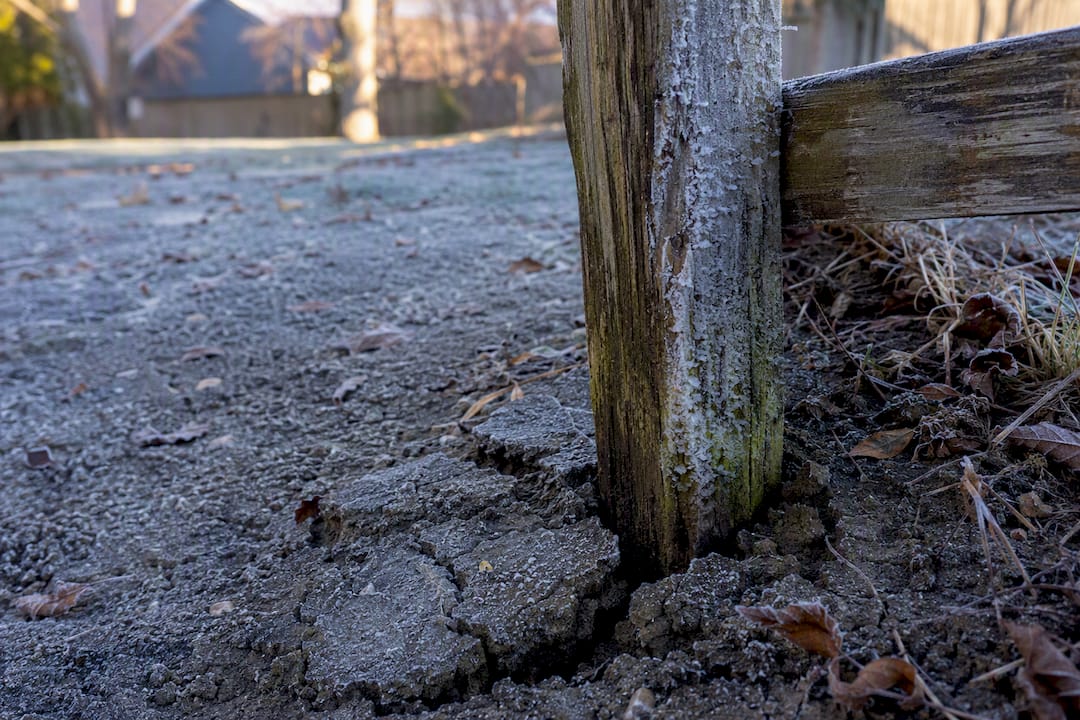
Your yard’s climate profile matters as much as anything you pick off a spec sheet. Freeze-thaw cycles are the single most common cause of early failure in colder regions. Water in the soil around a footing freezes, expands, and gradually heaves the post upward, a process that repeats every winter until the post is visibly loose. Regional climate data on freeze-thaw frequency and precipitation is exactly what a competent installer should use to size footing depth for your area.
Sun exposure works differently but causes just as much visible aging. Constant heat and UV cycling drives repeated expansion and contraction, and darker colors absorb more heat, which accelerates that fatigue. High-quality vinyl tolerates temperatures up to roughly 140°F without structural issues, but cheaper formulations degrade faster under the same conditions.
Wind load matters too, especially on solid privacy panels that act like sails in a storm. And near the coast, vinyl has a real advantage: salt air doesn’t corrode it the way it eats through metal fencing over time. Good drainage around footings still matters everywhere, since standing water accelerates frost heave and undermines concrete over the years.
What Maintenance Actually Extends Vinyl Fence Life?
Vinyl earns its low-maintenance reputation, but “low” doesn’t mean zero. A few simple habits protect your investment:
- Clean annually with mild soap and water. Skip harsh solvents, which can degrade the surface coating, and never blast panels at close range with a high-pressure washer since that can force water into seams and joints.
- Check gate hardware every season. Hinges and latches take the most mechanical stress in the whole system, so tighten loose screws and replace worn hardware before it fails completely.
- Walk the fence line twice a year. Look for leaning posts, cracked caps, or gaps at the base, all early signals that footings need attention before the problem spreads.
Catching a loose post early is a five-minute fix. Catching it two years late usually means replacing the whole section. For a full walkthrough of safe products and technique, see this cleaning guide.
Should You Repair or Replace an Aging Vinyl Fence?
Not every problem means starting over. Cracked caps, a single warped picket, or a loose hinge are all straightforward, affordable repairs. Systemic issues tell a different story:
- Multiple leaning posts across the fence line, which usually points to widespread footing failure
- Visible frost heave lifting several posts at once
- Chalky, brittle panels that crack when flexed, a sign UV degradation has gone past the cosmetic stage
- Rails pulling loose from posts along more than one section
Cost per linear foot depends heavily on height, style, terrain, and gate complexity. Sloped yards and elaborate gate hardware push the number up, so it’s worth reviewing a detailed cost breakdown before budgeting. A cost calculator can help narrow the range for your specific yard. The rule of thumb: address a leaning post or two now, or replace an entire fence line in three years once the footings underneath have all failed together.
What Does a Professional Installer Prioritize for Longevity?
Field experience consistently shows the same pattern: panels rarely fail first. Footings do. That’s why an estimate should specify post depth, concrete volume, and gate reinforcement, not just panel color and style.
The fences that make it to 40 years almost always share the same traits underground: adequate post depth for the region’s frost line, enough concrete properly compacted, and gate frames built to handle daily hinge stress. None of that shows up in a photo, but it’s what determines whether a homeowner calls us back in year 8 or year 38.
Ask any contractor these questions before signing:
- What’s the post depth for my specific soil and climate?
- What concrete mix and volume goes into each footing?
- Is gate hardware upgraded beyond standard panel hinges?
- What does the written warranty actually exclude?
A detailed vinyl fence page outlining installation standards is a reasonable starting point for comparing estimates.
Why Installation Depth Matters More Than the Brochure
The conventional advice on vinyl fencing spends too much time comparing colors, styles, and panel textures, and not nearly enough time asking what’s happening three feet underground. That’s backwards. A homeowner comparing two quotes based on which panel looks nicer is comparing the wrong variable entirely.
Wall thickness and post depth are boring specs. They don’t photograph well, and no salesperson leads with them. But they’re the two numbers that actually predict whether you’re calling a contractor back in year 8 or year 38. If I had one piece of advice for anyone shopping for a vinyl fence right now, it would be this: ask for the wall thickness and the post depth before you ask about color options.
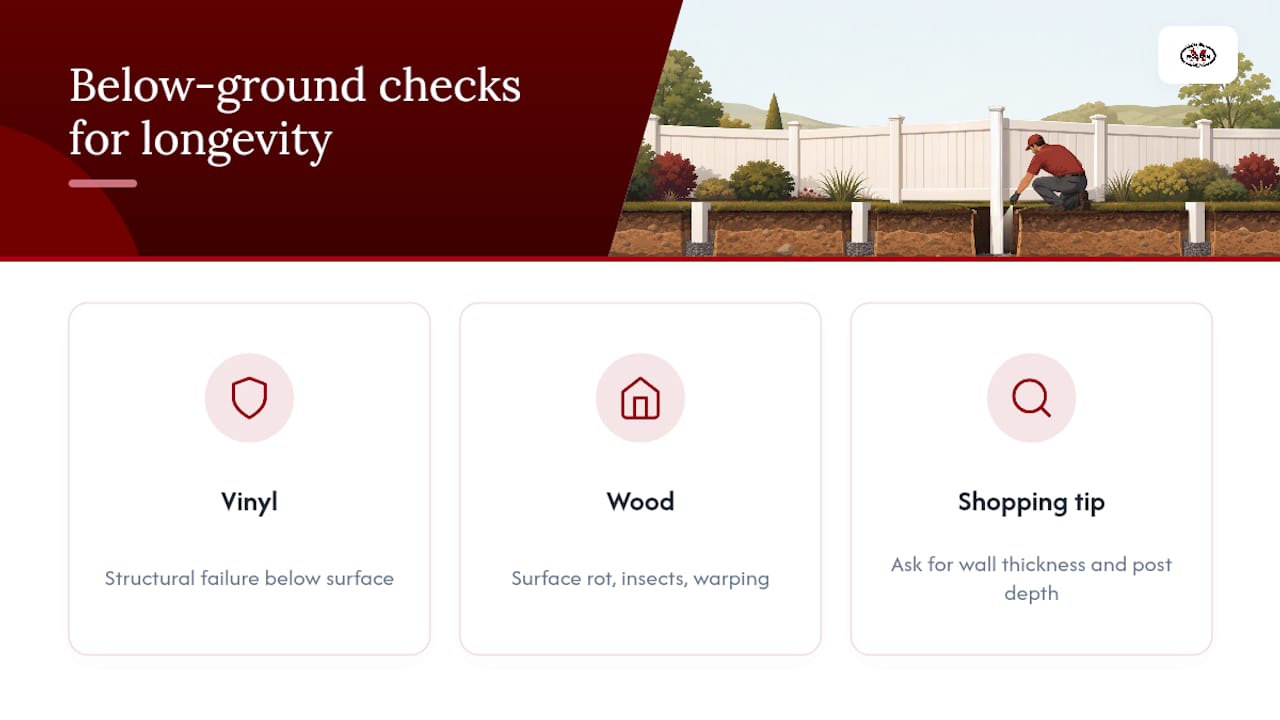
The comparison to wood fencing reinforces the same lesson from a different angle. Wood’s shorter typical lifespan comes from surface vulnerability, rot, insects, warping, that regular maintenance can slow. Vinyl’s failure mode is almost entirely structural and happens below the surface where no amount of cleaning or staining will help. That’s exactly why the below-ground decisions deserve more scrutiny than they usually get.
Get a Vinyl Fence Built to Last Decades, Not Just Years
Modernfence has spent more than 70 years learning what actually makes a fence last in Western Arkansas and Eastern Oklahoma soil and weather, and that experience shows up in how every estimate is written. Instead of quoting a panel style and calling it done, Modernfence specifies post depth, concrete volume, and gate reinforcement up front, the exact details this guide just walked through as the ones that separate a 20 year fence from a 50 year one.
Whether you’re installing new or replacing a fence that’s already showing footing problems, a written estimate that names these specs protects you long after the crew leaves. Licensed, insured, and family-owned, Modernfence serves homeowners, contractors, and businesses across the region. Start with the fence installation guide to see what a spec-driven estimate looks like, then request your free quote directly through Modernfence.
Frequently Asked Questions
How long do vinyl fences last compared to wood fences?
Vinyl typically lasts 20 to 30 years or more with minimal upkeep, while wood fences generally need replacement or heavy repair within 15 to 20 years due to rot, insect damage, and repeated staining requirements.
What causes a vinyl fence to fail early?
Shallow post depth and undersized concrete footings cause most early failures, often through frost heave that gradually loosens posts each winter. Panel defects are far less common than structural problems below ground.
Is a thicker vinyl fence always better?
Generally yes. Wall thickness around 0.120 inches resists impact cracking and thermal fatigue far better than thinner budget panels, and it’s one of the few specs you can objectively compare between quotes.
Can a vinyl fence survive harsh winters?
It can, provided posts are set below the frost line, commonly 36 to 42 inches in cold regions, with adequate concrete volume. Skipping proper depth is what causes frost heave damage, not the vinyl material itself.
How often should I clean my vinyl fence?
Once a year with mild soap and water is usually enough. Avoid harsh solvents and close-range high-pressure washing, both of which can damage the surface coating or force water into seams.
Sources
- Construction product technical reference (wall thickness guidance)
- How Long Does a Vinyl Fence Last? A Homeowner’s Guide.
- Vinyl fence lifespan homeowner guide (regional installer examples)
- What is PVC fencing and is it better than vinyl?
- NOAA engineering weather data (regional climate reference)