
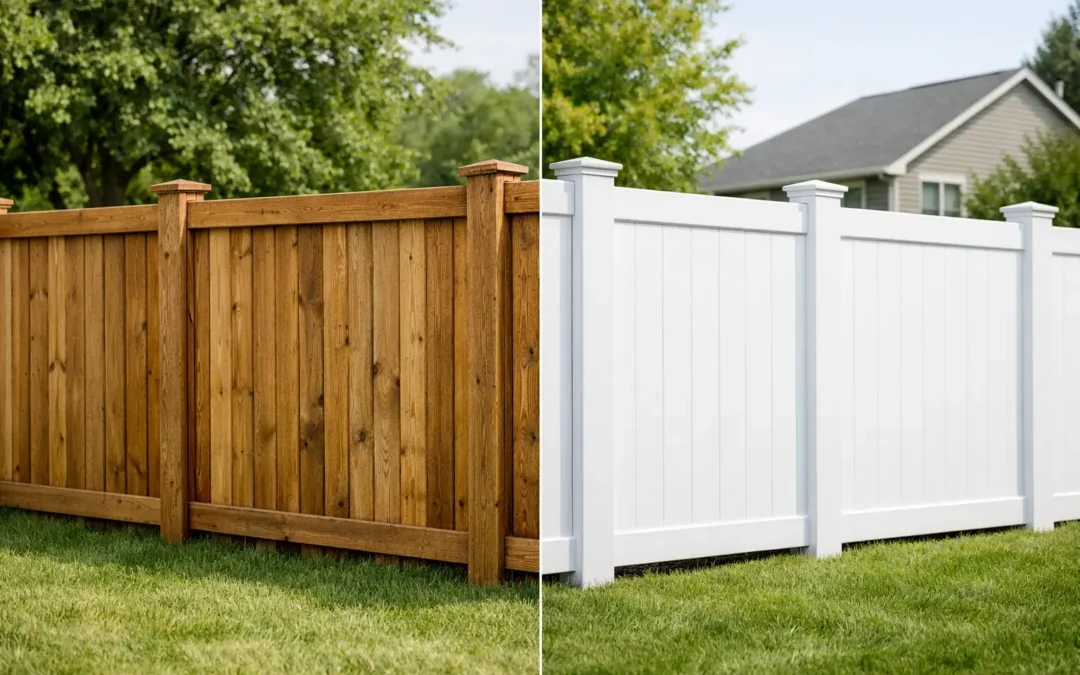
A fence has to do more than mark a property line. It may need to give your family privacy, keep pets contained, improve curb appeal, or create a clean perimeter around a rental, business, or job site. When weighing a wood vs vinyl fence, the better choice comes down to how you use the property, what look you want, and how much maintenance you are willing to take on over time.
Wood remains a familiar favorite across Western Arkansas and Eastern Oklahoma because it offers warmth, flexibility, and a traditional privacy-fence appearance. Vinyl appeals to owners who want a polished look with very little routine upkeep. Both can be excellent investments when they are properly designed and professionally installed.
Wood vs Vinyl Fence: The Core Differences
Wood fencing is built from natural lumber, often using treated pine or cedar depending on the design and budget. It can be assembled in many styles, from board-on-board privacy fencing to shadowbox, picket, ranch rail, and custom gates. It is easy to tailor to a particular yard, slope, or architectural style.
Vinyl fencing is a manufactured material that typically comes in preformed panels or components. It is available in privacy, picket, rail, and semi-private styles, most commonly in white, tan, gray, or other neutral finishes. Its appearance is consistent from section to section, which can be especially appealing for newer homes, managed properties, and commercial settings where a uniform perimeter matters.
The real distinction is not simply natural versus manufactured. Wood gives you more design freedom and a lower entry cost in many cases. Vinyl shifts more of the investment to the beginning of the project in exchange for less ongoing maintenance.
Upfront Cost and Long-Term Value
For many property owners, wood is the more affordable option at installation. Standard treated-wood privacy fencing can provide a substantial visual and security upgrade without the higher material cost associated with vinyl. That makes it a practical choice for larger yards, properties with long fence lines, or projects where the budget needs to cover gates and other improvements.
Vinyl usually costs more upfront. The materials, posts, rails, and specialized components can raise the initial price, particularly for tall privacy styles or projects with several gates. However, a vinyl fence does not require staining or painting, and it will not rot, splinter, or attract termites. Over a long ownership period, those reduced maintenance needs can narrow the cost difference.
Value depends on your plans for the property. If you expect to sell soon, a well-built wood fence can deliver the privacy and curb appeal buyers notice without overspending. If you intend to stay for many years and prefer predictable upkeep, vinyl may justify its higher initial cost. A clear, itemized estimate is the best way to compare the actual numbers for your layout rather than relying on broad price ranges.
Maintenance: Where Vinyl Has the Advantage
A wood fence needs attention because it is exposed to sun, rain, humidity, insects, and temperature changes. Treated lumber is designed to resist decay, but it still benefits from cleaning and periodic staining or sealing. Over time, individual boards may warp, crack, fade, or loosen. The good news is that damaged boards can often be replaced without rebuilding an entire section.
In the Fort Smith area, seasonal moisture and summer heat make maintenance especially relevant. Keeping vegetation trimmed away from the fence, checking for loose fasteners, and addressing weathered areas early can extend the life and appearance of a wood fence. Professional fence cleaning and staining can protect that investment while refreshing its color.
Vinyl is the lower-maintenance choice. It generally needs occasional washing with mild soap and water to remove dirt, pollen, and mildew. Its color is built into the material, so there is no stain or paint to reapply. For busy homeowners, property managers, and business owners, that simplicity is often vinyl’s strongest selling point.
Low maintenance does not mean no maintenance. Vinyl can collect algae or mildew in shaded locations, and a hard impact can crack a panel or rail. Replacement components may need to match the original product line, so keeping records of the fence style and manufacturer is helpful.
Privacy, Appearance, and Custom Design
Wood is hard to beat when a property needs a custom look. It can be built at different heights, topped with lattice, arranged in decorative patterns, or finished in a stain color that works with the home, deck, or landscape. A wood privacy fence also has a more textured, natural character that fits traditional homes, rural properties, and mature landscapes.
Vinyl has a cleaner, more uniform appearance. A solid vinyl privacy fence creates a crisp boundary with few visible imperfections, and picket styles offer a tidy front-yard option without the need for repainting. The trade-off is design flexibility. While vinyl styles have expanded, custom shapes, unusual heights, and intricate transitions are generally easier to achieve with wood or custom fabrication.
For sloped yards, both materials require planning. Wood can be stepped or contoured more easily in many layouts. Vinyl can work on changing grades, but its prefabricated panels and rails may place more limits on how closely the fence follows the land. An experienced installer can explain whether stepping, racking, retaining work, or a different fence design will produce the best result.
Strength, Weather, and Repairs
A properly installed wood fence is strong, dependable, and well suited to privacy applications. Its performance depends heavily on post depth, concrete work where appropriate, rail construction, fasteners, drainage, and the quality of the lumber. Poor installation shortens the life of any fence, but wood is particularly vulnerable when posts are set incorrectly or boards remain in contact with wet soil.
Vinyl resists moisture very well and will not decay as wood can. That makes it a good fit for areas with frequent rain, irrigation overspray, or damp soil conditions. Still, vinyl is not automatically stronger in every situation. In severe wind, extreme cold, or an impact from lawn equipment, a brittle or poorly supported vinyl component can crack. Wood may flex, dent, or lose a board instead, allowing for a simpler spot repair.
Gate construction deserves special attention with either material. Gates receive more stress than standard fence sections, especially when they are wide, frequently used, or attached to an access point. Strong posts, appropriate hardware, and proper alignment matter more than the material alone.
Which Fence Is Better for Your Property?
Choose wood when you want a traditional appearance, a more flexible custom design, or a lower initial investment. It is also a strong choice when you are comfortable scheduling periodic cleaning, staining, and minor repairs. For large residential privacy projects, wood often provides the most visual impact for the budget.
Choose vinyl when low upkeep is your priority and you prefer a consistent, clean appearance year after year. It can be especially practical for busy households, rental properties, and commercial locations where routine repainting or staining would create extra work. Vinyl is also a compelling choice for owners who want a fence that stands up well to moisture without the concerns of rot or insect damage.
There is also room for a mixed approach. A property may use wood privacy fencing along a backyard, vinyl picket fencing near the street, or a more security-focused material around a commercial perimeter. The best plan considers visibility, traffic, security needs, terrain, and how each side of the property is used.
Start With the Conditions on Your Lot
Before selecting a material, walk the proposed fence line and look for slopes, drainage paths, mature trees, utility locations, and gate access needs. Consider where sprinklers hit, where pets run, whether the fence will be visible from the street, and how much privacy is truly needed. Those details influence the right design as much as the choice between wood and vinyl.
Modern Fence Company helps property owners evaluate those practical factors before installation, from a straightforward backyard privacy fence to a more complex perimeter solution. A professional site review can prevent costly surprises and ensure the finished fence looks right, functions properly, and is built for the years ahead.
The best fence is the one that fits your property without creating a maintenance burden or design compromise you will regret later. Start with your daily needs, choose materials that match them, and make sure the installation is built on a solid plan.