Which fence wins: vinyl or wood?
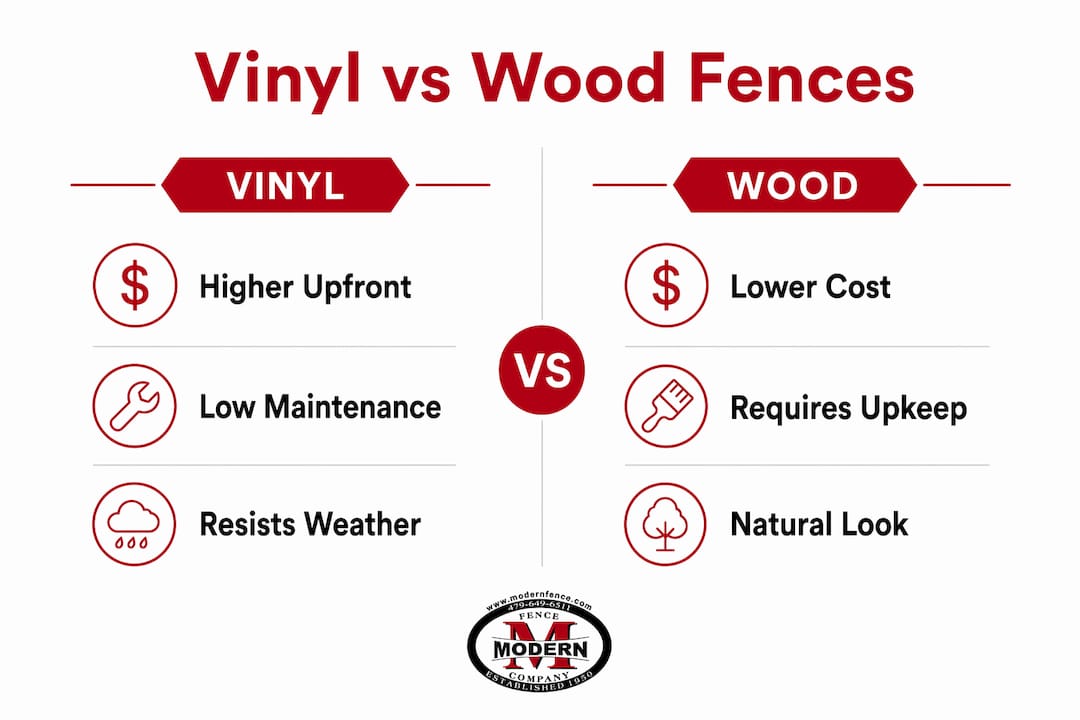
Vinyl fences cost more upfront but require almost no maintenance over their lifespan. Wood fences cost less to install, offer natural warmth and design flexibility, but need regular staining, sealing, and occasional board replacement. Over a 10-year period, the total cost of both materials converges, making the real decision about lifestyle, not just budget.
Vinyl fence quick facts:
- Vinyl fences have a long lifespan with minimal upkeep
- No painting or staining required, though periodic washing keeps it looking clean
- Limited lifetime warranties common from manufacturers
- Damaged panels often require full section replacement
- Colors are permanent; you cannot repaint vinyl
Wood fence quick facts:
- Cedar and treated pine have varying lifespans depending on maintenance and treatment
- Natural look that can be stained or painted any color
- Individual boards can be repaired or replaced without touching the rest of the fence
- Requires staining or sealing every 2–3 years
- More vulnerable to rot, insects, and moisture without proper treatment
How do vinyl and wood fences compare on cost, durability, and maintenance?
Cost: upfront vs. long-term
Vinyl generally costs more than wood at installation, making wood the more accessible starting point for many homeowners.
The picture shifts over time. Wood fences need staining or sealing every 2–3 years, board replacements, and power washing. Vinyl needs only occasional washing. Over time, total ownership costs for both materials tend to converge, making maintenance tolerance and lifestyle important factors. After that, vinyl keeps going for another 15–20 years with no added expense, while wood needs another maintenance cycle.
Pro Tip: If you plan to stay in your home for more than 10 years, vinyl’s long-term savings are real. If you’re likely to sell within 5 years, wood’s lower upfront cost makes more financial sense.
Durability in Oklahoma’s climate
Oklahoma’s weather is hard on fences. Summers push temperatures well above 90°F, winters bring ice storms, and spring delivers high winds and hail. Each material responds differently.
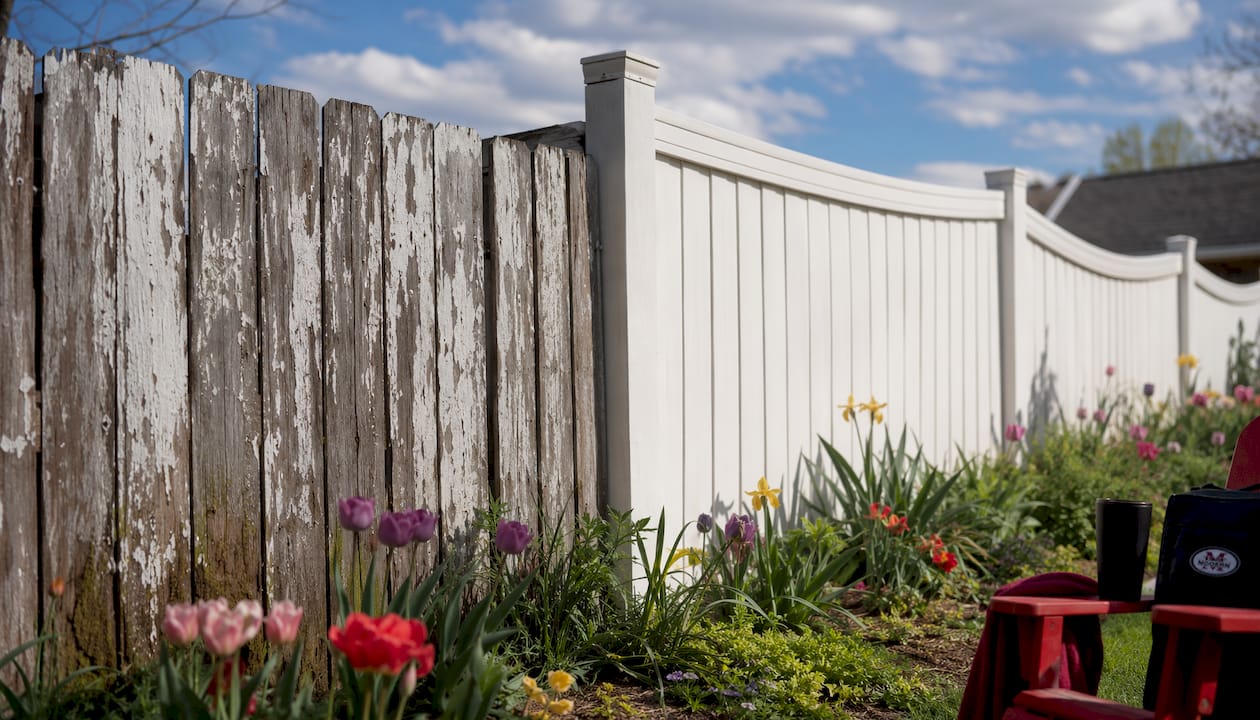
Vinyl can become brittle in extreme cold and warp under prolonged heat if the product quality is low. Thick-walled vinyl panels handle Oklahoma’s temperature swings far better than budget options. Wood is more physically flexible and absorbs impact without cracking, but it dries out, warps, and cracks without consistent sealing. Posts set in ground contact are especially vulnerable to rot, even with treated lumber.
Maintenance: what you actually have to do
Vinyl requires no painting or staining. A garden hose or pressure washer handles most cleaning, though lighter colors show dirt faster. Wood demands more attention: staining or sealing every 2–3 years, checking for rot at post bases, and replacing warped or split boards as they appear. For homeowners who prefer a low-maintenance fence, vinyl is the clear choice. For those who enjoy hands-on upkeep and want full control over color and finish, wood fits better.
Aesthetics and customization
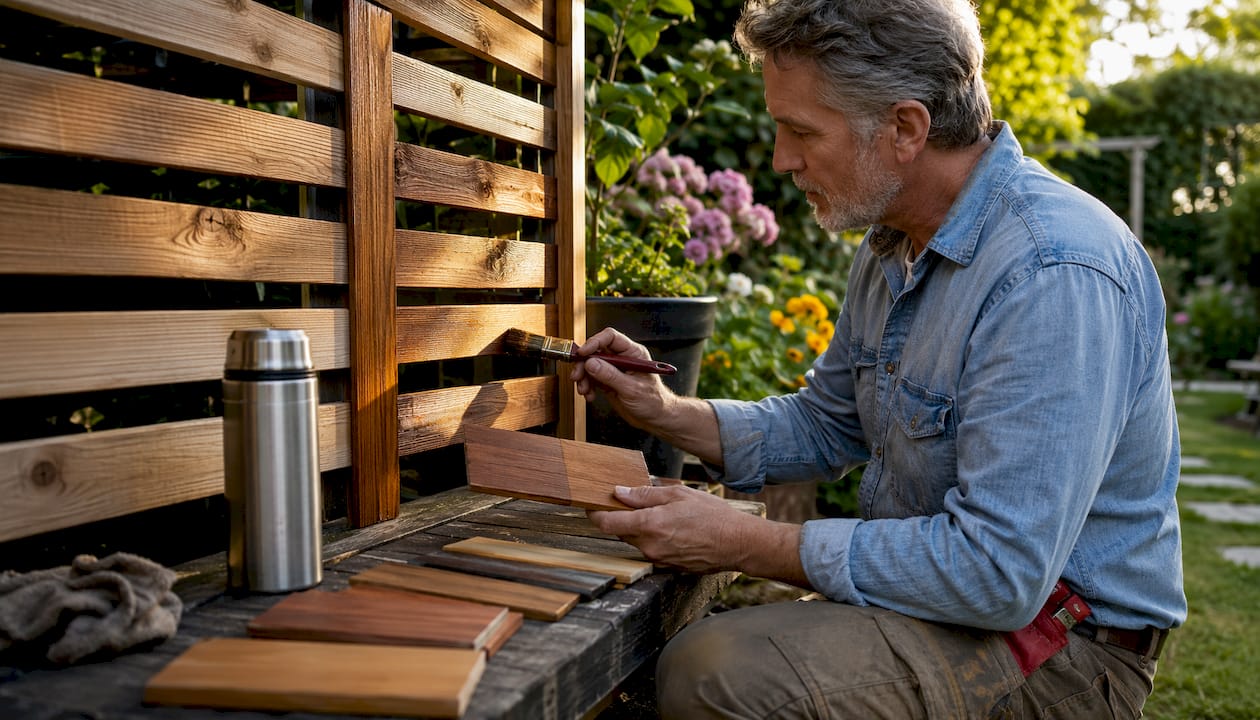
Wood offers natural warmth that vinyl simply cannot replicate. Horizontal wood slat styles are trending strongly in 2026, and vinyl does not adapt well to that look. Wood can be stained any shade, repainted when tastes change, and cut to fit uneven terrain without visible misalignment. Vinyl comes in a fixed set of colors and profiles. Modern vinyl textures have improved, but many homeowners still find the appearance too uniform. That said, vinyl’s consistent look holds up for decades without fading, graying, or weathering.
Top Oklahoma fencing providers for vinyl and wood fences
Oklahoma homeowners have strong local options for both materials. Here is how the leading providers compare.
| Provider | Specialty | Rating | Best For | Warranty |
|---|---|---|---|---|
| Fence OKC | Wood, vinyl, ornamental iron | 4.6★ (256) | Affordable installs with online pricing | Varies by product |
| A Better Fence Construction | Western red cedar, wood | 4.9★ (187) | Expert wood craftsmanship | Workmanship guarantee |
| Preferred Fence Solutions, Inc. | Cedar, Ameristar, iron gates | 4.7★ (166) | Award-winning cedar and iron work | Varies by product |
| FenceWorx by American Leveling | Residential, commercial, agricultural | 4.9★ (154) | Diverse property types including farms | Varies by product |
| Synergy Fencing and Materials | Cedar, chain link, wholesale supply | 4.9★ (109) | Budget-conscious wood fence buyers | Varies by product |
| Midland Vinyl Products | Custom vinyl fabrication | 4.9★ (55) | Custom vinyl privacy and ranch rail | Manufacturer warranty |
| Vinyl Fence Warehouse | Vinyl supply and fabrication | 4.8★ (52) | Quick supply with lifetime warranty | Limited lifetime warranty |
| Tran Fencing LLC | Fence supply and installation | 4.8★ (48) | Local supply with installation support | — |
| Oklahoma C&C Fence Supply | Commercial and residential supply | 5★ (40) | Ameristar-authorized materials | Manufacturer warranty |
| Iron Tough Vinyl Fence | Vinyl installation, Oklahoma weather focus | 5★ (14) | Low-maintenance vinyl built for local climate | Lifetime material warranty |
Fence OKC stands out for homeowners who want to get a price estimate before calling anyone. Its online estimator and veteran-owned credibility make it a practical first stop, especially for those comparing wood and vinyl side by side. The company holds an Access Control License and Ameristar certification, which matters if you want to add an automated gate later.
A Better Fence Construction has been building wood fences in Oklahoma City since 2008. Its focus on western red cedar and on-site picket construction suits homeowners who want craftsmanship over speed.
Preferred Fence Solutions earned Three Best Rated Business Excellence Awards in both 2021 and 2026, a distinction that reflects consistent performance across cedar installation, Ameristar fencing, and iron gate work.
For vinyl specifically, Iron Tough Vinyl Fence brings over 34 years of local installation experience and a lifetime material warranty, with products engineered for Oklahoma’s heat and ice cycles. Vinyl Fence Warehouse operates as the largest vinyl fabricator and supplier in the south central US, with a build-your-own quote tool and a manufacturer’s limited lifetime warranty on all products. Midland Vinyl Products focuses on custom fabrication, covering privacy, semi-privacy, picket, and ranch rail styles with fast local delivery.
FenceWorx by American Leveling covers residential, commercial, and agricultural properties, including fence staining services. Synergy Fencing and Materials offers wholesale cedar pricing with delivery, making it a practical option for homeowners managing their own installation or working with a smaller contractor.
How to choose between vinyl and wood for your Oklahoma home
The right fence depends on four factors: budget, maintenance tolerance, property conditions, and how long you plan to stay.
- Budget: If upfront cost is the primary concern, wood is the more accessible starting point. If you can absorb a higher initial investment, vinyl pays back over time.
- Maintenance willingness: Honest self-assessment matters here. If staining and sealing every few years sounds like a reasonable weekend project, wood works. If you want to forget the fence exists after installation, vinyl is the better fit.
- Terrain: Wood handles sloped yards and uneven ground more easily. It can be racked and custom-cut on site. Vinyl misalignment is harder to correct and more visible once installed.
- HOA and local regulations: Check your neighborhood’s rules before committing to a color or style. Some Oklahoma HOAs restrict fence height, color, or material.
When selecting a local fencing contractor, ask for proof of licensing and insurance, a written warranty, and references from similar projects in your area. Installation timelines vary by contractor and season. Spring and fall are the busiest periods in Oklahoma, so booking 4–6 weeks out is common.
Pro Tip: Get at least three estimates and ask each contractor to specify the vinyl wall thickness or wood species they plan to use. Thin-walled vinyl and low-grade pine are the two most common sources of early fence failure in Oklahoma.
Oklahoma climate problems that affect both fence types
Oklahoma’s weather creates specific challenges that national fence guides rarely address.
For vinyl fences: Cheap vinyl becomes brittle when temperatures drop sharply, which happens during Oklahoma ice storms. Panels can crack or shatter on impact. UV exposure from long, intense Oklahoma summers causes color fading and surface chalking on lower-grade products. High winds can stress panel connections, particularly on privacy fences with solid panels that catch wind like a sail.
For wood fences: The cycle of wet springs and dry summers causes wood to expand and contract repeatedly, which accelerates warping, cupping, and splitting. Post bases are the most vulnerable point. Even pressure-treated posts degrade where they contact soil, and Oklahoma’s clay-heavy ground holds moisture longer than sandy soils, speeding that process. Termites are active across much of Oklahoma and will target untreated or poorly sealed wood posts and rails.
Both materials benefit from professional installation that accounts for local soil conditions, post depth, and panel spacing. A fence installed to national standard specifications without adjusting for Oklahoma’s clay soil and wind load will underperform.
Modernfence serves Eastern Oklahoma with 70+ years of fencing experience
If you are weighing wood versus vinyl and want a contractor who has worked through Oklahoma’s climate conditions for decades, Modernfence is worth a call. The company serves Western Arkansas and Eastern Oklahoma with a full range of residential and commercial fence installation, covering wood, vinyl, chain link, and iron.
Beyond basic installation, Modernfence offers fence staining and cleaning, access control systems, temporary rental fences, and custom metal fabrication. That breadth means you can handle the full perimeter of a property, including gates and security systems, through one licensed and insured contractor. With more than 70 years of operating history, the company brings the kind of regional knowledge that makes a real difference when soil conditions, wind exposure, and local codes all factor into the job. Contact Modernfence for a free installation estimate and get a recommendation tailored to your property.
Key Takeaways
Vinyl and wood fences reach near-equal total cost at the 10-year mark, making the real decision about maintenance tolerance, aesthetics, and how long you plan to stay in your home.
| Point | Details |
|---|---|
| Upfront cost gap | Vinyl costs significantly more at installation; wood is the lower-cost entry point. |
| Long-term parity | Total 10-year ownership cost for both materials tends to converge, so the real decision is about maintenance tolerance and aesthetics. |
| Oklahoma climate risk | Cheap vinyl cracks in ice storms; wood rots at post bases in clay-heavy Oklahoma soil. |
| Repair flexibility | Wood boards can be replaced individually; vinyl often requires full panel replacement. |
| Modernfence option | Modernfence serves Eastern Oklahoma with wood, vinyl, iron, and full-service installation backed by 70+ years of experience. |
The case for thinking beyond the material
Most homeowners frame this as a vinyl-versus-wood decision, but the material is actually the second choice, not the first. The first choice is how much involvement you want with your fence after it goes in.
Wood fences reward attentive owners. A well-maintained cedar fence develops character over time, holds up to Oklahoma’s physical demands better than people expect, and gives you full control over color and style as your tastes change. The homeowners who regret choosing wood are almost always the ones who skipped the maintenance schedule, not the ones who kept up with it.
Vinyl rewards people who want the fence to disappear from their mental checklist. The tradeoff is real: you give up repairability, color flexibility, and some of the warmth that wood brings to a yard. But for a homeowner who travels frequently, manages a rental property, or simply has no interest in weekend fence projects, that tradeoff is completely rational.
What the online debate often misses is that Oklahoma’s climate makes material quality more important than material type. A thick-walled vinyl fence from a reputable local fabricator will outlast a budget wood fence by a decade. A properly installed and sealed cedar fence will outlast cheap vinyl that cracks in the first hard freeze. The contractor and the product grade matter as much as the material category.