
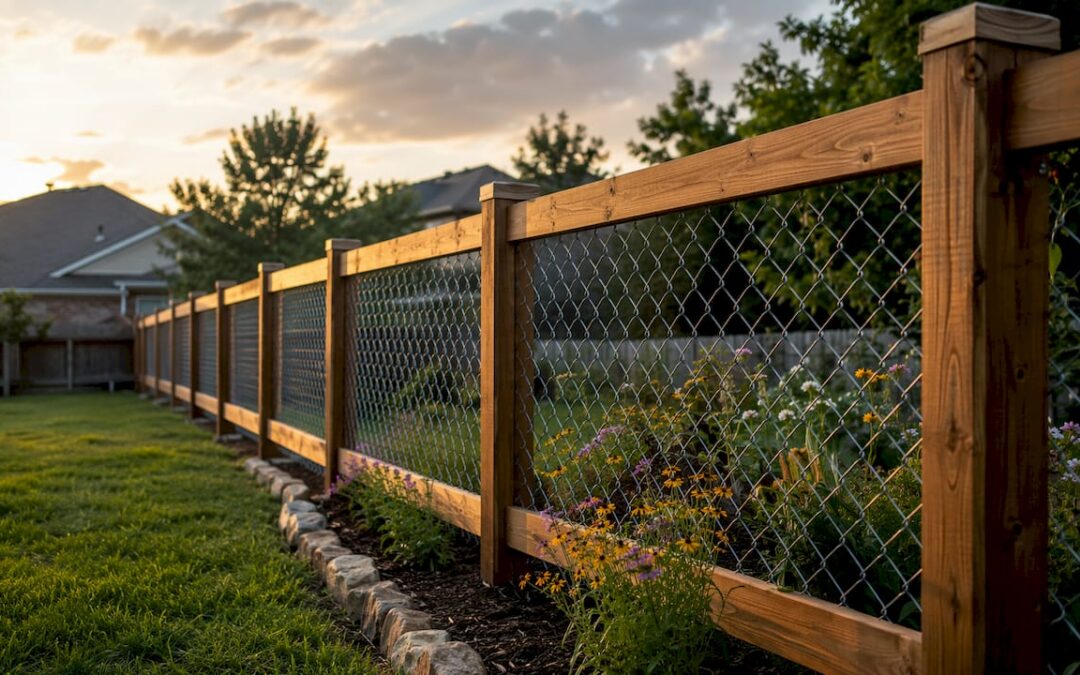
What is a combination wood and chain link fence?
A combination wood and chain link fence is a hybrid fencing system that pairs wooden posts and rails with chain link mesh panels to deliver the strength of metal and the warmth of natural wood in one structure. Rather than choosing between the two materials, you get both working together. The wood provides structure, visual appeal, and a natural look, while the chain link fills the panels with a durable, low-maintenance mesh that resists rust and holds up under pressure.
This approach suits a wide range of properties across Oklahoma, from residential backyards to commercial lots that need perimeter security without sacrificing curb appeal. A wood and chain link fence also tends to cost less than a full wood privacy fence, since chain link mesh is more affordable per linear foot than solid wood boards.
Common elements in a hybrid fence include:
- Pressure-treated or cedar wood corner and line posts
- Horizontal wood top and bottom rails
- Galvanized or vinyl-coated chain link mesh
- Tension bars and tension bands to secure the mesh to posts
- Optional wood slats woven through the chain link for added privacy
Key benefits of combining wood and chain link fencing
A chainlink and wood fence outperforms standalone fences in several practical ways. Chain link provides a strong, transparent barrier that deters intruders while allowing visibility across the property line. Wood adds structure and softens the industrial look of bare chain link, making the fence appropriate for front yards, side yards, and commercial entrances alike.
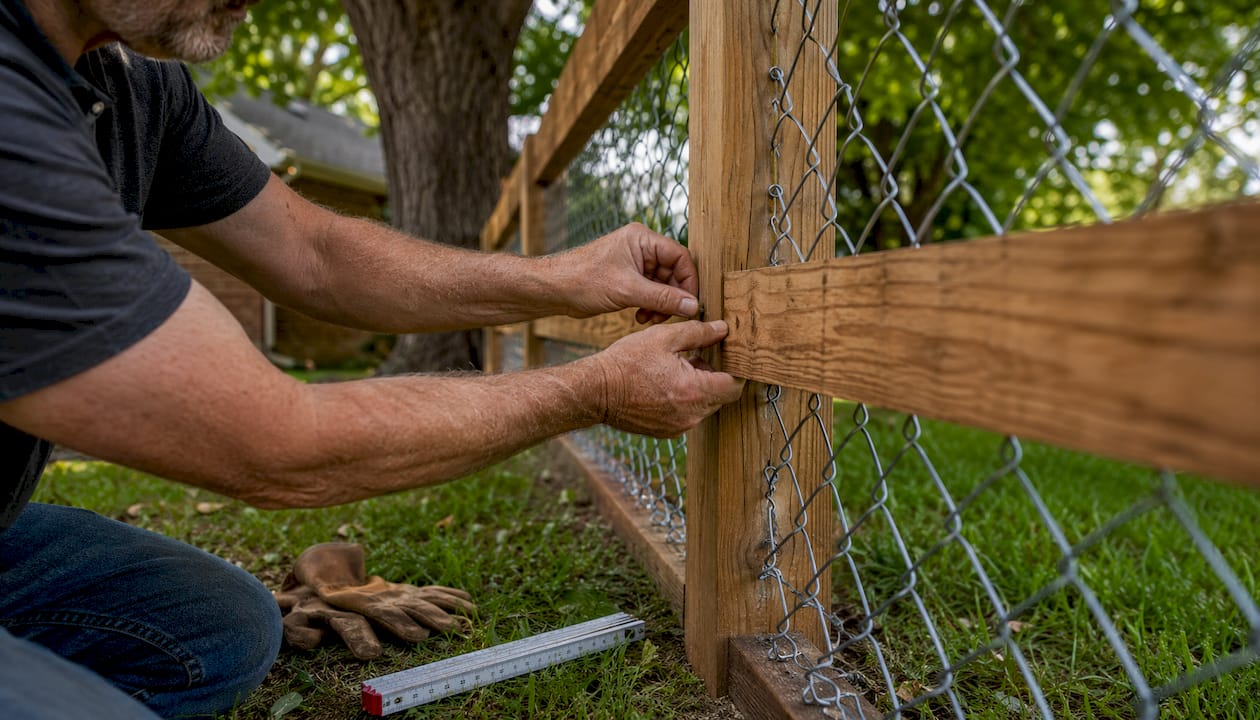
Chain link fences cost less to install and maintain than full wood privacy fences, and a hybrid design captures those savings while still delivering a finished, attractive appearance. You spend less on materials than a full board-on-board wood fence, yet you get a fence that functions as a privacy screen when wood slats are added.
Practical benefits at a glance:
- Chain link mesh resists rust, pests, and physical impact with minimal upkeep
- Wood posts and rails add structural rigidity and visual warmth
- Wood slats woven through chain link significantly reduce visibility into the property, functioning as a privacy fence
- The hybrid design is adaptable for residential yards, dog runs, agricultural enclosures, and commercial perimeters
- Individual wood slats or chain link sections can be repaired or replaced without rebuilding the entire fence
Pro Tip: Cedar naturally resists rot and insects without chemical treatment, making it a better long-term choice for wood posts and rails in Oklahoma’s humid summers than untreated pine.
How to choose the right design and materials for your hybrid fence
Good design decisions made before the first post goes in the ground save money and headaches later. The three most common wood chain link fence design patterns are the wood rail fence, the wood frame fence, and the chain link fence with wood slats. Each serves a different purpose.
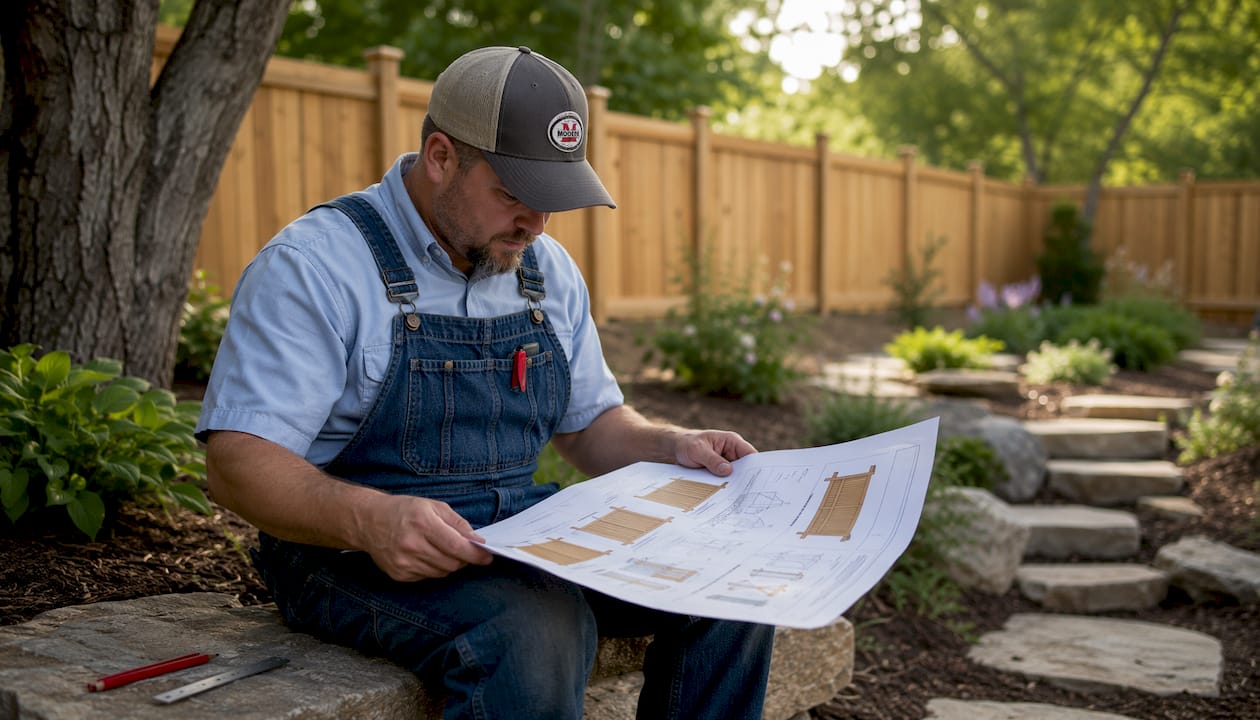
A wood rail fence uses two to four horizontal rails between vertical posts, with chain link filling the open spaces between rails. This works well for agricultural properties and large lots where containing animals is the priority. A wood frame fence uses a top and bottom rail to create a rectangular frame, with chain link stretched across the center. It looks clean and structured, and it suits both residential and commercial properties. A chain link fence with wood slats uses chain link as the base and weaves wood slats through the mesh to create a privacy screen, which is the most popular option for residential backyards.
| Design Type | Best Use | Privacy Level |
|---|---|---|
| Wood rail fence | Agricultural, large lots | Low |
| Wood frame fence | Residential, commercial | Medium |
| Chain link with wood slats | Residential backyards | High |
Material selection matters just as much as design:
- Cedar: Naturally rot-resistant, attractive grain, ideal for Oklahoma’s climate
- Pressure-treated pine: More affordable, chemically treated for rot resistance, slightly heavier
- Galvanized chain link: Standard coating, strong rust resistance, silver appearance
- Vinyl-coated chain link: Available in black, green, or brown, blends better with landscaping
Pro Tip: Vinyl-coated chain link in black or dark green reads as nearly invisible from a distance, which lets the wood elements carry the visual weight of the fence design.
Step-by-step installation for a wood and chain link fence
Installing a wooden chain link fence correctly comes down to post depth, spacing, and proper tensioning of the mesh. Rushing any of these steps leads to a fence that sags, leans, or fails under Oklahoma wind loads.
- Plan and mark the layout. Use stakes and string to mark corner posts, gate posts, and line post locations. Confirm your property line before digging.
- Dig post holes. Posts should be spaced 6–10 feet apart, with corner and gate posts set at least one-third of the post length deep for stability.
- Set posts in concrete. Add gravel at the base of each hole for drainage, set the post plumb, and pour concrete. Allow 24–48 hours to cure before stretching any chain link fabric.
- Install top rails. Slide the top rail through the chain link fabric loops and secure it to the posts with rail end caps and brackets.
- Attach chain link fabric. Slide a tension bar through the end of the fabric and attach it to tension bands on the corner post. Use a fence stretcher to pull the mesh taut before securing it with fence ties along the top rail and posts.
- Add wood rails and slats. Attach horizontal wood rails to the posts using heavy-duty brackets and screws. If adding wood slats for privacy, weave them vertically through the chain link mesh from top to bottom.
- Hang gates and hardware. Attach hinges and latches, check that the gate swings freely, and confirm it closes securely.
- Final inspection. Check post stability, fabric tension, and gate operation. Tighten any loose ties or fittings.
Pro Tip: For corner and gate posts carrying extra load, use a wider-diameter hole and more concrete than you think you need. Oklahoma’s clay soil shifts seasonally, and undersized footings are the most common cause of leaning posts.
How to maintain a combination wood and chain link fence
A wood and chain link hybrid requires attention to two different materials on different maintenance schedules. The chain link side is low-maintenance but not zero-maintenance. The wood side needs more regular care, especially in Oklahoma where summer heat and humidity accelerate rot and fading.
Routine maintenance checklist:
- Inspect wood posts and rails each spring for soft spots, cracks, or discoloration that signals rot
- Check chain link mesh for rust spots, bent sections, or loose fence ties after major storms
- Clean chain link with a mild detergent and water annually to remove dirt and debris buildup
- Apply a penetrating wood stain or sealant to wood components every 1–2 years to protect against moisture and UV damage
- Tighten or replace loose tension bands and fence ties as needed
Pro Tip: Products like Wood Defender Stain, used by Oklahoma fence professionals, penetrate the wood fiber rather than sitting on the surface, which means they last longer and don’t peel the way film-forming paints do.
For a full fence maintenance schedule that covers both wood and chain link components, planning ahead by season keeps repairs small and costs low.
Oklahoma market insights: costs, contractors, and local regulations
What does a hybrid fence cost in Oklahoma?
Pricing for a wood chain link fence in Oklahoma depends on fence length, post material, chain link gauge, and whether you add privacy slats or custom gates. Chain link fencing generally costs less than full wood privacy fencing due to lower material and labor costs, and a hybrid design sits between the two in total price. For a rough budget, 200 linear feet of hybrid fence typically costs less than the same length in full cedar privacy fence, though exact figures vary by contractor and material grade. Request free estimates from at least two or three local contractors before committing.
Oklahoma fence contractors for hybrid installations
Several Oklahoma City area contractors specialize in wood and chain link hybrid fences:
- Red River Fence, LLC specializes in premium wood and chain link fences, holds a Three Best Rated Best Business of 2026 award, and offers free fence quotes.
- Fence OKC provides custom cedar and chain link installation with licensed professionals and a free online instant fence price estimator.
- Preferred Fence Solutions, Inc. serves the OKC metro with cedar and Ameristar fence installations, free estimates, and a Three Best Rated Best Business of 2026 recognition.
For properties in Eastern Oklahoma and Western Arkansas, Modernfence brings over 70 years of installation experience to both residential and commercial hybrid fence projects, with licensed and insured crews and a full range of wood, chain link, and custom gate services.
Oklahoma fence permit requirements
Oklahoma does not have a single statewide fence law that governs all residential fencing. Local municipalities set their own rules. Oklahoma City, Tulsa, and most incorporated towns require a permit for fences over a certain height, typically 6 feet, and have setback requirements that determine how close a fence can sit to a property line or street. Before you install, check with your city or county planning department. You can also review Oklahoma homeowner fencing guidelines for a summary of common local requirements.
Key permit and regulation points for Oklahoma:
- Most Oklahoma municipalities require permits for fences 6 feet or taller
- Setback rules vary by city and zoning district; corner lots often have stricter requirements
- HOA rules may restrict fence materials, colors, or heights independent of city codes
- Adding wood to an existing chain link fence may require a new permit if the modification increases fence height or changes the structure significantly
Pro Tip: Pull your permit before breaking ground. Oklahoma inspectors can require removal of unpermitted fences, which costs far more than the permit fee itself.
Key Takeaways
A combination wood and chain link fence delivers security, privacy, and durability at a lower cost than full wood fencing, making it a practical choice for Oklahoma residential and commercial properties.
| Point | Details |
|---|---|
| Hybrid design advantages | Wood posts and rails paired with chain link mesh provide strength, visual appeal, and lower material costs than full wood fences. |
| Privacy with wood slats | Weaving wood slats through chain link mesh significantly reduces visibility into the property, functioning as a privacy fence. |
| Post depth for stability | Corner and gate posts must be set at least one-third of the post length deep, with 6–10 foot spacing between line posts. |
| Oklahoma permit rules | Most Oklahoma municipalities require permits for fences 6 feet or taller; check local codes before installation. |
| Maintenance split | Chain link needs annual cleaning and rust checks; wood components need staining or sealing every 1–2 years. |
Ready to install your hybrid fence? Modernfence can help.
Modernfence has served homeowners and commercial property owners across Eastern Oklahoma and Western Arkansas for over 70 years. Whether you need a wood frame fence with chain link panels, a full privacy slat installation, or a custom gate to complete your perimeter, our licensed and insured crews handle the entire project from estimate to final inspection.
Get your free fence installation estimate and find out what a professionally installed wood and chain link hybrid fence costs for your property.