
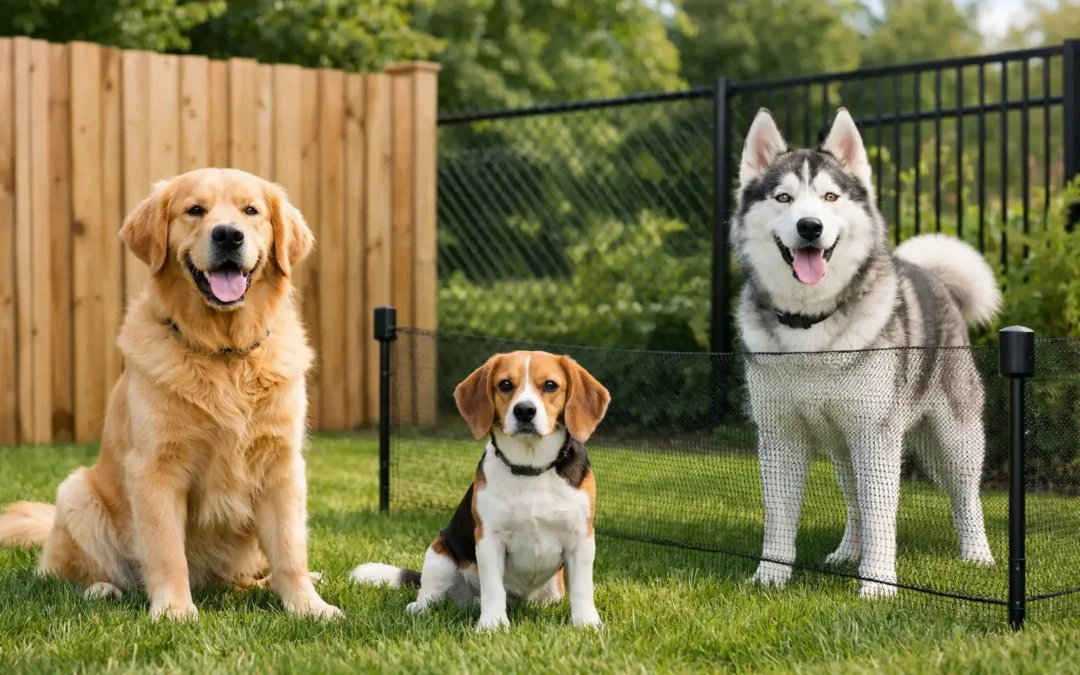
A fence for a dog has one job before all others: it must keep your dog safely contained without turning your yard into a daily escape challenge. The best fence options for dogs depend on your pet’s size, strength, temperament, and habits, as well as the layout of your property. A calm small dog and a determined, high-energy jumper do not need the same kind of enclosure.
The right fence also needs to work for your household over the long term. It should hold up to weather, provide the level of privacy you want, fit the look of your home, and include gates and hardware that are just as dependable as the fence itself. For homeowners in Western Arkansas and Eastern Oklahoma, professional planning matters even more when slopes, drainage, rocky soil, and changing weather are part of the project.
Start With Your Dog, Not the Fence Material
Before choosing wood, vinyl, chain link, or ornamental iron, consider how your dog behaves outdoors. Dogs that dig need attention at ground level. Dogs that jump or climb need appropriate height and a design without easy footholds. Large breeds may lean, push, or run against a fence when excited, while small dogs can squeeze through openings that look secure at first glance.
Height is often the first decision. A 4-foot fence may be sufficient for many small, relaxed dogs, but 5- or 6-foot fencing is usually the better choice for larger or more athletic breeds. Some dogs can clear a fence that seems tall enough on paper, especially if they can launch from a retaining wall, deck, landscaping feature, or stacked firewood nearby.
It also helps to think about what is outside the fence. Dogs that react to passing people, neighboring pets, or traffic may be calmer behind a privacy fence. A more open material can be a good fit for a social dog and a yard where visibility is preferred, but it will not block visual triggers.
Best Fence Options for Dogs by Material
Each fencing material has genuine advantages. The best choice is rarely about finding one universally perfect fence. It is about matching the fence to your dog, budget, maintenance expectations, and property.
Wood fencing for privacy and flexibility
Wood fencing remains a popular choice for dog owners because it creates a solid, private boundary. A properly installed wood privacy fence can prevent your dog from seeing many distractions beyond the yard, which may reduce barking, pacing, and fence-running. It also offers a classic appearance that works well with many homes.
Wood is especially useful when you need a custom layout. It can be built to accommodate grade changes, shaped around landscaping, and designed at a height that suits your dog. Board-on-board and solid privacy styles provide strong coverage, while other styles can offer a more open look.
The trade-off is maintenance. Wood needs periodic inspection for loose boards, warping, rot, and gaps near the bottom. Staining and sealing help protect the material from moisture and sun exposure. For a dog fence, repair small issues quickly. One loose picket or a widening gap can become an invitation for a persistent dog.
Vinyl fencing for low-maintenance privacy
Vinyl fencing offers the clean appearance and privacy of a solid fence without the recurring staining needs of wood. It does not rot, splinter, or need painting, making it an attractive option for homeowners who want a polished, low-maintenance dog enclosure.
A solid vinyl privacy fence can be particularly effective for dogs that become overstimulated by activity outside the yard. It creates a visual barrier while giving your property a neat, consistent appearance. Vinyl also has smooth surfaces that are less appealing to climbers than many horizontal fence designs.
However, quality and installation are critical. Vinyl panels and posts must be properly supported and set for local soil conditions. A thin or poorly installed vinyl fence may not be the right answer for a large dog that repeatedly pushes against the perimeter. A professional installer can recommend a system with the strength and layout your property requires.
Chain link fencing for dependable containment
Chain link is one of the most practical fence options for dogs, especially when containment, visibility, and value are priorities. It is durable, economical, and well suited for large yards, side yards, kennels, and properties where a solid privacy fence is not necessary.
For many dogs, chain link provides excellent security because it is difficult to chew through and can withstand everyday use. The material allows airflow and visibility, which some owners prefer. Black vinyl-coated chain link is also available for a softer, more residential appearance than traditional galvanized steel.
The main consideration is that dogs can see through it. If your pet barks at every passerby or neighboring animal, chain link may not reduce that behavior. Dogs that climb may also use the mesh as a foothold, so fence height and a secure top rail become especially important. For diggers, the bottom can be reinforced with buried wire, an apron, or another professional solution designed for the site.
Ornamental iron for strength and curb appeal
Ornamental iron fencing offers a refined appearance, long service life, and excellent perimeter definition. It is a strong choice for homeowners who want to preserve views, complement architectural features, or secure a front yard, pool area, or defined pet run with a more upscale finish.
Iron is not usually the first choice for a dog that needs visual privacy. Still, it can work very well for pets that are not reactive and for properties where openness is part of the appeal. The spacing between pickets must be carefully selected, especially for small breeds. A puppy or small dog may be able to slip through openings that are perfectly acceptable for a larger dog.
Gate design matters with iron fencing. Gates should have reliable hinges, a positive latch, and hardware positioned so a dog cannot bump or manipulate it open. If your dog is a skilled escape artist, an added self-closing or self-latching gate feature may be worth considering.
Do Not Overlook Gates, Ground Clearance, and Corners
A strong fence can still fail if the gate is weak or the installation leaves escape points. Gates receive more movement than any other part of the fence, so they need sturdy posts, well-fitted hinges, and latches that close securely every time. A gate that drags across the ground or does not fully latch is not a minor inconvenience when a dog is involved.
Ground clearance deserves equal attention. Uneven terrain can leave gaps beneath a fence, particularly along slopes or near drainage areas. Some dogs will immediately investigate those gaps. Others may not notice them until a squirrel, delivery truck, or neighboring dog creates enough motivation.
Corners should be checked carefully as well. Dogs often patrol the fence line, and repeated pressure at a corner can reveal weaknesses over time. Proper post placement, tension, panel alignment, and reinforcement make a meaningful difference in how well a dog fence performs year after year.
Choose a Fence That Solves the Real Problem
A fence should not be selected by appearance alone. A beautiful privacy fence may not be enough for a determined digger without ground-level protection. A tall chain link fence may contain a jumper but still leave a reactive dog frustrated by everything it can see beyond the yard. The best design considers the full behavior pattern, not just the most obvious concern.
It is also wise to plan for the dog you may have in a few years, not only the puppy in your yard today. Puppies grow, habits change, and a fence that feels adequate during the first month can prove undersized after a dog gains confidence and strength.
For a lasting result, work with an experienced fencing contractor who can evaluate the terrain, access points, gate locations, material options, and practical details that affect containment. Modern Fence Company has served local property owners since 1950, bringing the kind of craftsmanship that helps turn a fence from a boundary into a dependable part of daily life.
A secure yard gives your dog room to play, rest, and enjoy time outdoors. When the fence is chosen for how your dog actually behaves, you can spend less time watching the perimeter and more time enjoying your home.