
A fence rarely fails all at once. A loose post, a small rust spot, a gate that drags, or a patch of dark wood can look minor for months. This guide to fence maintenance schedules helps property owners catch those issues early, before a simple service visit turns into replacement sections, damaged gates, or a weaker perimeter.
For homes, that means protecting privacy, pets, children, and curb appeal. For businesses, it means keeping a property boundary secure, preserving a professional appearance, and avoiding disruptions around access points. The right schedule depends on fence material, age, exposure, and use, but regular attention is less costly than waiting for visible failure.
Start With the Conditions Around Your Fence
A fence in a shaded backyard needs different care than one along an open commercial lot. In Western Arkansas and Eastern Oklahoma, heat, humidity, heavy rain, wind, and occasional freezing conditions all affect fence materials. Moisture can accelerate wood rot and iron corrosion, while shifting soil and storm debris can put extra pressure on posts and gates.
Usage matters just as much. A backyard gate opened twice a day has different wear than a commercial access gate used by employees, delivery drivers, or service vehicles. Fences near lawn irrigation, sprinklers, trees, drainage areas, or livestock should be inspected more often because constant moisture, root growth, and impact can shorten their service life.
The practical goal is not to perform major work every month. It is to establish a rhythm of quick checks, seasonal cleanup, and timely professional repairs.
A Guide to Fence Maintenance Schedules by Frequency
Monthly: Take a five-minute walk around the perimeter
A monthly visual check is the simplest way to prevent surprises. Walk both sides of the fence where possible, paying close attention to gates, corners, and sections near drainage paths. Look for leaning posts, sagging rails, loose fasteners, damaged pickets or panels, and signs that soil has washed away from the base of a post.
Open and close every gate. It should move freely, latch securely, and sit level when closed. A gate that rubs the ground or requires force to latch is often signaling a settling post, loose hinge, or frame issue. Correcting alignment early protects the gate hardware and helps maintain reliable access.
For commercial properties, include locks, closers, keypads, card readers, and vehicle gate components in this check. Security equipment cannot do its job if a gate is bent, misaligned, or left open because the latch no longer catches.
Each season: Clean, clear, and inspect closely
Seasonal inspections should be more thorough. Spring is a good time to remove leaves, limbs, and dirt that accumulated through winter storms. Clear vegetation away from the fence line so moisture is not trapped against the material. Shrubs and vines may look attractive, but they can hold water against wood, conceal corrosion on metal, and add weight that pulls a fence out of alignment.
In summer, check for sun damage and dry conditions. Wood may shrink, crack, or show fading. Vinyl can collect mildew and discoloration, especially in shaded areas. In fall, clear leaves from the base of the fence and make sure water can drain away from posts. Before winter, inspect for loose hardware and weakened sections that could worsen during wind, rain, or freezing weather.
A seasonal cleaning also improves appearance. Use a garden hose and a soft brush for routine dirt. Material-specific cleaners may be appropriate for stubborn stains, mildew, or oxidation, but aggressive pressure washing can damage wood fibers, force water into joints, and leave surfaces rough. If pressure washing is used, it should be done with the right equipment, pressure setting, and technique.
Once a year: Plan preventive service
An annual maintenance appointment is a smart investment for aging fences, large properties, and high-use gates. This is the time to address minor repairs before they affect neighboring sections. A qualified fence professional can evaluate post stability, rail connections, gate alignment, hardware condition, and the overall integrity of the perimeter.
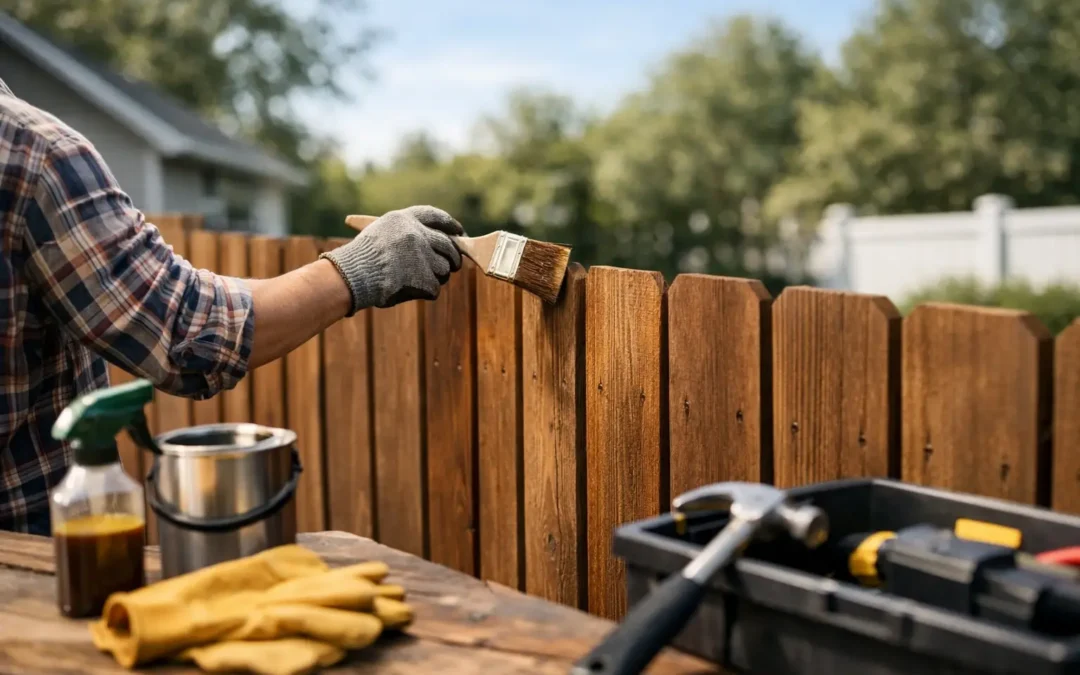
Annual service is also the right time to consider protective finishes. Wood fences may need staining or sealing based on the product used, the amount of sun exposure, and how well the surface is shedding water. Metal fences may need small areas of rust treatment and touch-up coating. The exact timing varies, so use the fence’s condition rather than a calendar alone to make the call.
Material-Specific Maintenance Needs
Wood fencing
Wood offers natural privacy and a classic look, but it requires the most active maintenance. Inspect wood fencing every season for cracked pickets, warped boards, loose nails or screws, rot near ground level, and dark areas that stay damp. Pay special attention to posts, since a failing post can affect several panels at once.
Stain and seal schedules vary. A fence exposed to direct sun and weather may need attention sooner than a protected fence under trees or eaves. A useful test is to sprinkle water on a clean section of wood. If the water beads, the finish is still doing its job. If it soaks in quickly, it may be time to clean and reapply protection.
Do not let mulch, soil, or stacked materials rest against the fence. Keeping the bottom of the boards clear helps reduce moisture exposure and makes early rot easier to spot.
Vinyl fencing
Vinyl is low maintenance, not no maintenance. It does not need staining, but it benefits from regular washing to remove dirt, pollen, mildew, and lawn-treatment residue. Check for cracked panels, loose caps, shifting posts, and gate hardware that needs adjustment.
Avoid using harsh abrasives or solvents that can dull the surface. Also be careful when trimming near vinyl. A string trimmer can leave permanent marks along the bottom edge, and impact from mowers or equipment can crack a panel even when the fence appears sturdy.
Chain link fencing
Chain link is valued for visibility, affordability, and dependable perimeter security. During seasonal inspections, look for bent fabric, loose ties, damaged tension bars, sagging top rails, and posts that have moved. Check the bottom edge for gaps caused by erosion, digging animals, or impact.
Rust is the main concern on older chain link systems, especially where coatings are scratched or water collects. Small corrosion spots are easier to manage than advanced rust that weakens the wire or post. Gates deserve special attention because worn hinges, rollers, and latches can affect daily use quickly.
Iron and ornamental metal fencing
Iron and ornamental metal fencing provides security with a more finished architectural look, but its protective coating must stay intact. Inspect it at least twice a year for scratches, bubbling paint, chipped areas, and rust, especially around welds, fasteners, and the base of posts.
Clean away dirt and organic debris, then address damaged finish promptly. Waiting allows moisture to work beneath the coating, where corrosion can spread farther than the visible spot suggests. If a section is bent or a weld is cracked, professional repair is usually the safer choice for both appearance and structural strength.
Do Not Put Off These Warning Signs
Some issues should move directly from your inspection list to a repair request. A fence that leans noticeably, a post that moves in the ground, a gate that will not latch, or metal with spreading rust can compromise security and cause adjacent sections to fail. The same is true for extensive wood rot, broken rails, damaged access-control components, or repeated standing water near the fence line.
Property managers and business owners should respond quickly when a damaged fence creates an access gap or safety concern. Temporary fencing may be appropriate during construction, repairs, or site changes when a perimeter cannot be left unsecured.
When Professional Maintenance Makes Sense
Homeowners can handle basic cleaning, vegetation control, and visual inspections. But post replacement, gate rebuilding, structural realignment, welding, major staining projects, and access-control repairs call for the right tools and experience. An incorrect repair can shift stress to another part of the fence and make a small issue more expensive.
Modern Fence Company has served local property owners since 1950, and our team understands how regional weather, terrain, drainage, and daily use affect fence performance. A professional assessment can identify whether a fence needs a minor adjustment, targeted repair, protective service, or replacement planning.
A maintenance schedule works best when it becomes part of normal property care, not an emergency response. Give your fence a quick look each month, a closer inspection each season, and professional attention when the warning signs appear. That steady approach protects the investment, appearance, and security your fence was built to provide.
Helpful information. Thank you