
A commercial fence company near me is the local contractor you need when your business property requires secure, code-compliant perimeter fencing built to last. Unlike residential fence installers, commercial fencing contractors specialize in heavier materials, stricter permitting requirements, and more complex site coordination. Property owners across Arkansas face specific challenges: zoning regulations, easement reviews, and the need for fencing that holds up against heavy use and weather. Choosing the right local commercial fence contractor means getting a partner who understands your site, your timeline, and the regulations that govern your project.
What commercial fence company near me options exist for Arkansas properties?
Commercial fencing is a broad category. The right material depends on your security needs, budget, and property type.
Chain link fencing is the most affordable commercial solution. It comes in heights from 3 to 20 feet, with heavy-gauge pipe options suited for high-security sites like solar farms, storage facilities, and utility yards. The trade-off is aesthetics. Chain link is functional and durable, but it does not project the professional image that some commercial properties require.
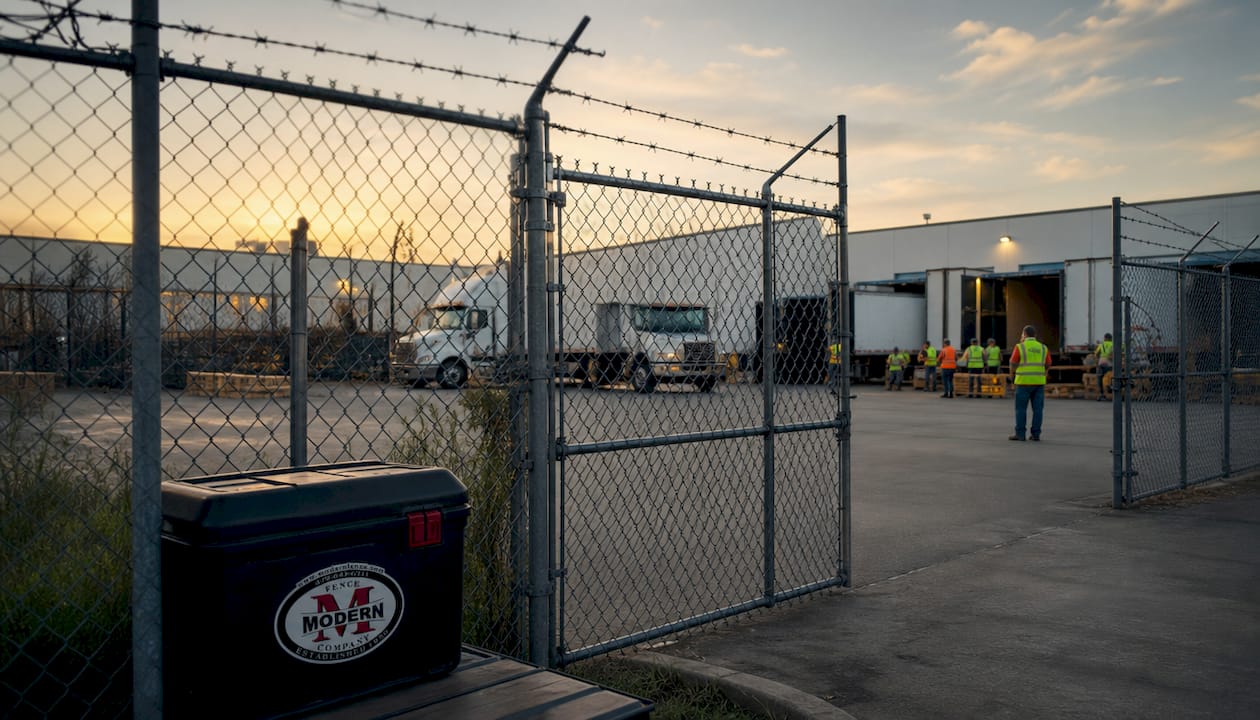
Ornamental iron and steel fencing sits at the other end of the spectrum. It delivers strong perimeter security with a polished appearance, making it a common choice for office parks, medical campuses, and government buildings. Iron fence installation costs more upfront, but the long service life and low maintenance needs make it a sound investment for properties where appearance matters.
Vinyl and wood fencing serve commercial properties where privacy is the primary goal. Vinyl resists rot and requires almost no maintenance. Wood offers a natural look but needs regular staining or sealing to hold up in Arkansas’s humid summers and cold winters.
Here is a quick comparison of the most common commercial fence types:
| Fence type | Security level | Durability | Maintenance | Typical use |
|---|---|---|---|---|
| Chain link | Medium to high | High | Low | Warehouses, storage, utilities |
| Ornamental iron | High | Very high | Low | Office parks, medical, government |
| Vinyl | Low to medium | High | Very low | Privacy screening, retail |
| Wood | Low to medium | Medium | High | Privacy, aesthetic applications |
| Specialty metal | Very high | Very high | Low | Industrial, high-security sites |
Most commercial projects also require gates and access control. Sliding gates, swing gates, and automated entry systems are standard additions for properties that need to manage vehicle and foot traffic. Modernfence installs access control systems alongside fencing to give property owners a complete perimeter solution.
How does the permitting process work for commercial fence installation?
Permitting is the part of commercial fence projects that surprises most property owners. Local jurisdictions require zoning permits for commercial fence installations. In Raleigh, NC, for example, permit fees are fixed at $264 with typical processing times of one to two weeks. Arkansas municipalities follow similar structures, though fees and timelines vary by city and county.
The permitting process generally follows these steps:
- Site assessment. Your contractor surveys the property, identifies easements, and notes any environmental constraints near the fence line.
- Permit drawings. Contractors prepare permit drawings before work begins. These drawings show fence placement, height, materials, and gate locations.
- Submission and review. The permit application goes to the local planning or zoning office. Standard reviews take one to two weeks.
- Engineering review. Projects near protected environmental features, wetlands, or utility easements may require an additional engineering review. This step can extend processing time beyond the standard window.
- Approval and inspection. Once approved, installation begins. A final inspection confirms the fence meets code requirements.
Delays at any step push your project back. The most common cause of delay is incomplete permit drawings submitted by contractors who lack experience with commercial projects.
Pro Tip: Engage your commercial fence contractor before you finalize your project timeline. A contractor who handles permit drawings in-house can give you a realistic schedule that accounts for local review periods, not just installation days.
What qualities should you look for in a local commercial fence contractor?
The difference between a smooth commercial fence project and a costly one often comes down to contractor selection. Not every fence installer has the experience to handle commercial work.
Strong commercial fence contractors share these qualities:
- Submittal process experience. Experienced commercial contractors understand how to coordinate with general contractors and developers from planning through final inspection. This matters on construction sites where your fence is one of many moving parts.
- Rapid communication. Top commercial fencing contractors respond to inquiries within one hour during business hours. Slow communication on a commercial project creates scheduling gaps that cost money.
- In-house fabrication. Contractors with in-house fabrication shops for custom gates and ornamental metalwork avoid delays caused by outsourcing. When a gate needs modification, an in-house shop turns it around in hours, not days.
- Licensed and insured status. Commercial properties carry liability exposure. Your contractor must carry current licensing and adequate insurance coverage before setting a single post.
- References from similar projects. Ask for references from commercial clients, not just residential ones. A contractor who has fenced warehouses, medical facilities, or industrial sites understands the demands of your project.
Modernfence brings over 70 years of operating history to commercial projects across Western Arkansas and Eastern Oklahoma. The company handles everything from permit coordination to custom metal fabrication in-house, which keeps projects on schedule.
Pro Tip: Ask your contractor directly: “How do you handle scope changes mid-project?” A contractor who has a clear answer has managed real commercial projects. One who hesitates probably has not.
Choosing the right contractor also means discussing site conditions early. Property managers who address general contractor workflows and submittal timelines at the start of a project keep their schedules realistic and avoid expensive surprises.
How does commercial fencing improve property security and reduce risk?
Commercial fencing is a fundamental layer of security and risk management, not just a boundary marker. The right fence controls who enters your property, reduces liability exposure, and protects physical assets from theft and vandalism.
“Professional commercial fencing is recognized as a fundamental component of comprehensive risk management, extending beyond physical boundaries to liability and asset protection. Environments like medical facilities, warehouses, and industrial sites benefit most from professional-grade perimeter fencing because the cost of a security breach far exceeds the cost of proper installation.”
Source: Perimeter Solutions Group
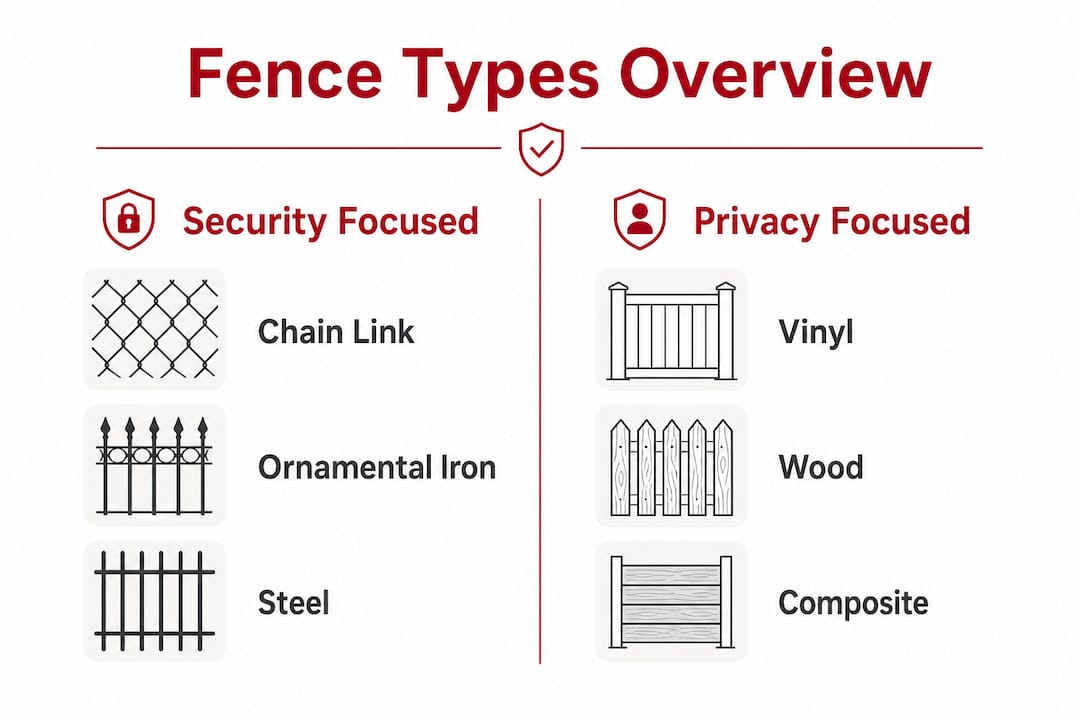
Medical campuses use perimeter fencing to control access to sensitive areas and meet compliance requirements. Warehouses use heavy-gauge chain link with barbed wire toppers to deter theft. Industrial sites use specialty metal fencing to keep unauthorized personnel away from hazardous equipment. Each of these environments has specific security requirements that a qualified commercial fence contractor must understand before recommending a solution.
Durability and safety outweigh initial savings in every commercial fencing decision. Frequent repairs and mid-project disruptions cost more over time than professional-grade materials installed correctly the first time. A fence that fails after three years forces you to budget for replacement, lost productivity during installation, and potential liability if the failure contributed to a security incident.
The best property security fence options balance upfront cost against expected service life. For most Arkansas commercial properties, ornamental iron or heavy-gauge chain link with access control delivers the strongest long-term value. Pairing fencing with automated gate systems and access control creates a layered security approach that passive fencing alone cannot provide.
For commercial properties that also need to manage temporary site access, such as during construction phases, temporary construction fence rental fills the gap without committing to permanent installation before the site is ready.
Coordinating with commercial property maintenance partners also strengthens your overall site management. For properties that include commercial garage access points, working with specialists in commercial door and access systems alongside your fence contractor creates a more complete perimeter plan.
Key Takeaways
Choosing the right local commercial fence contractor requires matching materials, permitting knowledge, and contractor capabilities to your specific property and security needs.
| Point | Details |
|---|---|
| Match material to security need | Chain link suits high-volume sites; ornamental iron fits properties where appearance and security both matter. |
| Plan for permitting early | Permit processing typically takes one to two weeks, longer near environmental features. |
| Verify in-house fabrication | Contractors with in-house shops avoid outsourcing delays that push project timelines back. |
| Prioritize durability over low cost | Professional-grade materials cost more upfront but reduce repair expenses and liability over time. |
| Confirm licensing and references | Always request proof of insurance and references from comparable commercial projects before signing. |
What I have learned from watching commercial fence projects go wrong
After years of observing commercial fence projects across Arkansas and the surrounding region, the pattern is consistent. The projects that go sideways share one root cause: the property owner chose the lowest bid without asking the right questions.
The lowest bid almost always means one of three things. The contractor is cutting corners on material gauge. They are not pulling permits. Or they are planning to outsource fabrication and hoping the timeline holds. None of those gambles pay off on a commercial property.
Local knowledge matters more than most property owners realize. A contractor who has worked in Fort Smith, Van Buren, or the surrounding Western Arkansas area knows which municipal offices move quickly and which ones need extra lead time. They know which soil conditions require deeper post setting. They know the local inspectors and what those inspectors look for. That knowledge is worth more than a $500 discount on the bid.
The other mistake I see repeatedly is treating the fence as the last item on the project checklist. Commercial fencing should be planned alongside your site layout, not after everything else is finalized. When the fence comes last, it inherits every delay from every other trade, and the property owner ends up with an unfinished perimeter right when they need it most.
Invest in quality materials. Hire a contractor who communicates clearly and pulls permits properly. Get a detailed written quote that specifies materials, heights, gauge, and gate hardware. Those steps cost you nothing extra and protect you from the problems that derail most commercial fence projects.
— mark
Modernfence serves Arkansas commercial properties with full-service fencing
Modernfence has served commercial property owners across Western Arkansas and Eastern Oklahoma for over 70 years. The company handles the full scope of commercial fence projects, from initial site assessment and permit coordination through installation and access control integration.
Whether your property needs heavy-gauge chain link for an industrial yard, ornamental iron for a professional campus, or a complete commercial fencing solution with automated gate access, Modernfence delivers licensed, insured installation backed by decades of local experience. The team provides free on-site assessments and detailed written quotes so you know exactly what you are getting before work begins. Call Modernfence today for your free estimate and get a clear plan for your commercial perimeter.
FAQ
What is a commercial fence company?
A commercial fence company is a licensed contractor that specializes in fencing for business, industrial, and institutional properties, using heavier materials and more complex installation methods than residential fence installers.
Do commercial fence installations require permits in Arkansas?
Most Arkansas municipalities require zoning permits for commercial fence installations. Permit timelines typically run one to two weeks, with additional time required for projects near environmental features or easements.
What fence material is best for commercial security?
Heavy-gauge chain link and ornamental iron are the strongest choices for commercial security. Chain link suits high-volume industrial sites, while ornamental iron works well for properties where appearance and access control both matter.
How do I evaluate a commercial fence contractor near me?
Ask about their experience with permit drawings, in-house fabrication capabilities, response time, and references from similar commercial projects. Licensed and insured status is non-negotiable for commercial work.
How long does a commercial fence installation take?
Timeline depends on project size, permitting, and site conditions. Most standard commercial installations complete within one to three weeks after permit approval, though complex sites with engineering reviews take longer.