
Yes, your HOA can set enforceable fence rules through its CC&Rs, and most communities require written architectural committee approval before you touch a post hole. Municipal safety codes, like pool barrier laws, sit above HOA aesthetics when the two conflict. Before you order a single panel, pull your CC&Rs, find your ARC guidelines, and start your application.
TL;DR:
- HOA fence height limits vary by yard location, with front yards typically capped around 4 feet and rears allowed higher for privacy.
- Municipal codes, such as pool safety regulations, take precedence over HOA aesthetic rules when conflicts arise.
- Approval from the architectural review board is usually required before ordering materials or starting construction, with timelines ranging from 2 to 60 days.
- A fence permit from local authorities is separate from HOA approval and is mandatory if the fence exceeds certain height thresholds or involves special features.
- Proper documentation, including written approval, detailed plans, and photos, is essential to avoid violations and defend against enforcement actions.
Table of Contents
- What Are Common HOA Fence Rules Homeowners Should Know?
- Who Actually Controls Your Fence: HOA, City, or State?
- How Does the ARC Approval Process Work?
- When Do You Need a Building Permit for a Fence?
- What Happens If You Violate HOA Fence Rules?
- Which Materials and Designs Get Approved Fastest?
- Step-by-Step: How to Get Your Fence Approved Without a Fight
- What a Professional Fence Contractor Brings to an HOA Project
- Where to Verify Your HOA’s Fence Rules
- Ready to Build a Fence Your HOA Will Approve?
- The Real Compliance Gap Most Guides Miss
- Sources
What Are Common HOA Fence Rules Homeowners Should Know?
Every HOA writes its fence rules a little differently, but the categories rarely change. If you know what to look for in your CC&Rs and architectural guidelines, you can tell within a few minutes whether your plan is likely to sail through or get sent back with a red pen.
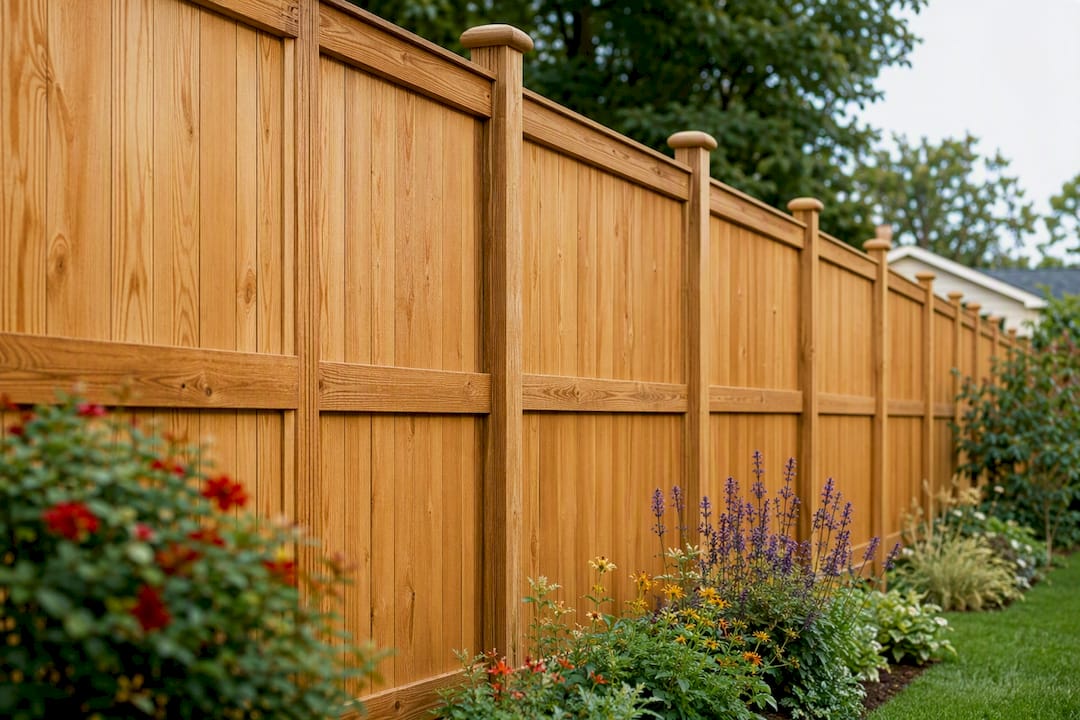
Height limits top the list, and they almost always vary by yard location. A front yard often has a height cap to keep sightlines open from the street, while a backyard fence is usually allowed higher for privacy. Such limits commonly appear in ordinances nationwide and are often reflected in HOA standards, according to residential fencing standards research from National Fence Authority.
Beyond height, expect rules covering:
- Materials: chain link and barbed wire are commonly banned outright in HOA communities, especially in front-facing areas.
- Color and finish: many CC&Rs specify approved stain tones or require vinyl in a limited color palette.
- “Good side out”: the finished, framed side of the fence must face the neighbor or street, not your yard.
- Setbacks: fences typically can’t sit directly on the property line and may need to stay a set distance back, which matters for surveys and shared boundaries.
- Pool safety exceptions: if you’re enclosing a pool, code-mandated height, gate, and latch requirements apply regardless of what the CC&Rs say about aesthetics.
That last point trips up more homeowners than any other rule on this list. Your HOA cannot deny you a compliant pool safety fence just because it exceeds the community’s usual height cap. Understanding privacy fence height standards before you draw up plans saves you from designing something that looks great on paper but fails the first rule check.
Who Actually Controls Your Fence: HOA, City, or State?
Three layers of authority govern what goes up in your yard, and knowing which one wins in a dispute saves you real money. CC&Rs (Covenants, Conditions, and Restrictions) are the recorded legal document tied to your deed. Bylaws govern how the HOA itself operates. Board-adopted rules sit below both and can be changed more easily, which also makes them easier to challenge if they weren’t adopted through proper notice and voting procedures.
Municipal zoning and building codes, often built on the International Building Code, form the safety floor underneath all of it. Local ordinances commonly cap front-yard fences around 4 feet and rear-yard fences around 6 feet, and these thresholds function as a baseline that HOAs typically fall in line with rather than override, per National Fence Authority’s fencing standards analysis.
When municipal rules win: Pool barrier codes, ADA and Fair Housing accommodation requests, and fire-code clearance requirements all take priority over HOA aesthetic preferences. An HOA cannot legally fine you for building a pool fence that meets code even if it’s taller than the community maximum, according to FixMyHOA’s analysis of fence height enforcement.
If a board rule conflicts with the recorded CC&Rs, or the board skipped required notice and voting steps when adopting it, the rule may not be enforceable at all. Your first move in that situation is requesting the board’s meeting minutes and adoption records in writing, not simply refusing to comply.
- CC&Rs (recorded, hardest to change) outrank board rules
- Municipal and state safety code outranks HOA aesthetics
- Procedural defects in rule adoption can void a board rule entirely
How Does the ARC Approval Process Work?
Nearly every HOA requires sign off from an architectural review board, sometimes called an ACC or ARC, before you touch the yard, and understanding the Metal Roof HOA Approval Process: A Homeowner’s Playbook can help you navigate committee expectations. Skipping this step is the single most common reason fences get flagged for removal, and unapproved construction can trigger fines, a lien on your property, or a forced teardown, according to Bluefield Group’s breakdown of how architectural review boards function.
A complete application package typically includes:
- A current parcel survey showing property lines
- A site drawing with fence placement and dimensions
- An elevation sketch showing height and style
- Material and color samples, or product spec sheets
- Photos of existing conditions where the fence will go
- Neighbor signatures or notifications, if your CC&Rs require them
Committees typically respond with one of three outcomes: full approval, denial with reasons, or conditional approval. Conditional approval is the trap most homeowners miss. If the ARC approves your plan contingent on a specific stain color or a staining deadline within 90 days, that condition becomes binding. Treat the approval letter like a technical spec, not a suggestion, according to guidance from FS Residential on Texas HOA fence procedures.
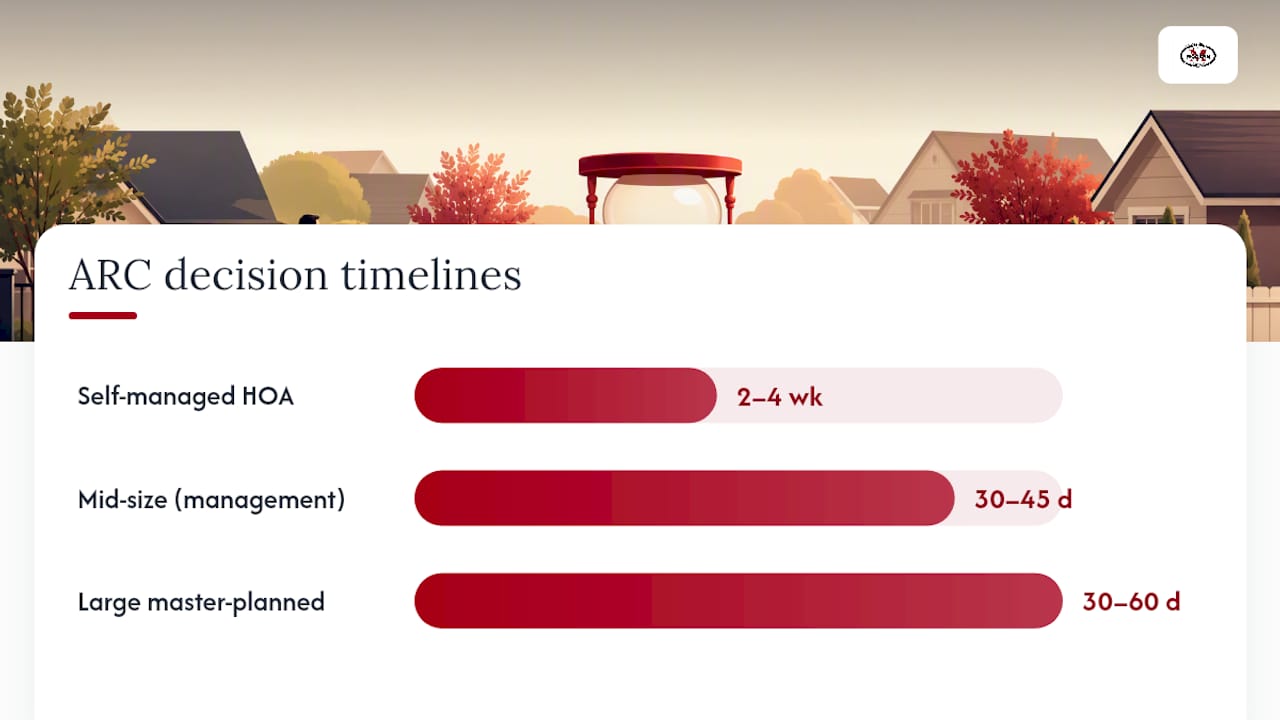
Timelines vary by how your HOA is structured. Self-managed associations with a small volunteer board might turn around a decision in two to four weeks. Mid-size communities with a management company often take 30 to 45 days. Large master-planned communities with layered committees can run 30 to 60 days, according to FenceCalc’s HOA fence approval guide.
Pro Tip: Never let a contractor order materials or schedule a crew until you have the approval letter in hand. A verbal “it looks fine” from a board member isn’t approval, and it won’t protect you if the fence gets flagged later.
When Do You Need a Building Permit for a Fence?
HOA approval and a municipal permit are two separate hurdles, and clearing one doesn’t clear the other. Permits typically get triggered by fence height past a local threshold, pool enclosures, or any gate with an electrified or automated locking mechanism.
Call your local building or planning department before you finalize a design; a five-minute phone call can tell you whether your project needs a permit, what the height threshold is in your jurisdiction, and whether pool code applies. Don’t rely on your neighbor’s fence as your legal reference point, since older installations may predate current code.
The smart order of operations looks like this:
- Confirm permit requirements with the building department first
- Submit your ARC application in parallel, referencing the same plans
- Wait for both written ARC approval and permit issuance before hiring a crew
- Keep copies of both approvals on file for the life of the fence
Occasionally you’ll hit a gap where the city allows a fence style or height that your CC&Rs restrict further. In that case, the stricter rule controls your project, because CC&Rs are a private contractual obligation layered on top of, not replacing, public code. Reviewing a residential fence permit guide before you submit anything helps you sequence the paperwork correctly instead of discovering the conflict mid-project.
What Happens If You Violate HOA Fence Rules?
Enforcement almost always follows a predictable sequence: a written violation notice first, then daily fines if the issue isn’t resolved, then a lien recorded against the property, and in unresolved cases, forced removal or litigation. Daily fines can accumulate quickly, and depending on state law and governing documents, an HOA may have authority to seek foreclosure for unpaid fines in some situations, according to LegalClarity’s analysis of HOA fence enforcement.
You’re not without options if a notice lands in your mailbox. Several defenses hold up regularly:
- Municipal code compliance: if your fence meets a mandatory safety requirement, like pool enclosure code, the HOA generally cannot fine you for exceeding its aesthetic limit.
- Procedural defects: if the rule wasn’t adopted with proper notice and board vote, it may not be enforceable.
- Selective enforcement: if neighbors have similar or identical fences that were never flagged, document it. Photos and addresses matter here.
- Reasonable accommodation: under the Fair Housing Act, homeowners with a disability-related need may be entitled to an exception to standard fence rules.
The best outcomes come from documenting everything early. Photograph the fence from multiple angles, keep your original approval letter if you have one, and gather evidence of comparable fences elsewhere in the neighborhood. Respond to the notice in writing within whatever window it specifies, and request mediation or a formal appeal hearing before the situation escalates to legal action.
Pro Tip: Save every email and letter exchanged with the board from day one, even the casual ones. A single email where a board member said “looks good” can become your strongest evidence in an appeal.
If your project involves a shared boundary, understanding good neighbor fence responsibilities ahead of time helps you avoid a dispute with both your neighbor and the HOA at once.
Which Materials and Designs Get Approved Fastest?
Wood remains the most commonly approved material because it’s familiar to most ARCs and easy to stain to match community palettes, though it demands the most ongoing upkeep. Vinyl offers a cleaner, low-maintenance alternative and tends to satisfy “good side out” and color uniformity rules without much back and forth. Aluminum and ornamental iron work well for HOAs that want an open, decorative look rather than solid privacy, and their narrow profiles often clear height rules more easily than solid panel designs.
Color and finish decisions matter more than most homeowners assume. A stain sample or a manufacturer’s color code attached to your application gives the committee something concrete to approve, rather than a vague description they have to interpret. Submitting the actual product spec sheet, including any warranty documentation, speeds up review because it answers durability questions before anyone asks them.
- Wood: high approval familiarity, requires periodic staining
- Vinyl: consistent color compliance, minimal upkeep
- Aluminum or iron: strong for open-style designs, narrower profile often clears height limits easily
Most CC&Rs also spell out maintenance obligations that follow you long after installation. Restaining on a set schedule, repairing damage within a defined window, and keeping the fence free of rot or rust are typical requirements. Photograph your fence annually and keep fence maintenance records so you have proof of compliance if a board ever questions upkeep.
Step-by-Step: How to Get Your Fence Approved Without a Fight
- Pull your CC&Rs and ARC guidelines, and order a current parcel survey before you sketch anything.
- Draft your site plan with dimensions, material specs, and color samples attached.
- Submit the complete application package to the ARC and save every piece of correspondence.
- Call the local building department to confirm whether a permit is required, and apply if it is.
- Wait for written ARC approval and permit issuance before scheduling a contractor or ordering materials.
- Photograph the work as it progresses, and submit final completion photos to the HOA once installed.
Following this order isn’t just about avoiding a fine. It protects you from the far more expensive scenario of paying for materials and labor on a fence you’re later ordered to tear down. A contractor checklist built around ARC and permit coordination can help you and your installer stay synced at every step.
What a Professional Fence Contractor Brings to an HOA Project
Modernfence has spent more than 70 years installing fences across Western Arkansas and Eastern Oklahoma, and that history includes plenty of ARC applications that went smoothly and a few that didn’t. Licensed and insured on every job, the company handles wood, vinyl, chain link, and iron installations along with access control systems, fence staining and cleaning, rental fences, and custom metal fabrication for homeowners who need something ARC guidelines don’t stock off the shelf.
The practical difference a contractor makes shows up before the first post ever goes in the ground. Modernfence builds contracts around a written-approval clause, meaning materials aren’t ordered and crews aren’t scheduled until the homeowner has ARC approval and any required permit in hand. That single habit prevents the worst-case scenario: paying for a fence, then paying again to remove it.
During construction, documenting the build with dated photos gives homeowners a paper trail if the HOA ever questions whether the finished product matches the approved plan. That kind of practice, paired with clear material spec sheets handed straight to the committee, tends to shorten the back-and-forth that stalls so many applications, according to insight from Modern Fence Company’s resources.
Homeowners facing a denial or a tight setback also benefit from a contractor who has requested variances before and knows what documentation actually moves a board.
Where to Verify Your HOA’s Fence Rules
Start with your own governing documents, but don’t stop there. The Community Associations Institute publishes practical resources boards use to draft clear ARC procedures, and it’s a solid reference if you’re a board member trying to tighten up vague language in your own guidelines. Municipal planning departments, like Richmond’s architectural review process, also show what a well-run local review process looks like end to end.
For the contractor side of the equation, Modernfence’s permit coordination guide and privacy fence height guide walk through the paperwork most homeowners need. When in doubt, a phone call to your local building department or HOA management company still gets you the fastest, most authoritative answer.
Ready to Build a Fence Your HOA Will Approve?
If you’re staring at a stack of CC&R pages trying to figure out whether your fence idea will survive committee review, don’t guess. Modernfence works with homeowners across Western Arkansas and Eastern Oklahoma to design fences that meet HOA height, material, and setback requirements from the first sketch, not after a denial letter shows up.
The company’s fence installation guide walks through what a compliant, lasting install actually requires, and its team can help you prepare the material specs and drawings your ARC will want to see. Whether you’re picking up a wood fence installation project or need something more architectural, getting a licensed, insured contractor involved before you submit your application often means the difference between a fast approval and a frustrating resubmission.
Call Modernfence for your FREE estimate, and let a team with more than 70 years of regional experience help you get it right the first time.
The Real Compliance Gap Most Guides Miss
Most advice on HOA fence rules focuses entirely on what the rules say. That’s the easy half. The harder half, and the one that actually determines whether your fence stays standing, is procedure: was the rule adopted correctly, did the board follow its own bylaws, and did you get written approval before a single post went in?
I’d argue the biggest mistake homeowners make isn’t picking the wrong height or the wrong color. It’s assuming a verbal nod from a board member counts as approval, or assuming their neighbor’s identical fence means the rule doesn’t apply to them. Neither assumption holds up once a violation notice arrives.
Boards, for their part, often lean too hard on aesthetic preference and too little on documentation. A rule that isn’t written down clearly, or wasn’t adopted through proper notice, is a rule that collapses the moment a homeowner pushes back with a records request.
If you take one thing from this guide, make it this: paperwork beats intention every time. Get the approval in writing, build exactly to spec, and keep photographic proof. Everything else is negotiable.
— mark
Sources
- How architectural review boards (ARBs) work in HOAs — Bluefield Group
- Residential fencing standards: HOA, local codes, and best practices — National Fence Authority