
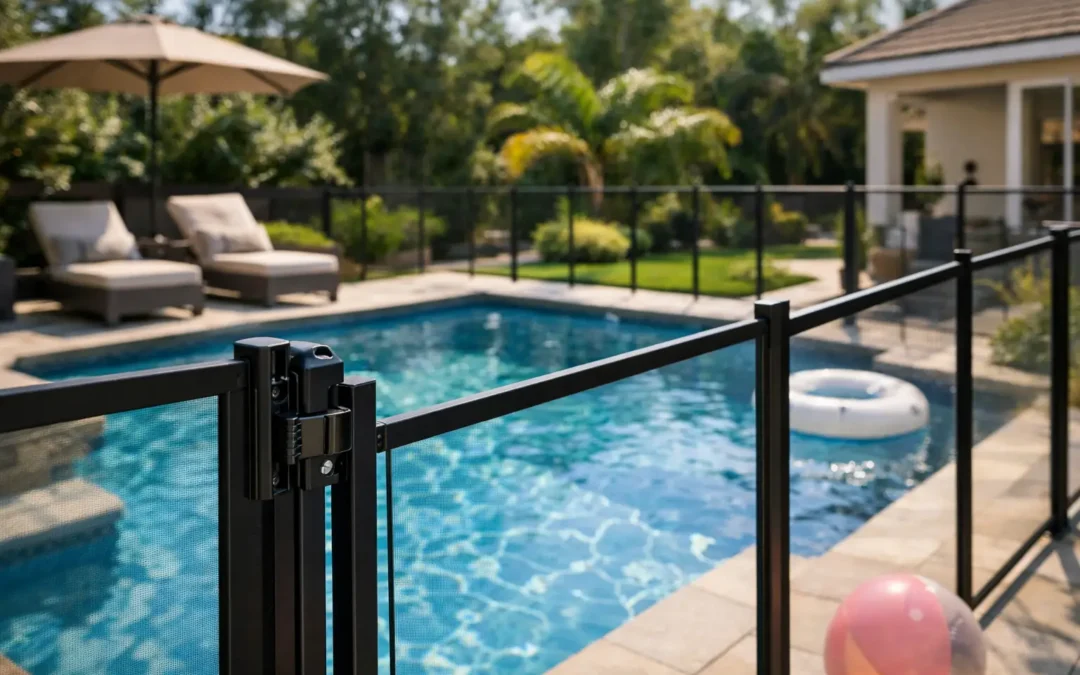
A pool can be the center of family time, summer gatherings, and quiet evenings at home. It can also become dangerous in seconds when a young child, pet, or visiting guest reaches the water without an adult present. A properly planned barrier is one of the most effective layers of protection, which is why understanding pool fence safety requirements should happen before selecting materials or scheduling installation.
A fence around a pool does more than mark a property line. It creates a controlled boundary between the water and the rest of the yard. The right design must be difficult for children to climb, difficult for them to open, and simple for responsible adults to use every day.
Pool Fence Safety Requirements: The Core Principles
Local building codes, state rules, homeowner association standards, and insurance requirements can all affect a pool enclosure. Requirements are not identical from one jurisdiction to another, so there is no single measurement or product that automatically works everywhere. Homeowners in Western Arkansas and Eastern Oklahoma should confirm the standards enforced by their city or county before installation begins.
That said, most pool-barrier rules are built around the same practical principles: adequate height, limited openings, self-closing and self-latching gates, and a layout that reduces climbable access. A professional installer can help translate those principles into a fence plan that fits the property, terrain, pool type, and local code.
Fence height and clear space below
Many jurisdictions use a minimum barrier height of 48 inches, measured from the side away from the pool. This is a common benchmark, not a substitute for checking local requirements. Some projects may need a taller fence because of a municipal rule, an elevated grade, a commercial setting, or a property owner’s preference.
Height alone is not enough. The space between the bottom of the fence and the ground matters just as much. A gap that seems harmless can give a small child or pet a path underneath the barrier, especially where soil settles or a sloped yard creates uneven clearance. Installation should follow the grade closely and account for drainage without leaving oversized openings.
Openings, pickets, and mesh
Pool fencing should prevent a small child from squeezing through, not merely discourage entry. Many code standards limit openings so that a 4-inch sphere cannot pass through. This can affect the spacing between pickets, rails, decorative metalwork, chain link mesh, and gaps around gates.
The material should also suit the barrier’s purpose. Ornamental iron and aluminum-style fencing can offer a clean appearance with tightly controlled picket spacing. Vinyl fencing can provide privacy, though its horizontal rail layout must be considered carefully. Chain link can be a practical choice for certain properties, but mesh size, tension, gates, and climb resistance deserve close attention. Glass, cable, and custom designs may look appealing, but they need equally careful planning around openings and climbability.
A Gate Is the Most Important Moving Part
A strong fence can still fail as a safety barrier if the gate is easy to leave open or easy for a child to operate. Pool gates are generally expected to be self-closing and self-latching. When someone releases the gate, it should return to a closed position and latch without requiring a second thought.
The release mechanism is often placed high enough that a young child cannot reach it from outside the enclosure. Depending on the gate configuration and local rules, latch placement, shielding, and the direction the gate swings may all be regulated. In many cases, gates should swing away from the pool so that pushing through the gate moves a person away from the water rather than toward it.
Test the gate after installation and throughout the year. It should close from a partially open position, latch securely, and avoid dragging on the ground. A gate that sticks after rain, shifts after a freeze, or no longer catches because of settling needs prompt adjustment. Pool safety depends on daily reliability, not how the gate performed on installation day.
Design Against Climbing, Not Just Entry
Children are resourceful climbers. Chairs, planters, firewood racks, patio tables, grills, outdoor toys, and even nearby trees can turn an otherwise compliant fence into an accessible route. Keep movable objects away from the outside of the pool barrier, and look up as well as down when assessing the enclosure.
Horizontal rails can create footholds when they are positioned on the outside of a fence. Some fence designs address this by placing rails on the pool side, using a smooth exterior surface, or choosing vertical pickets that offer fewer climbing opportunities. The best solution depends on the selected material and the applicable code, but the goal remains the same: make the exterior face of the barrier difficult to scale.
Landscaping needs attention too. A mature shrub may be attractive against a fence line, yet it can hide a damaged section, interfere with a self-closing gate, or provide leverage for climbing. Leave enough working space to inspect and maintain the fence, particularly around corners, gate posts, and latches.
The House Can Be Part of the Barrier, With Added Protection
Some pool layouts use the home itself as one side of the enclosure. This approach can reduce fencing footage, but it changes the safety conversation. Doors and windows that lead directly from the house to the pool area may require alarms, self-closing hardware, safety glazing, or other protections under local regulations.
Even where an alarm is not required, it is a sensible added layer. Door alarms, pool alarms, safety covers, and adult supervision all serve different purposes. None replaces a compliant fence, and a fence does not replace attentive supervision. Effective pool safety relies on overlapping safeguards because no single measure can prevent every incident.
For families with small children, a separate interior barrier around the pool is often safer than relying only on a backyard perimeter fence. It creates separation between the water and the house, driveway, play area, and neighboring yards. This can be particularly valuable when several adults, guests, or service providers may be moving through the property.
Inspection and Maintenance Keep the Barrier Working
Weather, ground movement, lawn equipment, and ordinary use can compromise a fence over time. A seasonal inspection is a practical habit, along with a quick check before pool season and after severe storms. Look for loose posts, rusted hardware, cracked vinyl, damaged mesh, leaning panels, sharp edges, and changes in ground clearance.
Pay close attention to the gate. Verify that hinges are secure, the closer has enough tension, the latch engages every time, and the key or release mechanism is controlled appropriately. If a gate needs to be propped open for maintenance, deliveries, or a gathering, close and secure it as soon as the task is finished.
Property managers and commercial pool operators should establish a documented inspection routine. Higher traffic, multiple access points, and changing staff make consistent checks especially important. Clear rules for keys, codes, access cards, and after-hours entry help prevent the enclosure from becoming an open perimeter.
Plan the Fence Before the Pool Is Finished
Fence planning is easier when it happens alongside pool construction rather than after the deck, drainage, landscaping, and utility work are complete. Early planning helps avoid conflicts with equipment pads, retaining walls, septic components, easements, irrigation lines, and required access routes.
It also allows the enclosure to look intentional. A pool fence should support the property’s appearance while doing its safety job without compromise. The right material, color, post placement, and gate location can complement the home and simplify movement around the patio.
Modern Fence Company has served property owners since 1950 and understands that a pool barrier must be built for real use, not just a quick inspection. A careful site evaluation can identify grade changes, access needs, gate locations, and material choices before they become expensive corrections.
Before anyone uses the pool, walk the entire enclosure from the perspective of a curious child. Check every opening, every latch, every nearby climbing aid, and every place the ground meets the fence. That small, repeatable habit is one more practical way to keep the backyard ready for the people who enjoy it most.