A fence has to do more than mark a boundary. It may need to protect equipment behind a business, keep pets safely in the yard, control who enters a property, or improve the first impression of a home. In a chain link vs iron decision, the better choice comes down to what the fence must accomplish every day – not simply which material looks better in a photo.
Chain link and iron fences are both proven options for Arkansas and Oklahoma properties, but they serve different priorities. Chain link is practical, adaptable, and cost-conscious. Iron delivers a more refined appearance with a strong, open perimeter. Understanding the trade-offs before installation helps you invest in a fence that works for the long haul.
Chain Link vs Iron: The Main Difference
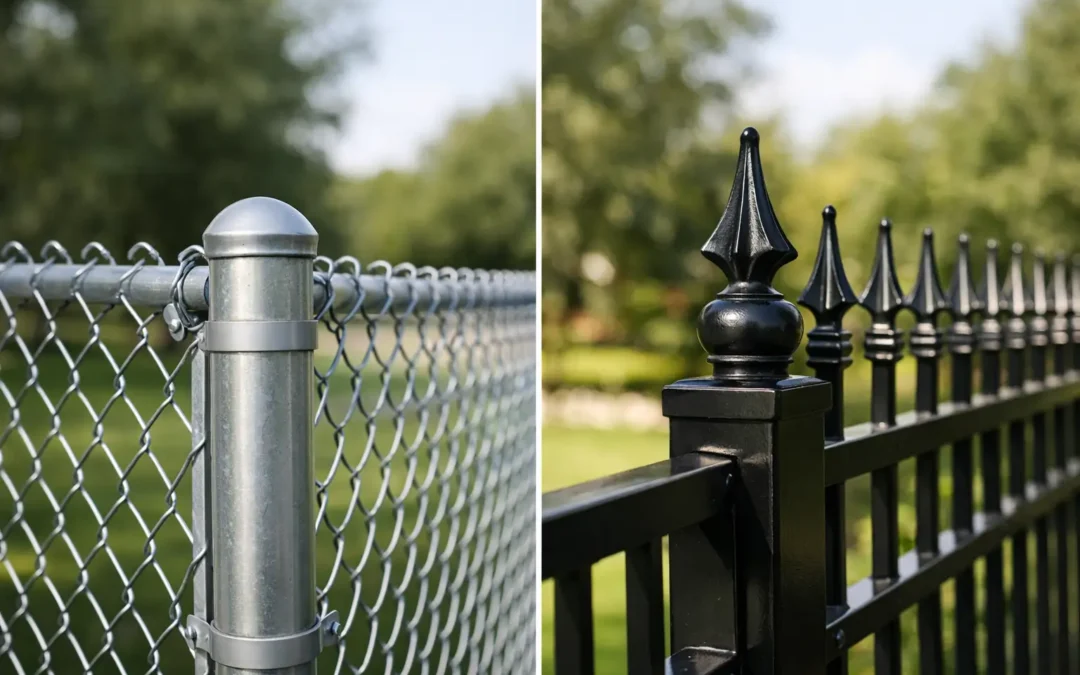
Chain link fencing is made from woven steel wire, usually protected with a galvanized or vinyl coating. Its diamond-shaped mesh creates a durable barrier while preserving visibility across the property line. It is a familiar choice for backyards, playgrounds, storage areas, commercial lots, and temporary jobsite enclosures.
Iron fencing refers to a picket-style fence with horizontal rails and vertical uprights. While traditional wrought iron exists, many modern iron-style fences are fabricated from steel and finished with protective coatings. The result is a clean, architectural look that suits front yards, pools, entryways, multifamily properties, and commercial buildings where appearance matters alongside security.
Neither option creates full privacy on its own. Chain link can accept privacy slats or screening, while iron is often paired with landscaping, masonry columns, or gates to create a more defined entrance. If privacy is the primary goal, wood or vinyl may be a better starting point. If visibility and containment are more important, chain link or iron may be the right fit.
Cost: Initial Price and Long-Term Value
For many property owners, chain link is the more economical choice at installation. The materials are efficient, and the design can cover long property lines without the cost associated with decorative pickets, detailed gates, or custom fabrication. This makes chain link especially practical for large residential yards, warehouse perimeters, athletic areas, and construction sites.
Iron typically carries a higher upfront cost because the materials, finish, layout, and installation require greater precision. Gate design, slope transitions, ornamental details, and custom metal components can also affect the final estimate. That higher investment can make sense when a property needs a more polished perimeter or when curb appeal supports the value of the home or business.
The lowest initial price is not always the lowest cost over time. A properly installed chain link fence can provide years of dependable service with modest upkeep. A well-finished iron fence can also last for decades, but chips in the coating should be addressed promptly to prevent corrosion. The right comparison is not just material price. Consider expected lifespan, repairs, desired appearance, and how the fence supports the use of the property.
Security and Access Control
Both fence types provide a clear physical boundary, but their security strengths differ.
Chain link is a workhorse for perimeter security. Taller fabric, heavier-gauge wire, reinforced framework, and properly designed gates can create a dependable enclosure for commercial yards, equipment storage, utilities, and recreation areas. Its open design gives staff, neighbors, and security cameras a clear view of activity around the perimeter. For higher-security commercial applications, additional features may be appropriate based on the site, local requirements, and the level of risk.
Iron offers a more formal but still effective security barrier. Its vertical pickets and rigid rails create a harder boundary to push through than a basic residential chain link installation. Spacing, height, gate hardware, and picket style all influence performance. Iron is frequently selected for properties that need to look welcoming from the street while discouraging unauthorized entry.
A fence is only as secure as its weakest point. A high-quality gate, sturdy posts, reliable hinges, latches, and access controls are just as important as the fence panels themselves. Businesses with regular deliveries, employees, or multiple authorized users may benefit from planning vehicle and pedestrian access at the same time as the fence layout.
Appearance and Property Character
This is where iron often has the advantage. Its clean lines complement brick, stone, stucco, and traditional or contemporary architecture without blocking views. An iron fence can define a front yard, frame a landscaped entrance, or surround a pool area while maintaining an open feel. It tends to look intentional and permanent rather than purely functional.
Chain link is more utilitarian, though it has come a long way from the basic galvanized fence many people picture. Black vinyl-coated chain link can blend more quietly into a backyard or commercial landscape. Green and brown options may work well around trees, fields, or parks. Privacy slats can change the visual effect, but they add cost and can catch wind, so they should be chosen with the site conditions in mind.
Think about where the fence will be seen most. A chain link fence may be exactly right behind a commercial building or along a large side yard. An iron fence may be the better choice across a visible front elevation, at a building entrance, or around a space where the property’s appearance is part of the customer experience.
Maintenance and Durability in Local Conditions
Western Arkansas and Eastern Oklahoma see hot summers, heavy rain, humidity, wind, and occasional freezing weather. Those conditions make quality materials and sound installation essential.
Galvanized chain link resists rust well, and vinyl-coated chain link adds another layer of protection. Routine maintenance usually involves checking for loose ties, damaged fabric, leaning posts, and gate alignment. Trees and vines should be kept from growing into the mesh, since vegetation can trap moisture and make future repairs more difficult.
Iron fencing needs periodic inspection, particularly at welds, fasteners, corners, and areas that may have been struck by lawn equipment. Scratches or chips should be cleaned and touched up before rust spreads beneath the finish. Quality coating and proper drainage around posts make a meaningful difference in how well an iron fence holds up.
In either material, installation quality matters as much as the fence itself. Posts must be set correctly for the soil and fence height, grades need to be planned instead of ignored, and gates need enough support to operate reliably. A fence that looks straight on installation day but shifts after a season of rain is not a good value.
Choosing for Homes, Businesses, and Special Uses
For a homeowner with a large backyard, active dogs, or a practical need to enclose a side or rear yard, chain link is often the sensible choice. It provides containment without consuming the budget needed for other outdoor improvements. A black-coated system may be worth considering when the fence will be visible from the patio or street.
For front yards, pools, upscale developments, and homes with strong architectural character, iron may better match the setting. It provides definition and security without making the property feel closed off. Pool fencing should always be planned around applicable safety requirements, including gate operation and latch placement.
Commercial decisions usually depend on the site’s security needs and public-facing appearance. Chain link is a strong solution for industrial yards, storage areas, sports facilities, and temporary fencing. Iron works well at office buildings, schools, apartment communities, churches, and customer entrances. Some properties benefit from both: iron at the street-facing entrance and chain link around less visible service or storage areas.
What to Review Before You Choose
Before selecting a material, walk the property with the fence’s purpose in mind. Consider the length of the run, changes in elevation, drainage, trees, utilities, gate locations, local requirements, and whether you may need additional access later. A vehicle gate that is too narrow or placed in the wrong location can create an everyday inconvenience that no fence material can fix.
It also helps to be honest about priorities. If the goal is efficient enclosure over a large area, chain link is difficult to beat. If the goal is a lasting architectural boundary that improves curb appeal, iron is often worth the additional investment. When security, privacy, appearance, and budget all matter, the best answer may be a tailored combination rather than one material across the entire property.
A detailed on-site estimate gives you the clearest path forward. Modern Fence Company can assess the grade, access points, intended use, and finish options so your fence is built for the property you have, not a one-size-fits-all plan.