
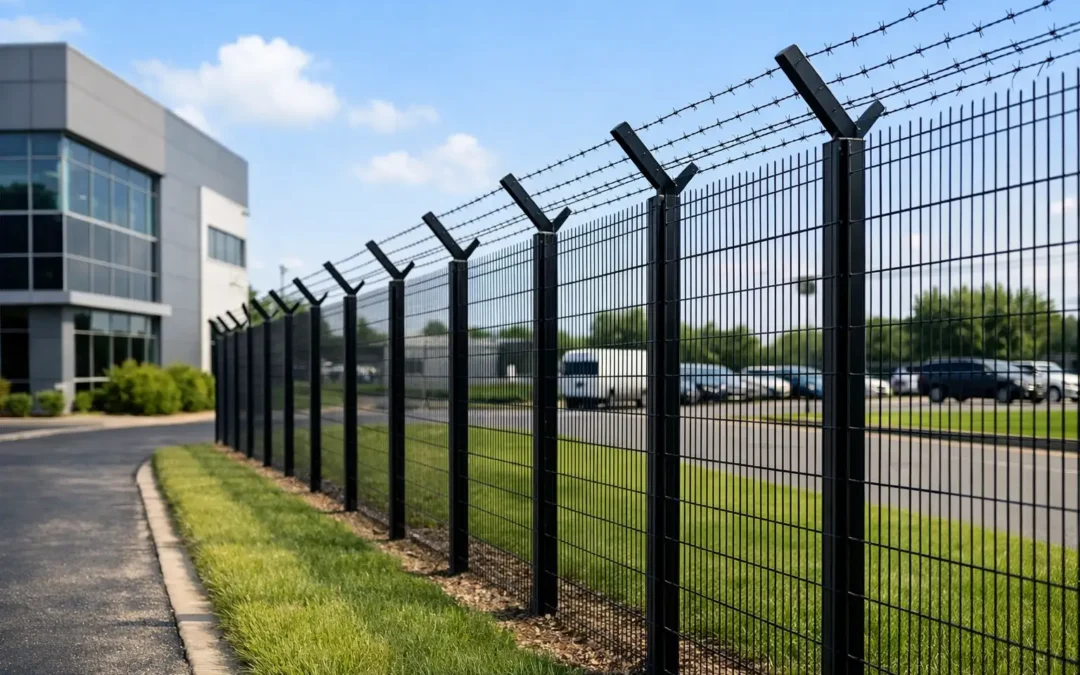
A warehouse yard with an open gate, a school campus with unclear boundaries, or an active construction site without a secure enclosure can create problems quickly. This guide to commercial perimeter fencing helps business owners, property managers, and contractors make decisions that protect people, equipment, inventory, and daily operations without paying for features they do not need.
Commercial fencing is not a one-size-fits-all purchase. The right system depends on what you are protecting, who needs access, how visible the property should be, and how the fence will perform over years of weather and use. A well-planned perimeter creates a clear boundary, supports security procedures, and presents a more professional appearance from the street.
Start With the Job Your Fence Must Do
Before choosing a material or fence height, define the primary purpose of the perimeter. Security may be the main concern for a distribution yard, equipment lot, utility area, or industrial property. A retail business may need to control vehicle and pedestrian access while maintaining an inviting appearance. For a school, church, apartment complex, or medical office, the goal may be to establish boundaries and improve safety without making the property feel closed off.
Most commercial projects involve more than one need. A fence can deter trespassing, guide visitors toward the correct entrance, screen service areas, protect expensive equipment, and reduce liability around restricted zones. Identifying those priorities early prevents a common mistake: installing an attractive fence that does not provide enough security, or building a highly secure barrier where a lower-profile solution would better suit the property.
It also helps to consider how the site operates after hours. Ask where deliveries arrive, which gates employees use, whether emergency vehicles need access, and where visitors might enter by mistake. The answers shape the layout as much as the fence material does.
Choosing Commercial Perimeter Fencing Materials
The material should match the property’s security level, maintenance expectations, budget, and visual requirements. Each option has a place, and the best choice is often a combination of materials rather than one fence type used across the entire site.
Chain Link for Practical Security
Commercial chain link fencing remains a dependable choice for many businesses because it is cost-effective, durable, and adaptable. It works well around storage yards, athletic areas, utility equipment, construction sites, and industrial facilities. Vinyl-coated chain link can provide a cleaner appearance, while privacy slats or screening can limit visibility into the property.
Chain link is not always the right choice for a customer-facing entrance or a property where appearance is central to the brand. However, it can be an excellent security backbone along rear and side boundaries, paired with ornamental fencing or custom gates at the front of the property.
Ornamental Iron and Steel for Security With Curb Appeal
Ornamental iron or steel fencing provides a more refined look while maintaining a strong physical boundary. It is often selected for office buildings, medical facilities, churches, schools, multifamily properties, and upscale commercial entrances. Its open design preserves sightlines, which can be valuable for surveillance and safety.
The trade-off is cost. Ornamental fencing generally requires a larger upfront investment than chain link, especially when the project includes custom fabricated gates, decorative details, or challenging terrain. For properties where public appearance matters, that investment can support long-term value and a stronger first impression.
Vinyl, Wood, and Privacy Fencing for Screening
Privacy fencing can be useful around dumpsters, loading areas, mechanical equipment, employee break spaces, and outdoor storage. Vinyl offers a clean, low-maintenance finish, while wood can be a practical option when a warmer, more traditional appearance fits the site.
These materials are typically better for screening than high-security applications. A solid fence reduces visibility, but it can also limit natural surveillance from the street or neighboring properties. In some cases, the strongest approach is to use privacy fencing around specific service areas and a more open, durable fence around the main perimeter.
Fence Height and Layout Matter as Much as Material
A commercial fence only performs as well as its design. Height, post spacing, gate placement, grade changes, and the connection between fence sections all affect security and durability. A low fence may clearly mark a property line but provide little resistance to unwanted entry. Taller fencing can be a stronger deterrent, but it may require additional planning for local requirements, visibility, and surrounding land use.
The perimeter should follow the property’s actual needs, not simply the easiest line to install. That may mean securing a vulnerable rear corner, separating public parking from delivery traffic, enclosing a generator, or creating a controlled pedestrian route from the parking lot to the building.
On sloped or uneven sites, proper installation is especially important. Gaps beneath the fence, poorly set posts, and awkward transitions near retaining areas can weaken both the appearance and function of the system. In Western Arkansas and Eastern Oklahoma, changing grades, rocky soil, drainage patterns, and storm conditions can all influence the installation plan.
Plan Gates and Access Control Early
Gates are often the busiest and most vulnerable part of a commercial perimeter. They need to match the flow of people, vehicles, deliveries, and service crews. A gate that is too narrow can slow operations. One placed in the wrong location can create traffic backups or encourage unsafe turns near the road.
Consider whether the site needs a swing gate, slide gate, cantilever gate, pedestrian gate, or a combination of these. Sliding and cantilever gates are often a practical choice where driveways are busy or space behind the gate is limited. Swing gates can be effective for lower-traffic entrances when there is enough clearance.
Access control adds another layer of management. Keypads, card readers, remote controls, telephone entry systems, and automated operators allow authorized users to enter while helping the business track and control access. The right system depends on the number of users, hours of operation, visitor volume, and whether the gate needs to integrate with existing security procedures.
Do not overlook emergency access. Fire, police, ambulance, and utility personnel may need a clear way to enter the property. Gate design should account for those needs from the beginning instead of treating them as a last-minute adjustment.
Address Site Conditions Before Installation
A dependable fence begins with a clear understanding of the site. Property lines should be confirmed before posts are set, especially when a fence will run near neighboring businesses, public right-of-way areas, or shared drives. Existing utility lines, drainage routes, buried infrastructure, and overhead clearance also need attention.
For active businesses, installation timing matters. A contractor should help coordinate work around customer traffic, employee parking, deliveries, and ongoing construction. Temporary fencing may be needed to protect an open work area, secure materials, or maintain a boundary while the permanent system is being installed.
This planning protects the project schedule and reduces disruption. It also gives the installer an opportunity to identify practical concerns, such as whether heavy equipment can reach the fence line or whether a gate operator needs electrical service.
Balance Upfront Cost With Long-Term Ownership
The lowest installation price is not always the lowest long-term cost. A fence exposed to constant traffic, frequent gate use, weather, or potential impact needs materials and hardware that can stand up to that use. Saving money on light-duty posts, undersized gates, or inadequate foundations can lead to repairs that cost more than doing the work correctly at the start.
Ask about the expected maintenance needs of the chosen system. Chain link may require occasional tension and hardware checks. Wood needs periodic inspection and may benefit from staining or sealing. Automated gates need regular servicing so safety devices, operators, and controls continue working properly. Ornamental metal fencing should be checked for coating damage that could allow rust to develop.
A good commercial fencing plan also leaves room for growth. If the business may add a parking area, storage yard, new building, or second entry point, consider how the current fence can accommodate that expansion. Planning ahead may allow for a future gate location or prevent the need to remove recently installed sections.
Work With a Contractor Who Understands the Full Perimeter
Commercial fencing requires more than setting posts in a straight line. It calls for a contractor who can assess security needs, manage site challenges, install dependable gates, and provide solutions when the project requires access control, temporary fencing, or custom metal fabrication.
Modern Fence Company brings more than 70 years of local fencing experience to commercial properties across the region. A detailed on-site estimate can clarify the right material, layout, gate operation, and installation approach before work begins.
The best perimeter fence is the one that fits the way your property actually operates. Start with a clear picture of the risks, traffic patterns, and appearance you need, then build a system that protects the business without getting in the way of it.