A fence around a business has one job on paper – define the perimeter. In real life, commercial fencing solutions do much more than that. They help protect equipment, guide traffic, support safety policies, reduce liability, and give customers, tenants, and employees a clear sense that the property is well managed.
That is why choosing a commercial fence should never come down to price alone. The right system needs to fit how your site operates every day. A warehouse has different demands than an office park. A school, apartment complex, construction site, and industrial yard all need something different from the fence line. When the fence matches the property, it works harder, lasts longer, and creates fewer problems down the road.
What commercial fencing solutions need to do
Most commercial properties are balancing three priorities at once: security, appearance, and durability. The trouble is that each site places a different weight on those goals. Some businesses need strong perimeter control first. Others care just as much about creating a clean, professional look at the street.
That is where experience matters. A fence is not just a material choice. It is a combination of layout, height, gate placement, access points, visibility, and how the property is used from morning to night. A good plan considers vehicle traffic, pedestrians, delivery areas, utility lines, slopes, drainage, and future maintenance before the first post is set.
In some cases, visibility is an advantage. Chain link or ornamental iron can help staff monitor the perimeter and see activity near gates. In other settings, privacy matters more. Vinyl or wood may make more sense where screening is part of the goal. The best answer depends on the property, not a one-size-fits-all sales pitch.
Matching the fence to the property
Commercial fencing solutions work best when they are selected with the day-to-day demands of the property in mind. That sounds obvious, but it is where many projects go off track.
Chain link for practical security
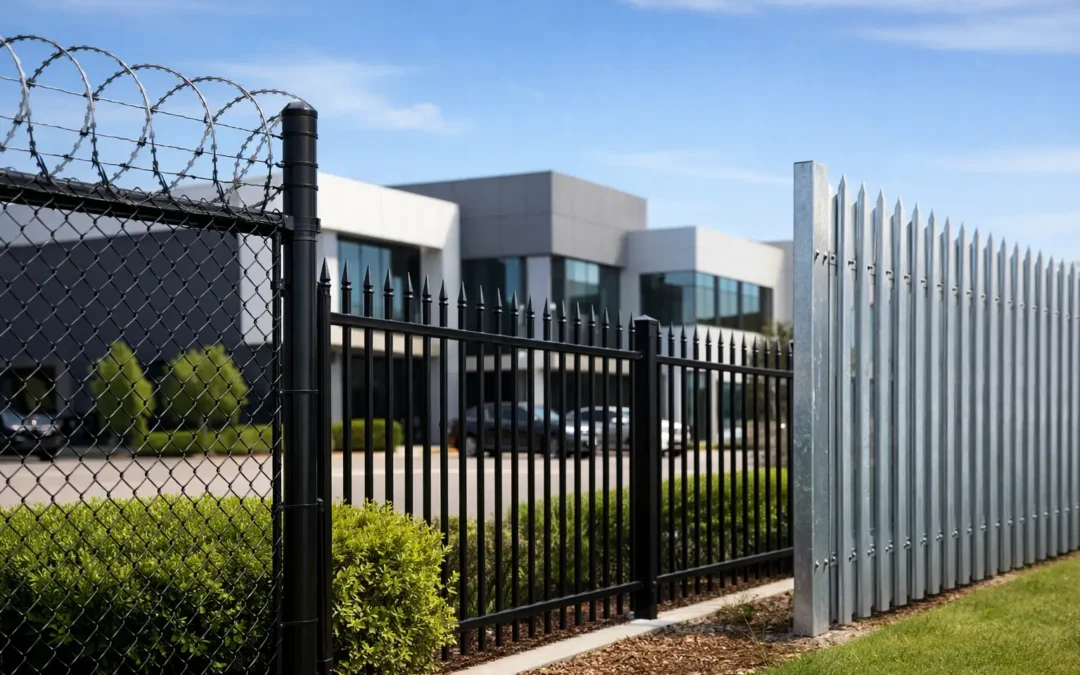
Chain link remains one of the most common commercial options for a reason. It is cost-effective, durable, and well suited for large perimeters. It works especially well for warehouses, service yards, schools, sports areas, and industrial properties where visibility and security both matter.
It is also flexible. Privacy slats, barbed wire where appropriate, and secure gate systems can expand its usefulness. The trade-off is appearance. While chain link is practical, it does not create the same visual impression as ornamental metal or a more finished privacy fence. For some businesses, function outweighs that concern. For others, curb appeal is part of the decision.
Iron and ornamental metal for security and presentation
If the front of the property needs to make a strong impression, ornamental iron or custom metal fencing often makes sense. These systems provide a more polished look while still offering strength and perimeter control. They are a common fit for office buildings, retail centers, churches, schools, and multifamily properties.
The advantage is clear – they look professional and hold up well. The trade-off is usually budget. Decorative metal fencing typically costs more upfront than chain link. Still, many owners see the value in a fence that supports security while improving the overall appearance of the site.
Wood and vinyl where privacy matters
Not every commercial property wants an open perimeter. Dumpster enclosures, service areas, apartment amenities, and certain customer-facing spaces may need visual screening. In those cases, wood or vinyl can be a strong option.
Wood offers a classic look and can be customized, but it will require more upkeep over time. Vinyl has a clean appearance and lower maintenance needs, though impact resistance and style preferences should be considered based on the site. For businesses that want privacy without constant maintenance, vinyl is often attractive. For owners who value a natural look and are comfortable with periodic care, wood can still be the right fit.
Gates and access control are part of the system
A fence without a good gate plan can create daily frustration. This is especially true on commercial sites where vehicles, staff, vendors, and visitors all move differently through the property.
Gate location, width, swing direction, and frequency of use all matter. A service entrance that sees constant truck traffic needs a different solution than a side gate for employee access. Add in keypad entry, automatic operators, card readers, or controlled access systems, and the design becomes even more site-specific.
This is one of the biggest reasons to think of commercial fencing solutions as complete perimeter systems instead of standalone materials. The fence, gates, and access control should work together. If one part is undersized or poorly placed, the whole property feels it.
Temporary fencing has a place too
Not every commercial need is permanent. Construction sites, special events, emergency repair zones, and phased development projects often need secure boundaries for a limited time.
Rental fencing can help manage safety and site control without committing to a permanent installation before the project is ready. It is practical, fast to deploy, and useful when site conditions are still changing. For contractors and property managers, that flexibility can solve an immediate problem without slowing the schedule.
Temporary fencing should still be planned carefully. Access points, site visibility, and stability matter just as much on a short-term job as they do on a long-term installation.
The installation matters as much as the material
A quality fence can still fail early if it is installed poorly. Commercial sites often have challenges that are easy to underestimate – uneven ground, drainage issues, buried utilities, tight property lines, existing pavement, and active business operations that cannot stop for the project.
Good installation starts before materials arrive. It means measuring accurately, checking grades, identifying conflicts, and setting a layout that works in the real world, not just on paper. It also means building with durability in mind, especially in areas that see frequent gate use, vehicle pressure, or changing weather.
For business owners and property managers, this is where licensed and insured experience carries real value. It reduces mistakes, helps avoid delays, and gives you confidence that the work will hold up after the crew leaves.
Maintenance should be part of the decision
The best commercial fencing solutions are not always the cheapest to install, and they are not always the fanciest either. Often, the smarter choice is the one that fits the maintenance expectations of the property.
A business with limited time for upkeep may prefer vinyl, chain link, or metal systems that require less routine attention. A property that values a certain appearance may accept more maintenance in exchange for a specific finish or style. There is no single right answer, but there is always a right answer for the way the property is managed.
Maintenance also includes cleaning, staining where appropriate, and occasional repairs before small issues become expensive ones. A leaning section, worn gate hardware, or finish breakdown rarely improves on its own. Taking care of those problems early can extend the life of the entire fence line.
Choosing a contractor for commercial fencing solutions
Commercial projects call for more than a crew that can install panels and posts. You want a contractor who understands scheduling, site logistics, and the practical demands of a working property. That includes communicating clearly, planning around operations, and recommending materials based on the actual use of the site.
Local knowledge also matters more than many buyers realize. Soil conditions, weather exposure, regional codes, and the common needs of businesses in Western Arkansas and Eastern Oklahoma can influence what performs well over time. A contractor with a long track record in the area brings useful perspective before problems show up.
For many property owners, the best partner is one that can handle more than the fence itself. Gate systems, access control, temporary fencing, maintenance, and custom metal fabrication are often connected parts of the same job. Working with one experienced company can make the project more efficient and reduce headaches from start to finish.
At Modern Fence Company, that full-picture approach has helped commercial clients across the region make practical decisions that serve them well for years, not just through the first inspection.
When you are planning a commercial fence, the smartest next step is not choosing a material from a brochure. It is looking closely at how your property works, what risks you need to manage, and what kind of result will still make sense five or ten years from now.