
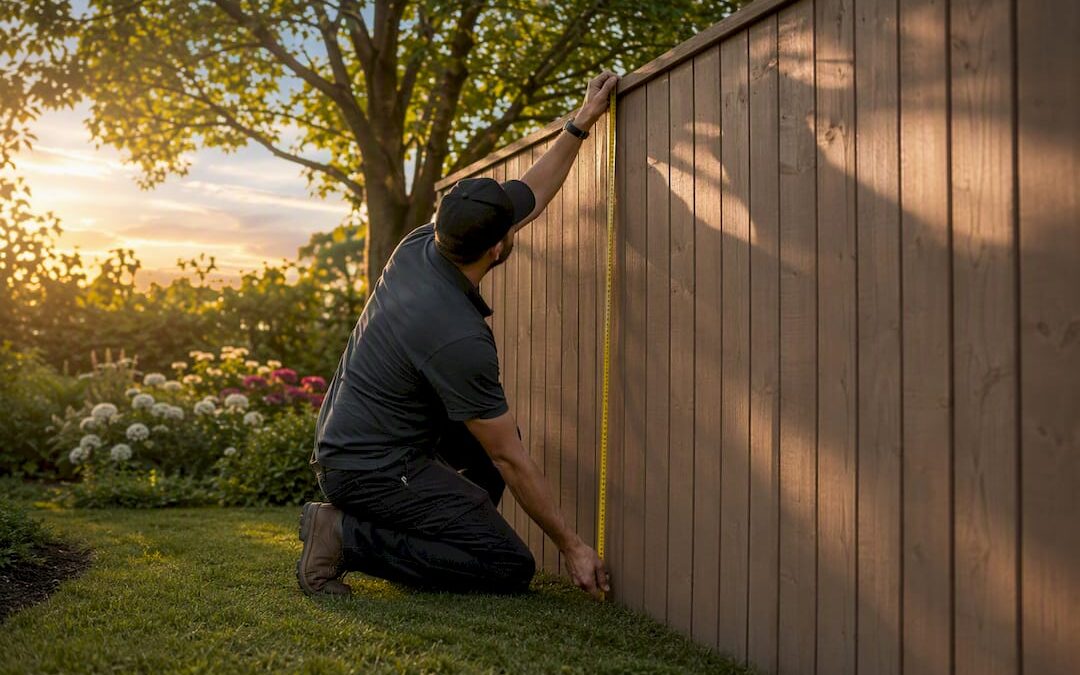
Six feet is the standard height for a residential privacy fence, and it’s the right call for most backyards and side yards. Front yards are a different story: most codes cap those at 3 to 4 feet so drivers and neighbors keep clear sightlines. Eight feet is available in many areas, but only when your local code allows it and you can justify the extra structure.
A few rules of thumb make the decision easier:
- Choose 6 feet for standard backyard and side-yard privacy. It’s the industry standard for a reason.
- Choose a taller fence when extra screening is needed from a busy road, a second-story neighbor, or noise, provided your municipality permits it.
- Keep front yards at 3 to 4 feet in almost every jurisdiction, since that’s where visibility rules are strictest.
Before you order materials, measure your property line and call your local building department. That five-minute call saves you from tearing down a fence that’s a foot too tall.
Key Takeaways
The right privacy fence height depends on where the fence sits on your lot, local code, and how much screening you actually need, with 6 feet as the reliable default.
| Point | Details |
|---|---|
| Default to 6 feet | It meets most codes and gives full privacy for backyards and side yards without triggering extra permits. |
| Keep front yards low | Most municipalities cap front-yard fences at 3 to 4 feet for visibility. |
| Check corner-lot rules | Sight-triangle restrictions near intersections can reduce allowed height in that zone. |
| Confirm HOA approval | HOA covenants can be stricter than city code and often govern enforcement. |
| Plan for structure at 8 ft | Taller fences need larger posts, deeper footings, and sometimes engineered plans. |
Table of Contents
- How Tall Should a Privacy Fence Be for Each Purpose?
- What Local Rules and Permits Apply to Fence Height?
- Which Material and Board Style Give You the Most Privacy?
- How Do You Measure Fence Height Correctly?
- When Should You Hire a Fencing Contractor?
- Where Can You Check Your Local Fence Rules?
- What Homeowners Get Wrong About Fence Height
- Frequently Asked Questions
- Sources
How Tall Should a Privacy Fence Be for Each Purpose?
Fence height isn’t a one-size-fits-all number. It depends on what you’re actually trying to solve, whether that’s blocking a neighbor’s view, keeping a dog contained, or muffling street noise.
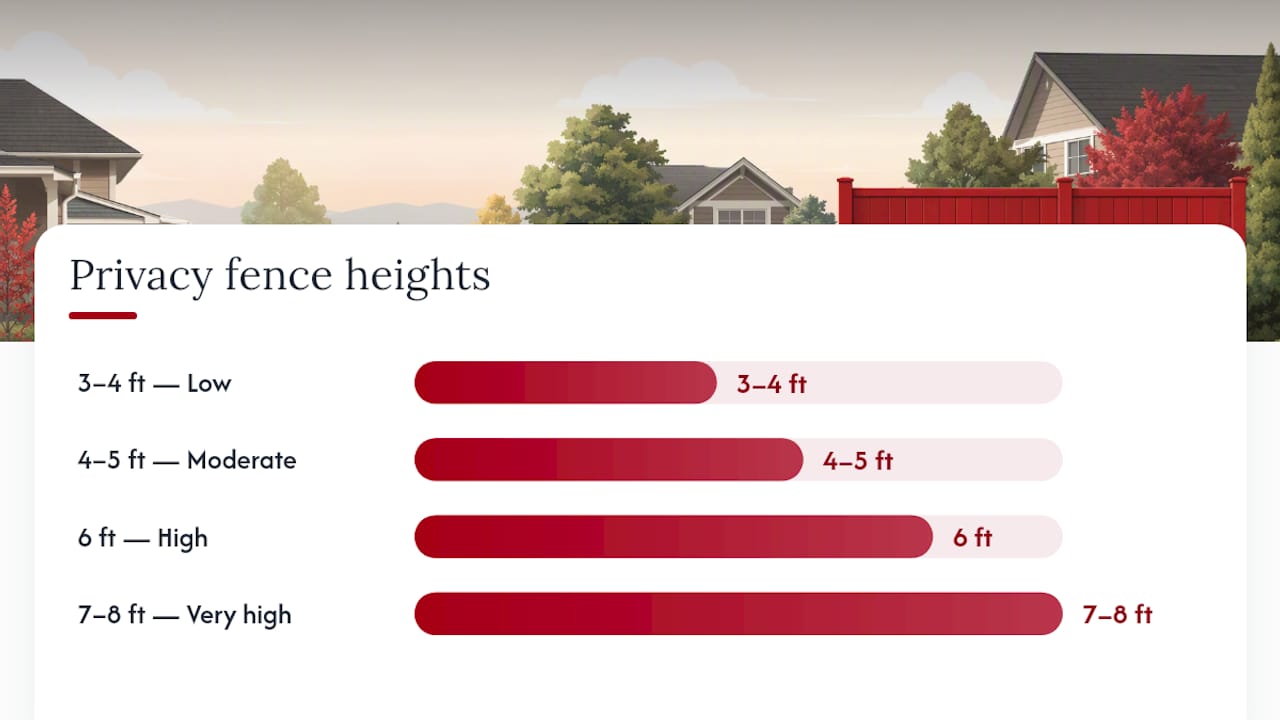
A 3 to 4 foot fence works for front yards where code requires open sightlines, or for marking a property line without blocking it. It won’t stop anyone from seeing into your yard, but it defines space and keeps casual foot traffic out.
A 4 to 5 foot fence adds light screening. It’s tall enough to block a direct line of sight from someone standing at ground level nearby, and it’s common for side yards where full privacy isn’t the goal but some buffer is.
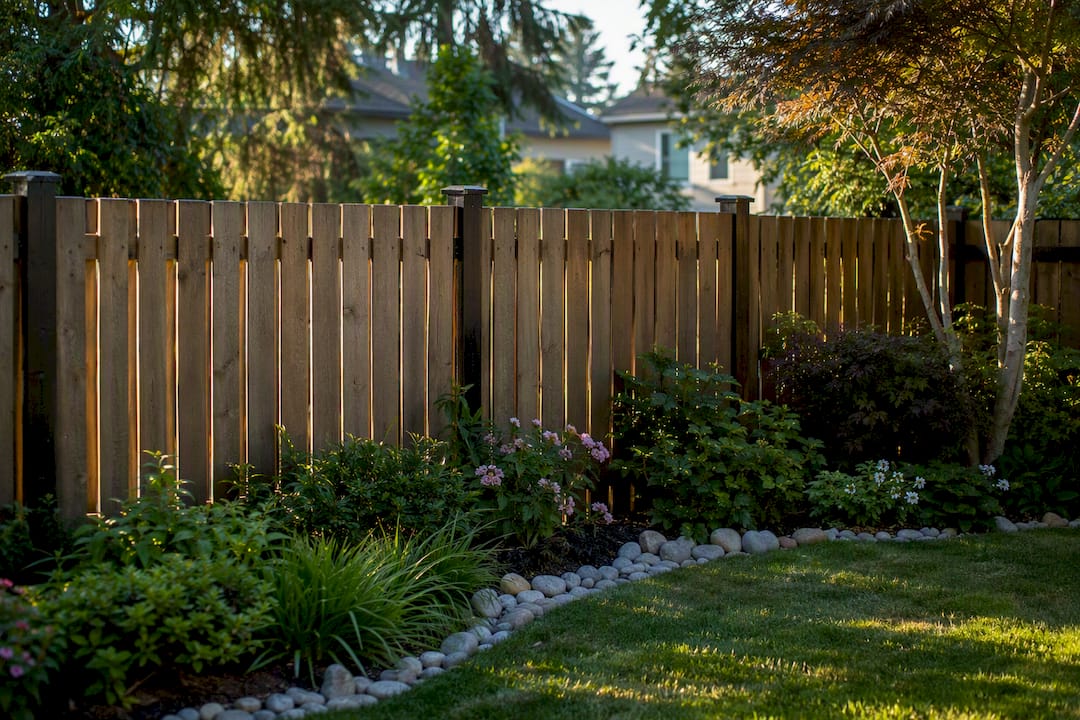
A 6 foot fence is the sweet spot for most backyards. It blocks eye-level views from neighbors and passersby, works for most dogs, and rarely triggers extra permitting. This is what most municipal codes treat as the default max for rear and interior side yards without special approval.
A 7 to 8 foot fence is for situations where 6 feet isn’t enough: a two-story house next door looking down into your yard, a fence along a busy road, or a pool area where you want maximum separation. These heights often require a permit and structural review.
| Height | Privacy Level | Permit Likelihood | Structural Needs |
|---|---|---|---|
| 3–4 ft | Low | Rarely required | Minimal, lightweight posts |
| 4–5 ft | Moderate | Occasionally required | Standard posts, basic footings |
| 6 ft | High | Sometimes required | Standard posts, moderate footings |
| 7–8 ft | Very high | Usually required | Larger posts, deeper footings |
If you’re weighing cost against these height jumps, our privacy fence installation cost guide breaks down what each step up typically adds to your project.
What Local Rules and Permits Apply to Fence Height?
Most cities regulate fence height differently depending on where the fence sits on your lot. A 6 foot fence might be fine in your backyard but restricted to 4 feet if it faces the street, and corner lots often face even tighter limits because of sight-triangle rules that protect driver visibility at intersections.
Those sight-triangle restrictions typically apply within a set distance of the corner and can knock your allowed height down to around 3 feet in that zone, based on traffic-engineering visibility standards. It’s a small area, but building without checking it is one of the most common reasons homeowners get a fence red-tagged.
Permits usually come into play once you exceed 6 feet. An 8 foot fence often needs a permit, a property survey, and sometimes an engineered footing plan because of wind load on a taller panel.
HOA rules add another layer, and they can be stricter than city code. HOA covenants frequently limit not just height but materials and style, and they take precedence for private enforcement even when the city would allow more. Always get written HOA approval before you build.
Here’s a simple pre-build checklist:
- Call your building department and ask for the max height by yard location (front, side, rear).
- Request a copy of your local zoning code and any sight-triangle maps for corner lots.
- Check your HOA covenant for height and material restrictions.
- Ask whether your lot needs a survey to confirm exact property lines.
- Find out whether your planned height triggers a permit or engineered plan.
Pro Tip: Start with your city’s building or zoning department website and search “fence permit” or “fence height ordinance.” Most departments post the code online, and a five-minute phone call can confirm the sight-triangle distance for your exact corner. Our residential fence permit guide walks through what to ask for step by step.
Which Material and Board Style Give You the Most Privacy?
Height only tells half the story. Board orientation and material change how private a fence actually feels and how much structure it needs.
Vertical boards give you tighter spacing and better privacy at every height, and they handle sloped ground more easily than horizontal designs. Horizontal fences look modern, but on average they’re less private and harder to install on slopes because each board has to be cut or stepped to follow the grade. If your yard slopes and privacy is the priority, vertical is the safer bet.
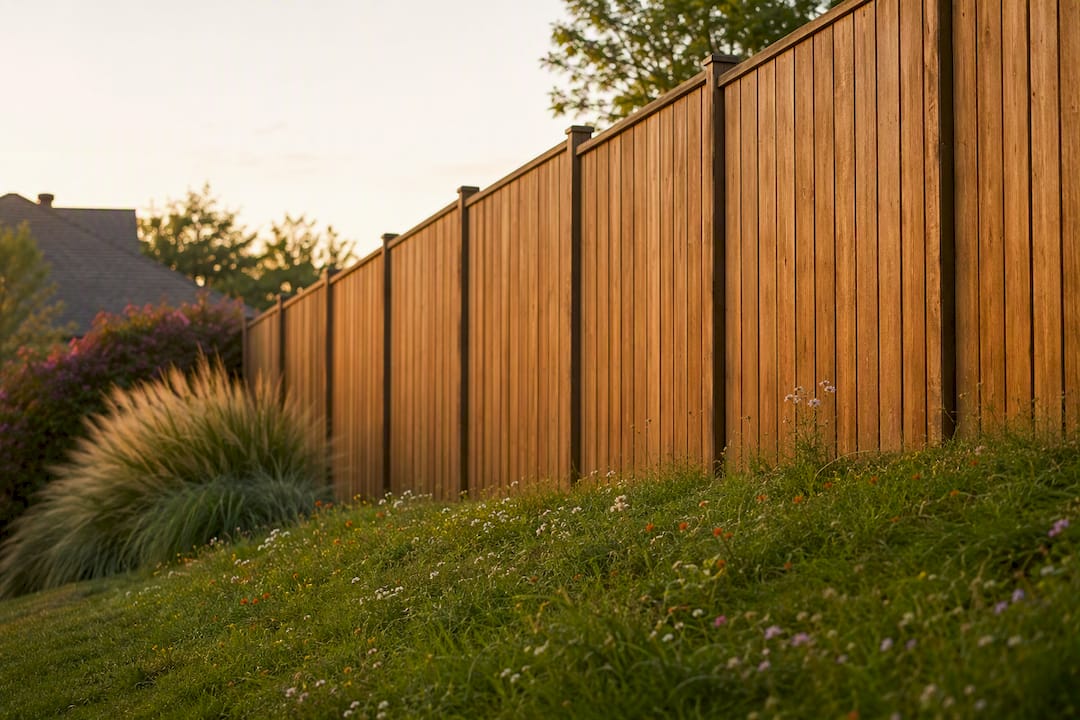
Material matters too. Wood and composite panels offer solid coverage; metal infill and some vinyl styles include gaps that reduce privacy even at 6 feet. Adding lattice, a trellis, or planter boxes on top of a fence can push your total height over the legal limit, so check whether your code counts add-ons as part of the measured height.
Taller panels also need bigger posts and deeper footings to resist wind load, which changes your post spacing plan regardless of material.
Pro Tip: If you’re building on a slope and want maximum privacy, vertical board fencing typically outperforms horizontal styles. Compare options in our guide on choosing a fence for backyard privacy.
How Do You Measure Fence Height Correctly?
Most codes measure fence height from finished grade on the property owner’s side, but you should confirm this with your local building department since some jurisdictions measure from the higher side of a grade change.
On flat lots, this is straightforward. On sloped lots, you have two choices: stepped panels, which keep each section level and create a staircase look along the slope, or racked panels, which follow the slope’s angle and keep the top line consistent. Racked designs generally hold privacy better on a slope, while stepped panels are often easier to install. Our guide on fences for sloped yards covers both approaches in more detail.
Taller fences need larger posts and deeper footings to handle wind load without leaning over time, and 7 to 8 foot builds often call for engineered plans.
Before requesting estimates, walk your site and note:
- The slope direction and approximate grade change across the fence line.
- Property line markers or survey pins.
- Any existing structures, utilities, or trees along the fence path.
Pro Tip: Take photos of your yard from multiple angles and measure the grade change with a simple level and stakes. Contractors can quote faster and more accurately with this on hand.
When Should You Hire a Fencing Contractor?
Some fence projects are simple enough for a confident DIYer. Others aren’t, and knowing the difference saves you money and headaches.
Call a professional when:
- Your height exceeds 6 feet and needs a permit or engineered footing plan.
- Your property lines are disputed or unclear.
- You’re on a corner lot with sight-triangle restrictions to navigate.
- Your yard has a steep slope requiring racked or stepped panels.
- You want a warranty backing the installation.
When interviewing a contractor, ask about licensing and insurance, whether they handle permit filing, their experience with engineered footings, and their post and footing specs for taller fences. Ask for references too.
Modern Fence Company has more than 70 years of combined operating history, works across wood, vinyl, chain link, and iron, and handles the permit-heavy and structural details that come with taller fence builds.
Where Can You Check Your Local Fence Rules?
Start with your city or county building department’s website. Search for “fence permit” or “zoning ordinance,” and look up sight-triangle maps if you’re on a corner lot. Example municipal pages, like St. Louis’s residential building permits or Traverse City’s planning and zoning department, show the kind of detail to expect: max height by yard location and sight-triangle distances.
What Homeowners Get Wrong About Fence Height
Most guides treat fence height as a single number to memorize. It isn’t. The real decision is where the fence sits on your lot, because that answer changes the legal limit before you even think about privacy.
Homeowners also underestimate how often HOA rules, not city code, end up being the stricter constraint. I’ve seen the conventional advice focus almost entirely on municipal ordinances while treating HOA covenants as an afterthought, when in practice they’re often the first wall you hit.
If you take one thing from this, prioritize the phone call to your building department over the fence style Pinterest board. Confirm your yard-by-yard height limits and sight-triangle rules first. Everything else, including whether you go vertical or horizontal, wood or vinyl, 6 feet or 8, is a decision you can make well once you know what’s actually allowed.
Frequently Asked Questions
Is a 6 ft or 8 ft fence better for privacy?
A 6 foot fence covers standard privacy needs for most backyards. An 8 foot fence adds value when you’re blocking a second-story view or a busy road, but it usually requires a permit and stronger structural support.
Do front yard fences need to be shorter than backyard fences?
Yes. Most municipalities cap front-yard fences at 3 to 4 feet to preserve visibility, while backyard and side-yard fences can typically reach 6 feet without special approval.
Is a horizontal or vertical fence better for privacy?
Vertical fences generally offer tighter board spacing and better privacy, and they handle sloped yards more easily than horizontal designs, which can leave gaps when following uneven grade.
Do I need a permit for a 6 foot privacy fence?
Often not, since 6 feet is the common threshold many codes allow without a permit. Confirm with your local building department, since rules vary by city and by yard location.
Can my HOA restrict fence height even if the city allows more?
Yes. HOA covenants frequently set stricter limits on height, material, and style than city code, and they typically govern private enforcement regardless of what the municipality permits.
Ready to plan a fence that fits your property and your local code? Contact Modern Fence Company for a free estimate on wood, vinyl, iron, or chain link privacy fencing across Western Arkansas and Eastern Oklahoma.
Sources
- How Tall Can a Privacy Fence Be? – FenceTrac
- Fence height regulations guide (FenceAdvisors)
- Horizontal vs. vertical fence (The Spruce)
- How Tall Is a Privacy Fence? Height Guide & Regulations