
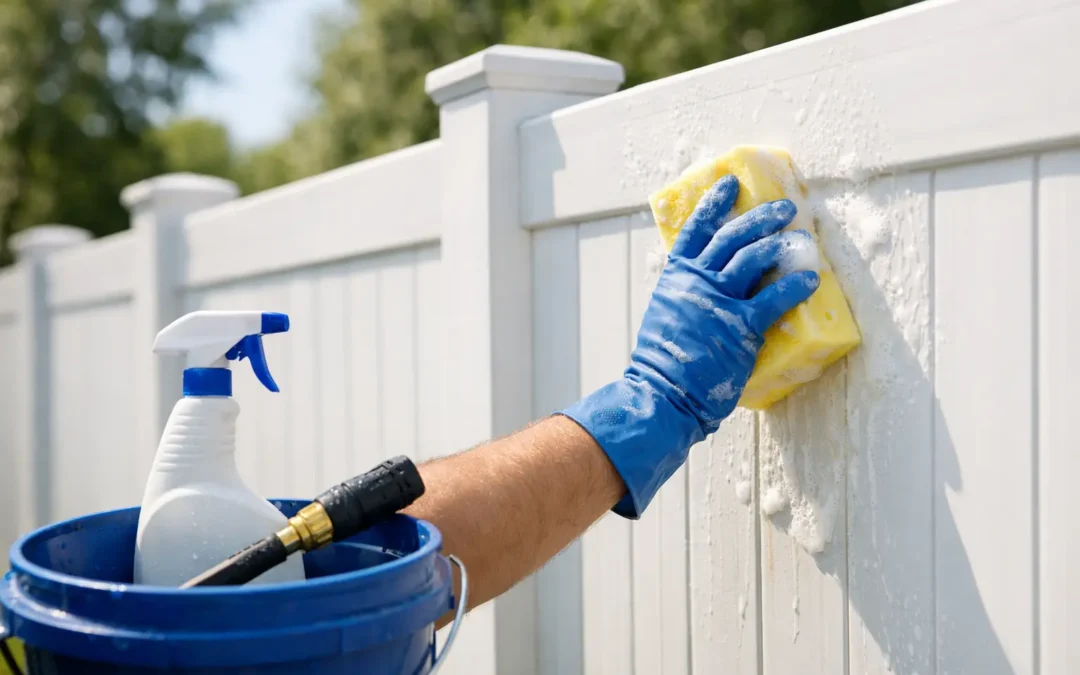
Arkansas red clay, summer pollen, lawn clippings, and sprinkler water can make a bright vinyl fence look tired long before the fence itself has reached the end of its life. Knowing how to clean vinyl fence properly helps restore its appearance without scratching the surface, fading the color, or creating more work than necessary.
Vinyl is popular because it does not need routine painting or staining, but it still benefits from regular care. A gentle cleaning once or twice a year is usually enough for most homes. Fences near trees, busy roads, garden beds, or irrigation systems may need more frequent attention, especially after a wet season.
Start With a Gentle Vinyl Fence Cleaning Method
The safest place to begin is with water, mild dish soap, and a soft cloth or sponge. Fill a bucket with warm water and add a small amount of mild, non-abrasive dish soap. Rinse the fence with a garden hose first to remove loose dust, cobwebs, and grass clippings, then wash one small section at a time.
Work from the bottom upward when applying the soapy water. This prevents dirty runoff from drying in streaks on lower panels. After lightly scrubbing the section, rinse from the top down before moving on. A soft-bristle brush can help with textured vinyl or stubborn dirt around posts, rails, and panel edges, but avoid stiff brushes that can leave dull marks.
For an average residential fence, this straightforward approach is often all that is needed. The goal is not aggressive scrubbing. Vinyl has a smooth protective finish, and gentle, consistent care preserves that finish better than harsh cleaners or excessive pressure.
Tools That Are Safe for Vinyl
A garden hose, bucket, mild soap, microfiber cloth, soft sponge, and soft-bristle brush handle most routine jobs. Wear gloves if you are using any cleaning product beyond soap and water, and keep plants watered before and after cleaning nearby fence sections.
A pressure washer can be used carefully, but it is not always necessary. If you choose to use one, keep the pressure low, use a wide fan tip, and stand several feet away from the fence. Directing a concentrated stream too close to the surface can force water into seams, damage caps, or leave visible lines in the vinyl. Hand cleaning takes longer, but it offers more control around gates, decorative details, and older fence components.
How to Clean Vinyl Fence Stains by Type
Not every mark responds to the same cleaner. Identifying the stain first can save time and keep you from using a product that is stronger than the job requires.
Green Mildew, Algae, and Mold
Shady areas and fence lines near shrubs often develop green or black growth. Start by rinsing away loose debris, then apply a mixture of water and white vinegar in equal parts. Let it sit for several minutes, scrub gently with a soft brush, and rinse thoroughly.
For heavier mildew, a store-bought cleaner labeled safe for vinyl may be appropriate. Read the label closely and test the product on a less visible area first. Avoid allowing any cleaner to dry on the fence, and rinse plants, mulch, and surrounding soil when you are finished. Mildew tends to return where moisture and shade persist, so trimming back vegetation and improving airflow can make a real difference.
Red Clay, Mud, and Ground-in Dirt
Red clay is common across Western Arkansas and Eastern Oklahoma, and it can cling to lower fence panels after a hard rain. Let thick mud dry first, then brush away as much loose soil as possible. Washing wet mud repeatedly can spread it over a larger area.
Follow with soapy water and a soft brush. If a faint orange residue remains, try a vinyl-safe cleaner rather than reaching for an abrasive pad. Abrasives may remove the stain, but they can also roughen the surface and give future dirt more places to settle.
Sprinkler Stains and Mineral Buildup
White, chalky spots near sprinklers are usually mineral deposits left behind as water evaporates. A vinegar-and-water solution is often effective. Apply it with a cloth, allow a short dwell time, wipe gently, and rinse.
If hard-water stains are persistent, the issue may be the sprinkler pattern rather than the fence. Adjusting the spray away from the panels can reduce repeated buildup and make routine maintenance much easier.
Grass Stains, Scuffs, and Small Marks
Grass stains and light scuffs are best handled promptly. Use mild soap first, then a vinyl-safe cleaner if needed. A melamine sponge may remove certain marks, but use it sparingly and test it in an inconspicuous area. Even products that feel soft can act like a very fine abrasive when used aggressively.
Be especially cautious with dark-colored vinyl. Scrubbing too hard can create a visibly lighter or duller spot that stands out more than the original mark.
Clean the Fence Without Damaging the Landscaping
Fence cleaning is not only about the panels. Nearby shrubs, flowers, grass, and mulch deserve protection too. Before using vinegar or any commercial product, rinse plants with plain water. This helps dilute any cleaner that drips or splashes onto leaves.
Clean on a mild, overcast day when possible. Direct sun can cause soap or cleaner to dry too quickly, leaving residue behind. Extremely hot conditions also make the job harder because you need to rinse each section almost immediately. If you must clean in sunny weather, work in small shaded sections and keep the fence wet while you work.
Do not mix cleaning products. Combining chemicals can produce unsafe fumes or damage the fence surface. Bleach, ammonia, solvents, and strong degreasers should not be your first choice for vinyl fencing. Some may discolor the material, weaken components, or harm the surrounding landscape. When a stubborn stain does not respond to a vinyl-safe product, professional fence cleaning is often the better next step.
A Simple Maintenance Schedule for Vinyl Fences
Routine inspection prevents minor issues from becoming more noticeable or costly. Each spring, rinse the fence and check for dirt buildup, loose gate hardware, shifted post caps, and vegetation pressing against the panels. After storm season, inspect for branches, windblown debris, and soil erosion around posts.
A deeper wash in spring or early fall is enough for many properties. Homes with mature trees, irrigation systems, pools, pets, or heavy lawn activity may benefit from a light rinse every month or two. The more consistently you remove pollen, dust, and organic debris, the less likely you are to need specialty cleaners later.
Keep mulch, soil, and plants from resting against the bottom of the fence. Vinyl resists moisture well, but trapped debris can encourage mildew and hide problems around the base of posts. It can also make a clean fence look neglected, even when the panels are in good condition.
When Professional Fence Cleaning Makes Sense
Most homeowners can manage a basic wash, but some situations call for experienced help. Large properties, tall privacy fences, heavy mildew, difficult access, and recurring stains can turn a weekend project into a demanding task. Commercial properties may also need cleaning completed with minimal disruption to tenants, customers, employees, or daily operations.
A professional can assess whether the issue is surface dirt, drainage, irrigation overspray, nearby vegetation, or a fence component that needs repair. That distinction matters. Repeatedly cleaning the same stain without addressing its source is frustrating and rarely delivers a lasting result.
Modern Fence Company has served property owners across the Fort Smith area for decades, and our team understands how local weather, soil, and terrain affect fence performance and appearance. A well-maintained vinyl fence should continue to provide privacy, definition, and curb appeal without becoming a constant chore.
A clean fence changes the way the entire property looks. Take a measured approach, use the mildest effective cleaner, and address recurring stains at their source. That is how vinyl stays one of the most dependable, low-maintenance fencing choices for years to come.