
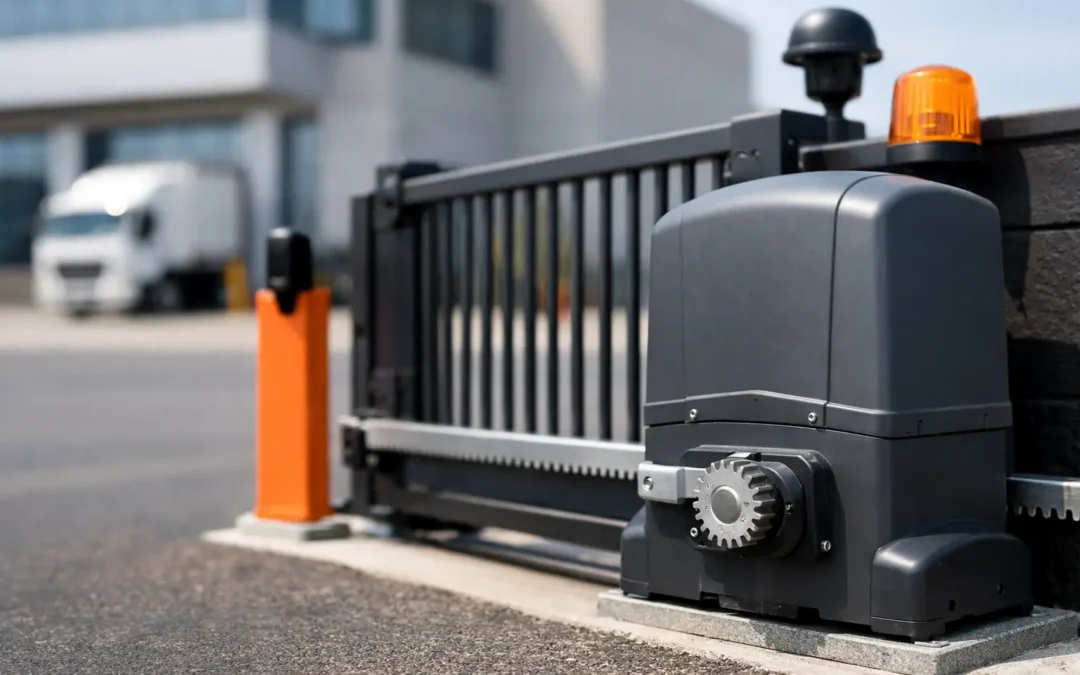
A commercial gate is often the first point of contact with your property, and the opener behind it determines whether access feels controlled or frustrating. This commercial gate opener review focuses on the factors that matter most for businesses, managed properties, farms, industrial yards, and construction sites: dependable operation, safe movement, compatible access control, and an installation built for the conditions on the ground.
The right opener is rarely the one with the longest feature list. It is the one properly matched to the gate’s weight, length, traffic volume, location, and security needs. A system that is undersized or poorly installed may work for a while, then create delays, maintenance calls, and a vulnerable entrance when you need reliability most.
What a Commercial Gate Opener Must Handle
Commercial gate operators are designed for more frequent use and heavier gates than residential units. That distinction matters. A small office lot with a few scheduled deliveries has a very different operating demand from a warehouse, apartment community, equipment yard, or agricultural entrance that sees constant traffic throughout the day.
Start with duty cycle, which describes how often an operator can run within a given period without overheating or wearing prematurely. For a low-traffic private drive, a lighter-duty system may be appropriate. For a business entrance with employee traffic, visitor access, service vehicles, and deliveries, a higher-duty operator is usually the safer investment. Choosing based on gate weight alone can overlook the daily workload that shortens an opener’s service life.
The operator also needs enough capacity for the actual gate, not the gate as it was originally designed on paper. Gate length, materials, wind exposure, grade, rolling resistance, and added accessories all affect the load. A long steel cantilever gate, for example, may require a substantially different operator than a shorter chain link swing gate, even if their basic weight ratings appear similar.
Commercial Gate Opener Review: The Main Types
Most commercial applications use either sliding gate operators or swing gate operators. Both can provide dependable access when selected and installed correctly, but each works best in specific site conditions.
Sliding Gate Operators
Sliding operators move the gate sideways along a track or cantilever system. They are a common choice for commercial properties because they work well with wide openings and can handle frequent cycles. A sliding gate is often practical when a driveway slopes upward toward the entrance, since a swing gate needs a relatively clear and level arc of travel.
For industrial sites, storage facilities, and commercial yards, a cantilever sliding gate is frequently preferred because it does not roll across the driveway opening. That can reduce issues from gravel, mud, leaves, and debris. It also keeps the entrance more usable in locations where ground conditions change with weather.
The trade-off is space. A sliding gate needs room beside the opening for the gate to travel fully open. The fence line, utility placement, slope, and nearby structures must all be reviewed before committing to this design.
Swing Gate Operators
Swing operators move one or two gate leaves inward or outward on hinges. They can be an excellent fit for office entrances, private commercial drives, smaller lots, and properties where there is not enough side room for a sliding gate.
A single swing gate may suit a narrower entrance, while a dual swing system can cover a wider opening with a balanced appearance. However, swing gates need clear space in their path and reliable hinge alignment. Uneven terrain, steep grades, snow or standing water, and vehicle parking patterns can make a swing configuration less practical.
Appearance may also influence the choice. Ornamental iron and custom fabricated gates often pair naturally with swing operators, especially at professional offices, residential communities, and properties where curb appeal matters alongside security.
Capacity Ratings Are Only the Starting Point
Operator specifications can be useful, but they should not replace a site evaluation. A listed weight capacity assumes reasonable gate construction and movement. If the gate drags, the rollers are worn, the hinges bind, or the track is out of alignment, the operator has to work harder every time it opens.
Before selecting equipment, make sure the gate itself is structurally sound. Posts must be properly set, framing needs to resist sagging, and moving components should travel smoothly by hand when disengaged from the operator. An opener cannot correct a gate that is out of level or poorly supported.
Wind deserves special attention in Western Arkansas and Eastern Oklahoma. Solid privacy panels and wide ornamental gates can act like sails during storms. High wind loads place stress on the gate frame, posts, hinges, rollers, and operator. In exposed locations, the gate design may need additional bracing or a different approach to reduce long-term strain.
Safety Equipment Is Not Optional
A commercial gate is a moving piece of equipment, not just a fence accessory. Proper safety devices protect people, vehicles, and the business owner from preventable incidents.
Photo eyes are commonly used to detect a vehicle or person in the gate’s travel path. Edge sensors can help detect contact or obstruction at the leading edge of the gate. Depending on the layout, vehicle loops, monitored sensors, warning signs, and audible alerts may also be appropriate. The exact equipment depends on the gate style, traffic pattern, and how people enter the property.
Safety is especially important where pedestrians may use the same entrance as vehicles. Employees walking from a parking area, delivery drivers, tenants, children, and visitors may not understand a gate’s movement pattern. A professional layout separates pedestrian access where possible and places controls where drivers can use them safely without stopping in traffic.
Do not overlook manual release procedures either. Staff should know how to operate the gate safely during a power interruption or equipment issue. A system is more dependable when the people responsible for the property understand its basic operation.
Access Control Should Match Daily Use
The gate opener provides movement, but access control determines who is allowed through. The best method depends on the property, the number of users, and how often permissions change.
Keypads are practical for employees, vendors, and visitors who need a code. Key fobs, remotes, card readers, and mobile credentials can offer greater convenience for regular users. Telephone entry systems allow a visitor to call a resident, tenant, office, or manager for authorization. For larger organizations, access records and scheduled permissions may be valuable for tracking entry and limiting access after hours.
A simple system is not automatically less secure, and a complex system is not automatically better. A small contractor yard may be well served by a dependable keypad and remote setup. A multi-tenant commercial property may need managed credentials, visitor calling, and clear procedures for adding or removing users. The right choice is the one your staff can administer consistently.
Power, Backup, and Site Preparation
Reliable power is essential, but commercial gate installations should also account for outages. Battery backup can keep a gate operating for a limited time when utility power is interrupted. Solar power may be a useful option at remote entrances where trenching electrical service would be difficult or costly, provided the location receives sufficient sunlight and the system is sized for expected use.
Electrical planning should happen early. The operator location, conduit route, control devices, safety sensors, lighting, and communication equipment all need consideration before concrete is poured or fencing is completed. This is where experienced coordination prevents costly changes later.
Drainage matters just as much. Water collecting around tracks, operator pads, or vehicle loops can lead to avoidable problems. A proper installation considers grade, surface runoff, vehicle approach angles, and the condition of the driveway itself. The goal is not merely to make the gate open on installation day, but to keep it working through changing seasons and daily traffic.
Installation Quality Determines Long-Term Value
Even a well-regarded commercial operator can disappoint when the gate and support system are not built correctly. Quality installation includes a stable operator pad, correctly sized posts and footings, smooth gate travel, protected wiring, appropriate safety devices, and careful control placement.
It also includes planning for service. Operators require periodic inspection, adjustment, and cleaning. Tracks need to remain clear, hinges and rollers need attention, and access credentials should be managed as employees or tenants change. Preventive maintenance costs less than responding to a gate that has failed at a busy entrance.
For properties in Sebastian, Crawford, Franklin, or Sequoyah County, local conditions should shape the design. Soil, grade, storm exposure, driveway layout, and utility locations all influence what will perform well over time. Modern Fence Company approaches gate systems as part of the entire perimeter, so the fence, gate, access controls, and site conditions work together rather than competing with one another.
A commercial gate opener should make the property easier to manage, not create another daily concern. Choose a system based on real traffic, gate condition, safety needs, and the people who will use it. With the right equipment and careful installation, your entrance can provide dependable control every time the gate moves.