
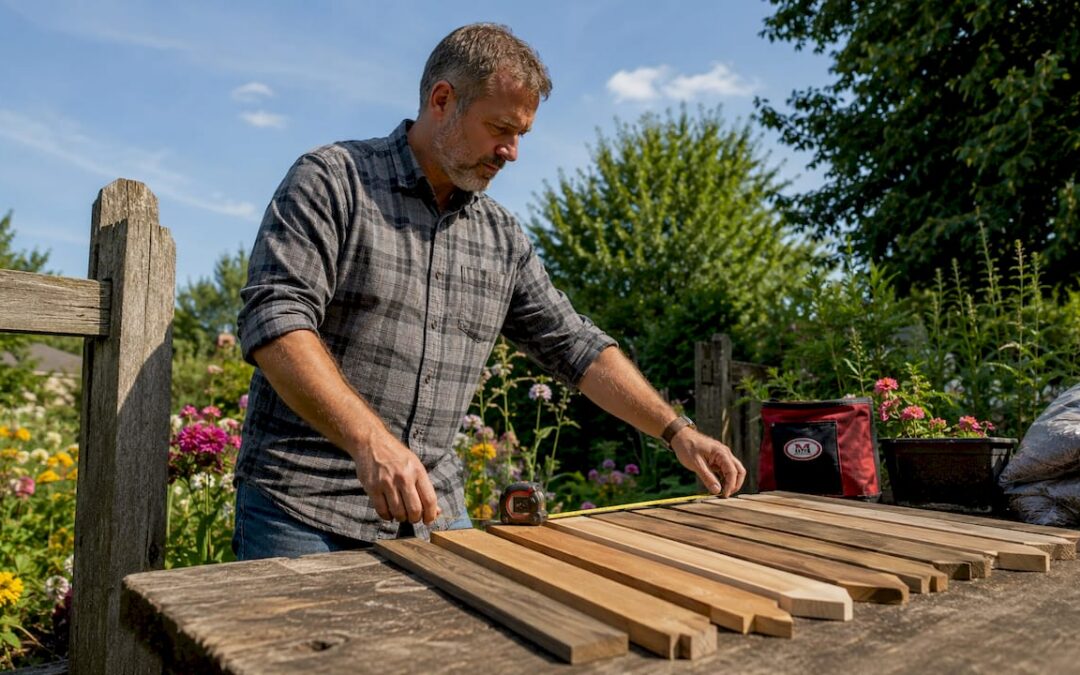
The most practical wood fence styles for residential properties are picket, board-on-board, shadowbox, privacy/stockade, tongue-and-groove, split-rail, horizontal slat, lattice-top, cap & trim, dog ear, and Gothic/French Gothic. Each one fits a specific homeowner need:
- Picket — front yards and curb appeal; classic look, low privacy, welcoming feel
- Dog ear — a budget-friendly picket variation with clipped top corners; good for side yards and garden borders
- Gothic/French Gothic — pointed-top pickets that add decorative character; suits cottage and traditional homes
- Privacy/stockade (side-by-side) — maximum seclusion for backyards, pools, and busy streets
- Board-on-board — overlapping pickets that maintain full privacy even as wood shrinks seasonally; best for hot tub enclosures and high-traffic rear yards
- Shadowbox — alternating pickets on both sides of the rail; the “good neighbor” option that balances privacy with airflow
- Split-rail — open, rustic boundary marker for large lots and rural properties; no meaningful privacy
- Horizontal slat — modern, clean-lined look for contemporary homes; requires precise leveling
- Tongue-and-groove — interlocking boards that form a near-seamless wall; top choice for sound dampening and full visual privacy
- Lattice-top — solid privacy panel with a decorative lattice section above; softens the look and allows airflow at the top
- Cap & trim — vertical boards framed with horizontal trim pieces; the most decorative privacy option
Pick the style that matches your primary goal first, then choose materials and finishes. The sections below walk through each style in detail, cover materials and costs, and end with a contractor checklist you can use before signing anything.
Table of Contents
- Which wood fence style fits your property?
- Which wood species and post type should you choose?
- What height and permits do you need before you build?
- What drives the cost of a wood fence project?
- How do you maintain a wood fence and how long will it last?
- Design ideas and modern variations worth considering
- Matching fence style to wind, sound, pets, and privacy needs
- How to choose a contractor and what to ask before you sign
- Environmental impact and sustainability of wood fence materials
- How wood fencing compares to vinyl and metal alternatives
- How Oklahoma’s climate affects your wood fence choice
- Key Takeaways
- Why the fence in the photo rarely matches what you actually need
- Modernfence handles wood fence installation across Eastern Oklahoma
- Useful sources and further reading
Which wood fence style fits your property?
Residential wood fence styles span a wide range of looks and functions, so the fastest way to narrow your list is to match each style to the job it does best.
Picket
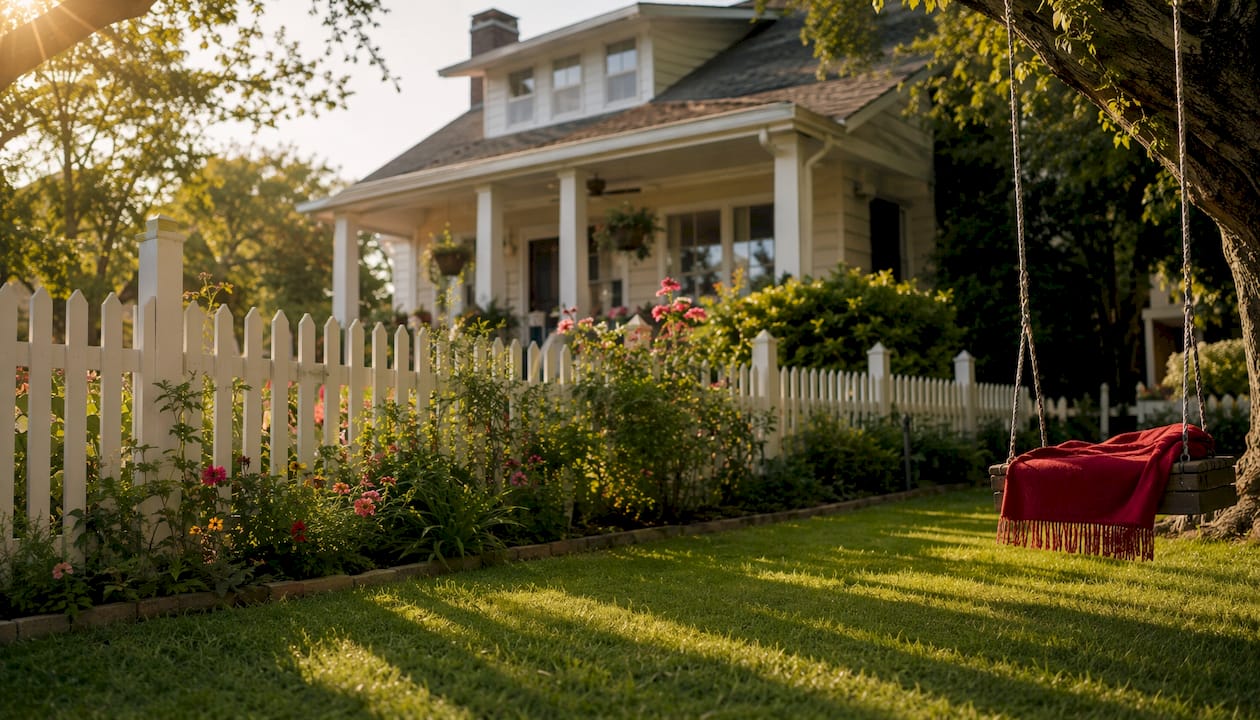
The classic American front-yard fence. Pickets run vertically with gaps between them, typically reaching a height suitable for front yard fences, generally around waist height. Privacy is low by design. The appeal is curb appeal: a well-built picket fence frames a front yard without closing it off. Painted white, it reads traditional; stained natural cedar, it reads relaxed and modern. The gaps do mean pets and small children can slip through, so it is not a containment fence.
Dog ear
Dog ear is the most common picket variation you will see in Oklahoma neighborhoods. The top corners of each board are cut at 45 degrees, giving a softer silhouette than a flat-top board. Heights run in a range appropriate for side and backyard fences, generally from mid-height to taller fences. Cost is typically lower than decorative alternatives because the cut is simple and the boards are standard dimensional lumber.
Gothic and French Gothic
Gothic pickets have a pointed top cut into a single peak; French Gothic adds a second, shallower point on either side of the main peak. Both styles add visual interest without adding cost over standard picket. They suit cottage-style homes, traditional neighborhoods, and any yard where a little architectural detail matters. Heights follow standard picket fence ranges suitable for front yards, generally around waist to chest height.
Privacy/stockade (side-by-side)
Boards are placed tightly together, edge to edge, with no gaps. The result is a solid wall, generally tall enough to block sightlines completely, often used for backyard privacy. This is the go-to style for backyards on busy streets, properties near commercial areas, and anywhere you want a true visual barrier. One limitation: because the boards are packed tightly, the fence catches wind like a sail. Post depth and concrete footings matter more here than with any open-style fence.
Board-on-board
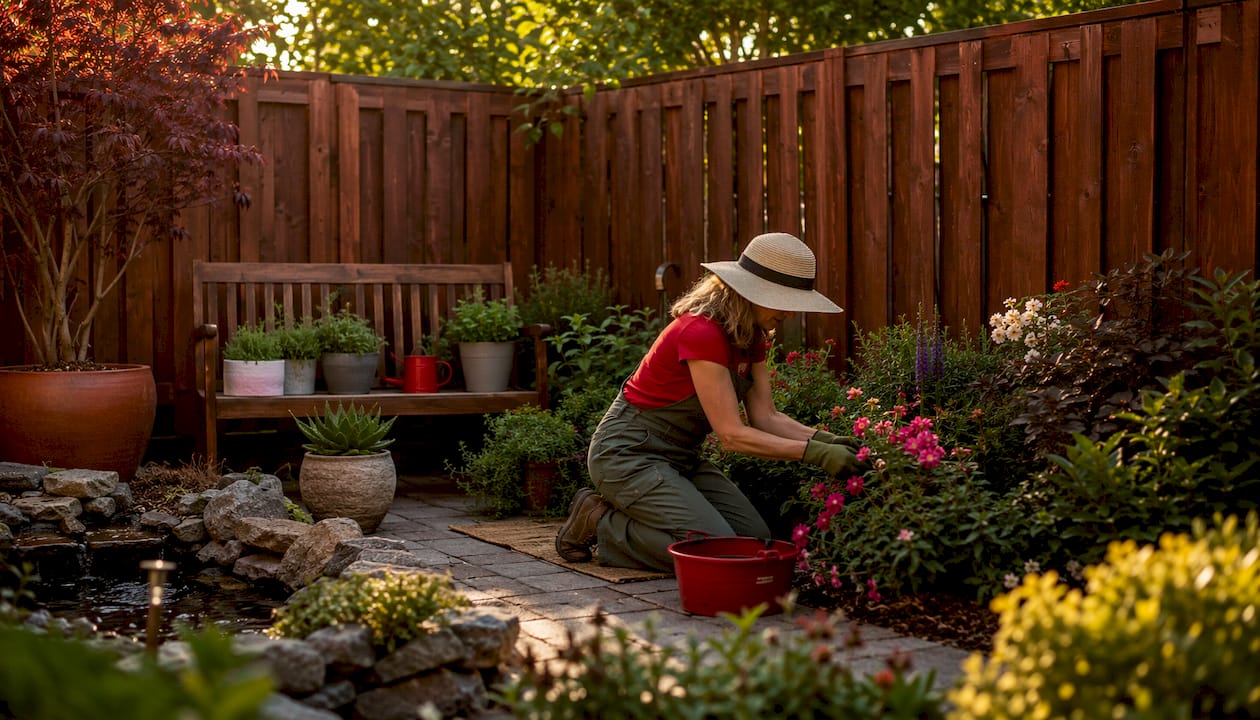
Board-on-board overlaps each picket over the next by a small amount, alternating front and back. The practical advantage is that as wood dries and shrinks over time, gaps do not appear. Board-on-board design preserves privacy after seasonal wood movement, which is why it is the preferred choice for hot tub enclosures, pool surrounds, and any application where you need privacy to hold up for years without re-boarding.
Shadowbox
Shadowbox fences alternate pickets on the front and back of the horizontal rails. Seen straight on, the fence looks nearly solid. Seen at an angle, you can see through the gaps. That gap structure lets wind pass through rather than pushing against a solid wall, which reduces load on posts and concrete footings. It is commonly called a “good neighbor” fence because both sides look finished and attractive. Heights run in the range common for privacy fences, providing medium-high privacy.
Split-rail
Two or three horizontal rails slot into notched round posts to create a rustic boundary fence. There is no privacy at all. Split-rail is a boundary marker and a landscape feature, not a containment or privacy solution. It suits large rural lots, horse properties, and front-yard acreage where you want to define the property line without blocking the view. Cedar and locust are the traditional species choices. For a deeper look at installation specifics, the split-rail fence guide covers post-setting and rail options in detail.
Horizontal slat
Boards in horizontal slat fences run side to side instead of top to bottom, providing a modern, streamlined look. The look is clean and contemporary, and it pairs well with modern architecture, mid-century homes, and minimalist landscaping. The construction challenge is that every board must be perfectly level. On a sloped lot, horizontal fences make installation errors immediately visible, and the cost of getting it right on a grade is higher than a standard vertical build. Steel posts are strongly recommended for horizontal installations.
Tongue-and-groove
Each board has a groove on one edge and a tongue on the other. The boards interlock to form a near-seamless wall with no visible gaps, providing high privacy and sound dampening. The result is the highest visual privacy of any wood style and meaningful sound dampening, making it the right choice for properties near busy roads, commercial zones, or anywhere noise is a real concern. It is also the most material-intensive style, which puts it at the higher end of the cost range.
Lattice-top
A privacy panel on the bottom with a section of diagonal lattice added above the top rail adds decorative height and allows airflow. The lattice lets light and air through while adding height and a decorative finish. It is a good compromise when you want the privacy of a 6-foot panel but prefer a less fortress-like appearance. The lattice section also reduces wind load compared to a fully solid top.
Cap and trim
Vertical boards are framed with horizontal trim pieces and a cap board along the top, creating a decorative privacy fence style. The result is the most finished-looking of all privacy fence styles. Cap and trim suits formal landscapes, upscale neighborhoods, and any property where the fence is meant to be a design feature rather than just a boundary. It requires more lumber and more labor, so it sits at the top of the cost range for wood privacy fencing.
Style comparison at a glance
| Style | Best for | Privacy level | Typical height | Maintenance effort | Durability/lifespan |
|---|---|---|---|---|---|
| Picket | Curb appeal, front yards | Low | 3–4 ft | Low–moderate | 15–20 yrs (cedar) |
| Dog ear | Side yards, budget builds | Low–moderate | 4–6 ft | Low–moderate | 15–20 yrs |
| Gothic/French Gothic | Decorative front yards | Low | 3–5 ft | Low–moderate | 15–20 yrs |
| Privacy/stockade | Full seclusion, busy streets | High | 6–8 ft | Moderate–high | 15–25 yrs |
| Board-on-board | Hot tubs, rear yards | High | 6–8 ft | Moderate | 20–25 yrs |
| Shadowbox | Shared property lines | Medium-high | 6–8 ft | Moderate | 20–25 yrs |
| Split-rail | Rural lots, boundary marking | Very low | 3–5 ft | Low | 20 yrs (cedar) |
| Horizontal slat | Modern/contemporary homes | Medium–high | 4–8 ft | Moderate | 15–20 yrs |
| Tongue-and-groove | Sound dampening, full privacy | Very high | 6–8 ft | Moderate–high | 20–25 yrs |
| Lattice-top | Decorative privacy | Medium-high | 6–8 ft | Moderate | 15–20 yrs |
| Cap & trim | Formal/upscale properties | High | 6–8 ft | Moderate–high | 20–25 yrs |
Which wood species and post type should you choose?
Material choice determines how long your fence lasts and how much work it needs over the years. Three species dominate residential wood fence construction in Oklahoma and the broader region.
- Western Red Cedar is the most recommended species for homeowners who want a low-maintenance natural look. It contains natural oils that resist rot and insects without chemical treatment, and it holds stain well. Western Red Cedar is recommended for long-term performance when budget allows, and it is the right call for most privacy and decorative styles.
- Redwood is the premium option. It resists warping and holds up in harsh weather, but it costs more than cedar and is less widely available in Oklahoma. Worth considering for high-end cap-and-trim or horizontal builds where appearance is a priority.
- Pressure-treated pine is the budget-friendly choice. It is chemically treated to resist rot and pests, widely available, and cost-effective for large projects. It requires more maintenance than cedar or redwood and tends to warp more as it dries. For split-rail or stockade builds where cost per linear foot matters most, treated pine is a practical starting point.
- Cypress contains a natural preservative oil called cypressene, making it a strong option in humid climates. Less common in Oklahoma but worth sourcing for properties in low-lying or wet areas.
Post and framing choices matter as much as the board species. Wood posts set in concrete will eventually rot at the ground line, typically within 10–15 years in Oklahoma’s clay-heavy soils. Steel posts with wood panels give you the look of a wood fence with significantly better longevity and wind resistance at the base. For horizontal slat fences and any installation in high-wind areas of eastern Oklahoma, steel posts are the practical standard.
Fasteners are a detail that gets overlooked. Standard steel screws or nails will rust and stain the wood within a few seasons. Stainless steel or hot-dipped galvanized fasteners cost a little more upfront and prevent the rust streaking that ages a fence prematurely.
Pro Tip: Ask your contractor to specify the fastener type in writing before work begins. “Galvanized” is the minimum; stainless is the upgrade worth paying for on cedar or redwood builds.
What height and permits do you need before you build?
Height and regulatory requirements are the two things homeowners most often skip, and they are the two things most likely to force a costly rebuild.
Typical height ranges by use:
- Front yard picket or decorative fence: 3–4 feet
- Side yard or transition fence: 4–6 feet
- Backyard privacy fence: 6–8 feet
- Pool enclosure (check local code): typically 4–6 feet minimum with self-closing gate hardware
Most Oklahoma municipalities require a permit for fences over a certain height, commonly 6 feet, though the threshold varies by city and county. HOA covenants add another layer: many specify allowed materials, colors, and maximum heights that are stricter than the local code. Confirm both before ordering materials.
Property lines are a separate issue. A fence built even a few inches over the line can require removal at your expense. For corner lots or any property where the boundary is unclear, a survey is worth the cost. Bring a copy of your plot plan to any contractor meeting.
Checklist to bring to a contractor or permit office:
- Plot plan or survey showing property boundaries
- HOA covenants (if applicable) with fence restrictions highlighted
- Desired fence height and style
- Gate locations and swing direction
- Any easements or utility lines near the fence line
Taller fences on slopes or near retaining walls require engineered post depths and professional installation. A 6-foot privacy fence on a 10% grade is a structurally different project than the same fence on flat ground. For more on privacy fence planning, including height-to-use-case guidance, that resource covers the key decisions in detail.
What drives the cost of a wood fence project?
Wood fence pricing varies widely based on several factors. Understanding what drives cost helps you have a more productive conversation with any contractor.
Primary cost factors:
- Linear footage — the single biggest variable; a 150-foot run costs roughly twice a 75-foot run
- Fence height — taller panels use more lumber and require deeper, more labor-intensive post setting
- Wood species — pressure-treated pine costs less per board than Western Red Cedar; redwood costs more than both
- Panel vs. custom boards — prefabricated panels install faster and cost less in labor; custom-cut boards allow more design flexibility at higher labor cost
- Post type — steel posts cost more than wood posts upfront but reduce long-term replacement costs
- Gates and hardware — each gate adds material and labor cost; self-closing hardware for pool compliance adds more
- Site prep — tree roots, rocky soil, and slopes all increase labor time and cost
- Permits — permit fees vary by municipality; factor them into the total budget
As a directional reference, wood fence installation in the region typically runs in a range from moderate to premium per linear foot depending on style and species. Split-rail and basic dog-ear stockade with treated pine sit at the lower end; tongue-and-groove or cap-and-trim in Western Red Cedar with steel posts sit at the higher end. Get at least two or three local quotes, as regional pricing in Oklahoma and western Arkansas can differ from national averages.
Typical project timeline:
- Initial estimate and on-site measurement: 1–3 days after contact
- Permit review (if required): 1–3 weeks depending on municipality
- Material lead time: 1–2 weeks for standard species; longer for custom orders
- Installation: 1–3 days for most residential projects
- Staining or sealing window: allow 2–4 weeks after installation for new wood to dry before applying finish
Spring and early summer are the busiest seasons for fence contractors in Oklahoma. Scheduling in late fall or winter often means shorter lead times and sometimes better pricing.
How do you maintain a wood fence and how long will it last?
Maintenance is where most homeowners underestimate the commitment. A wood fence is not a set-and-forget installation. The good news is that a consistent, simple schedule keeps most fences looking good for 20 years or more.
Routine care covers four areas: cleaning, inspection, re-staining or sealing, and hardware checks. Cleaning removes mildew, dirt, and the gray oxidation that develops on untreated wood. Inspection catches loose boards, cracked rails, and post movement before they become structural problems. Re-staining or sealing is the most important maintenance step because it protects the wood from moisture penetration, which is the primary cause of rot.
Style affects maintenance load. Tightly packed privacy fences, including stockade and tongue-and-groove, have more total surface area to keep sealed than open styles like split-rail or picket. High-privacy styles increase the surface area needing finish and therefore the maintenance commitment. Horizontal styles are also prone to showing water lines if drainage at the base is poor.
Typical maintenance schedule
| Task | Frequency | Notes |
|---|---|---|
| Visual inspection | Annually | Check posts, rails, boards, and hardware |
| Cleaning | Every 1–3 years | Pressure wash or hand-wash; remove mildew |
| Re-stain or re-seal | Every 2–4 years | Adjust for sun exposure and product label |
| Hardware check | Annually | Tighten hinges, check gate latches and self-closers |
| Post base inspection | Every 2–3 years | Look for rot or movement at ground line |
These are typical ranges. Follow the product label on any stain or sealer you use, and adjust frequency based on how much direct sun and rain your fence receives. Oklahoma’s summer heat and periodic heavy storms accelerate UV degradation and moisture cycling, so leaning toward the shorter end of re-staining intervals is the safer call here.
Pro Tip: Install metal posts in the ground even when using wood boards above grade. The post base is where rot starts. Eliminating wood-to-soil contact at that point is the single highest-return maintenance decision you can make.
For a full fence maintenance schedule with product-specific guidance, that resource walks through cleaning products, stain types, and interval recommendations in detail. Pairing your fence with thoughtful landscaping also matters: strategic tree trimming near the fence line reduces moisture buildup from overhanging branches and keeps the wood drier between maintenance cycles.
Design ideas and modern variations worth considering
The style you choose is the starting point. Finish and detail choices are what make a fence look custom rather than off-the-shelf.
- Dark-stained cedar is the most popular modern finish right now. A deep charcoal or espresso stain on vertical or horizontal cedar boards reads contemporary and pairs well with brick, stone, and fiber cement siding.
- Horizontal slat with steel posts is the go-to combination for mid-century and modern homes. The steel posts add structural integrity and a subtle industrial contrast to the wood grain.
- Lattice or diagonal lattice toppers on a standard privacy panel add height and visual interest without a full board extension. They also reduce wind load at the top of the fence.
- Decorative post caps are a low-cost upgrade that finishes the look of any fence style. Pyramid, ball, and flat caps each read differently; match the cap profile to the fence style.
- Mixed materials — wood panels with a stone or brick base, or wood slats with a metal frame — are increasingly common for homeowners who want a fence that functions as a landscape feature.
Pairing fence style to home architecture makes a real difference in curb appeal. Mid-century homes look best with horizontal slats and minimal trim. Cottage and craftsman homes suit white or light-stained picket with decorative post caps. Farmhouse and rural properties are natural fits for split-rail or board-on-board in a natural cedar finish. Formal traditional homes benefit from cap-and-trim privacy fencing with a painted finish.
Photo types to request from your contractor: Ask to see examples of the specific style and species you are considering, ideally on a property with a similar lot grade and home style. Photos of work 3–5 years after installation are more useful than fresh-install photos because they show how the finish holds up.
Design checklist:
- Confirm fence style matches primary function (privacy, curb appeal, containment)
- Choose wood species based on budget and maintenance willingness
- Select post type (wood vs. steel) based on site conditions and wind exposure
- Pick stain or paint color against the home’s exterior palette
- Specify post cap style and gate design before ordering materials
Plantings along a fence line can soften the look and add privacy above the fence height. Climbing vines like Virginia creeper or climbing roses work well on lattice-top sections. Keep any planting at least 6 inches from the fence boards to allow airflow and reduce moisture contact with the wood. For pool privacy landscaping ideas that combine fencing with plantings, that resource covers combinations that work well in warm climates.
For current local design trends, the fence design trends resource covers what is working in Western Arkansas and Eastern Oklahoma specifically.
Matching fence style to wind, sound, pets, and privacy needs
Looks matter, but the engineering behind a fence style determines whether it performs over time. These are the practical decisions most homeowners miss when choosing based on photos alone.
- Sound dampening: Tongue-and-groove is the clear leader. The interlocking boards eliminate gaps entirely, and the mass of the wall absorbs more sound energy than spaced-board styles. Board-on-board is a strong second choice. If your property borders a busy road or commercial area, either of these styles will make a noticeable difference.
- Wind resistance: Shadowbox fencing is the best balance of privacy and wind load management. The alternating picket design lets air pass through, reducing the pressure on posts and footings. For high-wind areas in eastern Oklahoma, shadowbox with steel posts and concrete footings set to the local frost line is the most durable combination. Solid privacy and tongue-and-groove fences catch significantly more wind and require deeper post setting and stronger framing to compensate.
- Pet and child containment: Board-on-board and stockade privacy fences are the most reliable containment options because there are no gaps for small animals or children to squeeze through. Self-closing, self-latching gate hardware is required for pool enclosures in most Oklahoma jurisdictions and is a good practice for any yard with children or dogs. For diggers, a buried wire apron or concrete footing along the base of the fence line is the practical solution.
- When to hire a professional: Complex grades, retaining wall integrations, and horizontal slat installations all require precise leveling that is difficult to achieve without professional equipment. Horizontal fences require exact installation to avoid visible errors, and on a sloped lot the complexity rises quickly. Any project involving a permit, engineered post depths, or more than 150 linear feet is worth professional installation for both quality and liability reasons. The residential fence installation guide covers technical standards for post depth and concrete methods.
How to choose a contractor and what to ask before you sign
A good contractor conversation starts before you call. Knowing what to bring and what to ask separates a smooth project from a costly one.
Step-by-step checklist:
- Measure your fence line and note any gates, grade changes, or obstacles
- Confirm property lines with your plot plan or a survey
- Review HOA rules and note any restrictions on height, material, or color
- Research permit requirements for your municipality
- Identify your top two style choices and preferred wood species
- Get a minimum of two written estimates with material specs included
- Check each contractor’s license and insurance before scheduling a site visit
- Review photo portfolios of similar completed projects
- Confirm post depth, concrete method, and fastener type in writing
- Ask about the maintenance schedule and any warranty on labor or materials
Questions to ask every contractor:
- Are you licensed and insured in Oklahoma? Can you provide proof?
- How deep will you set the posts, and what concrete method do you use?
- What wood species and grade will you use for boards and rails?
- What fasteners do you specify — galvanized or stainless?
- Can I see photos of similar projects you have completed in the last two years?
- What is your warranty on labor, and how do you handle post-installation issues?
- Do you handle permit applications, or is that the homeowner’s responsibility?
Red flags to watch for:
- Verbal-only quotes with no written material specifications
- Pressure to sign a contract before an on-site measurement
- No proof of license or insurance when asked
- Refusal to show a photo portfolio of past work
- Vague answers about post depth or concrete method
- No clear answer on who pulls the permit
The contractor checklist for homeowners covers these questions in a printable format you can bring to any contractor meeting.
Environmental impact and sustainability of wood fence materials
Wood is a renewable material, but not all wood fence choices carry the same environmental profile. The species, treatment method, and sourcing all affect the long-term sustainability picture.
Western Red Cedar and redwood are naturally durable without chemical treatment, which means they do not introduce preservative chemicals into the soil at the post base. Both species are available from sustainably managed forests certified by the Forest Stewardship Council (FSC). Choosing FSC-certified cedar or redwood is the clearest way to confirm the wood was harvested responsibly.
Pressure-treated pine uses chemical preservatives to achieve rot resistance. Modern treatments have moved away from the arsenic-based compounds used before 2004, and current formulations are considered safer for residential use. That said, treated wood requires more care at disposal and should not be burned. For homeowners prioritizing a low-chemical approach, cedar or cypress is the better starting point.
Proper maintenance extends the life of any wood fence, which is itself an environmental benefit. A cedar fence that lasts 25 years with regular staining requires far fewer resources than a treated pine fence replaced every 12 years. Choosing the right species and maintaining it consistently reduces the total material consumed over the life of the property.
How wood fencing compares to vinyl and metal alternatives
Wood is not the only option, and understanding the tradeoffs helps you confirm whether wood is the right call for your property.
Vinyl fencing requires almost no maintenance beyond occasional cleaning. It does not rot, splinter, or need staining. The tradeoff is appearance: vinyl reads as plastic, and it cannot be refinished or repainted if you want to change the color. It also has less structural rigidity than wood in high-wind conditions and can become brittle in extreme cold. For homeowners who want zero maintenance and are comfortable with the look, vinyl is a legitimate alternative.
Metal fencing (iron, steel, aluminum) offers the highest durability and the lowest long-term maintenance of any fence material. It is the right choice for security-focused applications, pool enclosures requiring specific code compliance, and properties where longevity over decades is the priority. The aesthetic is fundamentally different from wood, and metal fencing typically costs more upfront than a comparable wood installation.
Wood’s advantages over both alternatives are appearance, repairability, and design flexibility. A damaged wood board can be replaced individually. Wood can be stained, painted, or left natural. The range of styles available in wood, from split-rail to tongue-and-groove to cap-and-trim, is broader than what vinyl or standard metal fencing offers. For homeowners in Oklahoma who want a fence that looks like it belongs on a residential property and can be customized to match the home, wood remains the most versatile starting point.
How Oklahoma’s climate affects your wood fence choice
Oklahoma’s climate puts specific demands on wood fencing that homeowners in milder regions do not face. Hot summers, periodic severe storms, clay-heavy soils, and freeze-thaw cycles in the northern part of the state all affect how a fence performs and how long it lasts.
Heat and UV exposure are the primary drivers of finish degradation in Oklahoma. A fence that faces south or west receives intense direct sun for most of the day, which breaks down stain and sealers faster than shaded exposures. Plan to re-stain south- and west-facing sections on the shorter end of the 2–4 year interval.
Wind and storm exposure in eastern Oklahoma, including the Fort Smith corridor and surrounding areas, means that solid privacy fences and tongue-and-groove installations need deeper post setting and stronger concrete footings than the national average suggests. Shadowbox fencing is a practical choice in this region precisely because its alternating picket design reduces wind load without sacrificing privacy.
Clay soils hold moisture and expand when wet, which accelerates post rot and can shift post alignment over time. Steel posts set in concrete are the most reliable solution in clay-heavy areas. For wood posts, a gravel base in the post hole improves drainage and extends post life meaningfully.
Freeze-thaw cycles in northern Oklahoma can heave posts that are not set below the frost line. Confirm the required post depth for your specific county with your contractor or local building department before installation begins.
Western Red Cedar handles Oklahoma’s climate better than pressure-treated pine over the long term because its natural oils provide rot resistance without relying on chemical treatment that can leach in wet soil conditions. For properties in low-lying or flood-prone areas, cypress is worth considering as an alternative.
Key Takeaways
The right wood fence style is determined by your primary need first: privacy, curb appeal, containment, or wind tolerance, and then by material and finish choices that match your climate and maintenance commitment.
| Point | Details |
|---|---|
| Match style to function | Board-on-board and tongue-and-groove for full privacy; picket and dog ear for curb appeal; shadowbox for wind-prone shared lines. |
| Choose cedar for longevity | Western Red Cedar’s natural rot resistance outperforms treated pine over 20+ years with consistent staining every 2–4 years. |
| Steel posts extend fence life | Metal posts at the ground line eliminate the primary rot point, especially in Oklahoma’s clay soils and high-wind zones. |
| Confirm permits and lines first | Check HOA rules, local permit requirements, and property boundaries before ordering materials or signing a contract. |
| Modernfence for local installs | Modernfence serves Western Arkansas and Eastern Oklahoma with licensed, insured wood fence installation and free on-site estimates. |
Why the fence in the photo rarely matches what you actually need
There is a gap between what a wood fence looks like in a design gallery and what it takes to make that fence perform on a real Oklahoma property. Horizontal slat fences photograph beautifully. They also require perfectly level posts, precise spacing, and a flat or gently graded lot to look right after installation. On a sloped yard with clay soil and Oklahoma wind, that same fence can rack, show water staining along the bottom boards, and need re-leveling within a few years if the posts were not set correctly.
The decisions that determine long-term performance, post depth, concrete method, post material, fastener type, and drainage at the base, are invisible in any photo. They are also the decisions that separate a fence that holds up for 25 years from one that needs significant repair in 8. An experienced installer makes those calls based on your specific site conditions, not a standard template.
Homeowners who skip the on-site measurement and go straight to a price-per-panel quote are almost always comparing different things. One contractor’s 6-foot board-on-board quote may include steel posts set 36 inches deep with concrete; another’s may include wood posts set 24 inches with no concrete. The fence looks identical on paper. The performance difference over 15 years is not.
Modernfence brings more than 70 years of installation experience to every project in Western Arkansas and Eastern Oklahoma, which means the site-specific decisions get made correctly the first time.
Modernfence handles wood fence installation across Eastern Oklahoma
Modernfence is the direct alternative to a generic national fence company for homeowners in Eastern Oklahoma and Western Arkansas who want a wood fence built to local conditions, not a national template.
The Modernfence service portfolio covers everything a wood fence project requires: on-site measurement, free written estimates with full material specifications, wood fence installation in all major styles, fence staining, metal post upgrades, and ongoing maintenance services. The company is licensed and insured, family-owned with more than 70 years of operating history, and carries a photo portfolio of completed residential and commercial projects across the region.
If you are ready to move from research to a real plan, request a free on-site estimate. A Modernfence representative will measure your property, review your style and material options, and provide a written quote with full specifications before you commit to anything. Contact Modernfence directly or start with the fence installation guide to prepare for the conversation.
Useful sources and further reading
- Wood Fence Designs & Ideas | Types of Wood Fences Explained — Comprehensive overview of wood fence styles, species comparisons, and design trends; useful for visual reference and style definitions.
- 8 Popular Wood Fence Styles | Family Handyman — Construction-level guidance on board-on-board vs. side-by-side tradeoffs and Western Red Cedar recommendations.
- Best Wood Fence Options | C&W Fences and Decks — Style comparison tables with privacy level, best use, and maintenance ratings.
- Wood Fence Ideas That Make Your Yard Feel Like Home — Design inspiration with practical notes on horizontal fence installation complexity and when to hire a professional.
- Top 7 Wood Fencing Styles for Stunning Yards — Pros, cons, and construction complexity ratings for the most common residential styles.
- Privacy Fencing That Fits Your Property | Modernfence — Height-to-use-case guidance and privacy level comparisons for Oklahoma and Arkansas homeowners.
- Guide to Fence Maintenance Schedules | Modernfence — Cleaning, staining, and inspection intervals with product-specific guidance.
- Residential Fence Contractor Checklist | Modernfence — Printable checklist for contractor meetings, covering license verification, post depth, and material specs.
- Fence Staining Services That Protect Wood | Modernfence — Stain type comparisons and service options for maintaining wood fences in the region.