
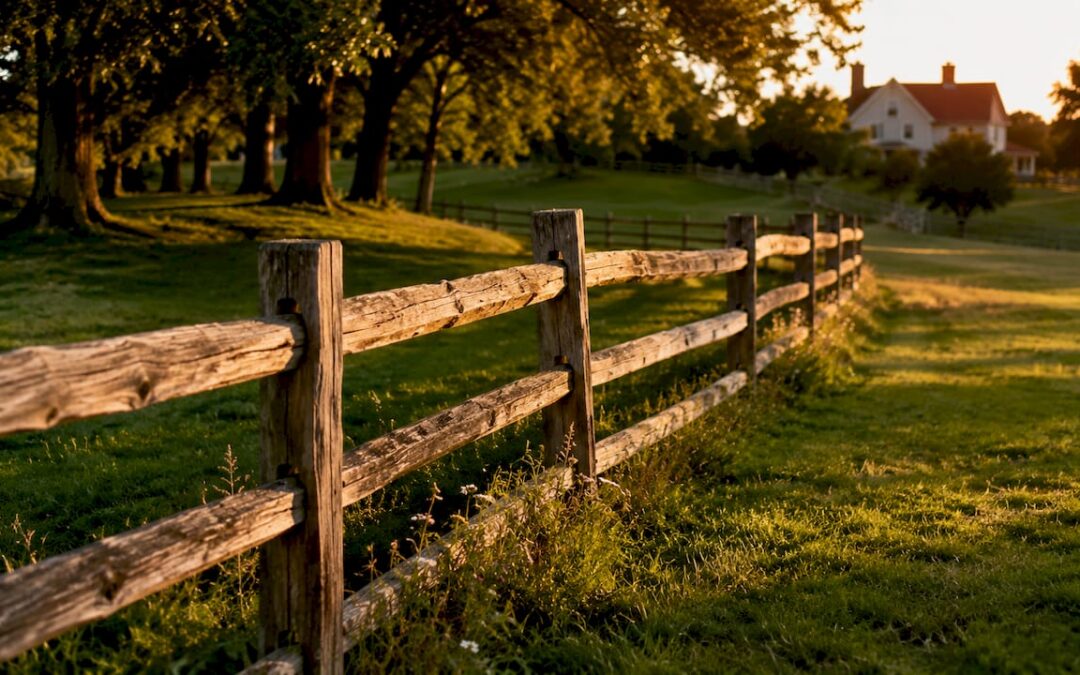
A split rail fence is a post-and-rail structure designed to define property boundaries with rustic charm and minimal visual obstruction. Known in the industry as “post and rail fencing,” this style uses round or half-round wooden rails slotted horizontally into upright posts. Standard configurations come in 2-rail or 3-rail designs, with fence heights typically between 3 and 4 feet. That height range makes this style ideal for boundary marking and landscape framing, not privacy or security. For Arkansas homeowners with large lots, rolling terrain, or livestock to manage, post and rail fencing is one of the most practical and cost-effective choices available.
1. Top 5 types of split rail fences and how to choose
Choosing the right style depends on your property’s purpose, not just its appearance. Each configuration has a distinct function.
- Two-rail: The most open and decorative option. Industry experts recommend 2-rail fences for light, airy boundaries where containment is not a priority. This style works well along driveways or garden edges.
- Three-rail: Adds a third horizontal rail for stronger visual definition and better containment backing. The extra rail also makes the fence more visible to livestock and horses. Experts recommend 3-rail designs when you need a firmer perimeter.
- Zigzag (worm) style: Also called a snake fence, this historic design stacks rails in an alternating zigzag pattern without posts. It adapts well to uneven terrain and requires no post holes, making it a practical choice for rocky Arkansas ground.
- Mortised: Posts are drilled with holes to accept the rail ends directly. This creates a structurally stable connection that resists racking and lasts longer than surface-mounted alternatives.
- Wire mesh addition: A split rail fence alone does not contain pets or livestock. Adding galvanized or coated wire mesh behind the rails solves that problem, though it adds roughly 15–25% to installation cost.
Pro Tip: Match your rail count to your primary goal. If you want a decorative boundary, two rails are enough. If you have dogs, goats, or horses, go with three rails plus wire mesh from the start.
2. Materials and finishes: wood versus vinyl
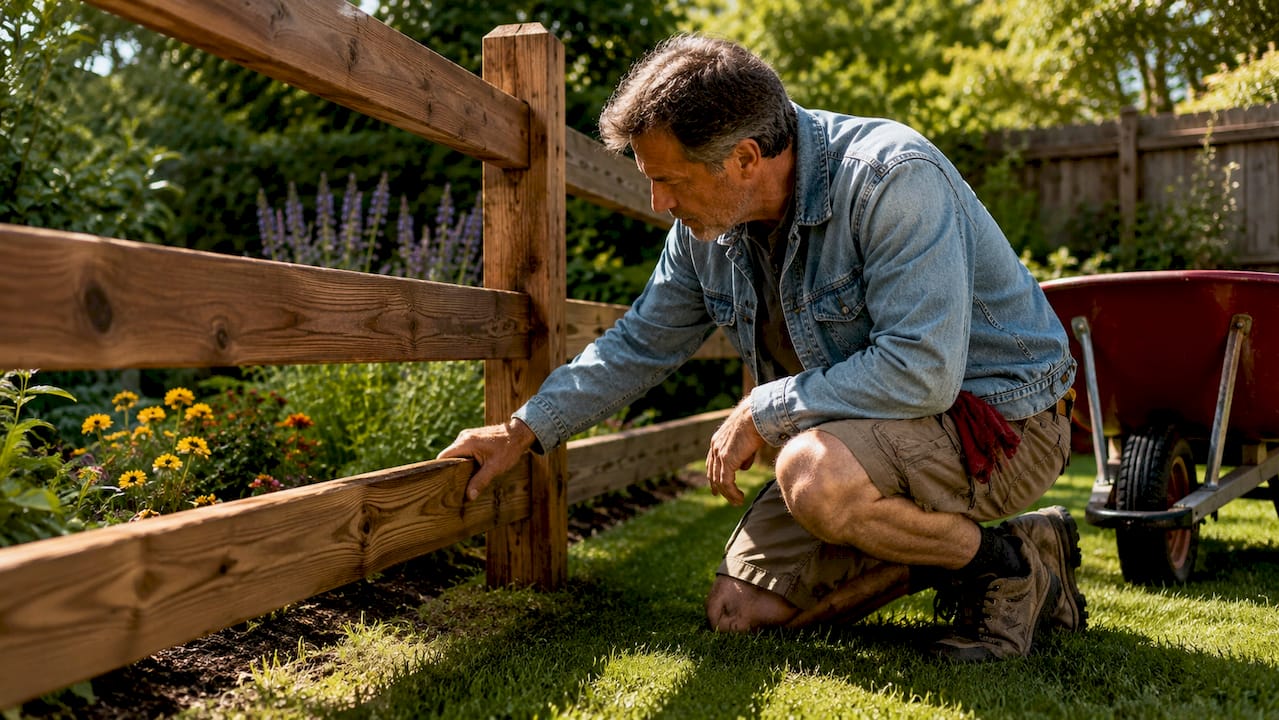
The material you choose determines how long your fence lasts and how much work you put into it over the years.
Wood options
Cedar is the top choice for split rail fencing in humid climates like Arkansas. It resists rot and insects naturally, and its reddish-brown color weathers to an attractive silver-gray. Black locust is even more rot-resistant than cedar and is one of the hardest domestic woods available, though it is harder to source. Pine is the most affordable option, but it requires pressure treatment to survive ground contact. Pressure-treated pine is widely available and holds up well when properly sealed.
| Material | Lifespan | Maintenance | Cost Level |
|---|---|---|---|
| Cedar | 15–20 years | Seal every 2–3 years | Moderate |
| Black locust | 20–30 years | Minimal | Higher |
| Pressure-treated pine | 10–15 years | Seal every 2–3 years | Lower |
| Vinyl | 20–30 years | Occasional cleaning | Moderate to higher |
Vinyl post and rail
Vinyl post and rail fences require no staining and no sealing. They hold their color and shape for decades with only occasional washing. The tradeoff is a more uniform, manufactured look that some homeowners find less charming than natural wood. For property managers who want low upkeep, vinyl is a strong choice. You can read more about vinyl fence durability before making a final material decision.
Pro Tip: In Arkansas’s humid summers, cedar or pressure-treated pine with a quality sealant outperforms untreated wood by years. Never skip the first coat of sealant before installation.
3. Step-by-step installation guide for lasting results
A proper installation starts long before the first post goes in the ground. Rushing site prep is the most common reason fences fail within a few years.
- Mark your boundary. Use stakes and string to define the fence line. Check local property surveys and call 811 to locate underground utilities before digging.
- Calculate post spacing. Standard rail lengths run 11 feet, so posts typically sit 8 to 11 feet apart. Measure your total fence line and divide by rail length to determine post count.
- Dig post holes. Hole depth matters more than most homeowners realize. Post holes must go below the frost line to prevent heaving and leaning within 1–2 years. In Arkansas, the frost line sits around 6 to 12 inches, but deeper holes always perform better.
- Set the posts. Place each post in its hole and backfill with compacted soil or concrete. Concrete provides the firmest hold, especially in sandy or loose soil. Check each post for plumb before the concrete sets.
- Install the rails. For mortised posts, slide rail ends into the pre-drilled holes. For surface-mounted styles, use galvanized hardware to secure rails to post faces. Work from one end of the fence line to the other to keep spacing consistent.
- Adjust for slopes. On rolling grades, step the fence down in sections rather than angling individual rails. This keeps the fence looking clean and prevents gaps at the base. Split rail fences adapt well to rolling grades without disrupting views, which makes them a natural fit for Arkansas’s varied terrain.
- Add wire mesh if needed. Attach galvanized wire mesh to the inside face of the rails before backfilling around posts. Secure it at the top rail and stake it into the ground at the base to prevent animals from pushing underneath.
- Apply sealant or stain. For wood fences, apply a penetrating oil-based sealant within 30 days of installation. This first coat is the most important one for long-term protection.
A standard residential installation typically completes within a few days, depending on fence length and soil conditions. Longer runs or rocky ground will add time. For a deeper look at residential fence installation best practices, Modernfence has a detailed residential fence installation guide worth reviewing before you start.
4. Maintenance practices that maximize fence lifespan
A well-maintained post and rail fence outlasts a neglected one by a decade or more. The maintenance schedule is simple, but consistency is what makes it work.
- Inspect annually. Walk the fence line each spring and look for leaning posts, cracked rails, and signs of rot at ground level. Catching problems early prevents small repairs from becoming full replacements.
- Clean before resealing. Dirt, mold, and algae block sealant penetration. Wash the fence with a mild detergent or a pressure washer on a low setting before applying any treatment.
- Reseal or restain every 2–3 years. Regular staining or sealing every 2–3 years prevents wood degradation and extends service life well beyond the baseline 3–5 years of an untreated fence. In Arkansas’s humid climate, sticking to this schedule is non-negotiable.
- Replace damaged rails promptly. A cracked or rotting rail weakens the entire fence section. Individual rails are inexpensive and easy to swap out without disturbing the posts.
- Check wire mesh annually. If you added wire mesh for pet or livestock containment, inspect it for rust, sagging, or gaps at the base. Galvanized mesh resists rust well, but coated mesh lasts even longer in wet conditions.
Pro Tip: Apply sealant in dry weather when temperatures are above 50°F. Sealant applied in cold or damp conditions does not bond properly and peels within months.
For professional fence cleaning that protects your investment, Modernfence offers fence cleaning services designed specifically for wood and vinyl fencing.
Key takeaways
A split rail fence delivers the best long-term value when you match the style, material, and maintenance schedule to your specific property needs and Arkansas climate.
| Point | Details |
|---|---|
| Rail count determines function | Use 2-rail for decoration and 3-rail for stronger perimeter definition or containment. |
| Material choice drives lifespan | Cedar and black locust outlast pine; vinyl eliminates staining requirements entirely. |
| Post depth prevents failure | Holes below the frost line stop posts from heaving and leaning within 1–2 years. |
| Wire mesh enables containment | Adding galvanized mesh behind rails adds 15–25% to cost but is required for pets and livestock. |
| Seal every 2–3 years | Consistent resealing doubles the service life of wood rail fences in humid climates. |
Why I think most homeowners underestimate this fence style
After years of working with property owners across Western Arkansas, I have noticed a consistent pattern. Homeowners either dismiss the split rail style as too simple, or they install one without thinking through their actual needs. Both mistakes cost money.
The biggest error I see is installing a two-rail fence and then adding wire mesh as an afterthought. That approach creates an awkward-looking result and often means pulling up posts to reattach mesh properly. If containment is part of the plan at all, design for it from day one.
The second mistake is choosing pine to save money upfront, then skipping the maintenance schedule. Untreated pine in Arkansas humidity degrades fast. I have seen pine rail fences look rough after just three years without proper sealing. Cedar costs more initially, but the total cost over 15 years is lower because you replace fewer rails and posts.
The thing I genuinely appreciate about post and rail fencing is how well it fits the Arkansas landscape. It does not fight the terrain. On a property with hills, trees, and natural grading, a split rail fence looks like it belongs there. A privacy fence on the same lot would look forced. For large rural lots or properties where the view matters, this style is the right call.
That said, be honest about what this fence cannot do. It does not provide privacy or high security. If either of those is a real requirement, a different fence style belongs in that part of your property. You can also find creative ideas for integrating fencing with outdoor decor and landscaping through resources like fence decoration inspiration that apply well to open-rail styles.
— mark
Modernfence: professional split rail fence installation in Arkansas
Modernfence has served homeowners and property managers across Western Arkansas and Eastern Oklahoma for more than 70 years. The team handles everything from site prep and post setting to rail installation and finishing, using materials selected for Arkansas’s climate and soil conditions.
Whether you need a two-rail decorative boundary along your driveway or a three-rail fence with wire mesh for livestock, Modernfence delivers wood fence installation built to last. The company also provides fence cleaning and staining services to protect your investment after installation. Get your free estimate by visiting modernfence.com or calling the Fort Smith office directly. Licensed, insured, and family-owned, Modernfence is the straightforward choice for post and rail fencing done right.
FAQ
What is a split rail fence used for?
A split rail fence defines property boundaries, frames landscapes, and contains livestock when wire mesh is added. It is not designed for privacy or security.
How deep should split rail fence posts be set?
Posts should be set below the local frost line to prevent heaving. In Arkansas, that means a minimum depth of 12 inches, though 18–24 inches provides better long-term stability.
How long does a wood split rail fence last?
With proper sealing every 2–3 years, a cedar or pressure-treated pine fence lasts 15–20 years. Without maintenance, lifespan drops to 3–5 years in humid climates.
Can a split rail fence contain dogs or livestock?
A standard split rail fence alone cannot contain most animals. Adding galvanized wire mesh to the inside of the rails is required for effective pet or livestock containment.
How much does it cost to add wire mesh to a split rail fence?
Wire mesh adds roughly 15–25% to the base installation cost. The exact amount depends on fence length, mesh gauge, and labor rates in your area.