
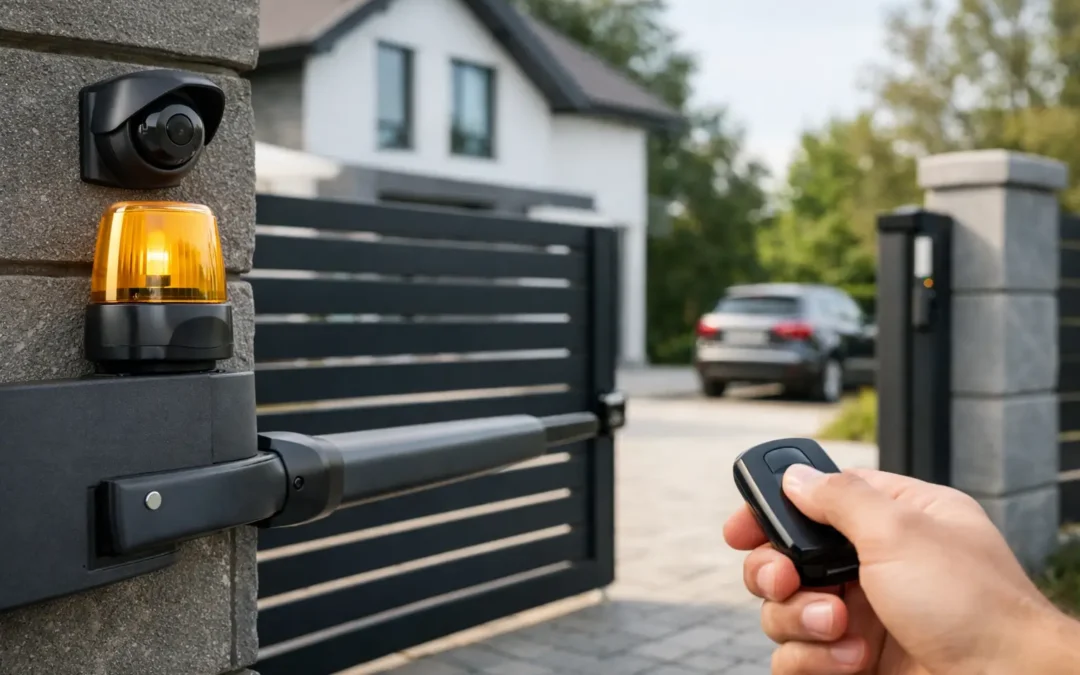
A gate should do more than open when a vehicle arrives. It should help control who enters, protect the people and assets behind it, and fit the way a property is actually used. Modern gate automation trends are moving beyond basic remote controls toward practical systems that give homeowners, businesses, and property managers more visibility and control.
For a home, that may mean opening the gate for a delivery driver without leaving the kitchen. For a commercial property, it can mean managing employee access, visitor traffic, and after-hours entry from one organized system. The best choice is not always the system with the most features. It is the one designed for the gate, traffic level, power source, and security needs of the property.
Modern Gate Automation Trends That Matter
Mobile access is replacing the shared remote
Traditional clicker remotes remain useful, especially for family members and frequent users. But phone-based access is becoming a preferred option for many properties. A homeowner can open a gate through an app, while a manager can issue or remove access permissions without collecting physical remotes.
This is especially useful for rental properties, storage yards, contractor entrances, and businesses with changing staff. Access can be assigned to an individual rather than passed around on a shared device. Some systems also keep an activity record, allowing the property owner to see when a gate was opened and by whom.
Mobile access does depend on a reliable connection and a plan for what happens when a phone is lost, dead, or unavailable. A well-planned installation still includes practical backup entry methods, such as a keypad, remote, manual release, or monitored call box.
Video intercoms bring the front gate closer
Video intercom systems are becoming more common at residential driveways and commercial entrances because they answer a simple question: who is at the gate? Rather than opening for an unidentified vehicle, the property owner can speak with a visitor and view the entrance before granting access.
For homes, this adds convenience for guests, service technicians, and deliveries. For businesses, it can reduce unnecessary trips to the gate and help staff direct visitors to the right entrance. A video intercom is most effective when camera placement, lighting, and gate location are considered together. A high-quality unit cannot compensate for a poor view caused by darkness, glare, or an obstructed approach.
Credential-based access is growing for commercial sites
Commercial gate automation increasingly uses credentials such as key cards, fobs, keypad codes, and vehicle tags. These methods make sense where many people need controlled access throughout the day, including employee parking areas, private facilities, apartment communities, equipment yards, and secured job sites.
The advantage is accountability. Instead of changing a gate code every time an employee leaves, a manager can deactivate one credential. Codes can also be separated by user group, shift, or contractor. This keeps access management more organized without making daily entry difficult for approved users.
The right credential depends on the site. Keypads are simple and familiar but codes can be shared. Fobs are easy to issue but can be misplaced. Long-range vehicle access is convenient for active traffic lanes but requires careful setup so the gate does not open for unauthorized vehicles nearby. There is no one-size-fits-all answer.
Safety Is the Most Valuable Upgrade
Convenience gets attention, but safety equipment should guide the design of any automated gate. A moving gate has real weight and force behind it. Proper safeguards protect vehicles, pedestrians, pets, and the gate operator itself.
Current systems often combine photo eyes, monitored safety devices, reversing edges, warning signs, and well-designed vehicle loops. These components help the operator detect an obstruction or prevent the gate from closing on a vehicle. They also need to be installed, tested, and maintained correctly. A safety device that is dirty, damaged, misaligned, or bypassed cannot do its job.
Gate design matters just as much as electronics. A sliding gate needs a clear travel path, while a swing gate needs room to open safely without extending into a road, sidewalk, or parking area. The fence line, grade, drainage, and nearby utilities all affect what can be installed safely. An experienced contractor evaluates these conditions before recommending an operator.
Solar Power Expands Where Automation Can Work
Solar-powered gate operators are a practical option for rural driveways, agricultural properties, remote entrances, and sites where running electrical service would be costly or disruptive. Improvements in solar panels, batteries, and low-power operators have made this option more dependable than many owners expect.
Still, solar is not automatic in every setting. Gate size, daily cycles, shade from trees, seasonal weather, and the number of accessories all influence performance. A gate that opens a few times a day has very different power needs than a busy commercial entrance with frequent traffic, lighting, cameras, and multiple access devices.
A proper assessment looks at the entire system, not just whether a panel can fit near the gate. In some cases, hardwired power is the more dependable long-term choice. In others, solar avoids trenching and makes automation possible where it would otherwise be impractical.
Smarter Operators Need Stronger Site Planning
Modern operators can provide alerts, programmable schedules, and diagnostic information that helps identify a problem before it becomes a complete failure. Some systems can notify an owner when a gate remains open longer than expected or when an access device has an issue. Those features can be valuable for properties that are vacant overnight or located away from the owner.
However, smart features do not fix a poorly built gate. The gate frame, rollers, hinges, track, posts, and hardware must be sized and installed for the operator and the expected use. An operator working against a sagging swing gate or a rough sliding track will wear out faster, create safety concerns, and lead to frustrating service calls.
This is why automated gate projects should be planned as complete entry systems. The gate structure, supporting fence, electrical needs, drainage, access controls, and safety devices need to work together. Retrofitting automation onto an existing gate can be a good investment, but only after the gate is inspected for proper alignment and structural condition.
Design Is Becoming Part of Security Planning
Property owners no longer have to choose between a secure entrance and an attractive one. Custom metal fabrication, ornamental iron, wood, vinyl, and chain link can all be incorporated into gate designs that reflect the property while providing controlled access.
For a residential driveway, a decorative gate may create a stronger first impression while adding privacy and security. For a commercial property, the priority may be visibility, durable materials, and a layout that directs traffic efficiently. In either case, the appearance of the gate should support its purpose. A beautiful entry that creates vehicle backups or limits emergency access is not a successful design.
Traffic patterns deserve special attention. Consider where vehicles wait while the gate opens, whether a truck needs a wider opening, and how visitors will find the call box without blocking a public road. On sites across Western Arkansas and Eastern Oklahoma, uneven terrain and changing weather can also affect post placement, drainage, and equipment selection.
What to Consider Before Choosing an Automated Gate
Before selecting an operator or access device, start with how the entrance is used on an ordinary day and during an emergency. Consider how many vehicles enter, which users need access, whether the gate must accommodate trailers or service trucks, and what level of visitor screening is needed.
It also helps to decide who will manage the system after installation. A homeowner may want a simple keypad and remote. A property manager may need user permissions, audit records, and easy ways to update credentials. A business may need the gate to coordinate with existing security practices. More technology is only useful when the people responsible for the property can operate it confidently.
Maintenance should be part of the decision from the beginning. Gates need periodic inspection, cleaning, lubrication where appropriate, and testing of safety devices. Keeping the track clear, trimming vegetation around sensors, and addressing unusual noise or slow operation early can prevent larger repairs later.
A dependable automated entrance begins with a careful site review, not a catalog of gadgets. Modern Fence Company can help property owners evaluate gate construction, access needs, safety requirements, and the conditions that will shape long-term performance. The right system should make entry easier while giving you greater confidence in the perimeter you rely on every day.