
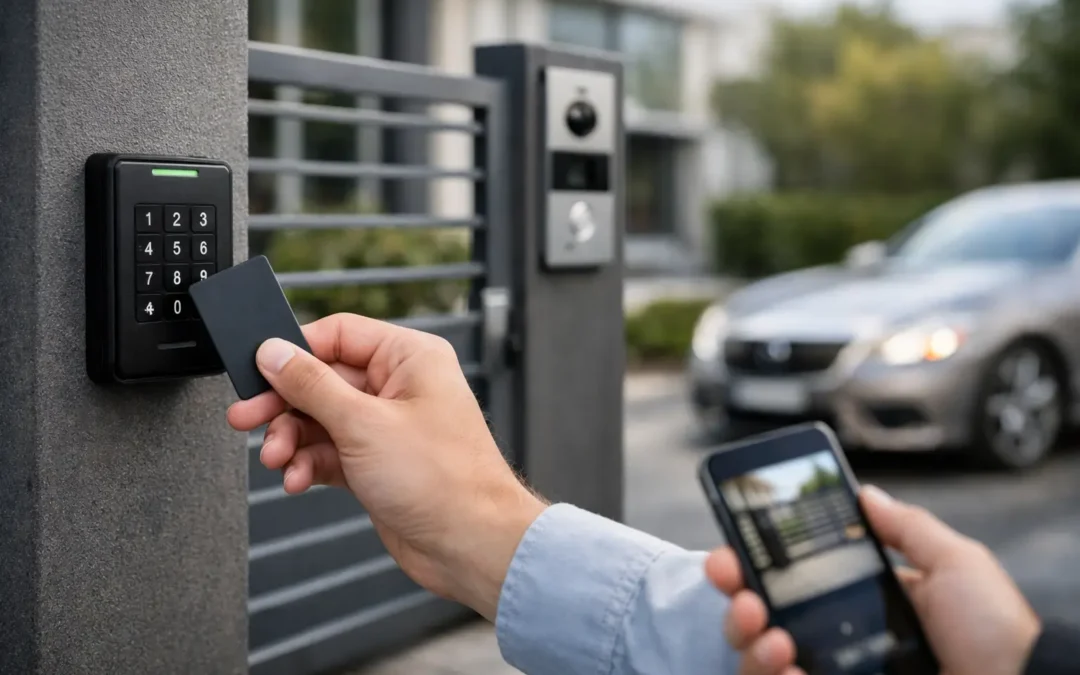
A gate that stays open too long, a keypad that frustrates tenants, or an entrance that anyone can walk through can create more trouble than most property owners expect. Good access control fixes that. It gives you a practical way to decide who gets in, when they get in, and how your property stays protected without turning daily use into a headache.
For homeowners, that might mean more privacy and better control at the driveway. For a business, it usually means managing traffic, protecting equipment, reducing liability, and keeping operations moving. The right setup is not just about security. It is also about convenience, appearance, and choosing a system that fits how the property is actually used.
What access control really does
At its core, access control manages entry points. That can be a driveway gate at a home, a controlled vehicle entrance at an apartment community, or a commercial gate system serving employees, deliveries, and vendors. Instead of leaving entry to chance, you put a system in place that sets the rules.
Those rules can be simple or more advanced. A homeowner may want a keypad and remote entry. A commercial property may need card readers, phone entry, scheduled access hours, or integration with a gate operator. The best solution depends on traffic volume, the level of security needed, and how much day-to-day management the owner wants to handle.
This is where experience matters. A system can look good on paper and still perform poorly if it does not match the gate design, site conditions, or the way people actually enter and exit the property. That is why planning matters as much as equipment selection.
Access control for homes and businesses is not the same
Residential and commercial properties often need very different results. A homeowner is usually looking for privacy, curb appeal, and dependable entry without a lot of complexity. In that case, a clean gate design paired with a straightforward access system may be the right fit. The goal is control without making every arrival feel like a chore.
Commercial properties usually have more moving parts. Employees arrive at different times, vendors need occasional access, and customers may need clear entry instructions. Some sites also have safety concerns tied to traffic flow, expensive inventory, or limited parking. In those settings, access control has to do more than block unwanted entry. It has to support daily operations.
A contractor yard, storage facility, industrial site, or multifamily property may all need controlled access, but not in the same way. One might need heavy-duty hardware and reliable operation through frequent cycles. Another might need a system that is easy for managers to update when users change. There is no one-size-fits-all answer, and that is usually where property owners save money in the long run – by choosing the right system first instead of replacing the wrong one later.
Choosing the right access control system
The first question is not which keypad or gate operator to buy. It is how the entrance needs to function every day. If the answer is not clear, the equipment decision usually gets rushed.
Think about how many people use the entrance, whether vehicles stack up at busy times, and how important speed is. A private residence with occasional visitors has very different demands than a business with steady in-and-out traffic. If a gate causes backups or confusion, it can become a daily frustration instead of an asset.
The next issue is user management. Some owners prefer simple codes. Others want credentials that can be added or removed without sharing one code across too many users. If tenants, employees, subcontractors, or delivery drivers need different levels of access, that should shape the system from the start.
Then there is the physical site itself. Slope, available space, utility access, and fence layout all affect what works. Swing gates, slide gates, and automated entry points each have their place, but the property has to support the design. A strong access control system is not just electronics. It is the gate, the hardware, the layout, and the installation working together.
Where property owners often make the wrong call
One common mistake is focusing only on the entry device and not the full perimeter. A keypad alone does not solve much if the fence line has weak points or the gate hardware is not built for the job. Security works best when every part of the entrance is considered together.
Another mistake is underestimating use. A system that seems fine for light traffic may wear out quickly on a busy commercial property. That can lead to downtime, service calls, and unhappy tenants or staff. Going too light-duty to save money up front often costs more later.
There is also the issue of convenience. Some owners choose a system with more features than they will ever use, and then nobody wants to manage it. Others go too basic and end up with poor control over who has access. The right answer is usually somewhere in the middle – enough capability to serve the property well, without unnecessary complexity.
Why installation quality matters as much as the system
Even the best equipment can disappoint if it is installed without precision. Gate alignment, post stability, operator placement, wiring, and safety components all affect long-term performance. Small installation errors can lead to uneven movement, early wear, inconsistent opening, or avoidable service problems.
That is especially true with automated gates and controlled entries. These systems need to work reliably in real conditions, not just on day one. Weather, dust, traffic, and repeated use all expose weak installation work. Property owners usually notice the same thing over time: quality craftsmanship is not an extra. It is what keeps the system dependable.
A properly planned and installed entrance also looks better. That matters more than some people expect. For homes, access control should add value without making the front entrance feel harsh or industrial. For businesses, a well-built gate system creates a stronger first impression and shows that the property is organized and cared for.
Access control and long-term property value
A controlled entrance can add value in ways that are easy to overlook. It can improve privacy, reduce unauthorized traffic, and support better use of the property. In some cases, it can also help owners feel more comfortable leaving equipment, vehicles, or outdoor assets behind the fence.
For residential properties, buyers often respond to features that combine security with convenience. A gated entrance can strengthen that appeal when it is well designed and easy to use. For commercial properties, controlled access can support tenant confidence, help with site management, and reduce avoidable disruptions.
That does not mean every property needs the most advanced setup available. It means the entrance should match the goals of the property owner. Sometimes a simple automated gate and keypad are enough. Sometimes a more structured solution is worth it because the site has more risk, more users, or more daily traffic to manage.
Access control works best when it is tailored
The strongest projects start with a clear look at the property, the people using it, and the problems that need solving. That may include limiting casual access, improving after-hours security, reducing traffic confusion, or making entry easier for residents, employees, or approved visitors.
In Western Arkansas and Eastern Oklahoma, property layouts vary quite a bit. Some sites have tight entry space. Others deal with uneven terrain, heavy use, or specific operational needs. That is why a tailored approach matters. What performs well at one property may not be the right answer at the next.
Modern Fence Company has seen that firsthand across residential and commercial projects. The best results usually come from combining strong gate construction, the right hardware, and a practical understanding of how the site works every day.
A better entrance starts with the right plan
If you are considering access control, start with the basics: who needs access, how often they need it, and what kind of experience you want at the gate. From there, the right system becomes much easier to identify.
A good entrance should do its job quietly. It should protect the property, support daily use, and hold up over time without constant attention. When access control is planned well, it becomes one of those improvements you notice less and appreciate more every day.