
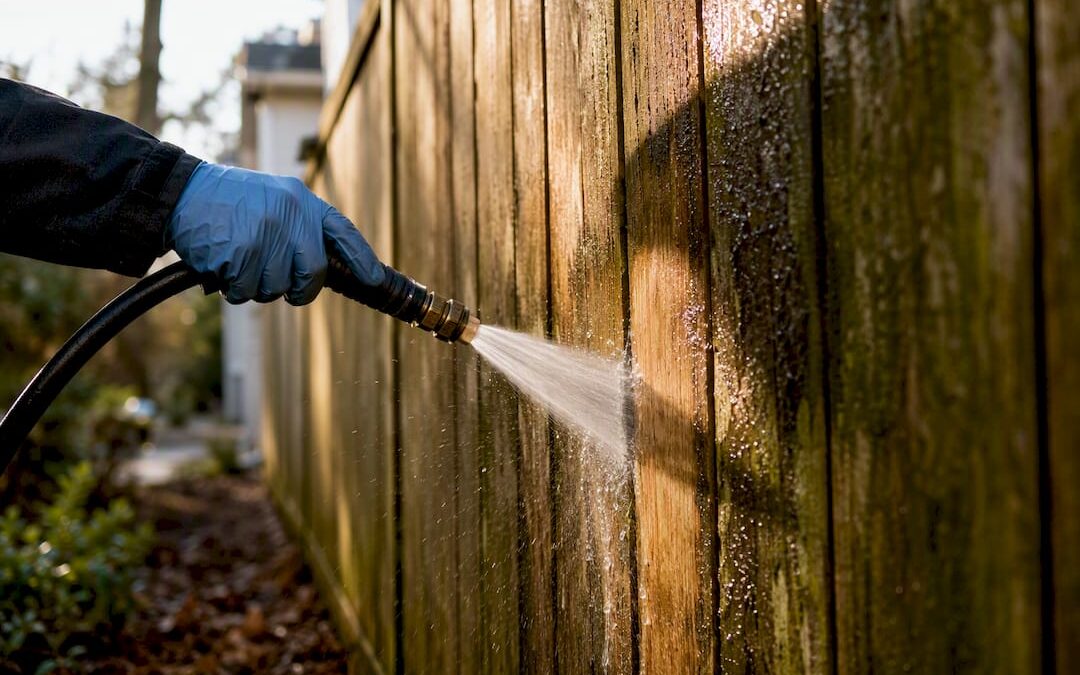
For most fences, a soft wash beats a power blast every time. Wood responds best to an oxygen-bleach solution and a soft rinse, while vinyl cleans up with mild dish soap and water or a vinyl-safe surfactant. Skip high pressure on older wood or brittle vinyl, and call a professional soft-wash crew if you’re facing a long fence run or heavy algae and mold coverage.
TL;DR:
- Using oxygen-bleach soft washing on older vinyl prevents yellowing and chalking, with recommended dwell times of 10 to 15 minutes for biological growth.
- Pressure washing should stay within 500 to 800 PSI for wood to avoid splintering, with wide-fan nozzles at an 8 to 12 inch distance for vinyl.
- For wood fences, avoid chlorine bleach and high PSI; instead, apply an oxygen-bleach solution, let it dwell, then gently scrub and rinse thoroughly.
- Composite fencing responds best to mild cleaners and soft brushes, while metal rust requires oxalic acid treatment and repainting after removing corrosion.
- Proper preparation, including landscape protection and tool selection, along with cautious pressure use, minimizes repair risks and enhances cleaning effectiveness.
Table of Contents
- What Are the Main Fence Cleaning Methods?
- How Do You Clean a Vinyl Fence Step by Step?
- What’s the Safest Way to Clean a Wood Fence?
- How Do You Clean Metal, Composite, and Chain-Link Fencing?
- What Tools and Cleaners Do You Need Before You Start?
- What’s the Safe Pressure-Washing Sequence Step by Step?
- How Often Should You Clean Your Fence?
- What Do Contractors See That Homeowners Miss?
- Why Method Matters More Than Effort
- When Cleaning Turns Into a Bigger Fence Project
- Sources
What Are the Main Fence Cleaning Methods?
Four approaches cover almost every fence cleaning job you’ll face: soap-and-water, oxygen-bleach soft wash, pressure washing, and hand-scrubbing. Each one fits a different combination of material and mess.
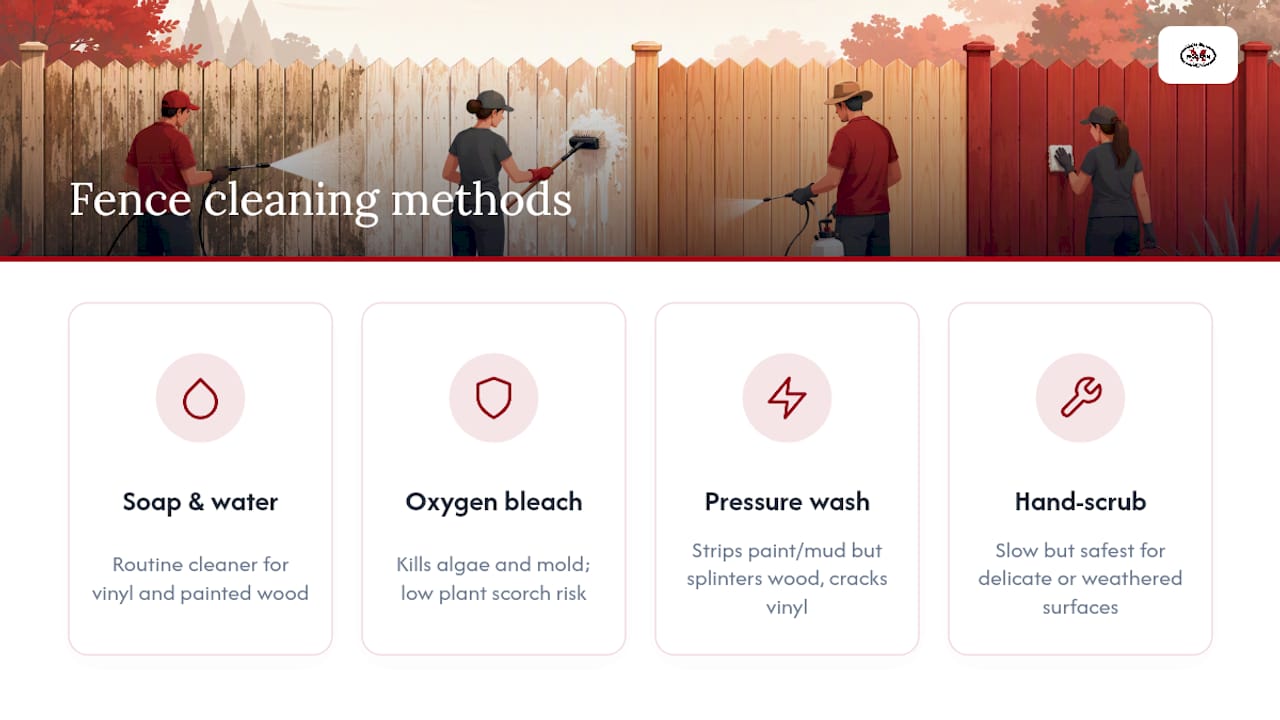
Soap-and-water is your routine cleaner. Mild dish detergent mixed into warm water lifts dust, pollen, and light grime from vinyl and painted wood without touching the finish. It won’t do much against established mold or algae, but for maintenance washes, it’s usually all you need.
Oxygen-bleach soft washing is the workhorse for biological growth. Sodium percarbonate solutions kill algae and mold on contact and break down into water, oxygen, and soda ash, so they won’t scorch the grass or shrubs along your fence line the way chlorine bleach can.
Pressure washing gets misused more than any other method on this list. It’s effective for stripping loose paint or caked mud, but too much force splinters wood fibers and can crack aging vinyl seams.
Hand-scrubbing with a soft-bristle brush is slower, but it’s the safest option for delicate or already-weathered surfaces.
Common mistakes: using undiluted chlorine bleach, holding a pressure-washer wand too close to seams, and skipping eye protection when mixing cleaners. For PPE, keep rubber gloves, safety glasses, and old clothes on hand. If your fence runs longer than 100 linear feet or shows heavy black algae streaking, a soft-wash service will finish faster and with less risk than a weekend DIY attempt.
How Do You Clean a Vinyl Fence Step by Step?
Vinyl is forgiving compared to wood, but it still punishes the wrong chemicals and the wrong nozzle. Here’s the sequence that handles routine grime, algae, and hard-water spotting.
- Mix your routine cleaner. Combine a quarter cup of mild dish soap per gallon of warm water in a bucket or pump sprayer.
- Wet the fence first. A quick hose-down loosens surface dust before you apply anything.
- Scrub in sections. Work a soft-bristle brush in small areas, top to bottom, so soap doesn’t dry before you rinse it.
- Rinse thoroughly. Use a garden hose or low-pressure setting to clear all soap residue.
- Treat mold and algae separately. Apply a vinyl-safe oxygen cleaner or surfactant to green or black patches, let it dwell 10 to 15 minutes, then scrub and rinse.
- Handle hard-water deposits with vinegar. A spot treatment of white vinegar diluted in water dissolves mineral film without pitting the surface. Rinse well afterward so the acid doesn’t linger.
If you’re bringing in a pressure washer, stick to wide-fan nozzles between 25 and 40 degrees and hold the wand 8 to 12 inches from the surface. Never use a zero-degree tip on vinyl, and avoid blasting directly into panel joints or post seams. The concentrated stream can force water behind the panels or split aging caulk.
Pro Tip: Repeated aggressive pressure washing accelerates yellowing and chalking on older vinyl. If your fence already looks faded, switch to a vinyl restorer instead of washing it more often.
For a fuller walkthrough with photos and material-specific warnings, see Modernfence’s guide on cleaning vinyl fences without damaging them.
What’s the Safest Way to Clean a Wood Fence?
Wood punishes shortcuts. The wrong chemical or too much PSI turns a cleaning job into a repair job, so the method matters more here than with any other material.
Skip chlorine bleach entirely. Bleach breaks down wood lignin over repeated use, weakening fibers and leaving the surrounding soil and plants at risk. Oxygen bleach, made from sodium percarbonate, does the same job of killing mold, mildew, and algae without that downside.
- Mix the oxygen-bleach solution according to the product label and load it into a pump sprayer.
- Apply evenly across the fence, working in manageable sections so the solution doesn’t dry before you can scrub it.
- Let it dwell for 10 to 15 minutes. This is where the real cleaning happens, not the scrubbing.
- Hand-scrub gently with a soft-bristle brush, moving with the grain rather than against it, to avoid raising the wood fibers.
- Rinse at low pressure, keeping any pressure washer at 500 to 800 PSI maximum for wood.
Statistic Callout: Pressure above roughly 1,200 PSI on wood risks splintering boards and raising the grain permanently, which is why contractors consistently recommend staying in that 500 to 800 PSI bands for routine cleaning.
Dwell time does more work than scrubbing pressure. A soft-wash approach that lets detergent sit before rinsing removes biological growth more thoroughly than brute-force scrubbing ever will.
If you’re planning to stain afterward, wait until the wood is fully dry, typically 48 to 72 hours depending on humidity. Staining over damp or freshly-raised grain leads to uneven absorption and blotching. Modernfence’s guide to maintaining stained wood fence panels covers timing in more detail.
How Do You Clean Metal, Composite, and Chain-Link Fencing?
These materials each fail differently under the wrong cleaning method, so matching the technique to the surface matters as much here as it does with wood or vinyl.
- Composite fencing responds well to mild cleaners and soft-bristle brushes. Avoid abrasive scouring pads or scrub brushes with hard plastic bristles, since they scratch the surface finish and create grooves where dirt collects.
- Metal and wrought iron need rust addressed directly. An oxalic-acid cleaner dissolves light surface rust, while heavier corrosion may call for a rust converter before you repaint or reseal. Once rust is treated, protect the coating with a fresh clear sealant or touch-up paint.
- Chain-link usually just needs a stiff brush and a hose to knock off organic buildup like leaves, moss, and dirt trapped in the mesh. For heavier grime, a low-pressure soft wash clears it without bending the wire.
None of these materials tolerate the same aggressive treatment vinyl can handle. Composite and coated metal both hide microabrasions that show up as dullness or streaking months later.
What Tools and Cleaners Do You Need Before You Start?
Half of a successful cleaning job happens before you touch the fence. Gathering the right equipment and protecting your landscaping upfront saves you from redoing work or explaining dead shrubs to your neighbor.
Tools to have ready:
- Pump sprayer for applying cleaners evenly
- Soft-bristle brushes in at least two sizes
- Garden hose with an adjustable nozzle
- Pressure washer rated for the material you’re cleaning, if needed
Cleaners and mix ratios:
- Oxygen bleach: follow label ratios, typically dissolved in warm water, 10 to 15 minute dwell
- Vinyl-safe surfactant: apply per label, similar dwell window
- Mild dish detergent: a quarter cup per gallon of water for routine washing
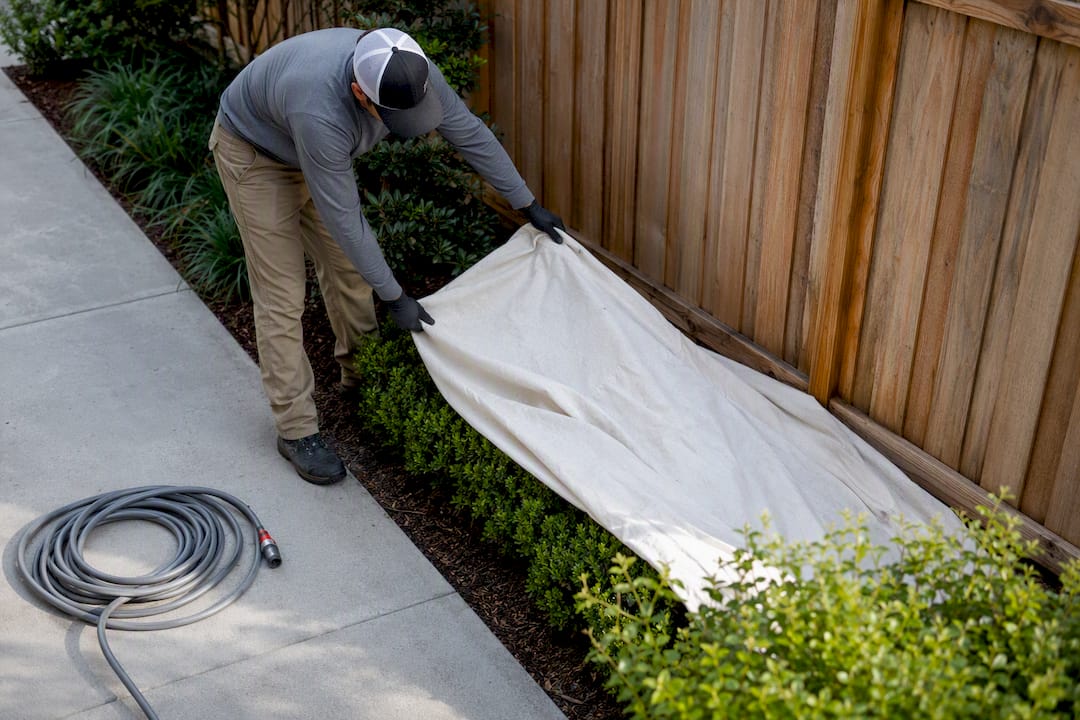
Landscape protection steps: pre-wet nearby plants so runoff doesn’t concentrate chemicals in the soil, lay plastic sheeting over flower beds, and shut off irrigation lines before you start so you’re not fighting wet ground.
Pro Tip: Keep a garden hose running nearby even when using chemical cleaners. Fast dilution is your best defense if a cleaner splashes somewhere it shouldn’t.
What’s the Safe Pressure-Washing Sequence Step by Step?
Pressure washing causes more accidental damage than any other cleaning method on this list, almost always because someone skips a step. Follow this order every time.
- Inspect the fence first. Look for loose boards, rusted fasteners, or cracked vinyl panels that need repair before they get hit with water pressure.
- Protect surrounding plants and hardscaping with sheeting or a quick pre-soak.
- Test a small, hidden section with your chosen PSI and nozzle before working the whole fence. This confirms the cleaner and pressure combination won’t strip paint or gouge the surface.
- Match PSI to material. Stay around 500 to 800 PSI for wood. Vinyl tolerates more, but keep nozzles in the 25 to 40 degree range with an 8 to 12 inch standoff regardless of material.
- Wash top to bottom so dirty runoff doesn’t resettle on sections you’ve already cleaned.
- Rinse thoroughly, then inspect again once the fence dries to catch anything the wash revealed.
This sequence takes an extra ten minutes compared to just grabbing the wand and starting, but it’s the difference between a clean fence and a costly repair bill.
How Often Should You Clean Your Fence?
Most fences need a real cleaning once a year. Properties in shaded, humid, or coastal climates should plan on twice a year, since algae and mildew take hold faster where moisture lingers.
Seasonal checklist:
- Spring: Rinse off pollen and winter grime before it bakes onto the surface in summer heat.
- Summer: Spot-check for early algae or mold, especially in shaded corners.
- Fall: Clean before staining or sealing, and clear fallen leaves from the base.
- Winter: Inspect for ice damage, loose fasteners, and areas where snow load may have stressed panels.
A few cheap habits cut down how often you need a full cleaning: trim vegetation back from the fence line so it dries faster after rain, angle sprinklers away from panels, and give the fence a quick hose-rinse after major storms. Modernfence’s maintenance schedule guide breaks this down by material if you want a printable version.
What Do Contractors See That Homeowners Miss?
The same mistakes show up on job after job: too much PSI on old wood, chlorine bleach mixed at guesswork ratios, and forgetting to protect the flower bed six inches from the fence line. Professional soft-wash crews avoid all three by controlling PSI at the pump rather than the nozzle, using detergents matched to the specific material, and tarping landscaping before the first drop of cleaner goes down.
A quick inspection during the wash also catches loose posts and corroded fasteners before they become bigger repairs.
Decide DIY versus professional based on four factors: total fence length, the age and condition of the material, how much biological growth you’re dealing with, and how close the fence sits to landscaping you can’t afford to lose. If two or more of those tilt toward “complicated,” hiring a soft-wash crew usually costs less than fixing a DIY mistake.
Why Method Matters More Than Effort
Most fence cleaning advice online treats pressure as the solution to everything, and that’s backwards. The research on wood and vinyl both point the same direction: chemistry does the real work, and pressure is just there to rinse it away. Homeowners who assume “more PSI equals cleaner fence” end up sending their wood fence into an early repaint or cracking vinyl seams that were fine the week before.
The conventional wisdom oversells DIY pressure washing and undersells dwell time. A cheap pump sprayer and 15 minutes of patience will outperform an expensive pressure washer used carelessly, every time. If there’s one thing worth prioritizing first, it’s matching the cleaner to the material, not upgrading your equipment.
Where I’d push back hardest: skip the pressure washer altogether for wood unless you’re confident in your PSI control. Hand-scrubbing after an oxygen-bleach soak is slower, but it’s nearly impossible to mess up.
— mark
When Cleaning Turns Into a Bigger Fence Project
Sometimes a wash reveals more than dirt. Rotted posts, sagging chain-link, or vinyl panels too chalked to restore are common discoveries once you get up close with a brush and hose. Fence companies with extensive experience in the region often find that cleaning jobs reveal repair needs homeowners never noticed from the porch.

Our services cover routine and deep-cleaning packages, stain prep for wood fences heading into a fresh coat, and repairs for anything a cleaning uncovers, from loose posts to insurance-grade storm damage. We also handle temporary fencing if a cleaning or repair project means your yard needs a stand-in barrier for a few days. If your fence is older, runs long, or shows heavy algae and mold coverage, get a free fence installation estimate or ask about our dedicated fence cleaning services to see what a professional soft wash actually costs against doing it yourself.
Sources
The Homes and Gardens guide on algae removal explains why oxygen bleach outperforms chlorine bleach on wood without harming nearby plants. ACME Pressure Washing’s soft-wash guide breaks down why detergent dwell time beats brute-force pressure. Fence Advisors’ vinyl maintenance guide covers nozzle angles and standoff distance in detail. The American Fence Association offers broader trade-level guidance on installation and maintenance standards worth checking before any large project.
- How to remove algae from a fence: advice from an expert | Homes and Gardens
- Front yard fence clean: Easy, safe guide | ACME Pressure Washing
- How to Clean & Maintain Vinyl Fence: Remove Mold, Algae & Stains | Fence Advisors