
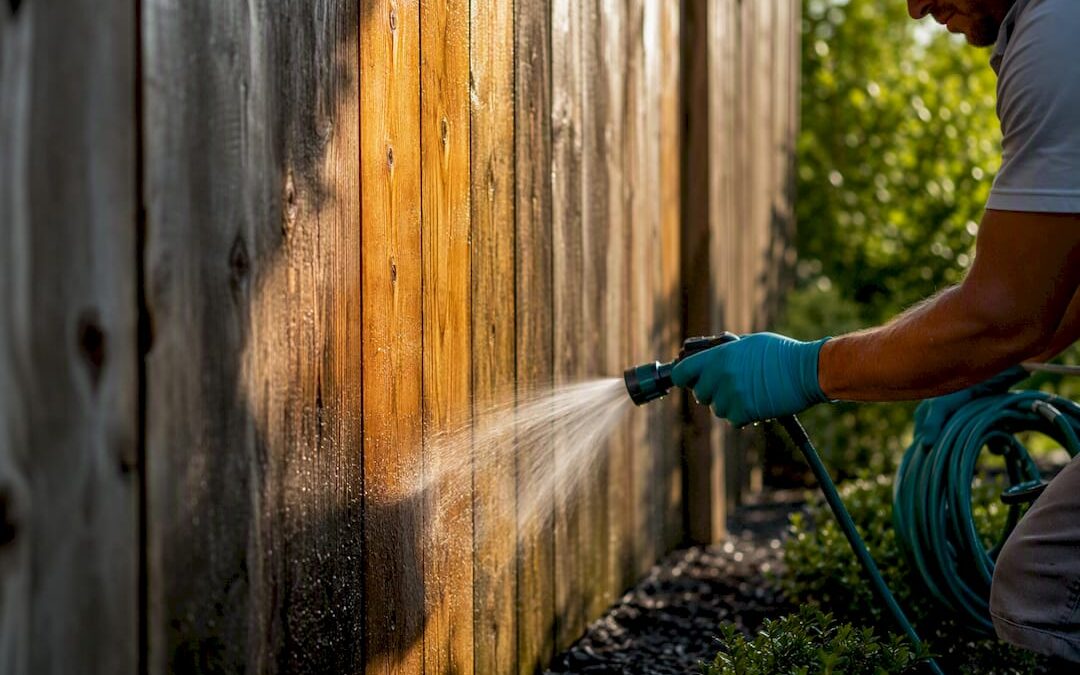
Soft washing is the right call for most wood, vinyl, and painted fences, and the rule that matters more than any other is simple: low pressure, correct chemistry, adequate dwell time. High-PSI blasting strips fibers and drives water behind panels. Follow the checklist and step-by-step process below, and you’ll get results that actually last.
TL;DR:
- Use a soft wash with low pressure under 500 PSI and a sodium metasilicate-based cleaner to effectively remove organic growth without damaging the fence surface.
- Always test a small hidden section first and dilute cleaning solutions based on growth severity to prevent over-bleaching or uneven results.
- For larger fences or heavy buildup, consider professional services with high-capacity systems to avoid damaging equipment or incomplete cleaning.
- Protect surrounding plants by pre-wetting, covering sensitive flora, and rinsing immediately after each section to minimize chemical runoff risks.
- Schedule full staining or sealing 24 to 48 hours after cleaning to ensure proper absorption and long-lasting results.
Table of Contents
- What Do You Need for Soft Washing a Fence?
- What Is Soft Washing and How Does It Differ From Pressure Washing?
- Which Cleaners Actually Work Without Bleaching Your Fence?
- Should You Use a Pump Sprayer or a Pressure Washer?
- How Do You Soft Wash a Fence Step by Step?
- How Do You Protect Plants and Control Runoff?
- Should You Soft Wash Your Fence Yourself or Hire a Pro?
- How Often Should You Soft Wash and Reseal a Fence?
- What Do Professionals See That Homeowners Often Miss?
- Ready to Restore Your Fence the Right Way?
- Sources
What Do You Need for Soft Washing a Fence?
Before you mix anything, lay out what the job actually requires. Soft washing fences is not complicated, but skipping a step here is where most DIY jobs go sideways.
Materials checklist:
- Pump sprayer (1 to 4 gallon) or a pressure washer with a downstream injector
- Wood-safe cleaner (sodium metasilicate based, not straight bleach)
- Garden hose with an adjustable fan nozzle for rinsing
- Soft-bristle deck brush or pole brush for stubborn spots
- Tarps or plastic sheeting for nearby plants and hardscaping
- Gloves, safety glasses, and a respirator mask rated for chemical mist
Dilution ranges depend on how much growth you’re dealing with. Start conservative. You can always go back over a stubborn patch.
Pro Tip: Mix a small test batch and apply it to a hidden fence section first. If the wood looks lighter or streaky after 10 minutes, dilute further before treating the whole run.
Keep surface pressure under 500 PSI, and closer to 60 to 100 PSI for the actual application step. Budget roughly 20 to 30 minutes per 100 linear feet for application and dwell time, plus rinse time on top of that. A standard 6-foot privacy fence around a typical backyard often runs two to four hours start to finish, depending on growth severity.
What Is Soft Washing and How Does It Differ From Pressure Washing?
Soft washing relies on chemistry to do the work; pressure washing relies on force. That distinction changes everything about how each method treats your fence.
A soft wash applies a cleaning solution at low pressure, typically under 500 PSI and often in the 60 to 100 PSI range, then lets it sit and break down organic material before a gentle rinse. Pressure washing runs 1,500 to 4,000+ PSI, physically stripping contaminants off the surface through sheer water force.
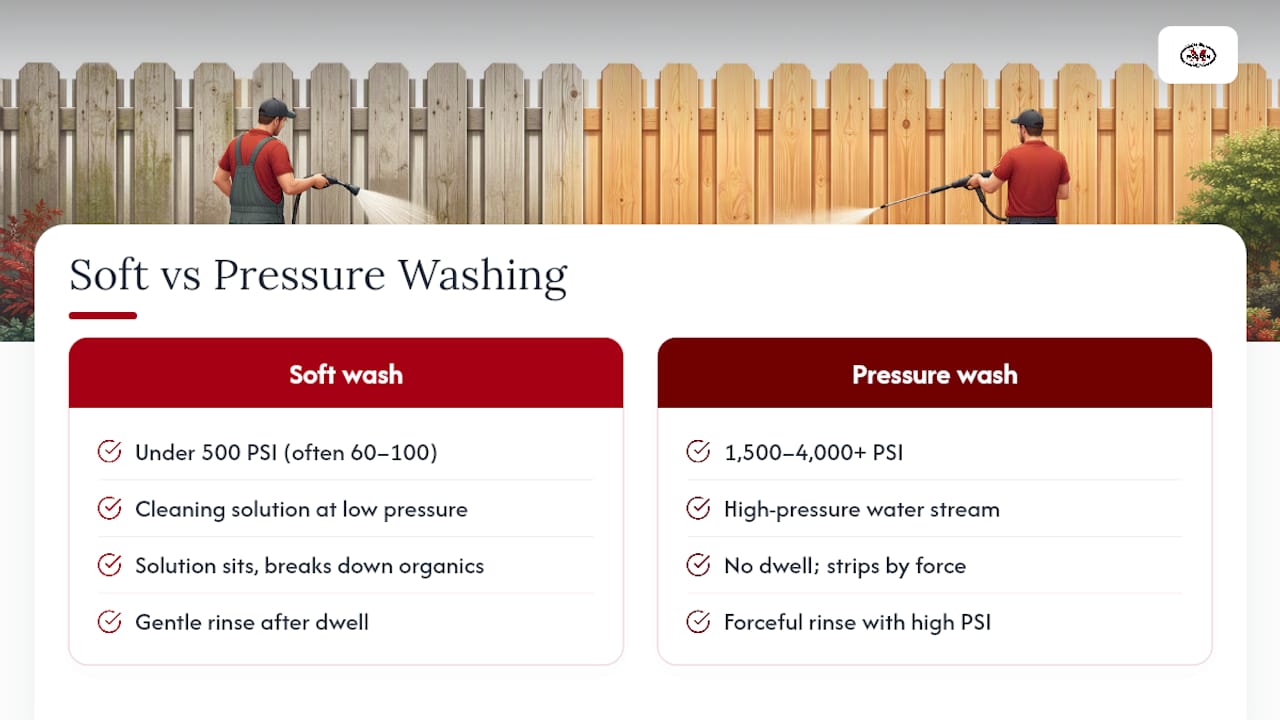
The chemistry in a soft wash doesn’t just clean what’s visible. It kills algae, mildew, and mold spores at the root, including growth embedded in wood grain that a pressure stream would only knock loose temporarily. That’s why soft-washed surfaces tend to stay clean longer than pressure-washed ones — pressure washing removes what you see, but leaves spores behind to regrow within a season.
High pressure on wood can cause permanent damage by raising and splintering fibers, which do not lie flat again even after sanding. On vinyl and painted surfaces, high pressure can force water behind panels and trim, potentially causing hidden rot or peeling.
Wood, vinyl, and painted or stained fences are best cleaned using soft washing to prevent damage. Chain link fences and concrete or masonry posts, being more durable materials, can tolerate pressure washing without significant risk.
Which Cleaners Actually Work Without Bleaching Your Fence?
Skip household bleach. Sodium hypochlorite bleach is cheap and it does kill surface growth, but it also bleaches wood fibers, strips natural tannins, and can scorch the grass and shrubs at the base of your fence line. It’s the reason so many “cleaned” fences end up looking chalky and flat instead of restored.
Sodium metasilicate-based cleaners break down mildew and the gray oxidized layer on wood without bleaching the fibers underneath. That gray layer is oxidized wood cells, essentially sun and moisture damage sitting on the surface, and removing it chemically reveals the original tone instead of just masking it under a bleached-out finish.
What to look for in a wood-safe cleaner:
- Sodium metasilicate as the active cleaning agent rather than chlorine bleach
- A biodegradable surfactant that helps the solution cling to vertical wood surfaces instead of running off immediately
- An adhesion or “cling” agent, sometimes labeled a thickener, which extends dwell time on upright panels
- Clear dilution instructions tied to growth severity, not a single one-size mix
Dilution guidance in practice:
- Light dirt or graying: approximately 1% solution
- Moderate algae, mildew, or green staining: 2 to 3%
- Heavy, longstanding growth: up to 3 to 4%, which mirrors what professional crews use on tougher jobs like roof and siding
Pro Tip: Different wood species react differently to cleaning. Cedar can look blotchy after washing until it fully dries, and some species need a brightening product to even out tone before staining. Test a hidden section first and give it a full day to dry before judging the result.
A few warnings worth taking seriously. Over-diluted bleach solutions splashed near flower beds can kill or discolor plants within hours, and full-strength bleach runoff will do it faster. Bleach and metal hardware (hinges, latches, screws) don’t mix well either. Repeated exposure accelerates corrosion and can leave rust streaks bleeding down painted or stained wood. And going heavier on concentration doesn’t mean faster results. Over-bleaching wood strips natural oils along with the discoloration, leaving the surface dry, prone to cracking, and harder for stain to absorb evenly later.
Should You Use a Pump Sprayer or a Pressure Washer?
The right equipment depends on job size, not ambition. A basic 1 to 4 gallon pump sprayer handles a single fence line, a gate, or a small side yard just fine. Fill it, pump the pressure chamber, and apply an even coat with a fan-pattern wand. No pressure washer required, and for most residential jobs under 150 linear feet, this is genuinely the simpler choice.
When a pressure washer earns its place in the process:
- Larger properties with 200+ linear feet of fencing, where hand-pumping becomes exhausting
- Heavy, longstanding growth that benefits from a wider, faster application pass
- Jobs where you also want the option to switch to a higher-pressure rinse tip on masonry posts or metal hardware
If you go this route, a downstream chemical injector paired with a black soap nozzle lets you apply soft-wash chemistry through the pressure washer at low surface pressure. The injector draws cleaner from a separate tank and mixes it into the water stream automatically, so you’re not hand-mixing batches mid-job. Keep the nozzle set wide and confirm surface pressure stays low. A pressure washer used correctly for soft washing still delivers the low-force application soft washing depends on; used incorrectly, it’s just a pressure washer with extra steps.
Professional crews run a different tier of equipment entirely. Dedicated 12-volt soft wash systems mounted on service trucks combine onboard chemical tanks, 5.5 to 8+ GPM pump capacity, and hot-water capability for tougher grease or grime jobs. That flow rate matters on large commercial properties or long perimeter runs, where a homeowner-grade sprayer would take all day. It’s also why hiring a pro for a large commercial fence line often finishes in hours what a rented consumer unit would take a full weekend to cover.
How Do You Soft Wash a Fence Step by Step?
Here’s the sequence that actually works, in order, without skipping ahead.
-
Inspect the fence first. Walk the full length and check for loose boards, cracked posts, or exposed nail heads. Water and chemical exposure will find every weak spot, so fix loose hardware before you start rather than after.
-
Clear the work area. Move furniture, planters, and decorations away from the fence line. Trim back any shrubs or vines pressed against the panels so you can reach the full surface.
-
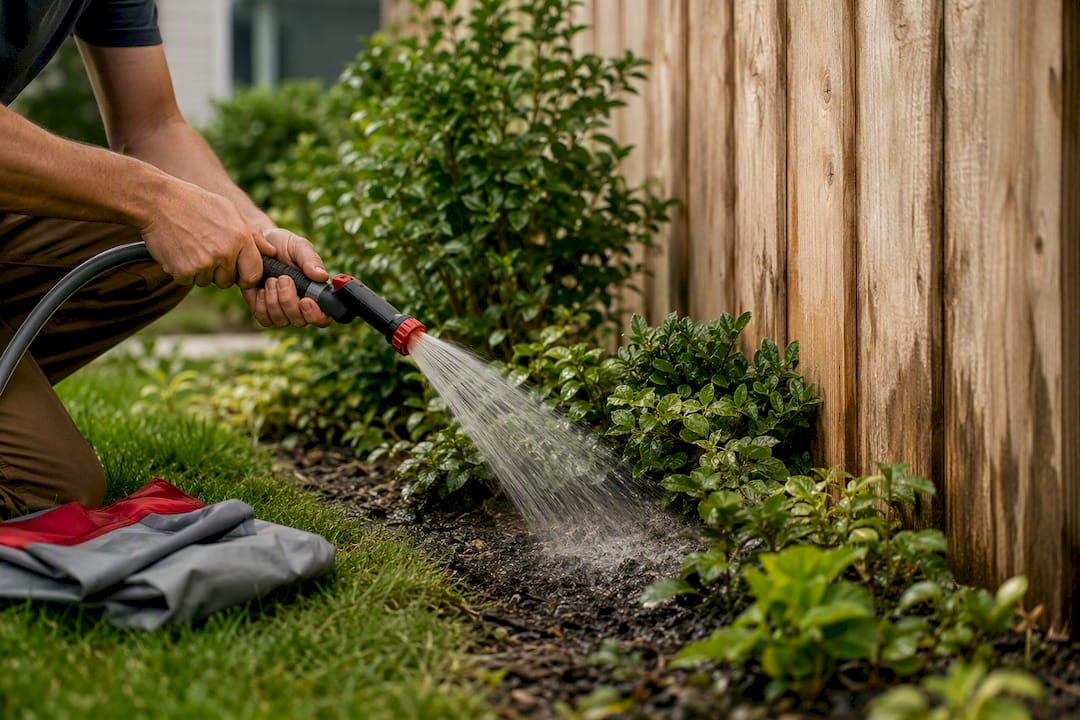
Pre-wet surrounding plants. Soak grass, flower beds, and shrubs near the fence with plain water before applying any chemical. Saturated plants absorb far less cleaning solution than dry ones, which cuts down on chemical burn significantly.
-
Run a test patch. Apply your diluted mix to a small, hidden section, wait 10 minutes, and check for any color shift or streaking before treating the whole fence.
-
Apply the cleaner in sections. Work in 8 to 10 foot segments rather than trying to cover the whole fence at once. Hold the sprayer or wand roughly 12 to 18 inches from the surface, using a wide fan pattern to flood the wood evenly. Volume matters more than pressure here; you’re saturating the surface, not blasting it.
-
Let it dwell. Give the solution 10 to 15 minutes of contact time so the chemistry can break down mildew, algae, and the gray oxidized layer. Don’t let it dry out completely on hot, sunny days. Mist lightly with water if it’s evaporating too fast.
-
Agitate stubborn spots. For heavy buildup, ground-level splash zones, or areas where growth clings in the wood grain, work a soft-bristle brush along the direction of the grain. Never scrub against the grain, and never use a wire brush on wood.
-
Rinse with a wide fan tip. Switch to a low-pressure fan nozzle and rinse from top to bottom, working the same 8 to 10 foot sections you applied. Keep the nozzle at least 12 inches from the surface and avoid narrow, concentrated tips that can gouge softened wet wood.
-
Move panel to panel systematically. Work in one direction down the fence line so you’re not backtracking over sections that have already dried and reset.
-
Let it dry completely. Wood typically needs 24 to 48 hours of dry weather before you stain or seal. Rushing this step traps moisture under the finish and causes peeling within a season.
-
Spot-check before finishing. Once dry, look for any remaining dark spots or uneven tone. A second light application on isolated trouble spots beats re-treating the whole fence.
-
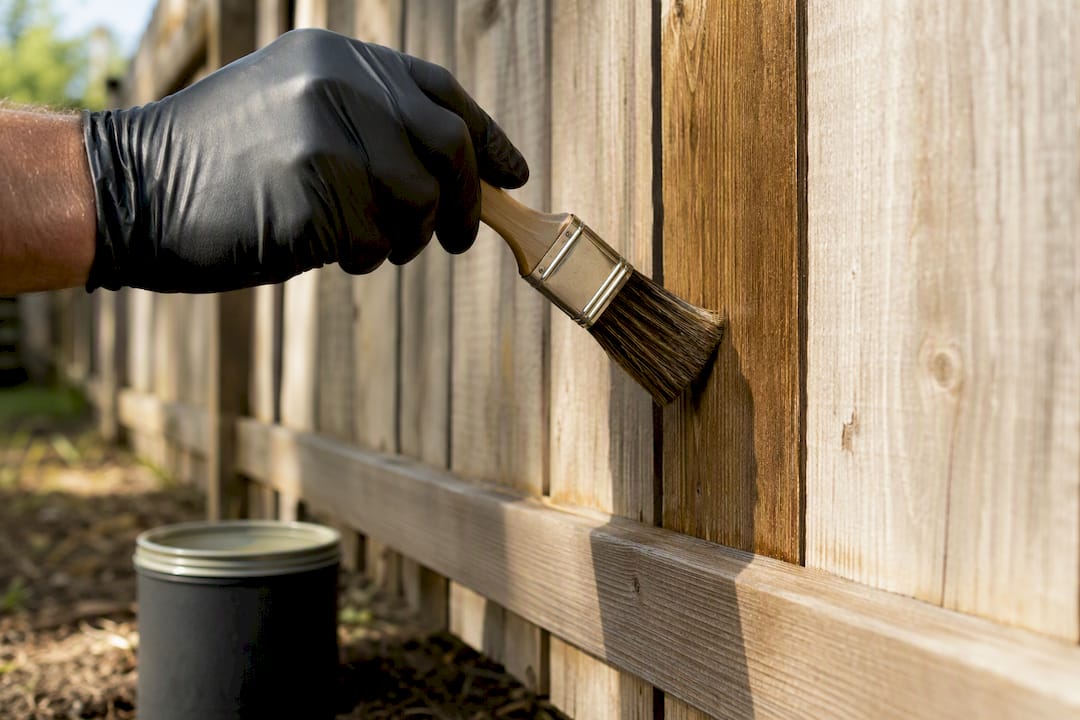
Stain or seal per product instructions. This is the step most homeowners skip, and it’s the one that protects everything you just did. Follow the manufacturer’s recoat window closely, since staining too early traps residual moisture and staining too late leaves the wood exposed again.
Pro Tip: Work on an overcast day if you can. Direct sun causes cleaning solution to evaporate before it finishes breaking down organic growth, which means weaker results and more streaking.
How Do You Protect Plants and Control Runoff?
Chemical runoff is the part of soft washing homeowners underestimate most. It’s not just about avoiding a burned hydrangea. Runoff into storm drains or shared drainage can violate local water-use ordinances in some municipalities, and HOA agreements sometimes carry their own restrictions on exterior chemical cleaning.
Steps that actually reduce runoff damage:
- Pre-wet all plants, mulch beds, and grass within 3 feet of the fence line before applying any cleaner
- Cover especially sensitive plants (roses, hydrangeas, anything newly planted) with tarps or plastic sheeting during application
- Use absorbent pads or a shallow berm of mulch to redirect runoff away from garden beds and toward a drain or gravel area
- Rinse plants again with plain water immediately after finishing each section, not just at the end of the whole job
- Time the job for a dry stretch of at least 24 hours so runoff isn’t compounded by rain washing more chemical into the soil
If you’re near a storm drain, culvert, or shared drainage ditch, check your city’s water-use guidelines before starting. Some municipalities restrict chemical runoff into storm systems regardless of dilution, and violations can carry fines. It’s a five-minute phone call or website check that saves a real headache later.
Pro Tip: Keep a garden hose running nearby the entire time you’re applying cleaner, not just during rinse. If you see any chemical drift toward a plant bed, you can flood it with water immediately instead of waiting until you’re done with the section.
Should You Soft Wash Your Fence Yourself or Hire a Pro?
Scale and access are usually the deciding factors, not skill alone. A single gate or a short side-yard run is a reasonable weekend project. A 300-foot commercial perimeter fence, a fence with hard-to-reach sections, or a fence you’re not willing to risk damaging is a different calculation.
Signs it’s time to call a professional:
- The fence is large enough that DIY application would take multiple weekends
- You’re dealing with heavy, longstanding growth that’s resisted previous cleaning attempts
- The fence has warranty terms that could be voided by DIY chemical treatment
- You’re uncomfortable mixing and handling concentrated cleaning chemicals
- Access is limited (steep slopes, tight side yards, fencing near a pool or water feature)
Questions worth asking any contractor before hiring:
- Can you show proof of liability insurance?
- What cleaning chemistry do you use, and at what dilution?
- What’s your containment plan for nearby plants and hardscaping?
- What PSI and equipment do you run for wood fences specifically?
- Can I see photos or references from a similar wood fence job?
Red flags that should end the conversation:
- A contractor who won’t disclose what chemicals they’re using or at what strength
- No mention of a containment or plant-protection plan
- Any indication they use high-pressure equipment on softwood fencing
- Reluctance to provide proof of insurance
Cost varies with fence size, material, access difficulty, and how much prep work the growth requires. A straightforward wood fence in good condition costs less to clean than one with heavy moss, limited truck access, or extensive pre-repair needs before cleaning can even start. Post-clean staining adds to the total but extends how long the result lasts, which is often the better long-term math. Our guide on fence cleaning services and what protects property value breaks down what typically drives that estimate up or down.
How Often Should You Soft Wash and Reseal a Fence?
Results don’t last forever, but they last a lot longer than most people expect from a single cleaning. Soft-washed surfaces can stay clean multiple years longer than pressure-washed ones, since the chemistry addresses the biological source of growth rather than just knocking it off the surface temporarily.
A realistic maintenance schedule:
- Annual rinse with plain water to knock off surface dust and pollen buildup
- Full soft wash every 2 to 4 years, depending on shade exposure, humidity, and how much moisture the fence line sees
- Re-stain or reseal every 2 to 3 years for most wood species, sooner in high-sun or high-moisture climates
- Wait a full 24 to 48 hours of dry weather after cleaning before applying stain or sealant
Climate plays a bigger role than most homeowners assume. A fence in a shaded, humid backyard will need soft washing closer to the two-year mark, while one in full sun with good airflow might comfortably stretch to four years between treatments.
Cost to maintain runs lower than most people guess once you’re on a routine schedule, since light annual maintenance prevents the kind of heavy, entrenched growth that drives up cleaning costs later. Skipping years between cleanings is usually what turns a simple soft wash into a longer job requiring higher dilution and more agitation.
What Do Professionals See That Homeowners Often Miss?
Seventy-plus years in the fencing business teaches you where DIY jobs typically go wrong, and it’s rarely the chemistry. It’s the pressure setting. We’ve replaced more fence sections damaged by an over-eager rental pressure washer than by actual rot or storm damage. Furring, gouged grain, and water forced behind panel seams are almost always avoidable, and almost always the result of someone reaching for maximum PSI because it feels like it should clean faster.
The other pattern we see constantly: homeowners who clean the fence and stop there. A soft wash that isn’t followed by staining or sealing within the proper drying window is only a temporary fix. The wood looks better for a season, then the gray returns faster than it would have otherwise, because the fibers are exposed with nothing protecting them.
Licensed and insured crews carry liability coverage for a reason. Chemical runoff onto a neighbor’s landscaping, or damage to fencing that turns out to have hidden rot, is a real risk on any cleaning job, not a hypothetical one. That’s part of what a professional service is actually paying for, beyond the labor itself.
Fencing companies that have handled wood, vinyl, chain link, and iron fencing across Western Arkansas and Eastern Oklahoma for decades find that the jobs that hold up longest are always the ones where cleaning, drying, and sealing happen in the right order, with the right chemistry, at the right pressure.
— mark
Ready to Restore Your Fence the Right Way?
If your fence has heavy growth, hard-to-reach sections, or you’re just not up for a weekend of mixing chemicals and hand-pumping a sprayer, that’s exactly the gap professional fence cleaning fills. Professional fence cleaning services bring the equipment, the wood-safe chemistry, and the containment know-how to get it done in a single visit instead of a multi-weekend project.

Getting an estimate is straightforward. Have your fence’s approximate linear footage, material type, and a general sense of how heavy the growth is (light surface dirt versus years of algae buildup) ready when you reach out. That’s enough for us to give you a realistic number before we ever step on your property. We also handle post-clean staining and sealing, so the fence you invest in cleaning stays protected instead of graying out again within a year.
Explore our fence cleaning services to see what’s included, or reach out through Modern Fence Company to request your estimate today.
Sources
The PSI ranges, chemistry recommendations, and equipment guidance in this article draw from the following industry sources:
- Soft wash vs pressure wash — Power Line Industries
- How to clean a wood fence and make it look new again — Southeast Softwash
- Soft wash vs pressure wash — Sandbar Soft Wash