
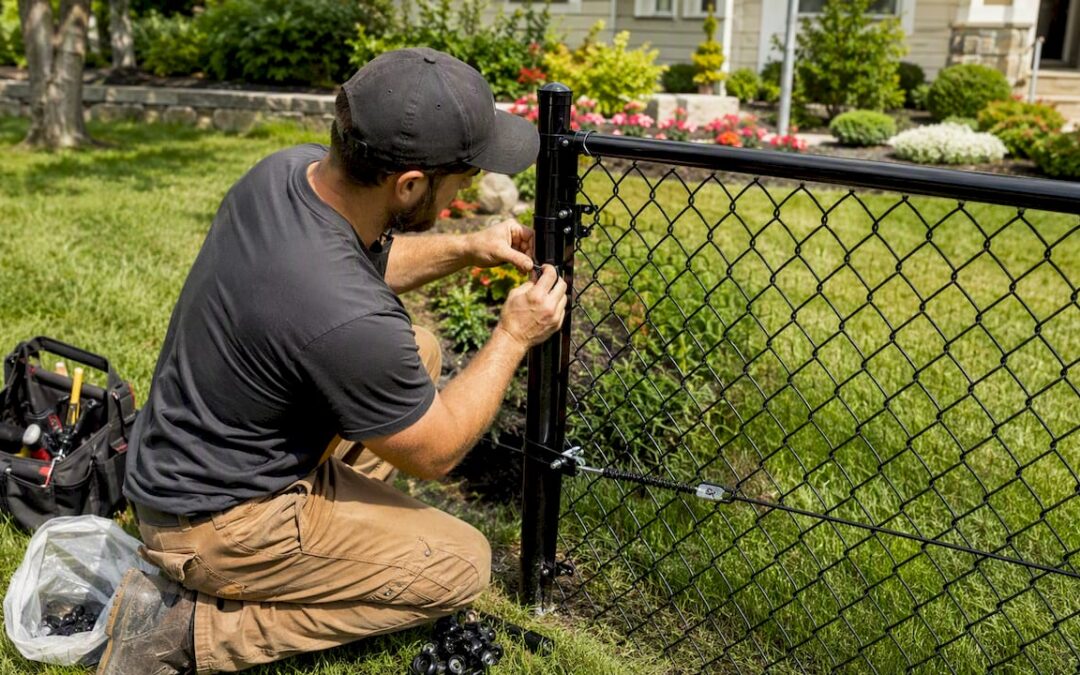
A black vinyl-coated chain-link fence typically runs $15 to $45 per linear foot installed, with most residential projects landing between $15 and $25 per foot. A standard 100-foot fence usually totals somewhere between $1,500 and $4,000, and the average homeowner spends around $2,300 once labor, hardware, and setup are factored in. Height, wire gauge, gates, and site conditions swing that number in either direction, sometimes by thousands of dollars.
Here’s how that scales across common project sizes:
- 50 feet: roughly $750 to $2,250 installed, depending on height and access
- 100 feet: roughly $1,500 to $4,000, the range most quote requests fall into
- 300 feet: often $4,500 to $13,500 or more, especially with multiple gates or a taller fabric height
Quick Stat: Labor alone can account for half or more of your total bill in many markets, and that share climbs fast on sloped lots, rocky soil, or long runs with multiple corners.
Those are the numbers most people search for. But a quote that looks like a good deal on paper can hide missing line items, mismatched hardware, or corner-cutting that shows up two years later as rust bleeding through a coating that was never supposed to fail. Understanding what goes into that per-foot number is what separates a fair estimate from a costly surprise.
Key Takeaways
Black vinyl-coated chain-link fencing typically costs $15 to $45 per linear foot installed, with labor commonly making up half or more of that total on difficult sites.
| Point | Details |
|---|---|
| Budget by linear foot | Plan for $15 to $25 per foot on most residential jobs, up to $45 per foot for taller or heavier gauge runs. |
| Expect labor to dominate | Labor often accounts for half or more of your total bill, especially on sloped or rocky lots. |
| Gates add real cost | A single gate can run $150 to $400, while drive gates and automation can add $1,000 or more. |
| Get itemized bids | Request three quotes that break out materials, labor, permits, and disposal so you can compare fairly. |
| Talk to a pro for complex sites | Modern Fence Company builds estimates from an in-person site visit, which catches cost drivers a phone quote misses. |
Table of Contents
- Black Chain Link Fencing Cost: Materials Vs. Labor
- How Height And Wire Gauge Affect The Price Per Foot
- Gate And Accessory Costs You Should Budget For
- What Actually Drives Your Total Bill Up Or Down
- DIY Vs. Hiring A Pro: Where The Real Costs Hide
- How To Get A Quote You Can Actually Compare
- How A Contractor Actually Builds Your Estimate
- A Contractor’s Take On Where Homeowners Overspend Or Underspend
- Ready For A Free, Accurate Estimate?
- Frequently Asked Questions
- Sources
Black Chain Link Fencing Cost: Materials Vs. Labor
Every quote you get is really two numbers stapled together: what the fence is made of, and what it costs someone to put it in the ground correctly. Understanding the split helps you spot a lopsided bid before you sign anything.
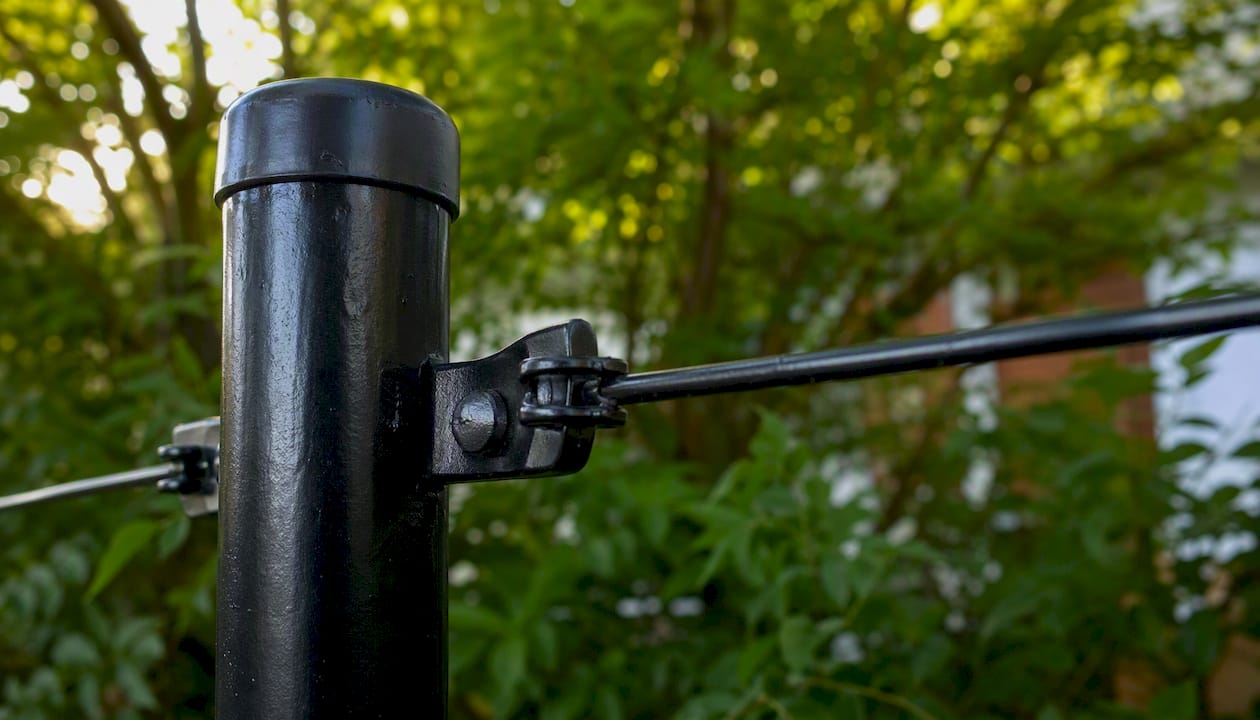
On the materials side, you’re paying for the chain-link fabric itself, line posts, terminal and corner posts, top rail, tension wire, and the fittings that hold it all together. Black vinyl-coated or powder-coated chain link costs noticeably more than plain galvanized fencing, because the coating process and the color-matched hardware both add expense that a bare galvanized fence doesn’t carry. Every clamp, bolt, and post cap needs to match the black finish, or the fence looks patched together the day it’s installed.
Labor covers digging and setting posts in concrete, stringing the fabric, tensioning it properly, and installing gates and hardware. According to Angi’s cost data, labor commonly runs $10 to $20 per linear foot on its own, while materials typically add another $5 to $25 per foot depending on height and coating quality.
Quick Stat: Soft costs like permits, surveys, and utility locating commonly add hundreds of dollars to a project, and they’re the line items DIY budgets and lowball quotes leave out most often.
If you’re pulling a permit, our residential fence permit guide breaks down what municipalities typically require and when inspections come into play.
How Height And Wire Gauge Affect The Price Per Foot
Fence height is the single biggest lever on your per-foot rate, and wire gauge is the quiet second factor most homeowners never ask about. A thicker gauge wire (lower gauge number) resists sagging and cutting better, which matters more on security runs than backyard pet enclosures.
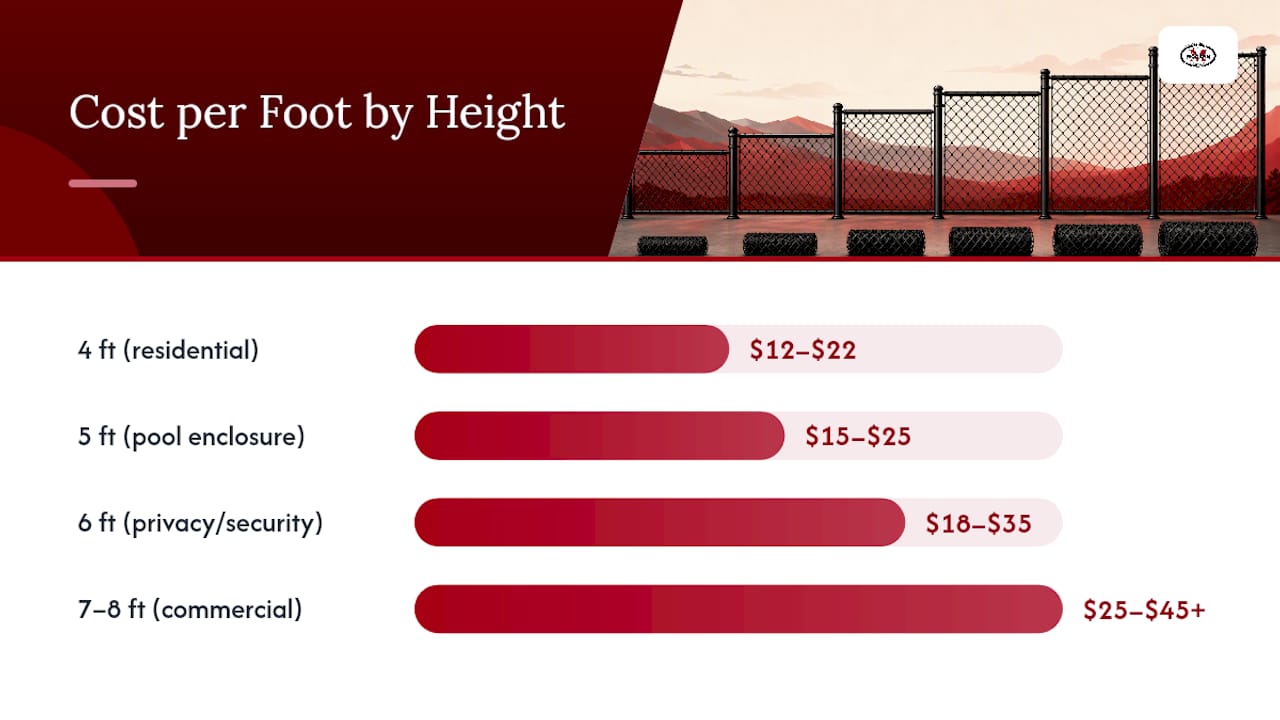
| Height | Typical installed cost per linear foot | Notes |
|---|---|---|
| 4 feet | $12 to $22 | Standard residential yard fencing, lightest gauge options |
| 5 feet | $15 to $25 | Common for pool enclosures and moderate privacy needs |
| 6 feet | $18 to $35 | Popular for privacy and security, often paired with slats |
| 7 to 8 feet | $25 to $45+ | Commercial and industrial-grade gauge, reinforced posts |
Coating quality matters here too. A cheap black coating over thin fabric will look identical to a premium version on install day, then start showing wear within a couple of seasons. Heavier gauge fabric with a properly bonded vinyl coat costs more upfront but holds its color and structural integrity far longer, which is part of why Well Built Florida’s scenario data shows a 100-foot, 4-foot fence often landing around $2,800 to $5,000 once labor and site conditions are included, not just the bare material minimum.
Here’s how the math plays out on two common jobs:
100 feet at 4 feet tall: At $12 to $22 per foot, you’re looking at $1,200 to $2,200 for a basic backyard enclosure, before gates.
200 feet at 6 feet tall: At $18 to $35 per foot, that stretches to $3,600 to $7,000, and that’s before factoring in corners, gates, or slope adjustments.
Prices jump sharply once you move into industrial-gauge fabric for commercial security runs or add features like barbed wire arms, which push per-foot costs well past the residential range.
Gate And Accessory Costs You Should Budget For
Gates are where a lot of homeowners get surprised, because a single gate can cost more per linear foot than the rest of the fence combined. Wider openings need reinforced posts and heavier hardware, which add both material and labor cost.
- Single walk-through gate (3 to 4 feet wide): typically $150 to $400 installed, including frame and hardware
- Double gate (10 to 16 feet wide): typically $400 to $1,200, depending on frame gauge and hardware quality
- Sliding or drive gate: typically $800 to $2,500 for a manual unit, with heavier commercial-grade frames pushing higher
- Gate automation: adds $500 to $2,500 or more on top of the gate itself, depending on the opener and access control components
If a drive-through gate or automated opener is on your wish list, our automatic gate options guide and this rundown of automatic fence gates both walk through how motorized systems change your budget and timeline.
Beyond gates, common accessories that shift your final number include:
- Privacy slats or wind screens: roughly $2 to $6 per linear foot added to the base fence cost
- Heavier top rail or reinforced framework: a modest per-foot upcharge, more common on commercial jobs
- Color-matched fittings and post caps: usually built into a quality black chain-link quote, but worth confirming line by line
Wider gate openings almost always mean reinforced posts and concrete footings sized for the extra load, which is labor time a basic fence run doesn’t require. If privacy is your main goal, our guide to inexpensive privacy fence ideas covers how slats and screens compare on cost against other privacy options.
What Actually Drives Your Total Bill Up Or Down
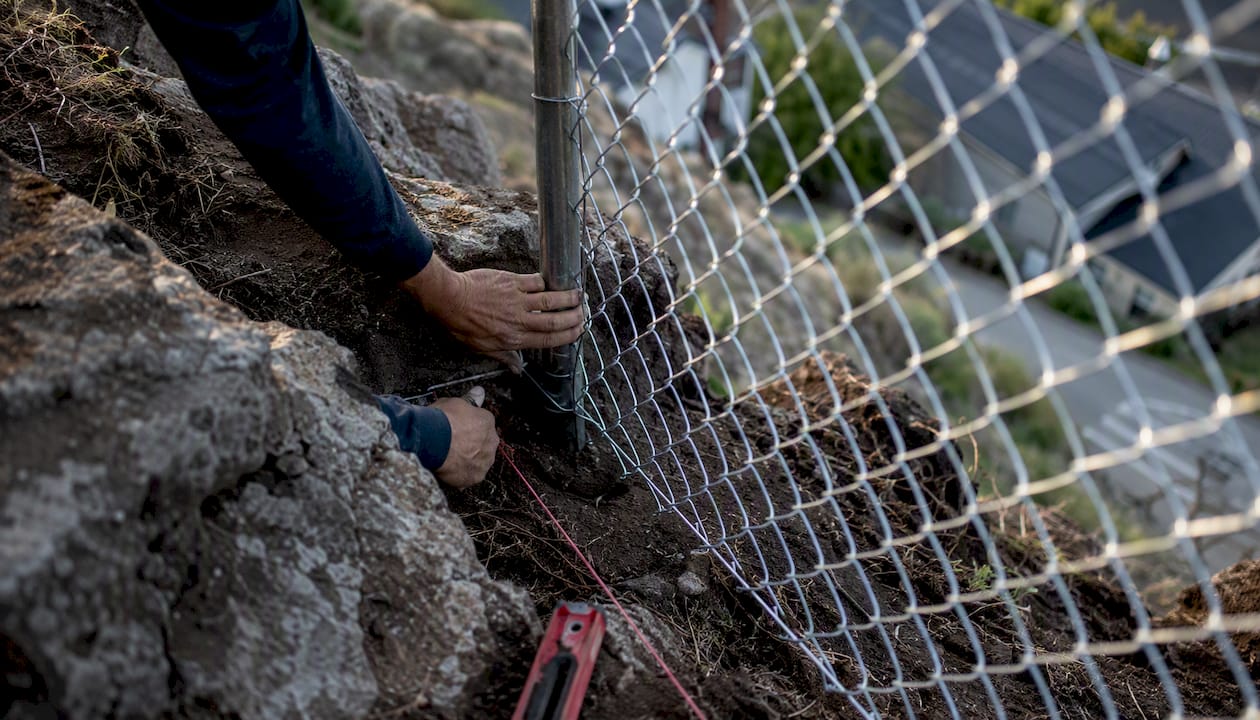
Terrain and access are major factors in cost. A flat, clear lot with easy equipment access costs less to fence than a sloped yard with tree roots, buried rock, or difficult gate locations. Crews spend more time and the associated labor costs increase accordingly.
Run geometry also affects cost. A simple rectangular run prices lower per foot than a property line with multiple turns, tight spacing, or several gates. Regional labor rates influence quotes, with higher cost-of-living areas charging more per hour.
Removing an old fence before installing the new one adds its own cost. Removal and disposal commonly add hundreds of dollars to a project, especially if the material is heavy or requires special disposal. Permits and surveys are also additional costs often excluded from per-foot numbers but included in final invoices.
Pro Tip: Ask your contractor what happens if they widen post spacing or drop planned privacy slats to hit a lower number. A quote that looks cheaper on paper sometimes gets there by reducing post density below what your soil and wind exposure actually need, which shows up later as leaning posts.
DIY Vs. Hiring A Pro: Where The Real Costs Hide
Buying materials yourself and installing a black chain-link fence on your own can look like a bargain. Raw fabric and hardware may cost less per linear foot than full installation, tempting homeowners to DIY.
The hidden costs are what change the math. A post hole digger, concrete mixer, come-along for tensioning, and the right fittings can easily add $200 to $500 in tool rental or purchase costs if you don’t already own them. Add in the time cost of a first-timer setting posts (often two to three times slower than an experienced crew), plus the real risk of a rejected permit inspection if post depth or spacing doesn’t meet code, and the “savings” shrink fast.
Hiring a professional crew typically means paying that $15 to $25 per foot blended rate, but it buys correctly set posts, proper tensioning that keeps the fabric from sagging within a year, and a crew that already knows your local permit requirements. For long runs, sloped lots, or anything involving a drive gate, professional installation usually pays for itself in avoided mistakes alone. Our chain link fence installation guide walks through exactly what that process looks like start to finish.
Pro Tip: DIY makes sense for small, flat jobs under about 100 feet where you already own or can easily rent the right tools and have the weekend to spare. Anything longer, sloped, or gate-heavy is where hiring a pro stops being a luxury and starts being the cheaper option long-term.
How To Get A Quote You Can Actually Compare
Getting three quotes that all use different pricing structures doesn’t help you if you can’t compare them apples to apples. A little prep work before you call anyone makes every bid you receive more accurate and easier to line up side by side.
- Measure your total linear footage yourself first, even roughly, so you can sanity-check what a contractor tells you.
- Mark where gates need to go, including width, so estimators price the right hardware from the start.
- Note slopes, trees, or rocky sections along the run, since these change labor time significantly.
- Confirm your property lines, ideally with a survey if boundaries are unclear, to avoid a fence that has to move later.
- List every accessory you want, from privacy slats to specific gate hardware, before the estimator arrives.
When the quote comes back, ask that it itemize materials, post and concrete costs, labor hours, permit fees, disposal of any old fencing, and a contingency line for unexpected site conditions. A lump-sum number with no breakdown makes it impossible to tell whether you’re paying a fair rate for labor or getting overcharged on materials. Per-foot pricing with a clear component breakdown, similar to the component-based cost models used across the industry, gives you something concrete to compare bid to bid.
How A Contractor Actually Builds Your Estimate
A real estimate starts with a site visit, not a phone number. A contractor walks the property line, measures the actual run (not just what’s on a plat map), and checks soil conditions and access points a truck needs to reach. That visit is what catches the tree root or slope that would have blown up a phone-quoted price.
From there, the estimator proposes fabric height, wire gauge, and coating quality suited to your goals, whether that’s a backyard pet enclosure or a commercial security perimeter. Gate locations, hardware type, and any automation get specified next, followed by permit and disposal costs if an old fence needs to come out first.
Here’s a condensed sample breakdown for a 100-foot, 6-foot-tall black chain-link job:
A quote that skips the site visit and gives you a number over the phone is skipping the exact step that catches the sloped section, the buried rock, or the property line dispute that would have derailed the project halfway through.
With more than 70 years of combined operating history, Modern Fence Company builds every estimate around a physical site walk before a single number goes on paper, serving both homeowners and commercial clients across Western Arkansas and Eastern Oklahoma.
A Contractor’s Take On Where Homeowners Overspend Or Underspend
The mistake I see most often isn’t overspending, it’s homeowners chasing the lowest number without asking what got cut to reach it. Post concrete depth, fitting quality, and proper tensioning are the three things that separate a fence that looks great for ten years from one that starts leaning within eighteen months, and none of those show up as a line item most people know to ask about.
What actually adds long-term value is boring: correctly set posts in full concrete footings, hardware that matches the fabric coating instead of bare galvanized clamps holding a black fence together, and a crew that tensions the fabric tight enough that it doesn’t sag after the first hard freeze and thaw cycle. None of that is exciting to talk about on a sales call, but it’s the difference between a fence you forget about and one you’re calling someone back to fix.
The one thing I wish more homeowners asked before requesting quotes: what gauge wire and what post spacing is included at that price? Two bids at the same per-foot rate can use dramatically different materials underneath, and you won’t know until the fence has been in the ground for a year or two.
Ready For A Free, Accurate Estimate?
If you’re past the ballpark-number stage and want a real quote for your property, Modern Fence Company gives you a site-visit-based estimate instead of a guess pulled from a phone call. That means the number you get actually accounts for your slope, your soil, and your gate locations, not a generic per-foot average that changes once the crew shows up.
Getting started is simple. Have your rough linear footage, the number of gates you want, and a few photos of your site ready, then either call our team or fill out the online contact form to schedule a visit. Modern Fence Company is licensed and insured, and most residential estimates can be scheduled within a few business days of your first call. Once the site visit is done, you’ll get an itemized quote covering materials, labor, permits, and any gate or accessory add-ons, so there’s nothing hidden in the final number.
Ready to see what your project actually costs? Visit our chain link fence services page to request your free estimate today.
Frequently Asked Questions
How much does black chain link cost per linear foot?
Black vinyl-coated chain-link fencing typically costs $15 to $45 per linear foot installed, with most residential jobs falling in the $15 to $25 range depending on height and site conditions.
Is black chain link more expensive than regular galvanized fencing?
Yes. The black vinyl or powder coating and matched hardware add cost compared to plain galvanized fabric, though many homeowners accept the premium for the improved appearance and added corrosion resistance.
What’s the average total cost for a 100-foot black chain-link fence?
Most 100-foot installations land between $1,500 and $4,000, with the exact number depending on height, gate count, and site access.
Does gate placement really affect the overall price that much?
It can. A single walk gate typically adds $150 to $400, but a drive gate with automation can add $1,500 or more once reinforced posts and an opener are included.
Is DIY installation actually cheaper than hiring a professional?
Material costs alone are lower, but tool rental, the time investment, and the risk of failed post concrete or permit issues often close the gap, especially on runs longer than about 100 feet.
Sources
The Angi cost guide provides the broadest per-foot and project-total ranges used throughout this guide, along with data on labor’s share of total cost.
Quick Stat: Across multiple industry cost guides, a 100-foot black chain-link installation consistently lands in the $1,500 to $4,000 range, making it one of the more reliable budget anchors for residential planning.
For scenario-based examples across different heights and run lengths, Well Built Florida’s pricing breakdown offers useful real-world comparisons. If you want to understand the per-foot component math contractors use to build a quote, the cost-per-foot model breaks materials, labor, and soft costs down individually. And for background on why black coating costs more than plain galvanized fencing in the first place, this materials overview explains the coating and hardware premium in more detail.
- How Much Does a Black Chain-Link Fence Cost? 2026 Data | Angi
- Black Chain-Link Fence cost guide | HomeAdvisor
- What are the benefits of black chain link fence?
- Black Chain Link Fence Cost: Price Ranges for 4–8 Foot Fences and Gates 2026 – Well Built Florida