
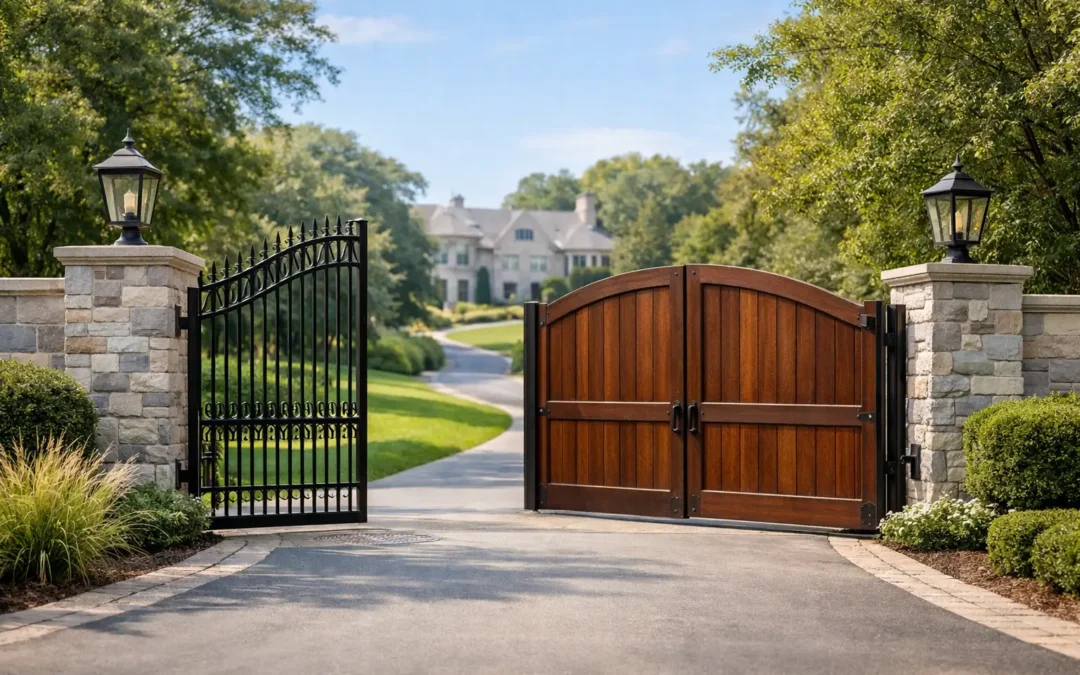
A well-built estate gate changes the way a property feels before anyone ever reaches the front door. It creates a clear entrance, adds privacy, improves security, and gives the entire frontage a more finished look. For homeowners, ranch properties, private drives, and some commercial sites, the right gate does more than mark a boundary – it sets expectations.
That is why choosing a gate should not come down to looks alone. A gate can be elegant and still be wrong for the site. It can be heavy-duty and still create daily frustration if the opening width, swing direction, grade, or access method is not planned properly. The best results come from balancing appearance, function, durability, and how the gate will actually be used every day.
What an estate gate should do
An estate gate usually serves three jobs at once. It helps control access, it contributes to the appearance of the property, and it needs to hold up over time in real weather and real use. If one of those pieces is missing, the gate may look good in photos but fall short where it matters.
For some owners, security is the main priority. They want to limit vehicle access, create a stronger perimeter, or add an entry point that works with keypad or remote access. For others, the goal is curb appeal. A gate can give a home, long driveway, farm entrance, or private development a more polished and intentional look. In many cases, both matter equally, which is why custom planning is often worth it.
Estate gate styles and how they affect function
Style has a direct impact on daily performance. A single swing gate may work well on a smaller opening, but on wider entries it can become too heavy or awkward to operate. A double swing gate often looks balanced and formal, yet it needs enough room for both leaves to open safely. A slide gate can be the better answer where slope, space, or wind exposure makes swing gates less practical.
Swing gates
Swing gates are a classic choice for residential properties and private entrances. They can create a traditional, high-end look, especially in ornamental iron or custom metal designs. The trade-off is space. The gate needs a clear arc to open, and grade changes can become a problem if the site is not level enough.
Slide gates
Slide gates are often chosen when security and efficiency matter most. They do not require the same swing clearance, which makes them useful for tighter areas or sloped driveways. They also tend to be a strong option for some commercial settings. The catch is that they need lateral space along the fence line, plus proper track or cantilever support depending on the design.
Custom and decorative designs
Some properties call for a gate that makes more of a statement. Arched tops, custom scrollwork, privacy panels, wood infill, and fabricated metal details can all create a distinct look. This is where craftsmanship matters. Decorative features should enhance the gate without weakening the frame or creating maintenance issues down the road.
Material matters more than most people expect
Material affects appearance, maintenance, longevity, and cost. The best choice depends on the property style, the climate, and how much upkeep the owner is comfortable with.
Steel and iron gates remain popular because they offer strength and a timeless look. They work especially well when security and durability are high priorities. With the right finish and proper fabrication, they can hold up well for years, but neglected coatings can eventually lead to corrosion.
Aluminum offers a lighter-weight option and can reduce strain on hinges and operators. It is often a smart fit when you want a clean look and lower maintenance. The trade-off is that it does not have the same heavy feel as steel, and in some applications that difference matters.
Wood gates can be beautiful, especially on homes that already feature wood fencing or a more traditional design. They provide warmth and privacy, but they also require more care. Sun, moisture, and movement in the material can shorten the service life if the gate is not built and maintained correctly.
A mixed-material gate can sometimes give you the best of both. A strong metal frame with wood or composite accents can improve stability while preserving a custom appearance. That kind of design needs to be thought through carefully so one material does not outlast the other by a wide margin.
Size, layout, and site conditions
A gate that looks right on paper can still fail on the property if the opening is wrong. Width should account for the vehicles that will actually use it, not just the family SUV. Delivery trucks, trailers, equipment, and emergency access all need consideration. A narrow entry becomes a problem the first time a larger vehicle needs to pass through.
Site conditions matter just as much. Slope is one of the biggest issues. A steep driveway may rule out certain swing designs or require adjustments to height, hinge placement, or opening direction. Soil conditions, drainage, wind exposure, and nearby fencing all affect how the gate should be built and supported.
This is where experience matters. A contractor who understands terrain, post depth, hardware loads, and operator requirements can catch issues before installation begins. That saves time, cost, and frustration later.
Manual or automatic access
Many property owners start by thinking about appearance and end up focusing on convenience. That shift makes sense. If the gate will be used daily, access control becomes one of the most important decisions in the project.
A manual gate can be perfectly practical for some rural properties, secondary entrances, or lower-traffic sites. It keeps the system simpler and usually lowers upfront cost. But if the gate is used multiple times a day, especially in bad weather or after dark, automation quickly becomes attractive.
Estate gate access control options
An automatic estate gate can be paired with keypad entry, remotes, card readers, telephone entry, or integrated access control systems. The right setup depends on who needs access and how often. A homeowner may want a simple keypad and remote. A business or multi-user property may need something more structured with tracking and controlled permissions.
Automation also requires reliable planning around power, safety devices, and usage levels. Not every operator fits every gate. A heavy decorative gate, for example, places different demands on hardware than a lighter residential system. Matching the operator to the gate size and frequency of use is one of those details that makes a big difference over time.
Security and privacy without overbuilding
More security is not always better if it creates inconvenience or pushes the budget in the wrong direction. The goal is to build a gate system that fits the property and the way people actually live or work on it.
For a private residence, that might mean a decorative front gate with controlled entry and partial visibility. For a large property, it could mean a wider, more durable entrance that accommodates trailers and service vehicles. For a commercial site, visibility, controlled access, and stronger perimeter coordination may matter more than ornamental detail.
Privacy also varies by design. An open metal gate creates a more welcoming, upscale look while still controlling entry. A solid-panel gate offers more screening but may feel heavier visually and can catch more wind. There is no single right answer. It depends on the setting, the desired look, and the practical demands of the site.
Why installation quality decides the outcome
Even the best-looking gate can become a headache if it is installed poorly. Sagging hinges, weak posts, misaligned latches, and underpowered operators usually trace back to rushed planning or shortcuts in the field. Gates carry weight, movement, and repeated stress. They need precise fabrication and proper installation to stay dependable.
That is especially true for custom entries. The gate has to match the opening, the hardware has to support the load, and the system has to operate smoothly in everyday conditions. Family-owned contractors with a long track record, like Modern Fence Company, tend to understand that a gate is not just another add-on. It is a working part of the property that needs to perform for years.
When custom work makes sense
A stock gate can work for some basic applications, but custom fabrication is often the better route when the entrance is a focal point or the site has unusual requirements. That may include wide openings, slopes, architectural details, matching fence sections, or integrated access systems.
Custom work also helps when the property needs a gate that feels proportionate. A gate that is too small, too plain, or out of step with the surrounding fence can make the entire frontage feel unfinished. On the other hand, a well-scaled custom gate can tie the entrance together and add long-term value.
If you are planning a new entrance, start with how the gate will be used, not just how it should look. The right estate gate should welcome the right people, discourage the wrong ones, and hold up to years of use without becoming a constant repair project. When those pieces come together, the entrance does exactly what it should – it works hard and looks right doing it.