
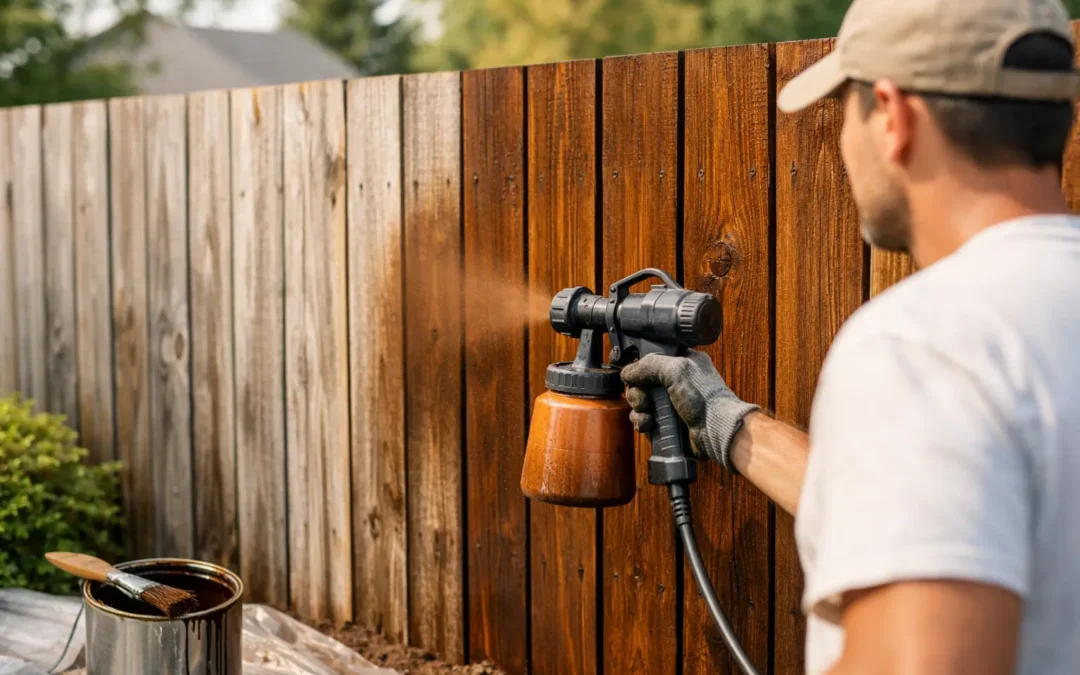
A wood fence can look solid when it is first installed, then start showing wear faster than most property owners expect. Arkansas sun, heavy rain, humidity, and seasonal temperature swings work on exposed wood every day. That is why fence staining services matter – not as a cosmetic extra, but as a practical way to protect your investment and keep your fence looking sharp.
For homeowners, staining helps preserve privacy fencing, decorative wood fencing, and gates that frame the property. For commercial sites, it helps maintain a professional appearance while extending the life of perimeter fencing around offices, multifamily properties, storage areas, and other managed spaces. In both cases, the goal is the same: slow down weather damage, reduce premature replacement, and keep the fence performing the way it should.
What fence staining services actually do
Staining is more than changing the color of wood. A quality stain penetrates the surface and helps shield the fence from moisture, UV exposure, and everyday wear. That matters because untreated wood absorbs water, dries unevenly, and gradually becomes more vulnerable to warping, cracking, fading, and surface deterioration.
A properly stained fence also tends to age more evenly. Instead of turning patchy gray or showing random dark water marks, the boards keep a more consistent appearance over time. That consistency matters for curb appeal at a residence and for presentation at a commercial property where first impressions count.
Not every stain performs the same way, and not every fence needs the same finish. Some owners prefer a natural, transparent look that highlights the grain. Others want a semi-transparent or more solid appearance for stronger color and greater visual uniformity. The right choice depends on the wood species, the age of the fence, how much sun it gets, and how much natural character you want to show.
Why timing matters with fence staining services
One of the biggest mistakes property owners make is waiting too long. Once a wood fence starts drying out, fading, and taking on moisture damage, staining can still help, but the prep work becomes more involved and the results may be less even than if the fence had been protected earlier.
New fences also need the right timing. Fresh wood often needs time to dry out before stain is applied. If staining happens too soon, the wood may not absorb the product correctly. If it happens too late, the fence can begin weathering before it gets the protection it needs. This is one reason professional fence staining services add value – they account for the actual condition of the wood instead of guessing based on the calendar.
Timing also depends on the season. Dry, moderate weather generally creates better conditions for cleaning, prep, and stain application. In a region like Western Arkansas and Eastern Oklahoma, scheduling around humidity and rain is part of getting a durable result.
The real value is in the preparation
The visible part of staining is the finish, but the part that often determines the outcome is the prep. A fence needs to be clean, dry, and ready to accept stain evenly. Dirt, mildew, old residue, and weathered fibers can all interfere with absorption.
That is why preparation usually includes cleaning the fence surface and allowing adequate drying time before stain is applied. In some cases, older wood may need more attention in heavily exposed areas or around the base where moisture tends to linger. If the prep is rushed, even a high-quality stain can end up looking inconsistent or wearing out too soon.
This is also where experience matters. Different boards take stain differently. Fence lines may have varied exposure to sunlight, sprinklers, drainage, and landscaping. A contractor who works with fences every day knows where problems tend to show up and how to prepare those sections properly.
Choosing the right stain for your fence
There is no single best stain for every property. The right product depends on the look you want, the condition of the wood, and the level of protection needed.
Transparent and lightly tinted stains are popular when the wood is new and visually appealing on its own. They let the grain stand out and keep a natural appearance, but they may require more frequent maintenance in high-exposure areas. Semi-transparent stains offer a balance between natural wood character and stronger pigment protection. More solid finishes provide greater color consistency and can be a smart option for older fences with variation in tone or weathering.
Color choice matters too. A rich cedar tone may suit a traditional backyard setting, while darker browns or more muted finishes can complement commercial landscapes or modern exterior palettes. The best choice is usually the one that fits both the property and the maintenance expectations. A finish that looks great on day one but does not fit the long-term use of the site is not always the right call.
Residential and commercial needs are not always the same
Homeowners often focus on appearance, privacy, and preserving the fence they see every day from the patio, driveway, or street. They want the fence to look clean and finished while standing up to weather and daily use from kids, pets, and yard equipment.
Commercial property owners and managers usually have a broader set of concerns. They may need staining completed with minimal disruption, consistent appearance across larger fence runs, and a maintenance schedule that helps protect long-term property value. A stained wood fence around an apartment community, office, or commercial site needs to hold up visually while also supporting a professional image.
Contractors and property managers also tend to think in terms of replacement cycles. If staining extends the useful life of an installed fence and reduces early board failure from weather exposure, that can make a real difference in long-term budgeting.
When professional application makes the difference
Some maintenance tasks are easy to underestimate. Fence staining is one of them. At first glance, it can seem straightforward. In practice, getting an even, lasting result across an entire fence line takes planning, surface prep, material knowledge, and efficient application.
Coverage has to be consistent. Overspray or drips need to be managed. Edges, posts, rails, and hard-to-reach sections all need attention. The stain also has to be applied under the right conditions so it penetrates and cures as intended. If any part of that process is off, the finish can wear unevenly or leave the fence looking blotchy.
Professional fence staining services help remove that uncertainty. You are not just paying for labor. You are paying for a process that protects the wood correctly, saves time, and avoids the kind of mistakes that can be expensive to fix later.
For property owners who want one contractor that understands fencing from installation to long-term care, that full-service perspective matters. Modern Fence Company has served this region since 1950, and that kind of history comes from doing the work the right way and standing behind it.
How often should a wood fence be stained?
There is no universal schedule because wood type, sun exposure, moisture levels, and stain selection all affect performance. Some fences need attention sooner on the south or west side where direct sun is stronger. Others may weather faster near irrigation, shade, or poor drainage.
A good rule is to watch for fading, dryness, and water no longer beading or absorbing as expected. If the fence starts looking dull, uneven, or more vulnerable to moisture, it is probably time to have it evaluated. Waiting until boards are badly weathered usually means more prep and potentially less attractive results.
Regular maintenance is usually less expensive and more effective than letting the fence decline and trying to restore it all at once. That is true whether the fence surrounds a family backyard or a larger commercial property.
What to expect from a quality staining project
A well-executed project should start with a clear assessment of the fence condition, wood readiness, and finish options. From there, the work should include proper cleaning, appropriate dry time, careful stain application, and attention to overall consistency.
You should also expect practical guidance. Not every fence needs the same product, and not every property should be treated on the same schedule. A trustworthy contractor explains what fits your fence, what the finish will realistically look like, and what kind of maintenance timeline makes sense based on your site conditions.
That honesty matters. Sometimes a fence is in great shape and simply needs protection before weather takes a toll. Sometimes an older fence may still be stainable, but with realistic expectations about how uniform the final appearance will be. Knowing the difference helps property owners make better decisions.
A wood fence does more than mark a boundary. It adds privacy, security, structure, and character to a property. Keeping it protected is one of the smartest ways to protect the value behind it, and the right staining work pays off every time the weather tries to do otherwise.