
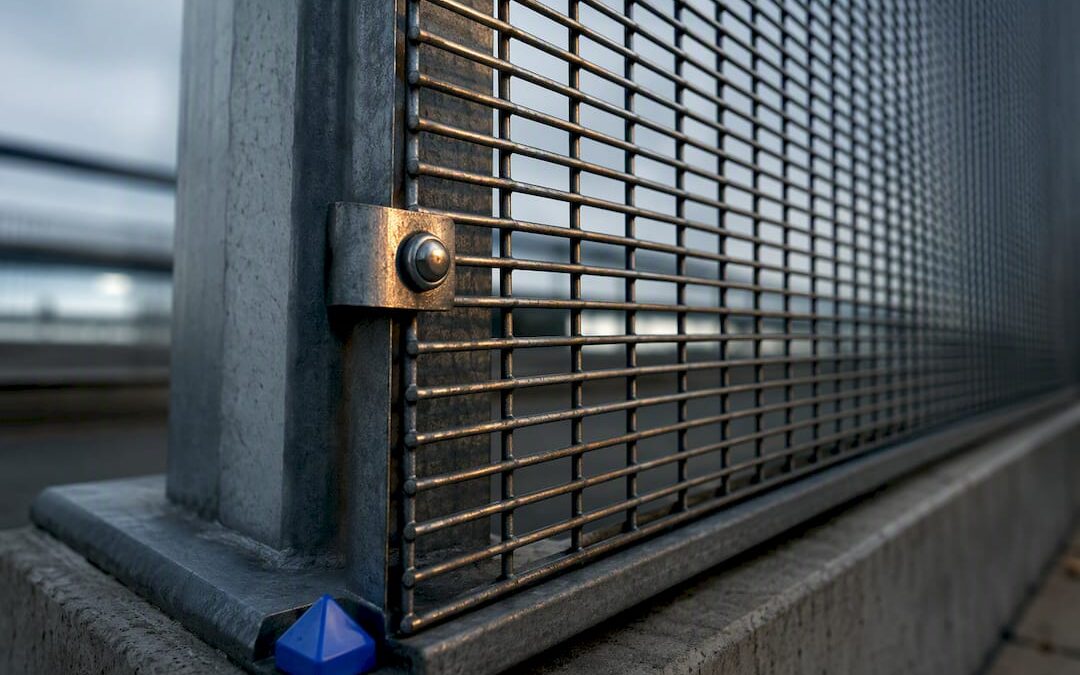
An anti climb fence is an engineered mesh or panel system built with narrow apertures, high weld strength, and rigid panels that deny footholds and handholds, delaying or stopping scaling attempts while keeping sightlines open for cameras and guards. Facility managers protecting substations, data centers, industrial yards, or any perimeter that needs a durable, visible deterrent should treat it as the default choice over standard chain link or ornamental fencing.
TL;DR:
- Using the narrow aperture and strong welds makes anti climb fences highly resistant to finger and toe holds, significantly delaying scaling attempts.
- Proper installation, including secure fasteners and slope-specific panel cuts, is crucial to maintaining the fence’s climb resistance over time.
- Layering the mesh with toppers or detection systems transforms a visible deterrent into an active security response.
- Long-lasting coatings like galvanizing combined with powder coating or paint extend the fence’s service life in harsh environments.
- Regular inspections focused on fasteners, coatings, and structural integrity are essential for sustaining security over the fence’s lifespan.
Table of Contents
- What an Anti Climb Fence Does and Why It Works
- Types of Anti Climb Mesh and Where Each Belongs
- Installation Details That Preserve Climb Resistance
- Toppers, Layered Security, and Detection
- Cost, Coatings, and How Long an Anti Climb Fence Lasts
- Maintenance Checklist to Keep the Fence Working
- How Modernfence Specifies, Installs, and Guarantees Anti Climb Systems
- What Actually Separates a Good Anti Climb Fence From a Great One
- Get an Anti Climb Fence Assessment for Your Property
- Sources
What an Anti Climb Fence Does and Why It Works
Anti-climb performance comes down to geometry and material strength, not height alone. A narrow aperture, small enough that fingers and toe tips can’t find purchase, is the single biggest factor separating a climb-resistant fence from a standard one. The same principle drives cut resistance: thicker wire gauge combined with strong welded joints means an intruder needs hydraulic bolt cutters or a grinder, not hand tools, to breach a panel. Rigid panels with no horizontal rails also remove the built-in ladder that palisade and ranch-style fencing accidentally provides.
- Aperture size denies fingertip and shoe-tip grip
- Wire diameter and weld quality raise the tools and time required to cut through
- Rigid, rail-free panels eliminate climbable horizontal members
- A see-through mesh structure keeps CCTV coverage and guard sightlines intact
That last point matters more than most buyers realize; pairing anti-climb mesh with property entrance signs can boost site visibility and safety, enhancing overall perimeter security. Anti-climb mesh systems are engineered specifically to stay transparent, so the fence deters casual intruders on sight while still letting cameras and patrols do their job behind it.
Types of Anti Climb Mesh and Where Each Belongs
Not every site needs the same level of resistance, and matching the construction to the asset value keeps a project from being over-specified or under-protected.
- 358-style narrow-aperture welded mesh. This is the benchmark for critical infrastructure. Panels typically run around 76 x 12.5 mm apertures with roughly 4.0 mm wire, a spec tight enough to block fingers and toes and thick enough to require hydraulic cutting tools rather than hand tools. Use it for substations, water treatment plants, and data center perimeters.
- Architectural welded mesh and heavy welded wire. These balance a cleaner appearance with strong security, making them common on corporate campuses, schools, and commercial yards where the fence still needs to look presentable at the front of a property.
- Expanded or perforated metal. Solid sheet construction blocks sightlines and offers different cut resistance trade-offs. It suits sites that want privacy screening more than open visibility.
- Palisade fencing. Pointed steel pales deter climbing through height and shape rather than mesh density, but horizontal rails can create footholds if not detailed carefully. Best reserved for lower-risk perimeters or as a secondary line behind mesh.
Match the choice to perimeter length and operational needs too. A quarter-mile industrial boundary calls for a different cost and coating strategy than a 200-foot commercial lot line.
Installation Details That Preserve Climb Resistance
A well-specified mesh panel loses most of its value if the installation creates gaps, weak fasteners, or an easy foothold at grade. Post spacing and bracket selection drive overall rigidity. Loose brackets or wide spacing let a panel flex enough to create a climbable seam, so bracket type has to match the mesh gauge, not just the post size.
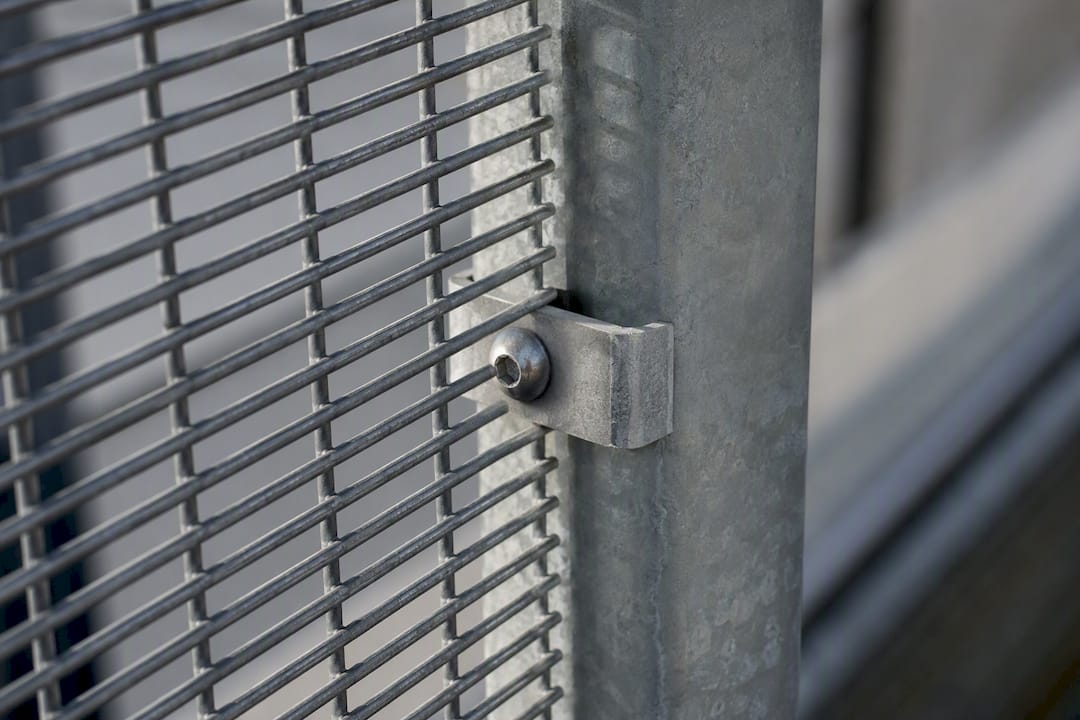
- Use tamper-proof fixings, concealed fasteners, or shear-off nuts so panels can’t be unbolted from the outside
- Space posts to the manufacturer’s rigidity spec rather than a generic fence-building rule of thumb
- Engineer slope transitions with custom panel cuts instead of standard stepping, which can leave triangular gaps at the base
- Coordinate grounding and bonding for metal fence runs at high-security sites, ideally with an electrical engineer, following IEEE guidance on grounding safety
Pro Tip: Ask your installer how they handle grade changes before you approve a bid. Standard stepped panels on a slope often leave a gap large enough to crawl under, which defeats the entire point of a narrow-aperture mesh above it.
Fastener choice deserves the same attention as the mesh itself. Exposed bolts are the fastest path to failure on an otherwise strong system, since anyone with a wrench can remove a panel that the mesh itself would never let them climb.
Toppers, Layered Security, and Detection
A mesh panel alone slows an intruder down. Layering it with a topper and detection turns that delay into an actual response window. Razor wire, barbed wire, or anti-climb spikes across the top add height and deterrence, though each carries maintenance needs and local regulatory limits worth checking before installation.
- Pair the fence with CCTV and perimeter intrusion detection systems (PIDS) so a breach attempt triggers an alert, not just a delay
- Keep toppers maintained; sagging wire or bent spikes lose their deterrent value fast
- Preserve access points for maintenance crews and emergency responders when adding sensors or toppers
Layering mesh, topper, sensors, and monitoring reduces risk more effectively than any single measure, because each layer buys time for the next to respond.
Cost, Coatings, and How Long an Anti Climb Fence Lasts
Panel specification, height, site prep, gate count, and labor drive most of the price swing between projects. A straightforward run of standard-height mesh on flat ground costs far less than a tall, tamper-fastened system with toppers and multiple access points cut into rocky or sloped terrain.
Coating is where long-term value gets decided. Hot-dip galvanizing remains the standard corrosion protection for steel fencing, and manufacturers often layer PVC or powder coating on top for appearance and added durability.
By the numbers: manufacturers cite salt-spray performance of 1,000+ hours on quality coating systems as a marker of long service life in coastal or industrial environments.
- Ask suppliers for their salt-spray test results, not just a warranty length
- Confirm whether the quote includes gates, toppers, and tamper-proof fasteners or treats them as add-ons
- Compare coating systems side by side. A powder coat over galvanized steel typically outlasts paint alone by a wide margin
Maintenance Checklist to Keep the Fence Working
An anti climb fence isn’t a install-and-forget system. The weak points that develop over time are predictable, which makes a regular inspection routine straightforward.
- Check fasteners and brackets for tampering or corrosion at every scheduled visit.
- Inspect coatings for rust bloom or chalking, and plan recoating before failure spreads.
- Walk the baseline for gaps, erosion, or vegetation that could create a foothold.
- Look for panel deformation from impact or attempted breach.
- Keep dated inspection records so patterns, like a fastener that keeps loosening, get caught early.
Quarterly inspections work for most commercial sites; high-risk perimeters often warrant a monthly walk-through instead.
How Modernfence Specifies, Installs, and Guarantees Anti Climb Systems
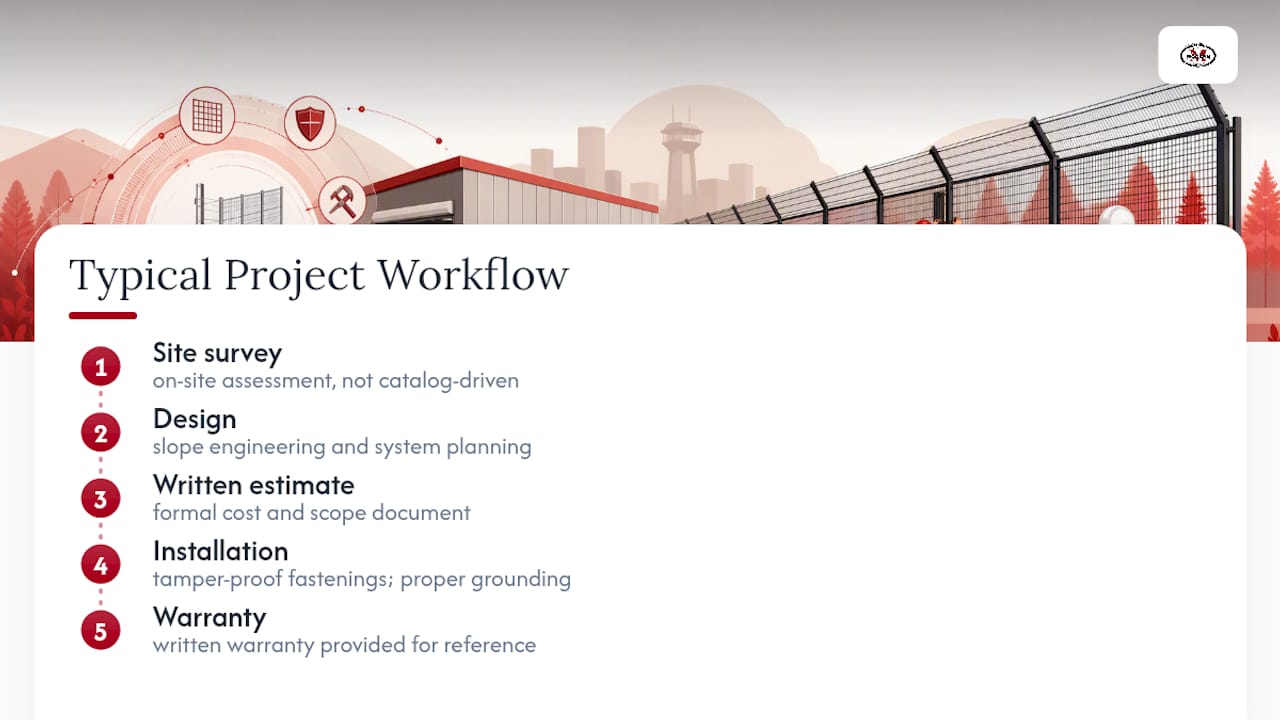
Modernfence has operated in Western Arkansas and Eastern Oklahoma for more than 70 years, and every anti climb project we take on starts with a site survey, not a catalog page. We’re licensed and insured, and our crews handle the details that separate a fence that looks secure from one that actually performs: slope engineering so grade changes don’t create gaps, tamper-proof fastenings instead of exposed bolts, and proper grounding on metal runs where required.
A typical project moves from assessment to design to a written estimate, then installation and a warranty you can reference later. We pair this with our access control and custom metal fabrication services when a project calls for integrated gates or fabricated components alongside the perimeter itself.
What Actually Separates a Good Anti Climb Fence From a Great One
Most buyers focus on the mesh spec and stop there. That’s the least interesting part of the decision. The panel you choose off a data sheet is only as good as the fastener holding it to the post, and in the field, that’s where most anti climb systems actually fail. An intruder rarely defeats 4.0 mm wire with hand tools. They defeat a bolt an installer left exposed.
Conventional advice treats coating and aperture size as the whole story. They’re necessary, not sufficient. The overlooked variable is the installer’s discipline on the details nobody photographs for a brochure: how brackets are torqued, whether slope transitions get custom-cut panels or lazy stepping, whether grounding gets coordinated with an electrical engineer or skipped to save a day of labor.
If you’re evaluating quotes, ask harder questions about fasteners and grade handling than about mesh aperture. Every reputable supplier can hit a similar spec on paper. Far fewer can show you a slope transition done right or explain their grounding approach without hesitating. That gap, not the wire gauge, is usually what determines whether a fence performs for 20 years or fails at year three.
— mark
Get an Anti Climb Fence Assessment for Your Property
Modernfence is the practical alternative to guessing at a mesh spec off a catalog. We design, install, and maintain anti climb systems paired with access control across Western Arkansas and Eastern Oklahoma, backed by more than 70 years of licensed, insured fencing work.
Reach out and we’ll start with a site visit, walk the perimeter with you, and put together a written estimate that accounts for slope, fasteners, and any toppers or gates you need. From there you get a realistic project timeline and a fence built to hold up, not just look secure on day one. Visit our security fencing page to request your assessment, or check our fence installation guide if you want to understand the process before you call.