
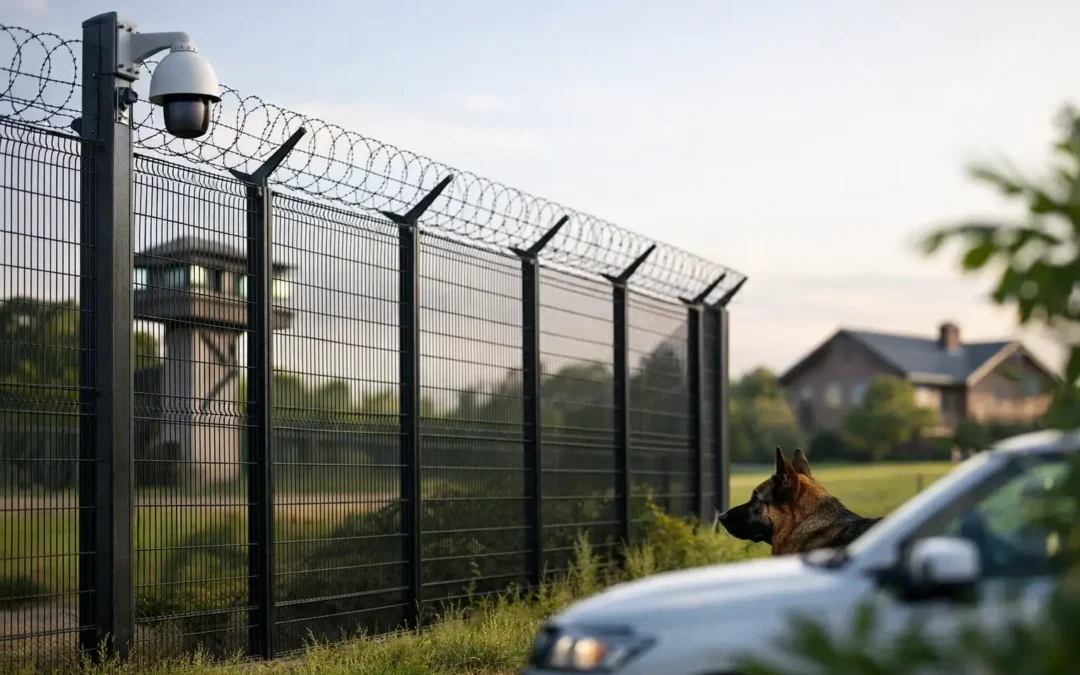
A fence can define a property line, but security fencing has a more demanding job: it must discourage unwanted entry, guide visitors to the right place, and hold up through years of weather and daily use. For a home, that may mean protecting children, pets, equipment, and privacy. For a business or job site, it may mean controlling access, reducing theft risk, and keeping operations moving without unnecessary disruption.
The right solution is rarely just a matter of selecting the tallest fence available. Effective perimeter protection comes from matching the material, height, gate design, layout, and installation method to the property’s real needs. A well-planned fence should make the property easier to use for the people who belong there and harder to access for those who do not.
Security Fencing Is More Than a Perimeter
A security fence works best when it is treated as part of a complete property plan. The fence establishes a visible boundary, but gates, latches, access control, lighting, and sightlines all affect how well that boundary performs.
For example, a tall chain link fence may be an excellent choice for a storage yard, but a weak or poorly placed gate can create an easy point of entry. An ornamental iron fence can provide an impressive, durable perimeter for a commercial entrance, yet dense landscaping around it may limit visibility. The details matter because most perimeter problems occur at openings, corners, uneven ground, or areas that are difficult to see from the building or street.
Good fencing also sends a clear message. It tells visitors where to enter, establishes where private space begins, and shows that the property is cared for. That visible order can be a meaningful deterrent before someone ever tests a latch or gate.
Start With the Risk You Need to Address
The best material depends on what you are protecting and how the property is used. Homeowners often need a balance of security, privacy, and curb appeal. Commercial properties may prioritize controlled entry, durability, visibility, and coverage across a larger footprint. Contractors may need temporary fencing that protects a work area while remaining practical to install and remove.
Residential properties
For a residence, security often starts with closing gaps around the yard and creating dependable gate access. A privacy fence can keep valuable items out of view while giving families a more comfortable outdoor space. Chain link can be a cost-conscious option for larger yards, pet areas, or side and rear boundaries. Ornamental iron provides a more open appearance while establishing a strong, long-lasting barrier around front yards, pools, driveways, and landscaped areas.
The right answer depends on your neighborhood, the slope of the lot, and whether privacy or visibility is the higher priority. A homeowner with a backyard pool has different concerns than one securing an ATV, garden equipment, or a pet enclosure. The fence should fit the daily routine, not create a new inconvenience every time someone needs to enter the property.
Commercial and industrial properties
Businesses need to think beyond the perimeter line. Where do employees enter? Where do deliveries arrive? Is there after-hours traffic? Are vehicles, tools, materials, or equipment stored outside? The answers help determine where gates belong, whether access control is needed, and how the fence should connect to buildings, retaining areas, or existing barriers.
Chain link security fencing is widely used around warehouses, service yards, utility areas, schools, and industrial sites because it offers clear visibility and dependable performance. Options such as heavier fabric, taller heights, privacy screening, and specialized gate systems can be selected based on the site. For properties where appearance matters at the front entrance, ornamental iron or custom metal fabrication can create a professional first impression without sacrificing boundary control.
Temporary rental fencing is also valuable when a project needs protection now but does not require a permanent installation. Construction sites, outdoor events, equipment staging areas, and renovation projects can all benefit from a clearly defined temporary perimeter.
Choose a Fence Material for Its Job
Every fence material has strengths, and choosing based on appearance alone can lead to frustration later. Security, maintenance expectations, budget, and local conditions should all have a place in the decision.
Chain link is practical, durable, and adaptable. It is often the right fit when coverage, visibility, and value are the main goals. It can work across substantial commercial areas and on residential properties where containment matters more than complete privacy. Adding a properly designed gate and dependable hardware is essential, especially where frequent vehicle access is expected.
Ornamental iron and fabricated metal fencing offer strength and a more refined appearance. These systems are often used at entryways, around commercial offices, and on homes where the front of the property needs to look as good as it performs. Because the design is open, it preserves sightlines, which can be an advantage for properties that benefit from visibility.
Wood fencing creates privacy and can be built in styles that complement many Arkansas homes. It can be a strong choice for residential security when installed with quality posts, properly spaced boards, and reliable gates. Wood does require maintenance over time, particularly in a climate with heat, humidity, rain, and seasonal temperature changes.
Vinyl fencing offers a clean, low-maintenance privacy option. It does not need staining like wood, but it should still be selected and installed carefully for the conditions of the site. On a high-impact commercial perimeter or a location exposed to frequent heavy use, another material may be a better fit.
Gates and Access Control Deserve Extra Attention
A gate is the working part of the fence. If it drags, sags, will not latch, or is difficult to operate, people are more likely to leave it open or find workarounds. That undermines the entire perimeter.
Vehicle gates need to account for traffic patterns, driveway width, slope, and the size of trucks or trailers using the property. Swing gates can be dependable where there is room for their arc of travel. Slide gates can make more sense for tighter areas or locations with regular vehicle traffic. The right choice comes down to available space, daily use, and the level of access control required.
For commercial sites, access control can add another layer of convenience and accountability. Keypads, card readers, remote entry systems, and automatic operators can reduce the need for staff to manually manage a gate throughout the day. These systems should be planned with the fence rather than added as an afterthought, so the gate structure, power requirements, and safety features are addressed from the beginning.
Installation Quality Determines Long-Term Performance
Even high-quality material can underperform when installed without attention to the site. Posts need proper depth and secure setting. Gates need adequate support. Fence lines must follow the terrain without leaving unwanted gaps beneath panels or fabric. Existing utilities, drainage paths, easements, and local requirements must be considered before work begins.
This is especially relevant in Western Arkansas and Eastern Oklahoma, where properties often include slopes, rocky ground, changing grades, and drainage challenges. A fence that looks straight from the road may still need careful planning at the back of the lot, along a creek line, or near a retaining wall. Professional installers evaluate those conditions before they become expensive corrections.
At Modern Fence Company, experienced crews help property owners choose solutions that make sense for the site, not just the catalog. Licensed and insured installation, dependable workmanship, and more than seven decades of local experience matter when a fence is expected to protect a property for years.
Plan for Maintenance Before You Need It
Security fencing should be inspected periodically, especially after storms, high winds, or heavy use. Check gates for smooth operation, look for loose hardware, and watch for soil erosion or washouts beneath the fence. Trim vegetation that pushes against panels or hides access points, and address damage before it spreads to posts or gate frames.
Wood fences benefit from cleaning and staining on an appropriate schedule. Metal systems may need occasional attention to coating damage, while chain link hardware should be checked for tension and secure connections. Small repairs are usually simpler and less costly than waiting until a gate fails or a section begins to lean.
The strongest security fence is one that fits the property, works reliably every day, and receives the care needed to stay that way. A thoughtful site evaluation is the best place to start, because the right perimeter should protect what matters without making life harder for the people inside it.