A loading gate that will not close, an unsecured equipment yard, or a temporary jobsite left exposed after hours can become an expensive problem fast. Choosing a commercial fence contractor in Western Arkansas is about more than putting posts in the ground. It is about creating a perimeter that protects people, assets, operations, and the reputation of your property.
Commercial fencing has to work under real conditions: traffic at the entrance, uneven ground, drainage, utility lines, employee access, deliveries, and the daily wear that comes with a working property. The right contractor helps you make decisions that fit those conditions before installation begins, not after problems show up.
What a Commercial Fence Should Accomplish
A commercial fence is rarely a one-purpose purchase. A warehouse may need a chain link perimeter to discourage trespassing, a controlled gate for delivery traffic, and a separate secured area for equipment. A multifamily property may need privacy around service areas while still keeping pedestrian routes clear. A contractor managing a construction site may need rental fencing that can be installed promptly, moved when phases change, and removed without disrupting the final site plan.
The first question is not simply, “What type of fence do we want?” It is, “What does this perimeter need to do every day?” Security, visibility, privacy, access control, appearance, and budget all matter, but their importance changes from one property to the next.
For example, a highly visible retail location may favor an ornamental iron fence near the street because it provides a finished appearance without closing off sightlines. A storage yard may prioritize a taller chain link fence with secure gates. A business with sensitive equipment may need both a physical barrier and access control that limits who can enter and when.
A qualified commercial fence contractor should ask about these operating details early. That conversation helps prevent a fence that looks right on installation day but creates headaches for drivers, staff, tenants, or maintenance crews later.
Selecting a Commercial Fence Contractor in Western Arkansas
Commercial work demands careful planning because the fence is tied to an active business or jobsite. Look for a contractor with established experience, proper licensing and insurance, and the ability to handle more than a standard perimeter installation. Gate systems, temporary fencing, custom metal fabrication, staining, cleaning, and repair needs often overlap over the life of a property.
Experience matters most when a site presents complications. Sloping terrain can affect fence height and ground clearance. Low areas may require attention to drainage. Existing utilities need to be located before posts are set. A gate opening must accommodate the actual trucks and equipment using it, not just look generous on a drawing.
A dependable estimate should also identify the practical scope of the work. Property owners and managers should understand the fence material, height, gate locations, post and terminal requirements, demolition or removal needs, and any access-control components involved. The lowest initial price can become costly if it leaves out details that are necessary for a durable, functional result.
Local knowledge adds value here. In Sebastian, Crawford, and Franklin counties, as well as nearby Eastern Oklahoma communities, properties can range from level commercial lots to sites with grades, rock, weather exposure, and access constraints that deserve a closer look. A site visit is the time to identify those conditions and build the installation plan around them.
Match the Material to the Job
There is no single best commercial fence material. The best option depends on the level of security, desired appearance, required visibility, maintenance expectations, and how long the fence must serve the property.
Chain Link for Practical Security
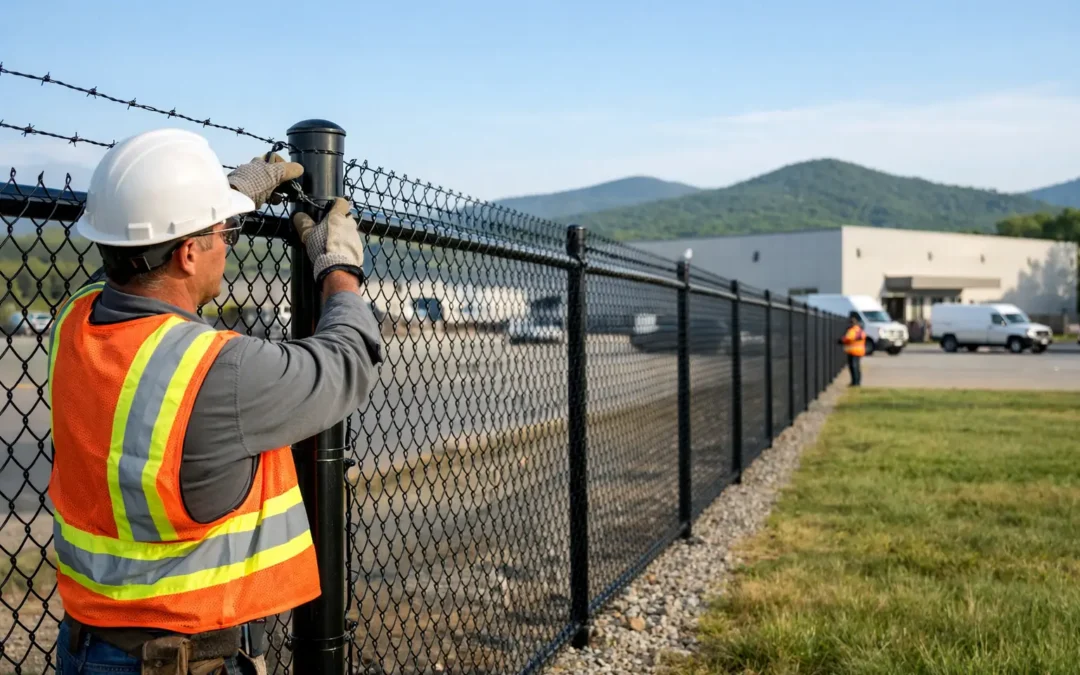
Chain link remains a strong choice for commercial perimeters, equipment enclosures, athletic areas, and construction sites. It is cost-effective, durable, and allows visibility across the property line. It can also be built in different heights and configured with gates, privacy slats, or security enhancements when the application calls for them.
For a utility yard or industrial property, visibility can be an advantage. Staff can see activity near the perimeter, while the fence clearly establishes a boundary. When privacy is the larger concern, chain link may need to be paired with screening or replaced with another material in targeted areas.
Ornamental Iron and Custom Metal for Appearance
Iron fencing and custom metal fabrication are often a better fit for business entrances, offices, apartment communities, churches, and properties where curb appeal carries real weight. These systems offer a more refined appearance while still providing a clear, lasting barrier.
The trade-off is that ornamental fencing usually represents a greater upfront investment than basic chain link. It can be the right investment when the front of the property is part of the customer experience or when the design needs to complement existing architecture. Custom fabrication can also solve difficult layout or gate-design requirements that off-the-shelf components cannot address well.
Vinyl and Wood for Privacy
Vinyl and wood fencing can help screen dumpsters, mechanical equipment, patios, or employee areas from public view. They are often selected for commercial spaces that need privacy without an industrial look.
Wood offers a classic appearance and can be stained to support long-term protection and a consistent finish. Vinyl provides a clean, low-maintenance option for the right setting. Neither material is automatically the answer for every boundary, however. High-security areas or large open perimeters may be better served by chain link, metal fencing, or a combination of materials.
Gates and Access Control Need Early Planning
The gate is frequently the busiest and most vulnerable part of a commercial fence system. It affects deliveries, employee arrival, emergency access, service vehicles, and after-hours security. Treating it as an afterthought can lead to poor traffic flow and inconvenient daily workarounds.
Start with the vehicles that use the entrance. A passenger-car gate and a delivery-truck gate have different clearance needs. Sliding gates, swing gates, cantilever gates, and manual gates each have a place, depending on available space, traffic volume, grade, and desired level of automation.
Access control adds another layer of practical security. Keypads, card access, remote controls, and other entry systems can help businesses manage who enters restricted areas. The right system should be simple enough for daily use, reliable for the environment, and appropriate for the level of risk. A small equipment yard may need a secure, straightforward gate, while a property with multiple authorized users may benefit from more controlled entry management.
Emergency access should always be part of the plan. Businesses need to consider how fire, medical, and service personnel will enter when the property is closed or the primary gate is secured.
Keep the Project Moving Without Disrupting Operations
Commercial installation should be organized around the way your property operates. That may mean coordinating work around customer hours, preserving a separate entry for deliveries, phasing a perimeter replacement, or installing temporary fencing before an old barrier is removed.
Construction managers, property managers, and business owners benefit from a contractor that communicates clearly about scheduling, site access, and what needs to happen before crews arrive. This is especially valuable when work includes multiple fence types, gates, or fabricated components.
Temporary rental fencing deserves special attention on active jobsites. It can establish a clear boundary, discourage unauthorized entry, and help organize staging areas while permanent work is underway. The right rental layout accounts for worker access, material deliveries, equipment movement, and changing site conditions rather than simply enclosing the largest possible area.
Plan for the Fence After Installation
A fence is a long-term property asset, not a one-time transaction. Gates need periodic attention because hinges, latches, rollers, and access components receive repeated use. Wood benefits from appropriate staining and cleaning. Fences around vegetation or drainage areas should be checked so growth and standing water do not create avoidable deterioration or access issues.
When choosing a contractor, ask whether the company can support the fence after installation through cleaning, staining, repair, rental fencing, or future modifications. That broader capability is useful when a property expands, a gate needs adjustment, or a new security concern changes the original plan.
Modern Fence Company brings more than 70 years of local fencing experience to commercial properties that need dependable workmanship and practical solutions. A well-planned fence should make the workday easier, protect what matters, and continue doing its job long after the installation crew has left.
The best time to address perimeter security is before a broken gate, theft, or access problem forces a rushed decision. Start with a clear view of how your property operates, then choose a fencing solution built for the way you work.