
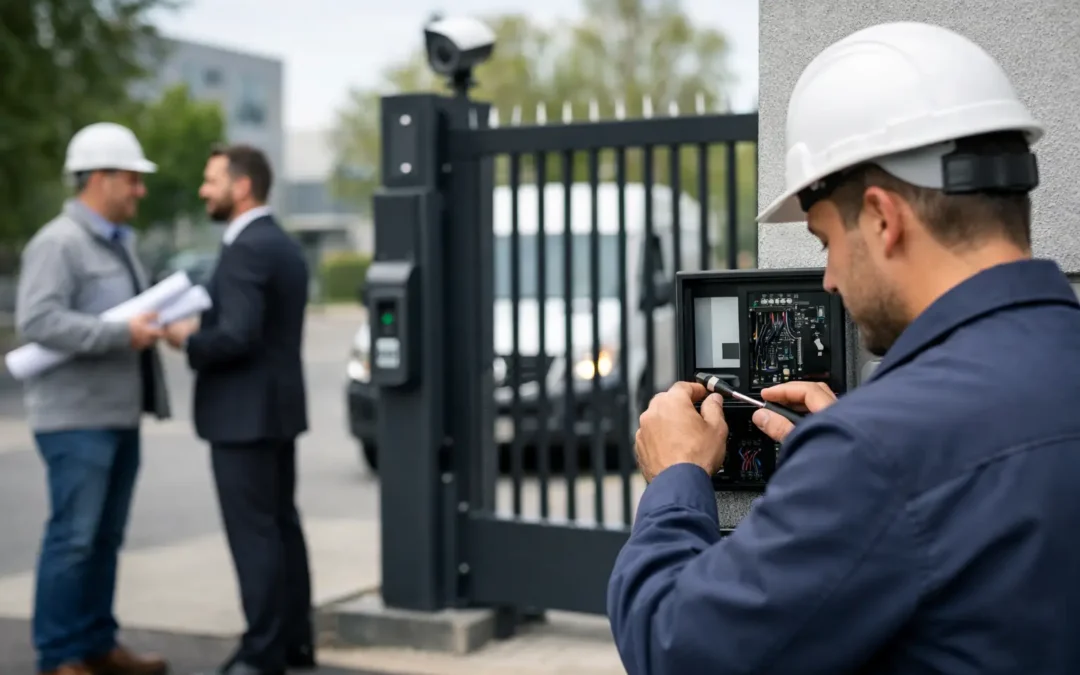
A gate at the entrance to a business, neighborhood, or private property has one job: let the right people in while keeping unauthorized traffic out. But once that gate needs a keypad, card reader, telephone entry system, remote controls, or automatic operation, it becomes more than a fencing project. Property owners often ask, who installs access control gates and whether they need one contractor or several.
The right answer depends on the gate, the electrical requirements, and the level of security you need. In many cases, a qualified fencing and gate contractor coordinates the complete project, including the gate structure, operator, access controls, safety devices, and related site work. For more complex electrical or network-connected systems, a licensed electrician, low-voltage specialist, or IT provider may also be involved.
Who installs access control gates?
Access control gates are commonly installed by professional fence and gate contractors with experience in automated entry systems. These contractors understand the physical side of the work: setting posts, building or installing the gate, preparing a stable operator pad, adjusting hinges or tracks, and making sure the opening works correctly with the property layout.
A capable access control gate installer also handles or coordinates the equipment that controls entry. That may include a slide or swing gate operator, keypad, key fob receiver, card reader, call box, vehicle loop detector, safety photo eyes, and emergency release features. The goal is not simply to make a gate move. It is to create an entry point that operates reliably every day and protects people, vehicles, and the property.
For many commercial sites, the best choice is a contractor that can evaluate both the perimeter and the gate system as one project. A gate operator cannot overcome a poorly built gate, weak posts, inadequate clearance, or drainage problems. Likewise, a well-built gate is not enough if the access equipment is poorly matched to traffic volume or installed without necessary safety protections.
The professionals that may be involved
The primary installer is often a fencing contractor that specializes in commercial gates and access control. This is usually the right starting point for homeowners associations, storage facilities, businesses, industrial properties, apartment communities, and construction sites because the contractor can assess the entrance as a whole.
An electrician may be needed when the project requires new line-voltage power, a dedicated circuit, trenching for electrical service, or connections that must meet local code requirements. Some gate contractors employ or regularly coordinate with licensed electrical professionals so the work is planned correctly from the beginning.
Low-voltage technicians may install certain components, such as telephone entry systems, intercoms, camera connections, network cabling, or credential readers. If the gate system will connect to a building network, cloud-based management platform, or existing security system, the property owner may also need input from an IT or security provider.
That does not mean you should manage each trade separately. A professional gate contractor should explain what is included in the scope of work, identify where specialty electrical or communications work is needed, and coordinate the timing. Clear responsibility prevents a common problem: a completed gate waiting weeks for power, programming, or final connections.
What a qualified installer should evaluate first
An accurate estimate starts with a site visit, not a catalog of gate operators. The installer should look at the entrance width, driveway grade, available space, soil conditions, existing fencing, and how vehicles approach and exit the property.
A sliding gate may be a practical choice where there is limited room behind the gate line or where a long, heavy gate must handle frequent use. A swing gate can provide a clean appearance and work well for many residential or lower-traffic commercial entrances, but it needs enough clear space to open without blocking vehicles. The wrong gate style can create frustrating delays, require expensive rework, or limit emergency access.
The installer should also ask how the gate will be used. A warehouse with delivery trucks has different needs than a private neighborhood or a homeowner’s driveway. Daily traffic counts, vehicle types, visitor access, operating hours, and the need for after-hours entry all affect the operator, controls, and safety equipment selected.
Power availability is another major factor. Running electric service to a gate location can require trenching, conduit, and coordination with an electrician. Solar-powered gate operators can be useful in remote locations, but they are not automatically the best answer. They depend on appropriate sun exposure, system sizing, battery capacity, and realistic expectations about usage during cloudy weather.
Access control is more than a keypad
A basic keypad works well for some properties, especially when a small group of users needs a straightforward entry code. However, shared codes can be passed along, forgotten, or difficult to manage when employees, tenants, or vendors change.
For properties that need better control, installers may recommend key fobs, proximity cards, mobile credentials, telephone entry systems, or managed access platforms. These options can make it easier to add or remove a user without changing a code for everyone.
Visitor access deserves just as much attention as regular access. A gate that works perfectly for employees can become a daily inconvenience if delivery drivers, service technicians, guests, and emergency personnel have no clear way to enter. A well-planned system considers who arrives, when they arrive, and how authorization will be handled without leaving the gate open all day.
Commercial customers should also think about exit controls. Vehicle loops, exit keypads, free-exit devices, and timed openings must be selected carefully to keep traffic moving while maintaining the intended level of security.
Safety and code compliance cannot be an afterthought
Automatic gates are powerful moving equipment. A professional installation should include safety measures appropriate to the design, such as photo eyes, monitored edge sensors, vehicle detection loops, warning signs, and emergency manual release provisions. These features help reduce the risk of a gate closing on a vehicle, pedestrian, or other obstruction.
The exact requirements can vary by jurisdiction, gate type, and application. A qualified installer will account for applicable safety standards, electrical requirements, and local permitting needs. They should also discuss emergency access with the property owner when appropriate, particularly for businesses, multifamily properties, and sites where first responders may need entry.
Be cautious about treating an automated gate as a do-it-yourself upgrade. Even if the gate seems simple, improper operator installation, poor entrapment protection, incorrect wiring, or unsuitable hardware can create serious safety and liability concerns. The cost of correcting a failed installation is often higher than doing the work properly the first time.
Questions to ask before hiring a gate installer
Before choosing a contractor, ask whether they have experience with the specific gate type and access controls you are considering. Request a clear explanation of the proposed system, including what happens during a power outage, how users are added or removed, and what maintenance the equipment will need.
It is also reasonable to ask who will handle electrical work, permits, programming, and final testing. Confirm that the contractor is licensed and insured as required for the work being performed. A detailed estimate should identify the gate, operator, access devices, safety equipment, site preparation, and any exclusions that could affect the final cost.
Service after installation matters, too. Gate operators, batteries, control boards, hinges, rollers, and safety devices all experience wear over time. Choosing a local contractor with the ability to inspect, repair, and maintain the system can save time when a busy entrance stops working.
Choosing a local team for the full project
For property owners in Western Arkansas and Eastern Oklahoma, Modern Fence Company brings fencing, gate construction, access control, and perimeter security experience together under one established local team. That makes it easier to plan an entrance that fits the property instead of piecing together separate parts from separate providers.
The best access control gate is not necessarily the most complicated one. It is the one built for your traffic, property layout, security goals, and budget – then installed with the care needed to perform year after year. A professional site evaluation is the practical first step toward an entrance that gives you control without creating a daily hassle.