
A new fence can make a backyard feel private, secure, and finished. But before posts go into the ground, a residential fence permit guide can save you from the costly problems that happen when a fence is too tall, crosses a property line, blocks a sightline, or sits over a utility route.
Permit requirements vary by city, county, subdivision, and fence location. A backyard privacy fence may be handled very differently from a front-yard decorative fence, a corner-lot enclosure, or a fence surrounding a pool. The right preparation keeps the project moving and protects the investment you are making in your property.
Start With the Rules That Apply to Your Address
There is no single permit rule for every homeowner in Western Arkansas or Eastern Oklahoma. Incorporated cities may have their own zoning and building requirements, while homes outside city limits may fall under different county rules. Some neighborhoods also have homeowners associations with standards that are separate from local government requirements.
Call or visit the planning, zoning, or building department that serves your property before choosing a fence height or ordering materials. Ask whether a permit is required for your specific address, whether a site plan is needed, and whether there are special rules for corner lots, drainage easements, pools, or fences near streets.
A permit is not always required for every residential fence. Even so, that does not mean you can build without restrictions. Height limits, setback requirements, easement rules, and visibility standards can still apply. Confirming the details early is much easier than moving a completed fence later.
Know Why Fence Location Changes the Answer
Most fence regulations treat the backyard more generously than the front or side yard facing a street. Six-foot privacy fencing is common behind a home, but the allowed height may be lower in a front yard or within a corner-lot visibility area. The purpose is usually safety: drivers and pedestrians need clear views where streets, driveways, and sidewalks meet.
A fence placed along the side or rear property line may be straightforward, while a fence near a road, alley, drainage channel, or utility corridor may require extra review. If your property has an unusual shape, slopes toward a drainage area, or backs up to a commercial site, do not rely on a neighbor’s fence as proof that the same placement is approved for yours.
Get Your Property Line Right Before You Build
One of the most common fence disputes begins with a simple assumption about where the lot ends. Existing fences, tree rows, landscaping, and informal markers are not always on the legal boundary. Building a few inches onto a neighbor’s property can create a difficult and expensive conversation, especially after concrete has set.
Your plat, deed records, or a recent survey may provide useful information. If the boundary is unclear, a licensed surveyor is the most reliable source for locating property corners and lines. This is particularly worthwhile when installing an expensive iron fence, a long privacy fence, or fencing near a neighbor who has raised boundary concerns.
It is also wise to talk with adjacent neighbors before work starts. You do not need their permission to build a fence entirely on your property, unless a local rule or recorded agreement says otherwise. Still, a clear conversation about placement, access during installation, gate locations, and which side faces outward can prevent avoidable friction.
Do Not Build in an Easement Without Checking
An easement gives another party a legal right to use part of your property for a defined purpose. Utility easements are common, but there can also be drainage, access, or shared-driveway easements. A fence may be allowed within some easements, but utility companies or local authorities may retain the right to remove it when access is needed.
That trade-off matters. A beautiful wood or vinyl fence that must be dismantled for utility work can become an unexpected expense. Ask the permitting office and utility provider what is allowed, and make sure your installation plan leaves necessary access where required.
Call 811 Before Any Post Holes Are Dug
A permit does not replace utility locating. Before excavation begins, contact 811 so underground utility lines can be marked. Fence posts may seem shallow compared with foundation work, yet they can still strike buried electric, gas, water, communications, or sewer lines.
Wait for the markings and keep them visible during the project. If the marked route conflicts with the fence layout, the contractor may need to adjust post locations, gate placement, or the fence line itself. That adjustment is far less disruptive when it happens on paper rather than after a damaged line interrupts service.
Private utility lines are another consideration. Lines running to a detached garage, outdoor lighting, irrigation equipment, a propane tank, or a separate structure may not be included in public utility marking. Homeowners should identify these lines before installation and discuss any concerns with their fencing contractor.
Prepare a Clear Site Plan for the Permit Office
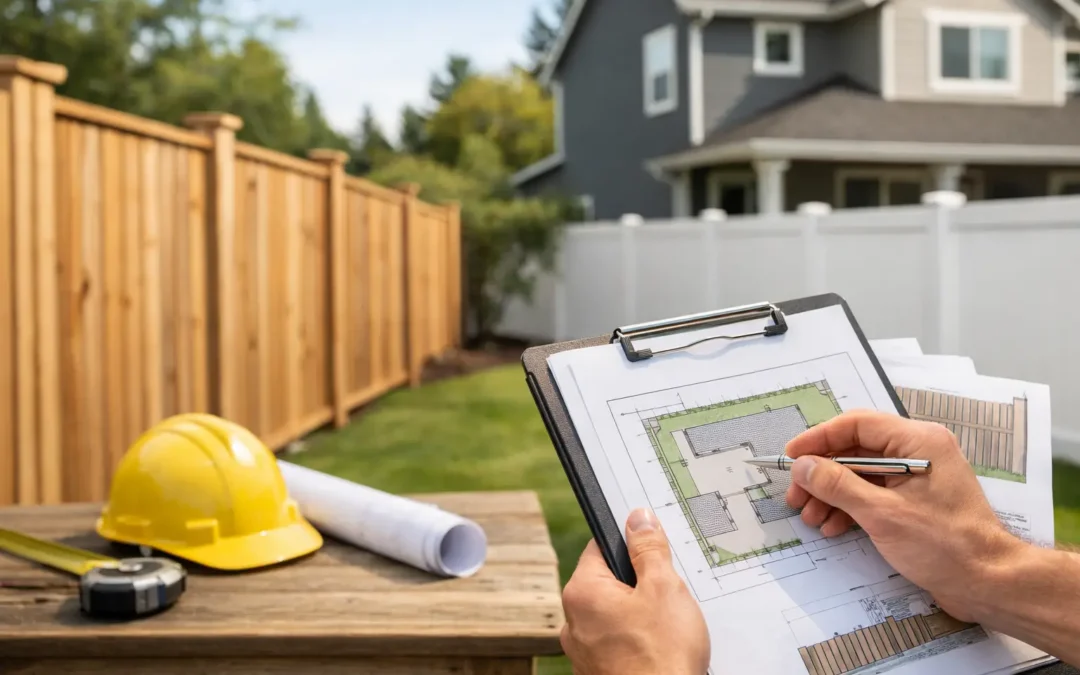
When a permit application requires a drawing, it usually does not need to be architectural. It does need to be clear. A simple site plan should show the house, lot boundaries, streets or alleys, the proposed fence line, gates, and the distance from the fence to relevant property lines or structures.
Include the fence material and planned height. If different sections use different heights, show that clearly. For example, a four-foot ornamental fence in the front yard and a six-foot wood privacy fence behind the home should be identified as separate sections.
For a pool enclosure, include the gate and latch details requested by the local authority. Pool barriers often have specific safety standards that go beyond ordinary yard fencing. A self-closing, self-latching gate and limits on openings or climbable features may be required depending on the jurisdiction.
Check HOA Standards Before Signing Off on Materials
An HOA can regulate fence design even when the city or county approves the permit. Association rules may set limits on material, color, height, placement, gate style, or the outward-facing side of the fence. Many require written architectural approval before construction begins.
Do not treat HOA approval as a formality. A fence that meets local code but conflicts with neighborhood covenants can still require changes at the homeowner’s expense. Review the current rules, submit the requested documentation, and keep the written approval with your project records.
This is where material selection deserves more than a quick decision. Wood offers warmth and privacy, while vinyl can provide a clean, low-maintenance look. Chain link is practical for large yards, pets, and budget-conscious projects. Iron and ornamental fencing can add security and curb appeal while preserving views. The right choice depends on the rules, your maintenance expectations, the terrain, and how you use the space.
Choose an Installer Who Plans for the Details
Permit questions are only one part of a successful fence project. Terrain, drainage, access for equipment, existing landscaping, soil conditions, and gate usage all affect the final layout. A fence that looks good on a flat drawing still has to follow the grade, close securely, and remain stable through changing weather.
Experienced installers can help identify practical concerns before construction, including areas that may need stepped panels, racked sections, reinforced gate posts, or a layout adjustment around utilities. They can also help homeowners understand where permit responsibility falls. In some areas, the homeowner must obtain the permit; in others, a contractor may handle the application as part of the project. Always confirm who is responsible before work is scheduled.
For homeowners in Fort Smith and the surrounding region, working with a licensed and insured local fencing contractor brings valuable familiarity with the real-world conditions that affect installation. Modern Fence Company has served area property owners for generations, with the craftsmanship and planning needed for projects that are built to last.
Keep Records Until the Project Is Complete
Save the permit, approved site plan, survey information, HOA approval, utility marking confirmation, and contractor agreement. If an inspection is required, schedule it at the correct stage and avoid covering work before the inspector has signed off.
Once the fence is complete, keep photos of the finished project and note the material, color, and warranty information. Those records can help with future repairs, insurance questions, resale discussions, or a later addition such as a gate operator or access control system.
A fence should create confidence, not a compliance problem. Confirm the rules, mark the utilities, respect the property lines, and choose an installation plan that fits both your home and the way you live there. A little preparation before the first post hole is dug gives your new fence the best chance to deliver privacy, security, and lasting value for years to come.