
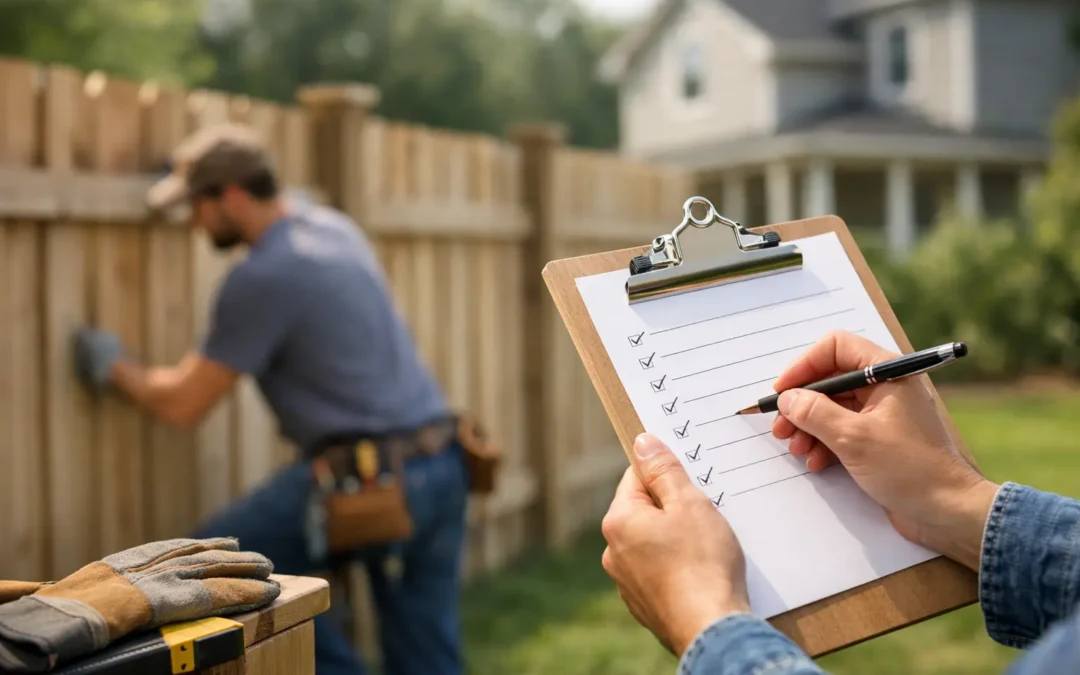
A new fence can improve privacy, security, curb appeal, and how comfortably you use your yard. But the difference between a fence that looks good for years and one that starts leaning, warping, or sagging early often comes down to the contractor and the details agreed upon before work begins. Use this residential fence contractor checklist before you accept an estimate or schedule installation.
Start With the Purpose of Your Fence
Before comparing contractors, get clear about what the fence needs to do. A backyard privacy fence, a secure enclosure for pets, and a decorative front-yard fence may all require different materials, heights, gate styles, and construction methods.
Think about how you use the property now and what may change in the next few years. If children or pets will use the yard, gate latches, spacing between pickets, and the location of gates matter as much as the fence material. If privacy is the priority, ask whether the selected style provides full coverage from the viewing angle that matters most, especially on sloped lots.
A dependable contractor should ask these questions before recommending a product. The right answer is not always the most expensive fence. It is the fence that fits your property, budget, maintenance preference, and intended use.
Confirm the Contractor Is Qualified and Protected
A fence is a permanent improvement to your property, not a weekend purchase. Start by verifying that the contractor is licensed and insured for the work they perform. Ask for proof of current liability coverage and workers’ compensation coverage where applicable. This protects you if property damage or an on-site injury occurs during installation.
Experience should be specific, too. A contractor who has installed fencing for years understands how local soil, drainage, grade changes, utility lines, and weather affect a finished project. In Western Arkansas and Eastern Oklahoma, heavy rain, uneven terrain, and shifting ground can make proper post depth and drainage especially important.
Ask how long the company has operated under its current name and whether the crew performing the work is employed by the company or subcontracted. There is no single right staffing model, but you deserve a clear answer about who will be on your property and who is accountable for the result.
Use This Residential Fence Contractor Checklist When Comparing Estimates
An estimate should give you more than a single total price. It should help you understand what the contractor plans to install, how the work will be completed, and what conditions could affect the final cost. When reviewing proposals, confirm that each one addresses these essential details:
- Fence material, style, height, color or finish, and the total linear footage being quoted.
- Post size, rail construction, picket or panel specifications, and how posts will be set.
- Number, width, placement, and hardware specifications for gates.
- Removal and disposal of an existing fence, if needed, plus site cleanup after installation.
- Permit responsibilities, utility locating, property-line verification, payment schedule, and warranty terms.
A low estimate can be attractive, but it may leave out demolition, gates, stronger posts, staining, haul-away, or other necessary work. Compare scope to scope, not just total to total. If one proposal is substantially lower than the others, ask exactly what is different rather than assuming you found the same fence for less.
Ask About Materials, Not Just Material Names
“Wood fence” and “vinyl fence” are broad descriptions. The quality of individual components can vary significantly. For wood fencing, ask about lumber type, picket thickness, post dimensions, rail count, fasteners, and whether the material is treated for ground contact where needed.
For vinyl, ask about panel thickness, reinforcement, gate construction, and manufacturer warranty coverage. For chain link, confirm the mesh gauge, coating type, terminal posts, framework, and gate hardware. Iron and ornamental fencing deserve similar attention, including coating quality, weld construction, and treatment of cut or field-modified sections.
A qualified contractor can explain these choices in plain language. Stronger components may cost more upfront, but they can reduce future repairs and help the fence hold its shape through changing seasons.
Check the Plan for Property Lines and Utilities
Fence placement is one of the most common sources of frustration after installation. Do not rely on an old fence, a neighbor’s opinion, or a rough visual estimate as proof of a property line. Existing fences are sometimes installed inside, outside, or directly on a boundary.
Review your survey or plat if one is available. If the boundary is unclear, discuss whether a professional survey is appropriate before construction begins. A contractor can install based on the information you provide, but only a surveyor can establish a legal property boundary.
Utility locating also needs attention before holes are dug. Public utility markings help identify buried lines, but they may not account for private lines such as irrigation, landscape lighting, propane connections, or lines running to an outbuilding. Point out anything you know about your property and ask how the contractor handles unexpected underground obstacles.
Discuss Terrain, Drainage, and the Bottom of the Fence
A level-looking yard can still have enough grade change to affect the appearance and performance of a fence. Ask whether the contractor recommends a stepped installation, a racked fence that follows the slope, or another approach. Each option has trade-offs.
A stepped fence creates level sections but may leave gaps beneath panels on a slope. A racked fence follows the ground more closely and can look more natural, though not every material or style racks well. The best choice depends on your fence type, the severity of the grade, and whether containing pets or creating privacy is the main concern.
Drainage matters as well. Fence posts that remain in standing water or are placed where runoff repeatedly washes away soil can lose stability. Tell the contractor about areas that stay wet after storms, downspout discharge locations, or recurring erosion. Addressing those issues during planning is easier than correcting a leaning section later.
Get Specific About Gates and Everyday Use
Gates receive more daily stress than most other fence components. A gate that is too narrow for lawn equipment, too light for its opening, or poorly supported can become a constant problem.
Walk through how you will use each entrance. A standard walk gate may be sufficient for a side yard, while a double drive gate may be needed for trailers, large equipment, or future access. Ask how gates will be braced, what latch and hinge hardware is included, and whether the gate will swing inward or outward.
For security-minded homeowners, consider lockable hardware and visibility around entry points. For families, ask about self-closing or self-latching options where they are appropriate. Details like these are easier to build into the original project than retrofit later.
Understand the Schedule, Site Access, and Cleanup
A professional contractor should provide a realistic timeline, while also being honest about weather delays, material lead times, permit processing, and utility-marking schedules. Ask when the project is expected to start, how long it should take once underway, and how schedule changes will be communicated.
Discuss access before the crew arrives. Identify gates, driveway access, sprinkler heads, landscaping, septic systems, and any areas that should be protected. Fence installation creates soil spoils, noise, and equipment traffic. Good planning reduces disruption to your lawn and helps the crew work efficiently.
Also confirm what cleanup includes. The agreement should state whether old materials, excess soil, concrete debris, and packaging will be removed. A clean jobsite is a practical sign that the contractor respects your home, not merely a finishing touch.
Review Warranty and Follow-Up Before Signing
A warranty is only valuable when you understand what it covers. Separate the workmanship warranty from the manufacturer warranty on materials. Ask how long each lasts, what exclusions apply, and who to call if a concern develops after installation.
Natural materials have limits. Wood can shrink, check, fade, and move as it dries. No contractor can prevent every natural characteristic of lumber, but proper construction and realistic expectations make a meaningful difference. Vinyl can expand and contract with temperature changes, while metal fences depend on coating condition and timely touch-ups if damage occurs.
Choose a contractor that explains care requirements honestly. Fence staining, cleaning, hardware adjustments, and occasional inspections can extend the service life of many fence types. Modern Fence Company has served property owners since 1950, and that kind of long-term local experience matters when you want clear answers before and after the installation.
A well-built fence begins with a careful conversation, not a rushed signature. Bring your questions, compare the full scope of each proposal, and choose the contractor who gives your property the same attention you would.