
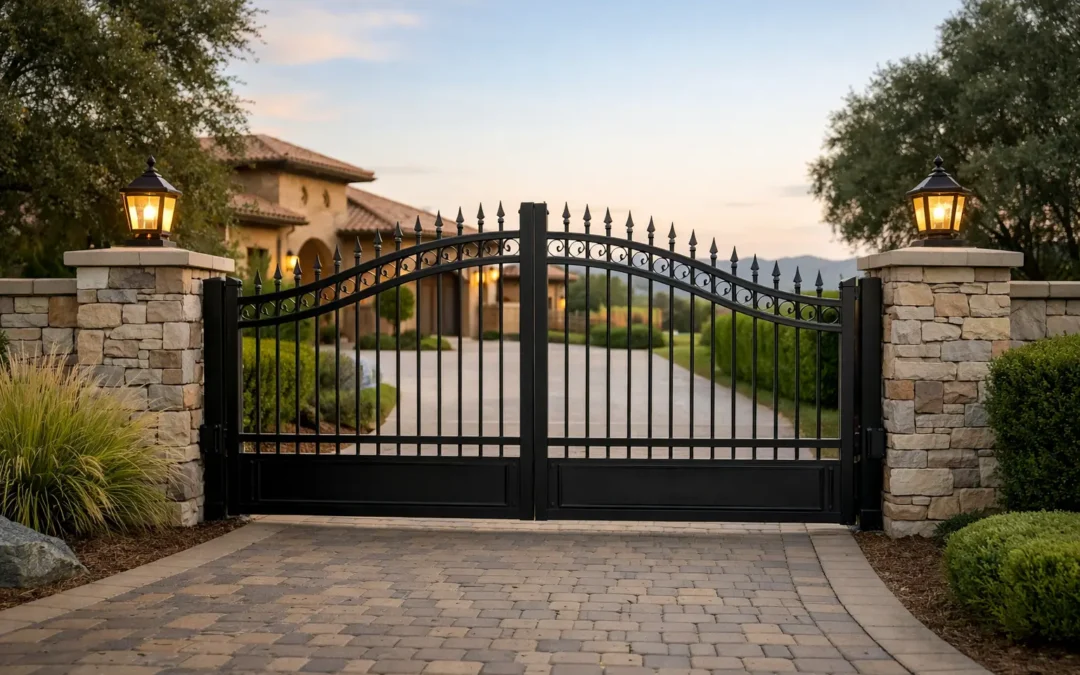
A driveway gate is often the first working part of a property visitors encounter. It needs to look right from the road, but it also has to open reliably in rain, wind, heat, and daily use. This guide to custom driveway gates explains the decisions that affect security, appearance, convenience, and long-term performance before installation begins.
A custom gate is not simply a fence panel with hinges. The driveway width, slope, vehicle traffic, post foundations, access needs, and available space all influence the right design. A well-planned gate feels easy to use because the difficult details were handled before fabrication and installation.
Start With What the Gate Needs to Do
The best gate for a private residence may be very different from the best choice for a business, apartment property, farm entrance, or contractor yard. Begin by identifying the gate’s main job. For some properties, privacy is the priority. For others, the goal is to manage vehicle access, improve perimeter security, keep children or pets safely inside, or add a finished architectural element to the entrance.
Security-focused gates typically benefit from taller fencing, durable metal construction, dependable locking hardware, and controlled entry. A decorative residential gate may place more emphasis on sightlines, color, and details that complement the home. Many projects need both. An ornamental iron-style gate, for example, can provide an open, welcoming appearance while still creating a defined and controlled entry point.
Think about who uses the gate and how often. A gate opened twice a day has different demands than one serving employees, delivery trucks, tenants, customers, or equipment throughout the day. Frequent use makes proper automation, commercial-grade hardware, and a strong support structure especially valuable.
Choose a Gate Style That Fits the Site
Custom driveway gates generally fall into two operating styles: swing gates and slide gates. Neither is automatically better. The right choice depends on the space around the driveway and the conditions on the ground.
Swing gates
Swing gates open inward or outward on hinges, much like a door. A single swing gate can work well for a narrower entrance, while a dual swing gate splits the opening into two leaves. This style can create a classic, balanced look at a residential entrance and often works well where there is enough clear, level space behind the gate.
The trade-off is that swing gates need room to travel. A sloped driveway can complicate the design, particularly when the gate would move uphill. Drainage, snow and debris, and the placement of vehicles near the entrance should also be considered. For automated swing gates, the operator and hinges must be matched to the gate’s size, weight, and expected wind load.
Slide gates
Slide gates travel sideways along the fence line, making them a practical choice where a driveway slopes or where there is limited room for a gate to swing. They are often used at commercial properties because they can cover wide vehicle entrances without requiring a large swing area.
A sliding design requires adequate space beside the opening for the gate to retract. Depending on the site, it may use a ground track or a cantilever system that carries the gate above the driveway. Cantilever gates are useful where a track could collect mud, gravel, leaves, or other debris, but they require additional counterbalance length and careful structural planning.
Select Materials for Appearance and Service Life
Material selection affects far more than curb appeal. It determines how much maintenance the gate will need, how it handles weather, and whether it can support the desired design and automation equipment.
Steel and ornamental iron-style gates are popular for their strength, customization options, and timeless appearance. They can be fabricated with straight pickets, curved tops, decorative accents, privacy panels, or a design that coordinates with an existing iron fence. Quality coating and finishing matter because exposed metal needs protection from moisture and surface wear.
Aluminum can be a good option when corrosion resistance and lighter weight are priorities. Its lighter weight may reduce strain on hardware and operators, although it does not offer the same impact resistance as steel in every application. Wood brings natural warmth and privacy, but it needs regular care to protect against moisture, sun exposure, and movement over time. Vinyl can provide a clean, low-maintenance look for certain residential entrances, though its suitability depends on gate size, framing, and wind exposure.
For many property owners, a custom metal frame with wood or composite infill offers a useful balance. The frame provides strength, while the infill creates a more private or distinctive appearance. The right combination depends on the surrounding fence, maintenance expectations, and budget.
Size the Opening for Real Vehicle Use
A gate that looks proportionate can still be inconvenient if it is too narrow. Measure for the vehicles that will actually use the entrance, not only the family sedan. Consider pickups, trailers, recreational vehicles, delivery vans, service trucks, emergency access, and future needs.
A wider opening improves turning clearance, especially when the driveway meets the road at an angle. On a commercial site, it may be necessary to account for larger trucks and separate entry and exit lanes. The gate placement should also leave enough space for a vehicle to pull completely off the road before stopping to enter a code or wait for the gate to open.
The gate itself is only part of the opening. Posts, hinges, operators, keypads, and safety equipment all need space. Accurate site measurements help prevent a gate from interfering with landscaping, retaining walls, utility locations, or vehicle paths.
Plan Access Control Before Fabrication
Access control is easiest to install when it is part of the original gate plan. A manual gate with a dependable latch may suit a low-traffic driveway, but automated entry provides a major convenience and security benefit for properties with regular vehicle use.
Common control options include vehicle remotes, wireless keypads, telephone entry systems, card or keypad credentials, and smartphone-enabled controls. The best system depends on who needs access and how often those permissions change. A family may prefer remotes and a keypad, while a managed property or business may need a system that gives administrators more control over employee, tenant, or vendor access.
Safety equipment should never be treated as an afterthought. Automated gates need properly placed sensors, obstruction detection, emergency release capability, and controls installed where drivers can use them safely. Gate operators should be selected for the gate’s actual weight, length, operating style, and daily cycle count. An undersized operator may work at first but can lead to unreliable service and premature repairs.
Build the Structure for the Ground Conditions
A beautiful gate can only perform as well as its posts and foundation. In Western Arkansas and Eastern Oklahoma, properties may have uneven grades, changing soil conditions, drainage challenges, and driveways that need practical adjustments around the entrance. Those conditions should shape the installation plan.
Gate posts carry substantial force, especially with wide swing gates, heavy steel construction, or automated systems. Properly sized posts and concrete footings help keep the gate aligned as it opens and closes. Poor alignment can cause dragging, latch problems, operator strain, and accelerated hardware wear.
Drainage deserves attention as well. Water collecting at a gate opening can erode soil, interfere with tracks, and create messy access conditions. A qualified contractor can evaluate grade, runoff, and the relationship between the gate, driveway surface, and surrounding fence line before work begins.
Utilities are another key consideration. Before digging for posts, electrical service, communication wiring, or access-control equipment, utility locations need to be identified. Planning power and low-voltage wiring early helps avoid visible shortcuts and costly changes later.
Do Not Overlook Local Requirements and Daily Operation
Before finalizing a design, check whether the property has neighborhood association rules, municipal requirements, fire access needs, or commercial site standards. Visibility near the road may also matter. A tall solid gate can increase privacy, but it may reduce sightlines for drivers leaving the property.
Daily operation should guide the details. Decide where visitors will stop, how deliveries will be handled, whether there is a pedestrian entrance, and what happens during a power outage. For commercial properties, it may also be wise to establish procedures for after-hours access and emergency response.
Maintenance is usually straightforward when the gate is built correctly. Keep hinges, rollers, latches, and tracks clear of debris; inspect finish coatings for damage; and have automated equipment serviced when it begins moving slowly, making unusual noise, or failing to close consistently. Addressing small issues early protects the larger investment.
Work With a Contractor Who Can Design for the Whole Property
A driveway gate should work with the fence, driveway, landscape, and access needs of the property rather than being treated as a separate add-on. Modern Fence Company brings decades of fencing, access control, and custom metal fabrication experience to projects that require more than an off-the-shelf solution.
The most dependable result begins with a site visit and a clear conversation about how the entrance will be used. Share your preferred style, security concerns, vehicle needs, and budget priorities. From there, the design can balance the details that matter most: a gate that adds confidence at the property line, performs reliably every day, and continues to represent your home or business well for years to come.