
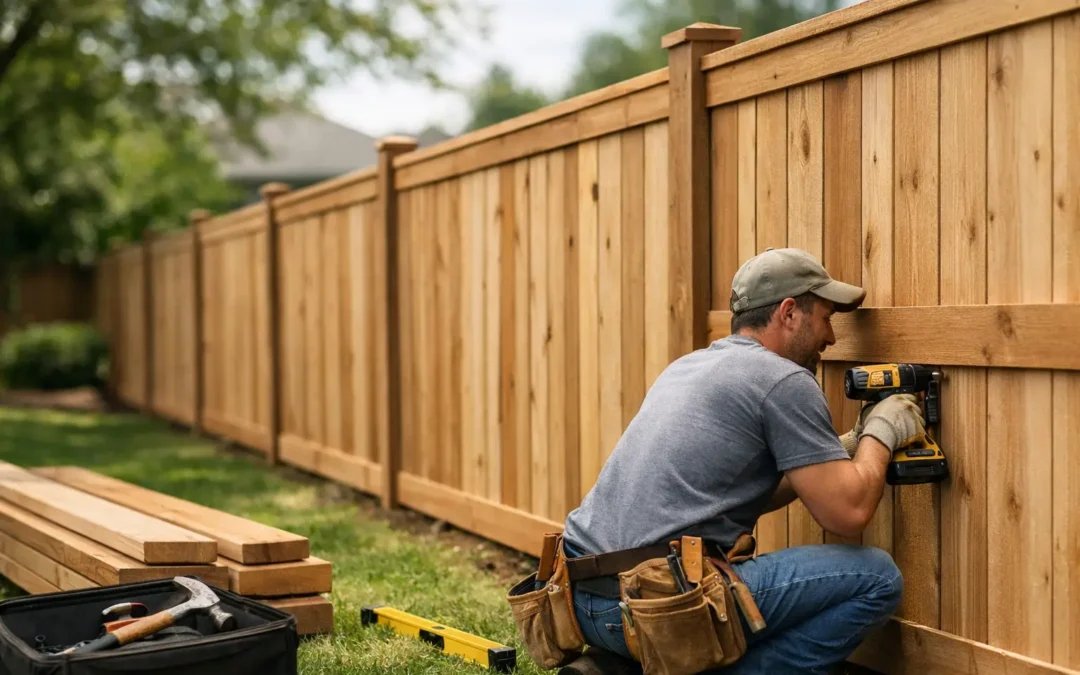
A wood fence rarely fails all at once. More often, it starts with a gate that sags, a panel that leans after a heavy rain, or posts that never had the depth to handle shifting soil. That is why wood fence installation is not just about putting boards in the ground. It is about building a fence that looks right on day one and still performs years later.
For homeowners, that usually means privacy, a cleaner backyard view, and a finished look that fits the house. For commercial properties, it can mean defined boundaries, screening, and a more secure perimeter. In both cases, the quality of the installation matters just as much as the material itself.
What a good wood fence installation should accomplish
A well-built wood fence has to do several jobs at once. It should create privacy where you want it, improve security without making the property feel boxed in, and hold up through heat, storms, and seasonal moisture. It also needs to look consistent from one section to the next, with straight lines, solid gates, and posts set for long-term stability.
That last point is where many fence projects go off track. Wood is a dependable material, but it is still affected by ground conditions, drainage, and daily use. If the fence is installed without accounting for slope, soft spots, drainage flow, or gate traffic, even good lumber can end up underperforming.
Why professional wood fence installation makes a difference
From the street, a fence can look simple. On the job site, it rarely is. Property lines need to be confirmed. Utilities need to be considered. Grades change. Existing structures, trees, and driveways all affect layout. A professional installer works through those details before they become expensive problems.
Post placement is one of the biggest reasons to hire an experienced contractor. Posts are the structure behind the entire fence. If spacing is inconsistent or depth is not right for the site, the fence may look acceptable at first and then begin shifting over time. Gates are another trouble spot. They need proper framing, hardware, and support or they will drag and twist under regular use.
For property owners in Western Arkansas and Eastern Oklahoma, weather adds another layer. Heavy rain, summer heat, and changing ground conditions can test a fence quickly. Installation methods that work in one area may not hold up the same way in another. Local experience matters because the installer already understands the soil, drainage patterns, and practical challenges that come with the region.
Choosing the right style for your property
Not every wood fence should be built the same way. The right design depends on what you need the fence to do and how visible it will be.
Privacy fencing is the most common choice for residential backyards. It creates separation from neighbors, helps contain pets and children, and gives outdoor spaces a more enclosed, comfortable feel. Shadowbox styles offer a more open look while still providing coverage, and they can be a smart option when airflow matters. Decorative wood fencing may work well in front yards or around select sections of a property where appearance is the main priority.
Commercial and multi-use properties often have different priorities. Screening dumpsters, service areas, or equipment yards may call for height, reinforced gates, or a layout that works around traffic patterns. In those cases, the fence is doing more than framing the property. It is supporting security, operations, and appearance at the same time.
The site conditions that affect installation
Every fence line has its own complications. Flat, open ground is the exception, not the rule. Many properties include slopes, tree roots, tight corners, drainage paths, retaining walls, or existing concrete that affects where posts can go.
Slope is one of the biggest design decisions. Some fences are stepped, creating a stair-step appearance across changing grade. Others are racked or contoured to follow the land more closely. Neither option is automatically better. It depends on the style of fence, the steepness of the slope, and the look the property owner wants.
Drainage matters too. If water regularly collects along the fence line, posts can loosen faster and wood components can wear unevenly. A seasoned contractor looks at more than the property line itself. They look at how water moves across the yard and whether adjustments are needed before installation starts.
Then there is access. A backyard with narrow gates, landscaping, or limited room for equipment may affect labor and scheduling. That does not mean the job cannot be done well. It just means the plan needs to be realistic from the beginning.
Materials matter, but workmanship matters more
Property owners often ask which wood is best, and that is a fair question. The answer depends on budget, appearance preferences, and how much maintenance you are willing to take on. Different wood options offer different benefits in terms of look, longevity, and cost.
Still, even quality materials can disappoint when the workmanship is poor. Boards that are not aligned, rails that are not secured correctly, and posts that are not set with care can shorten the life of the fence. Good installation protects the investment you make in the material.
Hardware also deserves attention. Hinges, fasteners, and gate latches are easy to overlook during planning, but they have a direct impact on daily performance. A fence is only as convenient as its gate, and the gate is only as reliable as the hardware supporting it.
What the installation process usually looks like
A professional wood fence installation should begin with a clear site review and estimate. That includes discussing the purpose of the fence, reviewing layout options, identifying obstacles, and confirming details like height, gates, and finish preferences. The more clearly the project is defined up front, the smoother the build tends to go.
After layout is finalized, the installation crew marks the fence line and prepares for post placement. This stage is where precision matters most. Small layout mistakes become obvious once the fence is standing, especially on long runs or highly visible sections.
Once posts are set and stabilized, rails and pickets are installed to match the chosen design. Gates are framed and fitted carefully so they operate correctly and hold their alignment over time. A quality crew also pays attention to the finishing details, including clean transitions, consistent spacing, and a finished appearance around corners and openings.
Depending on the project, staining or sealing may be part of the long-term plan. Some owners prefer to let the wood weather briefly before applying a finish, while others want protection scheduled soon after installation. That decision depends on the material and the desired appearance.
Common mistakes that shorten fence life
The most expensive fence is often the one that has to be repaired too soon. Inadequate post depth, rushed layout, poor gate support, and low-grade hardware are common reasons fences start showing problems earlier than expected.
Another mistake is choosing strictly by initial price. Budget matters, and every project has limits, but the lowest number on an estimate does not always reflect the best long-term value. A fence built with better planning and stronger installation practices usually costs less to live with over time because it needs fewer adjustments and repairs.
Maintenance also gets underestimated. Wood fencing needs periodic care if you want it to keep its appearance and resist weathering. That does not make wood a poor choice. It just means owners should go in with realistic expectations. The payoff is a classic look and strong performance when the fence is built and maintained correctly.
Why local experience matters
A contractor who works in this region regularly understands the practical details that affect results. Soil movement, storm exposure, property layouts, and neighborhood expectations are not abstract issues. They show up on real jobs every week.
That kind of experience helps during planning, but it also helps when the unexpected comes up. Maybe the terrain changes more than it looked from the driveway. Maybe access is tighter than expected. Maybe the project needs a gate arrangement that balances privacy with everyday use. These are the moments when experience saves time and frustration.
For property owners who want a fence that adds security, improves appearance, and lasts, that experience is worth a lot. A company like Modern Fence Company brings the kind of long-term regional knowledge that helps turn a straightforward fence project into a solid investment.
If you are considering a wood fence, the best next step is not guessing at materials or measuring from the back porch. It is getting clear advice based on your property, your priorities, and the way you plan to use the space. A well-built fence should feel like it belongs there from the start and keep proving its value long after the crew leaves.