
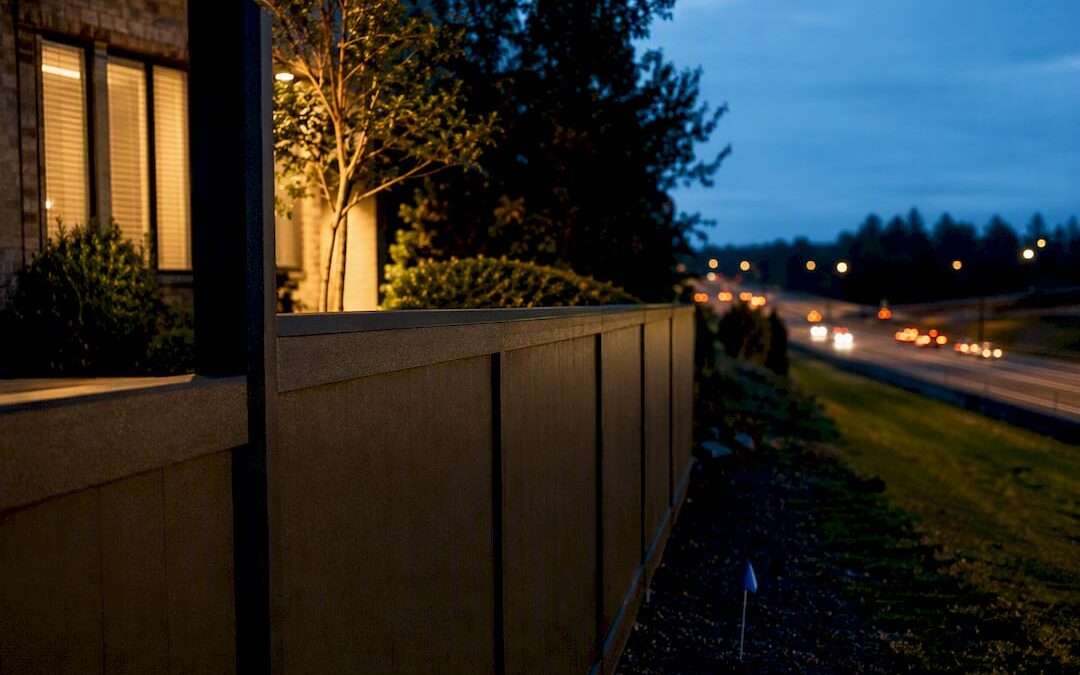
Yes, a well-built soundproof fence works, but not the way most people expect. A sealed, gap-free barrier with real mass can cut perceived noise by roughly 5 to 10 decibels, enough to turn a jarring street into a background hum. For most homeowners, the fastest reliable path is a solid privacy fence with added mass or a membrane retrofit, installed by a contractor who understands sealed construction. Start by identifying your noise source and photographing the site before you request an estimate.
TL;DR:
- Installing a sealed, gap-free fence with added mass can reduce perceived noise by about 5 to 10 decibels if it fully blocks line of sight to the noise source.
- Higher fences, typically 8 feet or more, are more effective when the noise source is elevated or from a two-story neighbor, especially if they obscure the view.
- Dense, sealed materials such as mass-loaded vinyl or heavy timber panels are necessary for substantial sound reduction, with masonry walls offering the most effective but less practical options.
- Positioning the fence close to the noise source and eliminating gaps at the ground level significantly improve noise mitigation, especially for low-frequency sounds.
- Cost and build time vary widely, from quick gap-sealing repairs in a weekend to several weeks for full acoustic fence replacements with heavier, structurally reinforced panels.
Table of Contents
- How Sound Behaves and Why Fence Design Matters
- What Materials Actually Reduce Noise?
- Which Design Choices Drive Real Performance?
- DIY Fixes, Membrane Retrofits, or a Full Acoustic Fence?
- What Will It Cost, and How Long Does It Take?
- What Should You Ask an Installer Before You Sign?
- Why Experience Matters More Than the Product Catalog
- Ready to Quiet Your Yard? Here’s What a Consultation Looks Like
- Sources
How Sound Behaves and Why Fence Design Matters
A fence works by blocking your view of the noise source. If you can see a busy road or a neighbor’s HVAC unit over or through your fence, sound is traveling that same path. This is why line-of-sight blocking matters more than most homeowners realize: a taller barrier that fully hides the source almost always outperforms a shorter one with better materials.
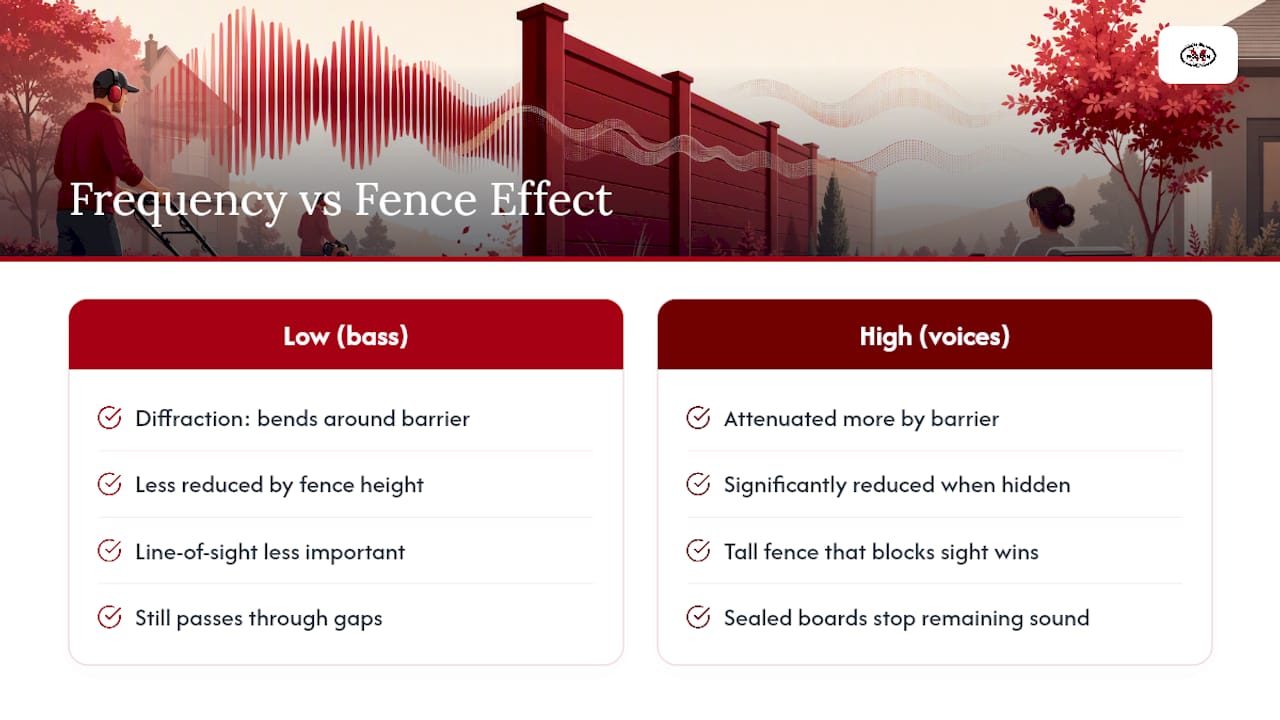
Low frequencies bend around barriers through a process called diffraction. That is why deep engine noise or bass from a neighbor’s speakers still gets through even after a fence goes up, while higher-pitched sounds like voices or tire noise drop noticeably. Set your expectations by frequency, not just by fence type.
Reflective surfaces, like solid wood or masonry, bounce sound back toward its source rather than absorbing it. That is usually fine outdoors. Absorptive materials matter more when reverb inside a courtyard or between two hard walls is bouncing noise back at you. Whatever the material, gaps undo the benefit. A sealed, continuous fence with no visible daylight through the boards is the single biggest factor in whether the whole project performs.
What Materials Actually Reduce Noise?
Not every fence material earns the “acoustic” label, and the differences come down to mass, density, and how well the panels seal. Here is what tends to work, ranked roughly by cost and complexity:
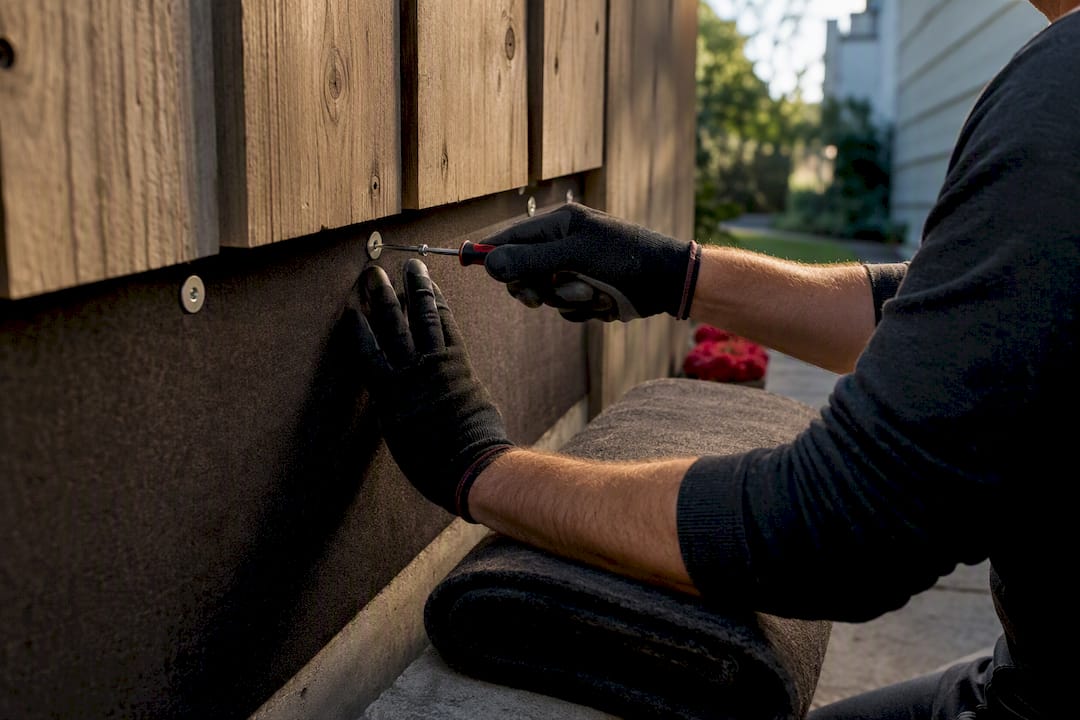
- Mass-loaded vinyl (MLV) and acoustic membranes: These dense, flexible sheets add mass to an existing fence and are commonly rated around STC 27 to 30. They convert sound energy into heat rather than letting it pass through, and installers typically sandwich them between fence layers or hang them directly on the noise-facing side.
- Sealed heavy timber or composite tongue-and-groove panels: Interlocking, rebated boards close the small gaps that plague standard picket or lattice fencing, and they hold up better over years of weather exposure than butt-jointed boards.
- Absorptive panels and outdoor blankets: These help when echo off a nearby wall is part of the problem, but most lose effectiveness outdoors compared to sealed indoor applications.
- Masonry walls or earth berms: These deliver the largest reductions of any option, but permitting, cost, and footprint make them impractical for most residential lots.
Every material choice trades off against wind load, upkeep, and how much the fence will cost to maintain over a decade.
Which Design Choices Drive Real Performance?
Height and placement matter more than most product brochures suggest. Follow these principles when planning or evaluating a design:
- Match height to line of sight. A 6-foot fence is often enough if it fully blocks your view of the source; go to 8 feet or taller when the noise comes from an elevated road, a two-story neighbor, or heavy truck traffic.
- Place the barrier close to the source, not the listener. Distance to the noise origin matters more than distance to your patio, so a fence at the property line facing a road usually outperforms one closer to the house.
- Eliminate every gap. Use rebated or tongue-and-groove profiles, and add gravel boards at the base to close the ground-level gap that lets low-frequency sound sneak through.
- Design gates to match. Keep gates solid, narrow, and positioned away from the noise source whenever the layout allows it.
- Plan for structure. Heavier acoustic panels demand stronger posts and deeper footings than a standard privacy fence, so this is not a place to reuse undersized existing posts.
DIY Fixes, Membrane Retrofits, or a Full Acoustic Fence?
Match the fix to the problem instead of jumping straight to the most expensive option. Sealing gaps, swapping in denser boards, and adding staggered plantings can meaningfully help with moderate mid or high-frequency noise, like conversation or foot traffic, and cost little; see these smart ways to boost noise reduction at home for more ideas.
If your existing fence is otherwise sound but too thin, a membrane retrofit using MLV or an acoustic blanket adds mass without a full rebuild, often bringing meaningful transmission loss for a fraction of replacement cost. Persistent, high-volume traffic noise or industrial sources justify a purpose-built acoustic fence or masonry wall. And for point sources like a pool pump or HVAC unit, a small dedicated enclosure often solves the problem faster and cheaper than treating the whole yard.
What Will It Cost, and How Long Does It Take?
Sealing gaps and upgrading boards on an existing fence runs the lowest cost and can often be finished in a weekend. A membrane retrofit adds material and labor cost but skips full demolition, typically completing in one to two days once materials arrive. A full acoustic fence replacement, including new posts and footings, usually spans several days to two weeks depending on run length and site access.
Before signing anything, check your local permit requirements and any HOA height or material restrictions, since acoustic fences often push past standard height limits. Ask your installer what maintenance the warranty requires and what voids it.
What Should You Ask an Installer Before You Sign?
A qualified contractor should talk about sealing details and structural support before they mention board style. Bring these questions to your consultation:
- Have you installed acoustic or noise-reducing fences before, and can I see photos of a finished project?
- What materials and STC numbers are you specifying, and why for my specific noise source?
- How will you handle post spacing and footings for the added weight of dense panels?
- What warranty and maintenance plan comes with the installation?
Pro Tip: Ask to see a close-up photo of a finished bottom rail or gravel board from a past job. If an installer cannot show you a gap-free base detail, the rest of the fence’s performance claims deserve real skepticism.
Walk away from anyone who proposes hit-and-miss or open-lattice panels for a noise-facing run, and be wary of a quote with no reference projects behind it.
Why Experience Matters More Than the Product Catalog
Experience with wood, vinyl, and metal fencing shows that materials only perform as promised when the build is sealed and structurally sound. The improvements that matter most in the field are rarely the fanciest panel; they are gap-free runs and posts rated for the extra weight of dense acoustic material. Licensed, insured crews catch those details before they become callbacks.
— mark
Ready to Quiet Your Yard? Here’s What a Consultation Looks Like
A qualified fencing company can provide on-site assessments, diagnosing your specific noise source before recommending materials. A consultation starts with a site visit where we identify sound paths, check sightlines to the noise source, and discuss whether your situation calls for a sealed timber fence, a membrane retrofit, or something heavier.
Before your estimate, take a few photos of the affected yard area, note where the noise comes from, and mark your property lines. If you have HOA guidelines on hand, bring those too. From there, the installer can guide you through material options, realistic timelines, and provide a written estimate. Start by exploring our fence installation guide for what to expect from project kickoff to final walkthrough, or reach out directly to schedule your site visit and get a plan built around your yard, not a generic template.
Sources
- Cornell ergonomics acoustics notes
- Acoustical Solutions — soundproofing and noise control information
- FenceTrac — noise barrier fencing overview