
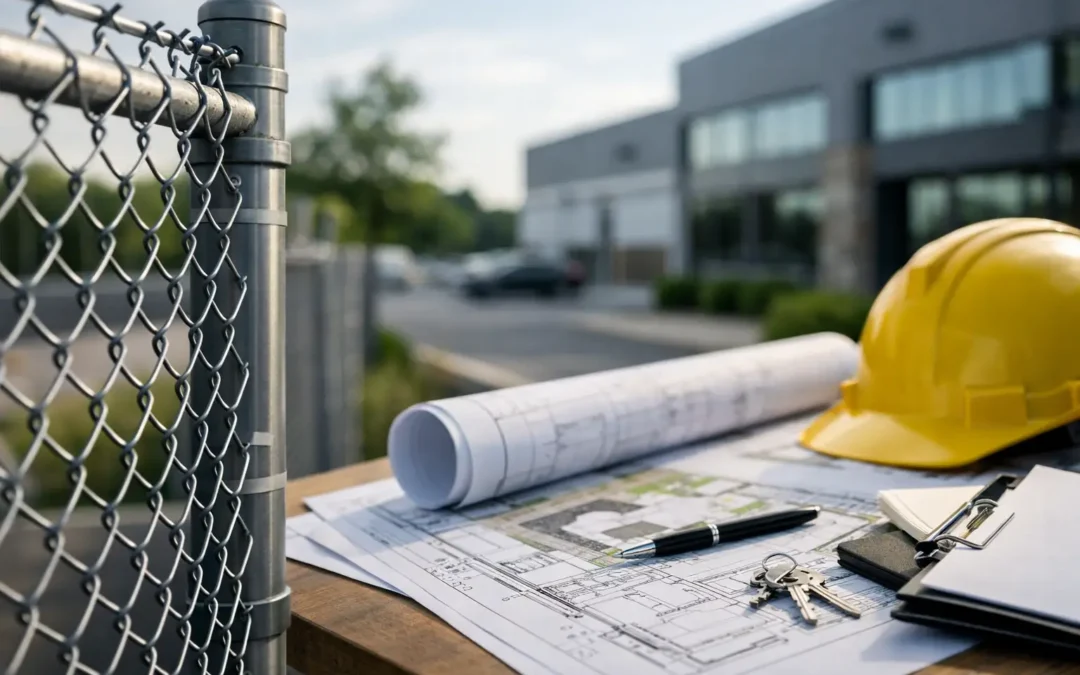
A new commercial fence can improve security, control access, and define a property line, but it can also delay a project if local requirements are missed. Business owners often ask, do commercial fences need permits? In many cases, yes. The actual answer depends on the fence design, its location, the property’s zoning, and the rules enforced by the city or county with jurisdiction over the site.
A permit is not simply paperwork. It gives local officials a chance to confirm that a fence will not block traffic visibility, encroach on public property, interfere with drainage, or create a safety concern. Planning for that review before materials arrive helps keep a commercial project on schedule.
When Do Commercial Fences Need Permits?
Commercial fencing permits are commonly required when a fence exceeds a certain height, sits near a public street, includes gates or automated access controls, or is part of a larger site improvement project. Even where a basic fence permit is not required, zoning or development rules may still limit where the fence can go and how tall it can be.
Rules differ between municipalities and unincorporated areas. A property inside Fort Smith may be subject to different requirements than a commercial site in a nearby Arkansas community or across the state line in Eastern Oklahoma. Do not assume that a permit issued for a building addition, parking lot, or tenant improvement automatically covers a new fence.
The type of fence can matter as well. A short decorative iron fence may be treated differently than an eight-foot chain link security fence with privacy slats. A temporary construction fence may have its own approval process, particularly if it occupies a sidewalk, right-of-way, or public-facing area.
Height and Location Usually Drive the Decision
Height is one of the first details a planning department will review. Commercial properties often need taller fencing for equipment yards, warehouses, storage areas, utility sites, and industrial operations. Those taller fences may require a permit, a zoning review, or both.
Location is just as critical. Fences along a side or rear property line are often allowed at greater heights than fences placed in a front yard or near a street corner. Corner lots and driveway entrances may have visibility triangles that must remain clear so drivers can see pedestrians and oncoming vehicles. Installing a solid privacy fence in one of these areas can create a problem even if the fence itself is structurally sound.
Setbacks also deserve careful attention. The apparent edge of a parking lot, landscape bed, or mowed area is not always the legal property line. A fence installed even a few inches across a boundary can lead to an expensive dispute or require removal. For commercial sites, a current survey is often the safest starting point.
Zoning Rules Can Affect More Than the Fence
A fence is part of the overall site, which means zoning requirements can apply to its materials, appearance, and purpose. Retail centers, office properties, industrial yards, multifamily communities, and agricultural businesses may each face different standards.
For example, a municipality may allow open-style ornamental fencing along a commercial street frontage but restrict opaque materials in that same location. It may require screening around dumpsters, mechanical equipment, or outdoor storage. A security fence around a contractor yard may be permitted, but the outdoor storage itself could have separate zoning conditions.
This is why a property manager should describe the purpose of the fence clearly when checking requirements. Say whether the project is intended for perimeter security, pool safety, access control, tenant separation, equipment protection, or screening. The reason for the fence can change the review process.
Gates, Access Control, and Electrical Work Add Requirements
A manually operated walk gate is generally straightforward. A vehicle gate with an operator, keypad, card reader, intercom, camera, or safety devices is a more involved system. In addition to fence approval, electrical permits and inspections may be required for power connections and low-voltage equipment.
Automated gates must also be designed for safe operation. A gate should not swing into a public sidewalk, street, or driveway lane where it could create a hazard. The site needs enough room for vehicles to wait without backing into traffic, especially at busy commercial entrances.
A properly planned access control system improves daily operations as well as security. It can limit entry to authorized employees, document access activity, and reduce the need to distribute physical keys. But the gate design, gate hardware, electrical work, and emergency access needs should be considered together rather than added after installation begins.
Site Conditions Can Trigger Separate Reviews
Some permit questions have little to do with the fence itself. Drainage channels, easements, utility corridors, flood-prone areas, and shared access drives can all affect where posts and gates may be placed.
Before digging, utilities must be located. Underground power, gas, water, communications lines, irrigation, and private site utilities may cross the planned fence line. Calling 811 is an essential early step, but utility locating does not establish property boundaries or identify every private line on a commercial site. A contractor should review available site plans and field conditions before setting posts.
Easements are another common concern. Utility companies and public agencies may need access through portions of a property, even when the business owns the land. A fence across an easement may need a removable panel, a utility access gate, or written approval. Building without checking can leave the owner responsible for removing and reinstalling the fence later.
A Practical Way to Plan a Permitted Fence Project
The fastest path is to address approvals while the fence is still being designed. Start with the parcel address, a site survey if available, the intended fence line, proposed height, materials, and gate locations. Photos of the area can also help identify street frontage, slopes, existing walls, and nearby utilities.
Then contact the local planning, zoning, or building department that governs the property. Ask whether the project requires a fence permit, zoning clearance, site plan review, electrical permit, or any special approval for an automated gate. Request written guidance when possible, especially for unusual sites or large security projects.
A complete permit application may require a simple plot plan showing property lines, streets, existing structures, the new fence, gate swings, and fence height. More complex projects may need engineered details, especially if they include retaining walls, significant grade changes, cantilever gates, or custom structural steel.
Permit responsibilities should be clear before work begins. Some jurisdictions allow a licensed contractor to submit the application, while others require the property owner or authorized representative to sign. Either way, the owner should understand the approved plan and keep permit records with the property file.
Do Not Let Permit Questions Delay Security Improvements
A permit review can feel like an added step, but it is usually less costly than relocating a completed fence or resolving a code complaint. It also gives business owners a chance to confirm that the fence will support the security, access, and appearance goals they had in mind.
An experienced commercial fencing contractor can help identify likely concerns early, from terrain and gate clearances to utility coordination and material selection. Modern Fence Company has served commercial properties across Western Arkansas and Eastern Oklahoma for decades, bringing practical installation knowledge to projects that need dependable protection without unnecessary surprises.
Before choosing a fence style or scheduling installation, gather the site details and confirm the local rules. A well-planned fence should protect the property for years, not create a preventable issue after the final post is set.