
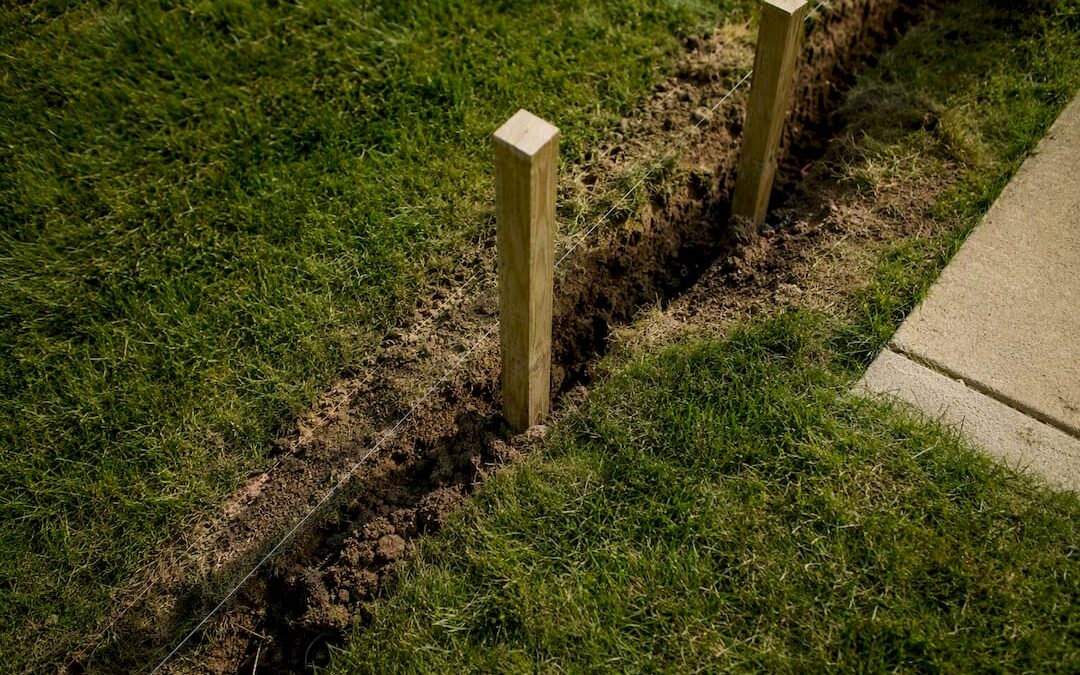
A fence built directly on a property line is generally owned jointly by both neighbors, while a fence built entirely within one owner’s lot belongs to that owner alone, and if you’re considering upgrades, automatic access options are worth exploring through automatic fence gates. That single distinction decides who pays for repairs, who needs to sign off on changes, and who has standing in a dispute, according to a breakdown of ownership rules from LegalClarity.
The catch: state law varies on cost-sharing. California presumes both neighbors split the cost of a boundary fence unless they agree otherwise. Texas has no statewide law forcing a neighbor to pay a share. That gap alone causes a lot of confused homeowners.
Before you do anything else:
- Stop any self-help repairs, removals, or replacements until you know where the line actually is.
- Get a boundary survey or locate existing survey markers (iron pins or rebar at the corners).
- Send written notice before starting repairs or demanding shared costs, and keep a copy.
Key Takeaways
A property line fence is jointly owned when it sits on the boundary, and the fastest way to avoid a costly dispute is a professional survey before anyone builds, repairs, or demands payment.
| Point | Details |
|---|---|
| Ownership follows placement | A fence on the line is shared; a fence fully on one side belongs to that owner alone. |
| Survey first, always | A boundary survey (roughly $800 to $5,500) is the strongest evidence in any dispute. |
| Notice before cost demands | States like California require 30 days’ written notice before splitting fence costs. |
| Never self-help | Removing or damaging a disputed fence risks trespass and conversion claims against you. |
| Modernfence coordinates the process | Modernfence handles surveys, permits, and installation together across Arkansas and Oklahoma. |
This article is general information, not a substitute for advice from a qualified lawyer. Consult a qualified legal professional about your own circumstances before acting on anything here.
Table of Contents
- What Is a Property Line Fence, Legally?
- Who Owns a Property Line Fence, and Who Pays?
- How Tall Can a Fence Be Near a Property Line?
- How Do You Resolve a Property Line Fence Dispute?
- Can You Legally Remove or Move a Neighbor’s Fence?
- What Should You Check Before Building or Repairing a Fence?
- When Do You Need a Surveyor Versus an Attorney?
- Our Take on Preventing Fence Disputes
- Get a Fence Installed the Right Way, the First Time
- Sources
What Is a Property Line Fence, Legally?
A property line is the legal boundary recorded on your deed and plat map. A fence line is just where a fence physically sits, and the two are not always the same thing. That gap is where most disputes start.
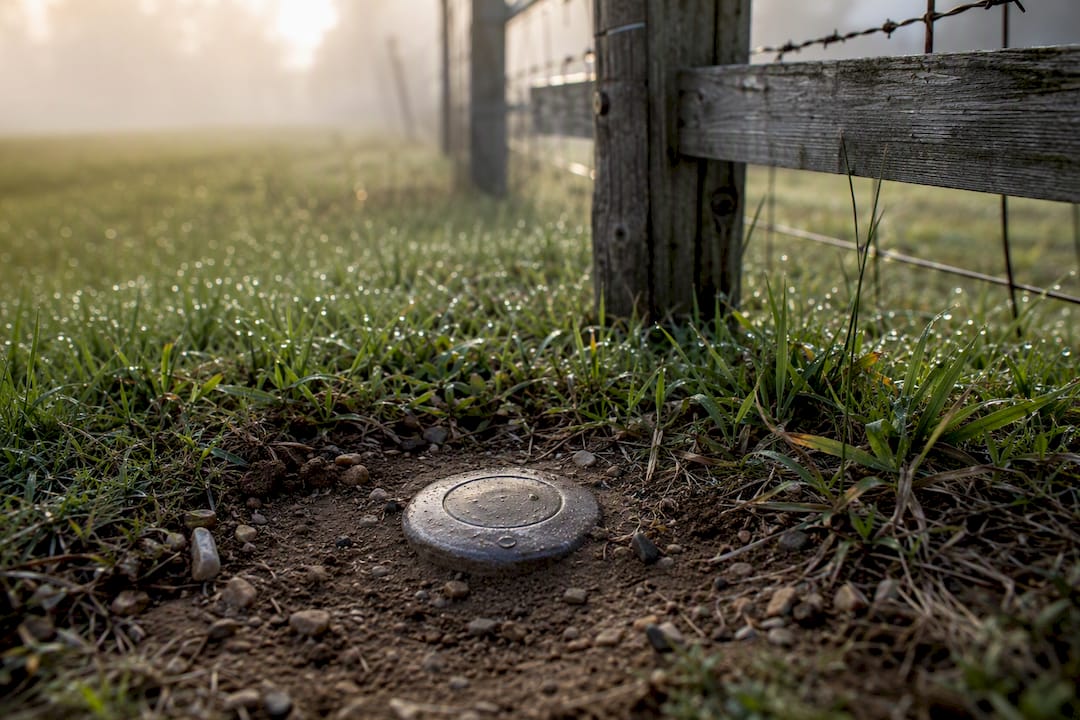
A partition fence (sometimes called a division or boundary fence) sits on or straddles the legal line and serves both properties. A boundary monument is the physical marker, usually an iron pin, rebar stake, or concrete marker, that a surveyor sets or locates to prove where the line actually runs. An easement is a legal right for someone else, often a utility company, to access or use part of your land even though you own it.
Then there’s adverse possession, the legal principle that lets a fence built in the wrong spot for years eventually shift the actual boundary. A fence is a structure, not a legal boundary, and long-standing misplacement can complicate title through adverse possession or acquiescence claims, according to a study of boundary dispute resolution from Stone Surveyors. Adverse possession timelines vary widely depending on the state, and they typically require exclusive, open use, like mowing, maintaining, or fencing off the disputed strip as your own.
A fence that has sat six feet onto your neighbor’s actual lot for two decades isn’t just a maintenance headache. In some states, it can become the new legal line, whether either owner intended that or not.
Who Owns a Property Line Fence, and Who Pays?
Placement relative to the recorded boundary is what determines ownership, not who built the fence or who’s used it longer. A fence entirely inside your property line is yours, full stop. A fence straddling or sitting exactly on the line is typically shared, which means shared maintenance duty and shared cost for reasonable repairs.
States handle the payment question very differently:
- California presumes adjoining owners benefit equally from a boundary fence and generally requires 30 days’ written notice before demanding a cost split, under California Civil Code §841.
- Texas has no single statewide statute forcing a neighbor to pay anything toward a boundary fence; responsibility usually comes down to common law and any agreement you and your neighbor make, according to the Texas State Law Library’s neighbor law guide.
- Missouri and other agricultural states run division fences through a separate statutory system. Missouri’s RSMo Chapter 272 lets counties adopt local option fence law, which changes repair and livestock-related obligations county by county, per the MU Extension fence law reference guide.
A written notice, where required, should include who’s proposing the work, what’s being done, a cost estimate, and a timeline. California and several other states, including Colorado, Oregon, and Washington, require this kind of notice before you can demand reimbursement.
Pro Tip: Even where the law lets you split costs, cosmetic upgrades rarely qualify. If your neighbor wants a decorative rebuild and you’re fine with a basic repair, you generally only owe your share of a reasonable, functional replacement, not the fancier version.
Roughly a third of documented boundary conflicts trace back to fences that were never properly surveyed before installation, based on patterns described across neighbor-law resources.
How Tall Can a Fence Be Near a Property Line?
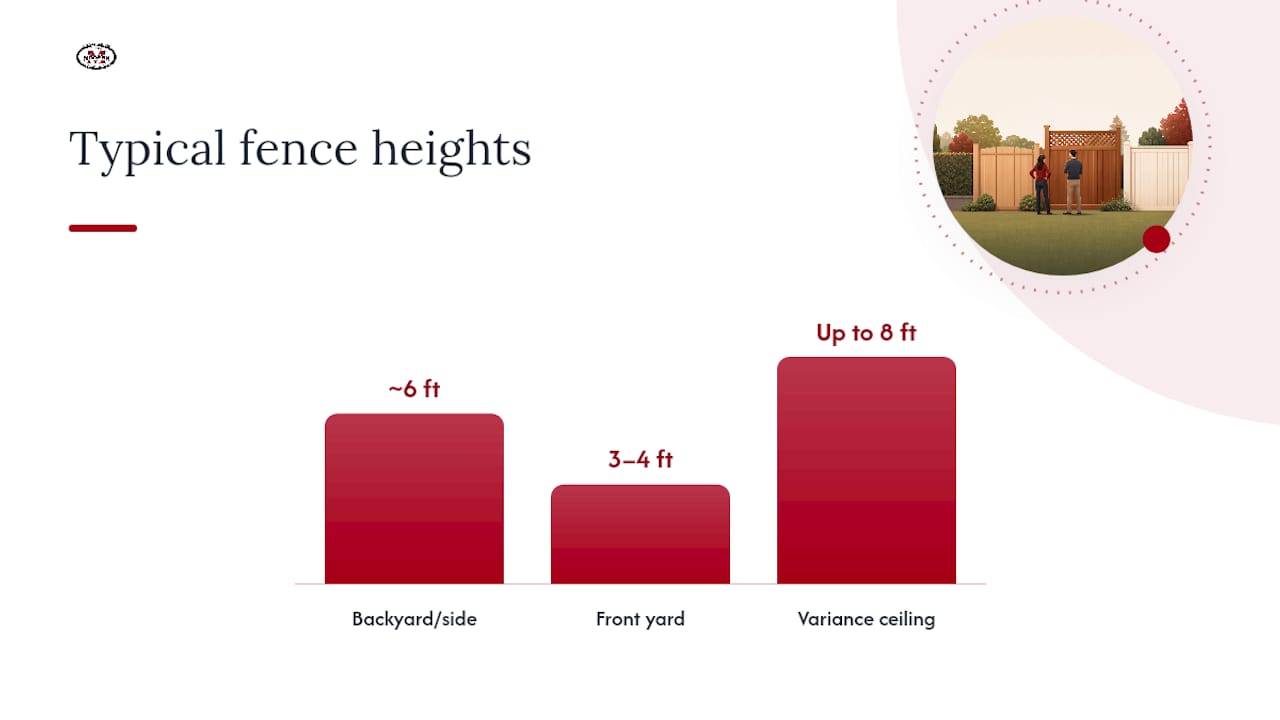
Most municipalities cap backyard and side fences around 6 feet and front-yard fences around 3 to 4 feet, though plenty of cities grant variances up to 8 feet for privacy or noise concerns. Corner lots usually carry extra sight-line restrictions near intersections and driveways, since a tall fence there can block a driver’s view.
A few rules trip people up constantly:
- “Good side out” ordinances in some cities require the finished, attractive side of the fence to face the neighboring property or the street, not your own yard.
- Utility easements can force removal of an otherwise legal fence if it blocks access a utility company needs, regardless of how long it’s been standing.
- HOA covenants often impose stricter limits than city code, including material and color restrictions city zoning never mentions.
Then there’s the spite fence, a structure built mainly to annoy a neighbor, often unusually tall with no real purpose beyond blocking light or a view. Many states have legal provisions addressing this directly, and in Massachusetts, towns can appoint “fence viewers,” a genuinely old-fashioned title for local officials who investigate height, condition, and location disputes, according to FindLaw’s overview of Massachusetts fence law.
| Rule Type | Typical Standard |
|---|---|
| Backyard/side height | Around 6 feet |
| Front yard height | Around 3 to 4 feet |
| Corner lot sight lines | Reduced height near intersections |
| Variance ceiling | Up to 8 feet in some cities |
Call your local building or code enforcement department before you build or modify anything near a boundary. It’s a five-minute phone call that can save you a forced teardown later.
How Do You Resolve a Property Line Fence Dispute?
- Get a professional boundary survey. This is the single most effective step you can take, and it usually costs somewhere between $800 and $5,500 depending on lot size, terrain, and how recently the property was last surveyed, per LegalClarity’s ownership breakdown. Turnaround typically runs two to six weeks.
- Send written notice. State what you found, what you’re proposing, the estimated cost, and a reasonable deadline for a response, generally 30 days.
- Negotiate directly. Most disputes end here once both sides see the same survey data.
- Try mediation. A neutral third party costs far less than litigation and resolves most boundary disagreements that don’t settle through direct talk.
- File in small claims court for cost disputes under your state’s dollar limit, or pursue a quiet title action or injunction in civil court when ownership itself, not just cost, is contested.
Experts consistently point to the survey as the turning point in a dispute, not the lawsuit. Once both neighbors are looking at the same set of coordinates, the argument usually changes from “whose fence is this” to “how do we split the bill,” according to McNeil Engineering’s analysis of boundary dispute resolution.
Never remove, damage, or relocate a fence you suspect is misplaced before you have survey confirmation. Self-help moves like that routinely turn a boundary disagreement into a trespass or property-damage claim against you, regardless of who was technically right about the line.
Can You Legally Remove or Move a Neighbor’s Fence?
You can remove a fence that sits entirely on your own land without needing your neighbor’s permission, provided that it is definitely on your property. A fence on the shared line is joint property, so you generally need agreement before altering or removing it. A fence that has drifted onto your land but that your neighbor built is not yours to touch.
Moving too fast carries real legal exposure:
- Trespass and conversion claims if you damage or remove a fence you don’t fully own.
- Counterclaims for adverse possession if the fence has stood long enough to shift the practical boundary.
- Liability for any damage caused during removal, even accidental.
Pro Tip: If a boundary fence genuinely needs to move, get a survey first, then negotiate a written boundary agreement or request a court order. Skipping straight to removal is the fastest way to turn a fence problem into a lawsuit.
What Should You Check Before Building or Repairing a Fence?
- Locate existing survey markers, or hire a licensed surveyor if none are visible.
- Pull any required building permits before work starts; Modernfence’s residential fence permit guide walks through what most municipalities require.
- Call 811 to have utility lines marked before digging post holes.
- Check for recorded easements and HOA covenants that might restrict placement, height, or material.
- Decide whether to build exactly on the line or set back a few inches to avoid future boundary questions altogether.
A few more things worth doing before the first post goes in the ground:
- Verify any contractor’s license and insurance, and get a written estimate with a site plan attached. Modernfence’s contractor checklist covers exactly what to ask for.
- Put any cost-sharing offer with a neighbor in writing, even if it’s just an email confirming the split.
- Record a formal boundary line agreement with the county recorder if you and your neighbor are settling a genuine boundary question, not just a cosmetic upgrade.
When Do You Need a Surveyor Versus an Attorney?
Call a licensed land surveyor first whenever the boundary itself is uncertain or you’re planning work on or near the line. Surveyors use official plat maps and physical corner markers to produce court-admissible evidence, which resolves most disputes before they ever need a lawyer.
Call an attorney when the disagreement moves into legal recordings, title disputes, or you’re facing a quiet-title action or injunction.
Pro Tip: Share the survey with your neighbor before escalating anything. A neutral, professional document tends to defuse arguments that emotional back-and-forth never will.
Our Take on Preventing Fence Disputes
Get the survey before you get emotional about the fence. That order matters more than almost anything else in this guide, because nearly every dispute we’ve seen described in the record started with two neighbors arguing from two different mental maps of where the line actually sits.
Modernfence has coordinated fence projects across Western Arkansas and Eastern Oklahoma for more than 70 years, and the projects that go smoothly are the ones where the survey, the permit, and the written agreement all happen before the first post goes in.
- We help clients schedule surveys before quoting placement.
- We handle permit paperwork so HOA and municipal requirements aren’t a surprise later.
- We document scope and cost in writing, the same standard we’d want if we were the neighbor on the other side of the line.
Get a Fence Installed the Right Way, the First Time
A property line dispute is expensive to fix after the fact and cheap to prevent up front, and that’s exactly where Modernfence saves homeowners the most trouble. Instead of guessing at placement or hoping a neighbor doesn’t object later, our crews coordinate directly with your surveyor, pull the right permits, and build to a documented boundary from day one.

We install wood, iron, vinyl, and chain link fencing across Western Arkansas and Eastern Oklahoma, and we’re licensed and insured for both residential and commercial jobs. If you’re planning a boundary fence and want the placement, permits, and paperwork handled correctly the first time, start with our fence installation guide or request a free estimate through Modernfence today.
Sources
- California Civil Code §841
- Property line and fence laws in Massachusetts – FindLaw
- Fences & boundaries – Neighbor Law – Guides at Texas State Law Library
- Who Owns the Fence Between Properties and Who Pays? – LegalClarity
- Missouri Fence and Boundary Law Reference Guide | MU Extension