
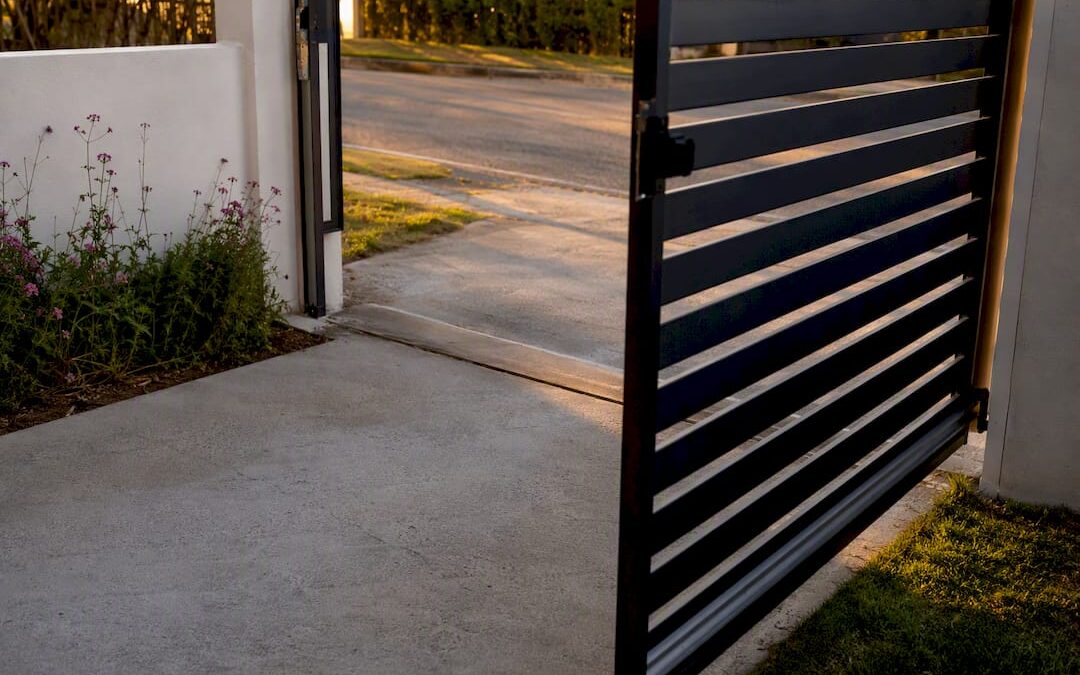
Aim for a 10 to 12 foot clear opening if you drive a sedan or hatchback, 14 to 16 feet if a truck or SUV needs through, and 20 feet or more for an RV, boat, or trailer. Those numbers describe the clear opening, the actual gap your vehicle passes through, not the distance between the posts holding the gate.
Here’s the quick reference before we get into measuring and code checks:
- Compact car or sedan: 10 to 12 feet clear opening
- Pickup truck or full-size SUV: 14 to 16 feet clear opening
- RV, boat trailer, or dual vehicles side by side: 20 feet or more
- Tight or angled driveway approach: add width regardless of vehicle type
The right number for your property depends on how you measure that opening, what you drive, and whether your gate swings or slides. All three get covered below.
Key Takeaways
Gate width should always be set from the clear opening your vehicle needs, not the post-to-post structural measurement a contractor pours first.
| Point | Details |
|---|---|
| Match width to vehicle type | Use 10 to 12 feet for cars, 14 to 16 feet for trucks and SUVs, 20 feet or more for RVs. |
| Measure clear opening, not structural opening | Subtract 1 to 3 inches per side for hinge and latch hardware before ordering a gate. |
| Add clearance for approach angle | Angled driveways or narrow streets need extra width beyond the vehicle’s measured size. |
| Split wide openings into double leaves | Openings past roughly 12 to 14 feet handle better as two leaves than one oversized panel. |
| Confirm local minimums before ordering | Check building codes and HOA rules for emergency access width requirements first. |
| Work with a fabricator for exact sizing | Modernfence measures the clear opening on site and fabricates gates to match, rather than guessing from a calculator. |
Table of Contents
- Standard Driveway Gate Width Ranges by Type
- Clear Opening vs. Structural Opening: What Actually Gets Measured
- How Much Width Do You Need for Your Vehicle?
- Swing Gates vs. Sliding Gates: Which Fits Your Space?
- Hardware, Ground Clearance, and What Installers Subtract
- Check Local Codes Before You Finalize a Width
- What to Measure Before You Call for a Quote
- What Installers See Go Wrong Most Often
- Get a Precise Gate Measurement From Modernfence
- Sources
Standard Driveway Gate Width Ranges by Type
Single swing gates on most residential properties run 10 to 14 feet wide, which covers a single vehicle without much room to spare. Double swing gates, built as two leaves that meet in the middle, typically span 12 to 20 feet and give you more flexibility for trucks or two cars parked side by side. Sliding and cantilever gates can stretch past 30 feet on properties with wide openings or commercial driveways, since the track and support structure scale with the opening rather than a swinging arc.
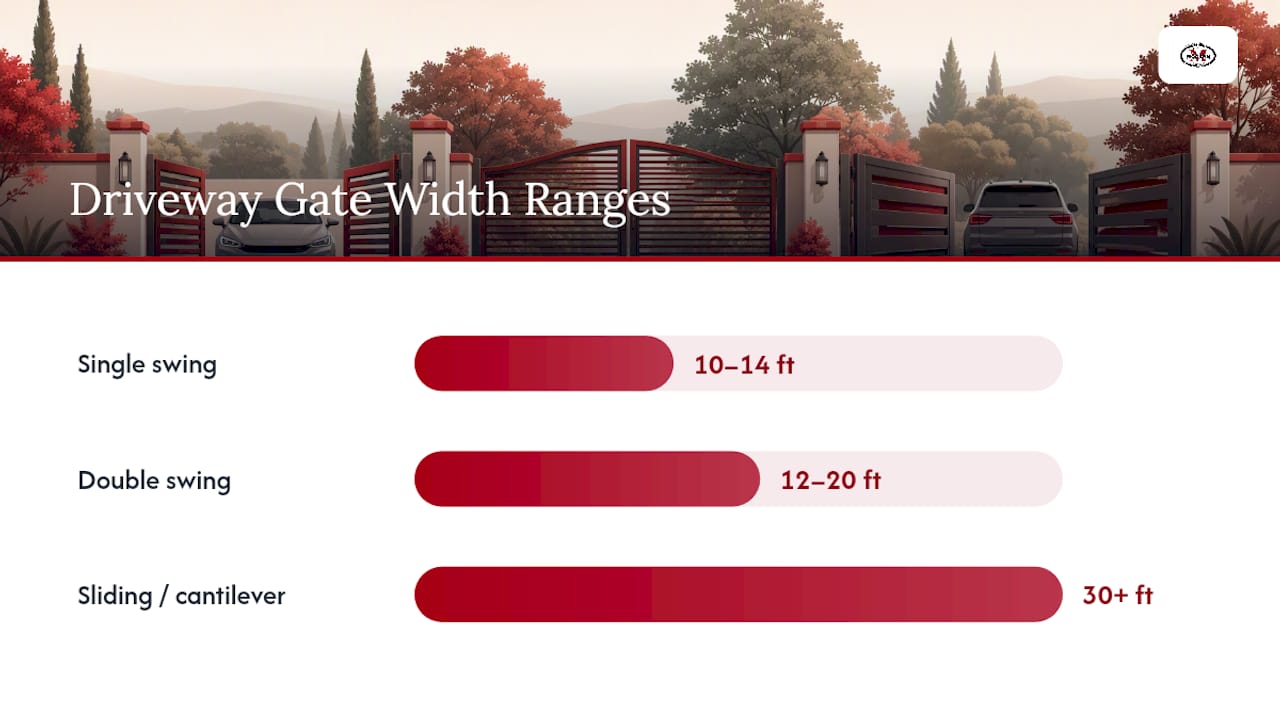
These ranges overlap on purpose. A homeowner with a delivery van or a boat trailer should lean toward the top of a band rather than the middle, and anyone approaching their driveway at an angle needs more width than someone driving straight in.
A double-leaf gate covering a 14 foot opening usually means two 7 foot leaves, which is a common configuration because it keeps each panel light enough for standard hinges and a mid-range electric operator to handle reliably.
Standard residential gates commonly fall between 10 and 16 feet wide, according to installer data across the industry, with the wider end reserved for households running trucks, trailers, or multiple vehicles through the same entry.
Clear Opening vs. Structural Opening: What Actually Gets Measured
The clear opening is the unobstructed gap your vehicle actually drives through. The structural opening is the post-to-post measurement, and it’s always larger because the finished gate has to leave room for hinges, latches, and the small gap where two leaves meet. Order a gate sized to the structural opening and you’ll end up with less usable width than you planned for.
Here’s how to measure it correctly:
- Measure the distance between the inside faces of the two posts, not the outside faces or the post centers.
- Subtract hardware allowances. Fabricators typically reserve 1 to 3 inches per side for hinge clearance, and double gates need another few inches where the leaves meet.
- Record the number as your target clear opening and give that figure to your fabricator, not the raw post-to-post distance.
- Double check ground level at both posts. A slope changes how much swing clearance you actually have.
Pro Tip: Write down the clear opening you want, not the opening you have. Tell your fabricator “I need a 14 foot clear opening” rather than “my posts are 14 feet 6 inches apart” and let them handle the hardware math.
How Much Width Do You Need for Your Vehicle?
Sedans and hatchbacks clear a 10 to 12 foot opening with room to spare. Full-size trucks and SUVs need 14 to 16 feet, especially once you account for towing mirrors that extend several inches past the body on each side. RVs, boat trailers, and anything wider than a standard vehicle need 20 feet or more, and that number climbs further if you’re backing a trailer through rather than driving straight in.
Measure your actual vehicle, mirrors included, then add clearance. A general rule of thumb from gate planning calculators is to add roughly 2 feet of total clearance beyond your vehicle’s widest point, split between both sides.
- Straight, flat driveway approach: minimum recommended width applies
- Angled approach or narrow access street: add 2 to 4 feet beyond the minimum
- Sloped driveway near the gate: add clearance for the reduced turning arc
- Multiple vehicle types sharing one entry: size for the widest one, not the average
Gate calculators and installer guidance consistently point to the same conclusion: measure the clear opening first, then add clearance for your actual vehicle and the angle you’ll be driving through, and let the fabricator handle hardware tolerance from there.
Swing Gates vs. Sliding Gates: Which Fits Your Space?
A swing gate needs an open arc equal to roughly its own width, clear of cars, landscaping, or a steep grade. Once a single-leaf swing gate gets much past 12 to 14 feet, the leaf gets heavy, sags over time, and puts more stress on hinges and posts. That’s why installers commonly split anything wider into a double-leaf configuration instead of one oversized panel.
Sliding and cantilever gates trade the swing arc for a side run: the gate needs a flat stretch of fence line roughly equal to the gate’s own width to slide into when open. That makes sliding gates a better fit for sloped driveways, tight turning approaches, or properties where a swinging arc would block the driveway or sidewalk.
- Choose swing gates when you have clear space on both sides and a level approach
- Choose sliding or cantilever gates when the site slopes, the approach is narrow, or nothing can obstruct the arc
- Choose double leaves over a single wide leaf once the opening passes roughly 12 to 14 feet, to reduce sag and hardware wear
Hardware, Ground Clearance, and What Installers Subtract
Every gate needs a small gap at the bottom, generally 2 to 4 inches, to clear gravel, snow, or leaves without dragging. Uneven terrain or a freeze and thaw climate can push that number higher, since ground heave changes clearance seasonally.
Hinges, latches, and the meeting point between double leaves all eat into your clear opening too. Fabricators typically reserve 1 to 3 inches per side for hinges and leaf mating, and a double gate can lose 3 to 6 inches total across the full opening once every allowance is subtracted. Wider, heavier gates also need a stronger motor and heavier duty hinges, since a 16 foot steel gate puts far more load on an operator than a 10 foot aluminum one.
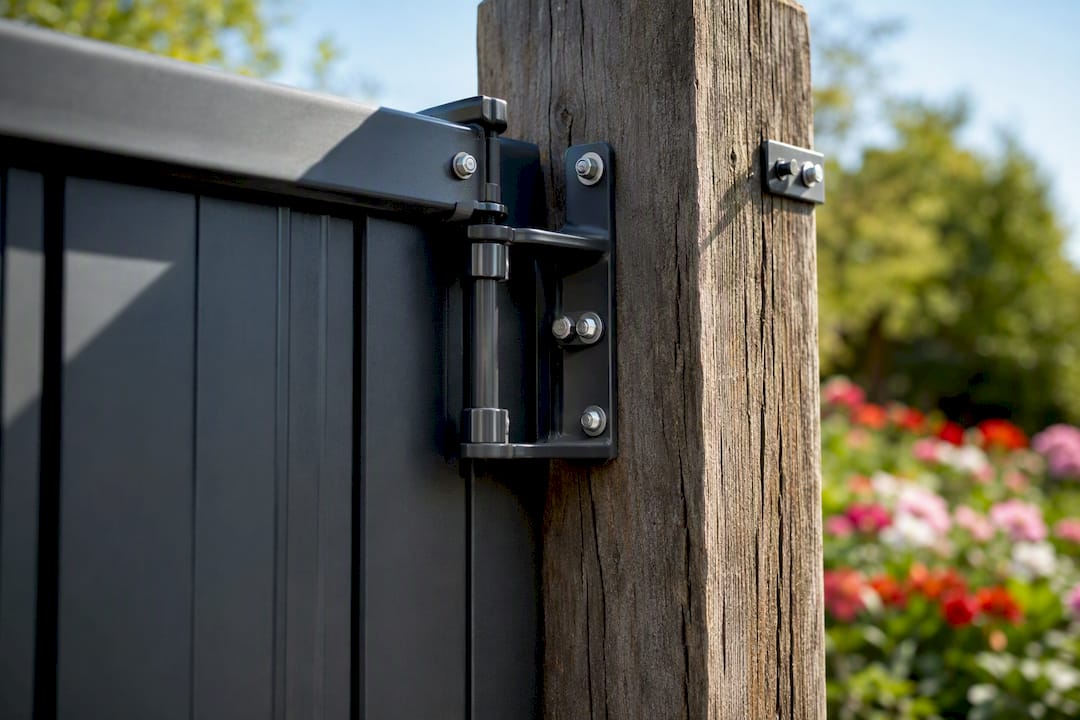
Pro Tip: If you’re planning a wide double-leaf gate with automation, ask your installer to size the access control and opener to the finished weight, not the ordered width. A heavier gate needs a stronger motor even at the same clear opening.
Check Local Codes Before You Finalize a Width
Some municipalities and homeowners associations set minimum clear openings specifically for emergency vehicle access, which can override whatever width you’d otherwise choose. Skipping this step is how homeowners end up re-ordering a gate after inspection.
- Call your local building department and ask about minimum gate width requirements for your zoning classification.
- Check your HOA covenant for gate width, setback, or fire access clauses if you’re in a managed community.
- Ask about fire and emergency access standards directly if your property sits on a rural or shared access road.
- Keep a written record of your planned clear opening, post locations, and any permit correspondence for inspection.
Our residential fence permit guide walks through what most Arkansas and Oklahoma jurisdictions ask for before you break ground.
What to Measure Before You Call for a Quote
Bring these numbers to any estimate, whether you’re getting quotes from a fabricator or ordering a gate yourself.
- Clear opening width at the narrowest point between posts.
- Driveway width at the gate location and 10 feet back from it.
- Curb-to-post distance if the gate sits close to the street.
- Slope or grade across the gate line.
- Your widest vehicle’s width, mirrors included.
Photograph the approach from the street, any obstructions near the posts, and the post faces themselves. Ask your fabricator directly what clear opening they’ll deliver after hardware allowances and what operator they recommend for that width and weight.
Pro Tip: A landscape contractor’s walkway width guide is a useful side reference if your gate sits near a pedestrian path, since the same clearance logic applies to foot traffic beside the driveway.
What Installers See Go Wrong Most Often
The most common mistake is measuring the structural opening and ordering a gate to match it, then discovering the finished gate is too tight once hinges and latch hardware eat into the space. A close second is ignoring swing clearance entirely, planning a wide single-leaf gate that can’t fully open without hitting a parked car or a slope.
Dry-fitting a gate template before pouring concrete for posts is worth the extra step. Once masonry is set, a width mistake gets expensive to fix. If your driveway has any angle, grade, or narrow street access, a professional measurement is worth the cost over a DIY guess.
— mark
Get a Precise Gate Measurement From Modernfence
Guessing at gate width from a tape measure and a calculator gets you close. Getting the clear opening, hardware allowance, and operator sizing right the first time takes someone who fabricates gates for a living. Modernfence handles all three: on-site measurement, custom metal fabrication, and installation, without you juggling separate contractors for each step.
A professional estimate visit typically confirms your clear opening, checks the slope and approach angle, and recommends whether a swing or sliding configuration fits your site better than a generic calculator can. Before your visit, have your vehicle dimensions, any HOA restrictions, and a rough sense of your desired automation on hand. From there, our custom driveway gate guide shows what to expect from fabrication through install.
If you’re ready to get exact numbers for your property instead of estimating from a chart, request a fence installation estimate and we’ll measure your actual clear opening on site.
Sources
The HomeProCalc driveway gate calculator and the gate opening versus gate size explainer are solid starting points for checking your own numbers.
- Driveway Gate Calculator – Free Online Calculator | HomeProCalc
- What’s the Difference Between Gate Opening vs. Gate Size? | Buy Direct Vinyl Fence
- Automatic Driveway Gate Size Guide: Width, Height and Clearance | TX Fence and Deck