A fence can look finished on installation day and still be the wrong choice for the years ahead. The best fencing materials for durability are not automatically the strongest-looking options. They are the materials that match your property’s purpose, exposure to weather, maintenance expectations, and the quality of the installation supporting them.
For homeowners, that may mean a private backyard fence that stands up to humid summers, driving rain, and active children or pets. For businesses, it may mean a secure perimeter that handles frequent use, vehicle traffic, and controlled access. In Western Arkansas and Eastern Oklahoma, changing weather and uneven terrain can put every part of a fence to the test – from posts and gates to fasteners and finishes.
What Makes a Fence Truly Durable?
Durability is more than a material’s resistance to breaking. A long-lasting fence must resist moisture, sun exposure, insects, corrosion, ground movement, wind pressure, and daily use. It also needs properly set posts, correctly sized rails, dependable hardware, and gates that remain aligned.
That is why the same material can perform very differently from one property to another. A wood privacy fence built with quality posts and adequate ground clearance can serve a family well for many years. A chain link fence may be the better long-term choice for a commercial yard where visibility, security, and low maintenance matter more than privacy.
Before choosing a fence, consider what failure would be most costly or frustrating for your property. Is it a sagging gate? Lost privacy? Rust? Rot at the base of posts? A fence that is difficult to repair after storm damage? Answering that question narrows the field quickly.
Best Fencing Materials for Durability by Need
Vinyl fencing: dependable privacy with low upkeep
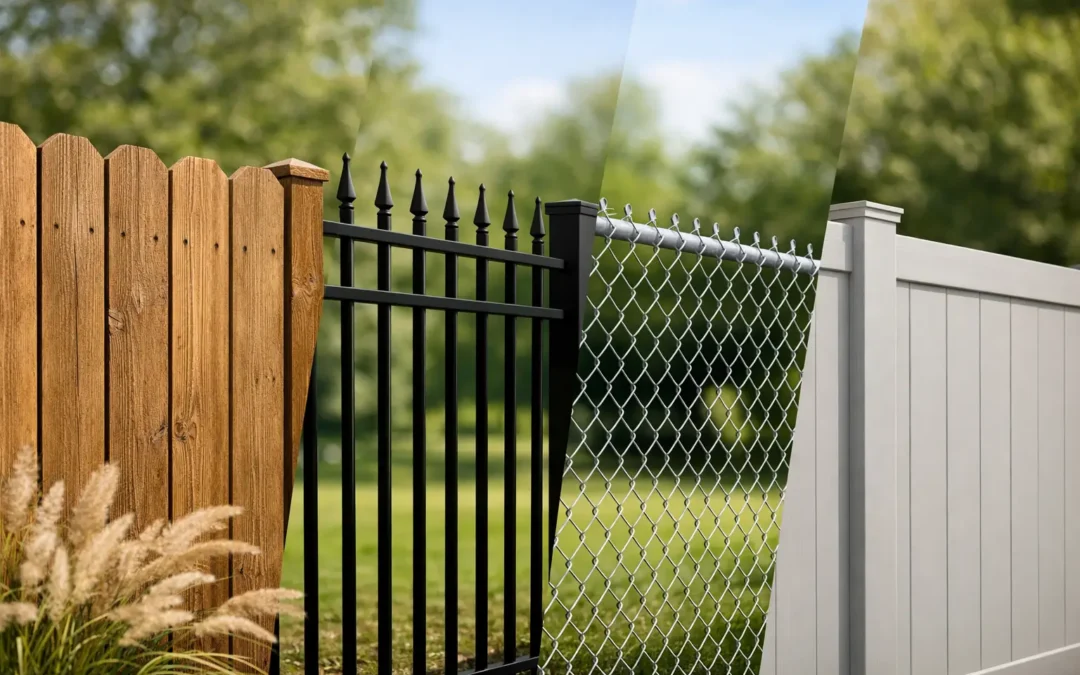
Vinyl is a strong option for homeowners who want a clean privacy fence without regular painting or staining. It does not rot, attract termites, or absorb moisture the way wood can. Quality vinyl fencing also holds its color well and can be cleaned with routine washing.
The trade-off is impact performance and repair flexibility. Vinyl can crack under a hard impact, especially in colder conditions, and a damaged panel may need replacement rather than a simple board-by-board repair. It is also important to use a system designed for wind loads and to reinforce gate areas correctly. A vinyl fence is only as durable as its posts, internal support, and installation.
Vinyl works especially well around homes, pools, patios, and yards where privacy and a polished appearance are priorities. It is a practical choice for property owners who want to reduce ongoing maintenance without giving up a finished look.
Wood fencing: proven performance with proper care
Wood remains one of the most popular fence materials because it delivers privacy, warmth, and design flexibility at a practical price point. Cedar and pressure-treated pine are common choices, and both can perform well when selected and installed for local conditions.
Wood’s biggest strength is that it can be repaired in sections. If a picket, rail, or gate component is damaged, there is often no need to replace the entire fence line. It can also be stained or painted in a wide range of colors, making it easy to update as a property changes.
Its durability depends on maintenance. Moisture is wood’s greatest enemy, particularly at post locations and where boards sit close to the ground. Periodic cleaning, staining, and sealing help protect the fence from water, sun, mildew, and warping. Leaving adequate clearance below the fence and using sound post-setting practices also makes a significant difference.
For a residential privacy fence, wood is often the best balance of appearance, repairability, and value. It is not a maintenance-free material, but a cared-for wood fence can provide reliable service and classic curb appeal for many years.
Chain link fencing: practical strength for active properties
Chain link is one of the most durable and cost-effective fencing materials for security, containment, and high-use spaces. Its open design allows wind to pass through rather than pushing against a solid surface. That makes it a dependable choice for large yards, dog runs, athletic areas, equipment storage, commercial sites, and temporary perimeter needs.
Galvanized chain link resists corrosion, while vinyl-coated chain link adds another protective layer and offers a more finished appearance. The framework matters just as much as the fabric. Properly sized terminal posts, line posts, rails, tension wire, and fittings help the system stay tight and stable over time.
Chain link does not provide privacy on its own, although privacy slats or screening may be added when appropriate. It also has a more utilitarian appearance than wood or vinyl. Still, when the goal is dependable containment with modest maintenance, few materials offer the same long-term value.
Ornamental iron: lasting security and architectural appeal
Ornamental iron fencing is built for properties where strength, visibility, and appearance need to work together. It is a common choice for entryways, pools, commercial properties, estate-style homes, and areas where a more substantial perimeter is desired without blocking sightlines.
A well-fabricated and properly finished iron fence can last for decades. Its durability depends heavily on corrosion protection, particularly around welds, fasteners, and areas exposed to standing water or landscaping irrigation. Quality coatings and routine inspections help catch scratches or early rust before they become larger problems.
Iron is generally a higher initial investment than wood, vinyl, or basic chain link. It also does not create privacy unless it is paired with landscaping, masonry, panels, or another screening solution. For security-focused properties and custom architectural applications, however, iron provides a level of permanence that is difficult to match.
Aluminum fencing: corrosion resistance with lighter-duty strength
Aluminum fencing deserves consideration when the goal is an elegant, low-maintenance perimeter around a pool, garden, or sloped property. It resists rust and is available in styles that resemble ornamental iron. Because panels can often follow the grade of the land, aluminum can be a practical solution on uneven terrain.
It is not the best material where heavy impact resistance or maximum security is required. Aluminum is lighter than steel or iron and can bend if struck with enough force. For residential boundaries and pool enclosures, it can be a durable, attractive fit. For industrial security or high-traffic access points, iron or a heavier commercial system may be the better choice.
Installation Details That Determine Fence Life
Choosing a quality material is only half the decision. Posts carry the load of the entire fence, especially during wind, gate use, and soil movement. Setting them at the proper depth, using the right spacing, and accounting for drainage are essential steps.
Gates deserve special attention. A gate is the most frequently used moving part of many fence systems, and undersized posts or weak hinges can cause sagging long before the rest of the fence shows wear. Commercial gates may also require access control planning, vehicle clearance, and stronger support systems from the start.
Local utility locations, slopes, tree roots, and drainage patterns should be addressed before installation begins. A fence line that looks simple on paper may require grading adjustments, stepped panels, custom fabrication, or a different post layout in the field. Experienced installation prevents shortcuts from becoming expensive repairs.
How to Choose the Right Long-Lasting Fence
Start with the primary job your fence must do. Choose wood or vinyl when privacy is the priority. Consider chain link for affordable containment and commercial practicality. Choose ornamental iron when security and a refined appearance need to share the same boundary. Aluminum is a good fit for decorative enclosures where corrosion resistance and terrain flexibility matter.
Then be realistic about maintenance. If you enjoy the look of wood but do not plan to clean and protect it periodically, vinyl may be a better long-term fit. If your fence will protect equipment, guide traffic, or secure a business property, focus less on decorative panels and more on framework, gate design, and access needs.
Modern Fence Company has served area property owners since 1950, and one lesson remains consistent: the right fence is the one built for the way you actually use your property. A thoughtful material choice and professional installation give you a perimeter that keeps doing its job long after the new-fence appearance has settled in.