
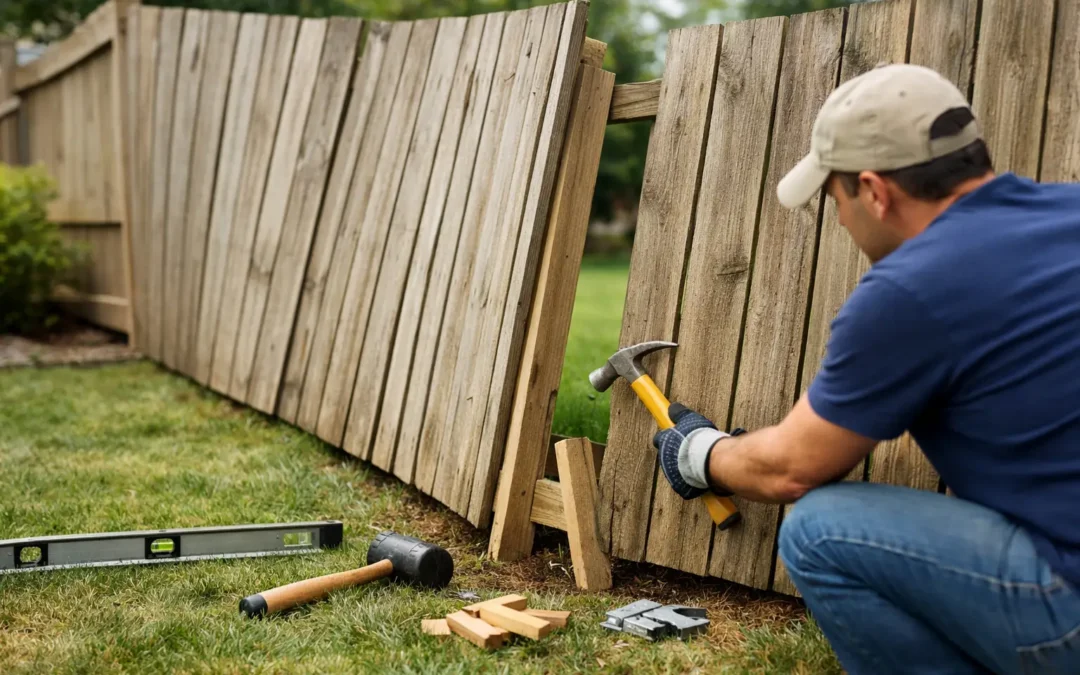
A fence rarely starts leaning all at once. One panel begins to sag after a hard rain, a gate stops lining up, or the top rail develops a noticeable slope across the yard. To fix leaning fence panels correctly, the first job is not pushing them back into place. It is finding out what moved and why.
A leaning fence can affect privacy, curb appeal, and security. It can also place extra pressure on neighboring sections, turning a manageable repair into a larger replacement project. For homeowners, property managers, and business owners, a prompt, well-planned repair protects the investment already in the ground.
Why Fence Panels Start Leaning
Fence panels are usually not the true source of the problem. They lean because the posts that support them have shifted, weakened, or failed. A panel attached to a solid, plumb post should stay straight unless it has been hit or severely damaged.
In Western Arkansas and Eastern Oklahoma, saturated soil is a common culprit. Prolonged rain softens the ground around a post, especially where drainage sends water toward the fence line. Clay-heavy soil can expand when wet and contract during dry periods, gradually loosening posts over time.
Wood rot is another frequent cause. A wooden post may look acceptable above grade while decay has weakened it at or just below the soil line. This is where moisture lingers and where the post carries the most stress. Termite damage, age, and undersized posts can create similar issues.
Wind, fallen limbs, vehicle contact, and a heavy gate can also pull a fence out of alignment. On sloped properties, poor installation depth or inadequate bracing may become obvious after seasons of soil movement. The right repair depends on the cause, not just the visible angle of the panel.
Inspect Before You Fix Leaning Fence Panels
Walk both sides of the fence line before removing screws or digging around a post. Look along the top of the fence rather than focusing only on the section that appears crooked. Nearby posts may be leaning slightly too, and a repair that addresses only one panel can leave the underlying problem unresolved.
Check whether the post itself is moving. Grip it firmly near the middle and apply moderate pressure. If it rocks in the ground, the footing or surrounding soil has failed. If the post is firm but the rails or fasteners are loose, the repair may be limited to the panel connection.
Look closely at the base of wood posts. Soft wood, dark staining, cracks, insect tunnels, and a narrowed post at ground level are warning signs that replacement is the better choice. Do not assume a post is sound because the exposed portion still feels solid.
Also inspect the fasteners, rails, and fence boards. Rusted nails can pull free, wood rails can split, and vinyl brackets can crack. For chain link fencing, a leaning line may involve bent terminal posts, loose tension bands, damaged top rail connections, or improperly tensioned fabric.
If utilities, irrigation lines, or buried cables may run near the fence, pause before digging. A professional assessment is especially worthwhile near commercial sites, access points, retaining walls, or any fence that defines a security perimeter.
When a Simple Panel Repair Is Enough
A straightforward panel repair can work when the posts are still plumb and stable, but the panel has separated from its supports. This is often the case after strong wind, minor impact, or normal fastener failure in an older wood fence.
Start by supporting the panel so it is level and aligned with the adjoining sections. A temporary brace and a helper make this safer and more accurate. Remove damaged nails, screws, brackets, or split rail sections rather than fastening through compromised material.
For wood fencing, exterior-rated structural screws generally provide a more secure repair than standard nails. Attach the rails securely to solid portions of the post, then replace cracked boards or rails as needed. If water has been repeatedly reaching the panel, consider whether drainage, sprinklers, or vegetation against the fence is contributing to premature wear.
Vinyl panels should be re-seated in their routed posts or replaced with compatible brackets and hardware. Avoid forcing a warped vinyl section into place, as this can crack the material or put stress on adjacent posts. Chain link panels may need tension restored after the post and top rail are corrected.
A panel-only repair is economical when the support system remains sound. It is not a lasting solution when a post is loose, rotted, bent, or set too shallowly.
Repairing a Loose or Leaning Fence Post
If a post is structurally sound but has shifted in the soil, it may be possible to reset it. Remove or temporarily detach the fence sections connected to that post so their weight does not fight the correction. Then excavate carefully around the footing until the post can be brought back to plumb.
The old concrete footing may be intact but tilted, cracked, or too small for the fence load. In that case, simply packing dirt around the post will not solve the problem. The post needs a stable, properly sized footing and enough depth to resist future movement.
Once the post is plumb, brace it in both directions. New concrete should be placed according to the post type, fence height, soil conditions, and local requirements. The surrounding grade should direct water away from the post instead of creating a low spot where moisture collects.
This repair takes patience. Reattaching panels before the footing has properly set can pull the post out of alignment again. It is also easy to make a fence look level from one viewpoint while it remains out of line across the full run. A string line, level, and careful measurements make a noticeable difference.
When Post Replacement Is the Better Investment
Replace the post when rot, corrosion, splitting, or impact damage has reduced its strength. Trying to reinforce a failing post may make the fence look better for a short time, but the load still rests on compromised material.
For a wood privacy fence, replacing one post can require removing several boards or rails to maintain a clean appearance. That can feel inconvenient, but it gives the repair a better chance of matching the existing fence line and staying straight. When multiple posts have deteriorated, replacing a longer section may be more cost-effective than repeating isolated repairs year after year.
Metal and chain link posts can often be reset if they are not bent or badly corroded. A bent terminal post, however, should generally be replaced because it carries significant tension from the fabric. Vinyl fence posts may need replacement when they crack, deform, or lose the internal support needed to hold a gate or panel steady.
There is a trade-off between the lowest immediate cost and the longest service life. A small repair is appropriate for a minor issue on a healthy fence. A failing post, poor drainage, or widespread material wear calls for a repair plan that addresses the whole condition, not only the visible lean.
Avoid These Quick Fixes
Propping a leaning panel with a loose stake, tying it to a tree, or adding a surface bracket to a rotted post may buy time, but these measures do not restore structural support. They can also create a hazard for children, pets, tenants, or customers.
Avoid pouring new concrete around a post without checking whether the post itself is damaged. Do not attach a sagging section to an already leaning neighboring post, either. That spreads the load and often causes a longer portion of the fence to fail.
Painting or staining a damaged wood fence before making structural repairs is another common mistake. Finish work protects a sound fence, but it cannot stop decay that has already weakened posts or rails.
Get the Repair Matched to Your Fence
A leaning fence along a backyard property line may need a different approach than a commercial perimeter fence, rental fence, or gate enclosure. Height, wind exposure, terrain, material type, and security needs all affect the right repair. Gates deserve special attention because even a small post shift can cause dragging, latching problems, and accelerated hardware wear.
Modern Fence Company has served the Fort Smith area since 1950, with experience repairing and installing wood, vinyl, chain link, iron, and specialty fencing. A professional inspection can identify whether a section needs adjustment, a new post, drainage correction, or a more complete replacement plan.
The best time to address a lean is when it is still limited to one section. Correcting the support now helps keep the rest of the fence straight, secure, and ready for the seasons ahead.