
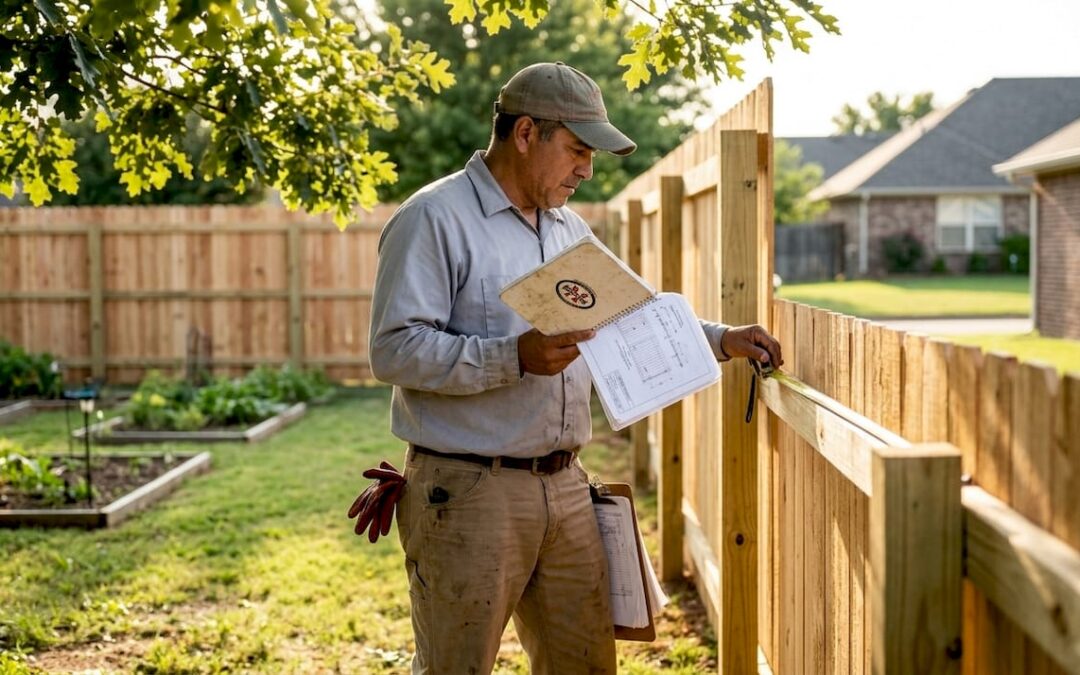
Fencing contractors near me are local professionals who install, repair, and customize residential and commercial fences to meet your property requirements and local building codes. In Oklahoma, where properties range from urban lots in Tulsa to rural acreage in the eastern part of the state, the right fence installer does far more than drive posts into the ground. A qualified local contractor handles material selection, permit paperwork, utility locating, and HOA compliance from start to finish. Modernfence has served homeowners and commercial clients across Eastern Oklahoma and Western Arkansas for over 70 years, making it one of the most experienced fence installation services in the region.
How to find and evaluate fencing contractors near me
The single most important filter when searching for local fencing services is licensure and insurance. An unlicensed installer puts you at legal and financial risk if something goes wrong on your property. Always ask for proof of both before signing anything.
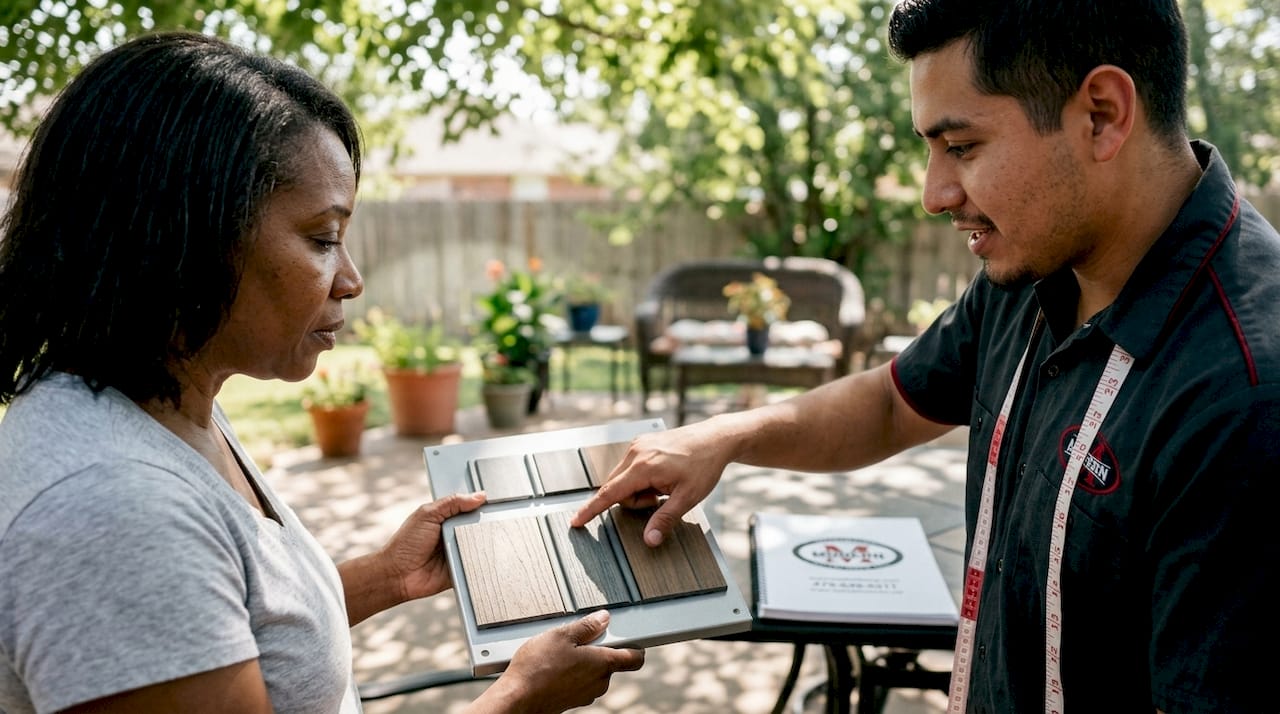
Beyond credentials, look at how long the contractor has operated and who actually does the work. Contractors with 10+ years of staff tenure produce more consistent craftsmanship than those who rely on rotating third-party labor. That consistency shows up in post alignment, gate swing, and how well the fence holds up after the first Oklahoma storm season.
Use these criteria to vet any fence installation service near you:
- License and insurance: Verify both are current and cover your project type.
- Written, on-site estimates: A thorough site evaluation takes only 10–15 minutes but produces a quote that accounts for terrain, slope, and access constraints.
- Detailed quote breakdown: Labor, materials, permits, and cleanup should each appear as separate line items.
- Online reviews and BBB standing: Look for patterns across multiple reviews, not just star ratings.
- References from similar projects: Ask for at least two local jobs you can verify.
Red flags include vague pricing (“we’ll figure it out as we go”), no physical address, and pressure to pay in full before work begins. Unlicensed installers also tend to skip permit steps, which can force you to tear down a fence that violates local code.
Pro Tip: Request that your written estimate include the specific fence post depth and concrete mix the contractor plans to use. Oklahoma’s clay-heavy soil expands and contracts with moisture, and shallow posts are the leading cause of fence lean within two years.
What are typical costs and timelines for local fence installation?
Residential fence installation costs range from $1,760 to $4,500 for most standard projects. Smaller jobs can come in around $430, while large multi-acre properties can exceed $43,000. That wide range reflects how much material choice, terrain, and fence length affect the final number.
Labor is a major cost driver. Fence installers charge around $50 per hour, and active labor runs 24–72 hours depending on project complexity. A straightforward 150-foot wood privacy fence on flat ground sits at the low end of that range. A sloped lot with multiple gates and a mix of materials pushes toward the top.
| Fence type | Typical cost per linear foot | Durability | Maintenance level |
|---|---|---|---|
| Wood | $12–$27 | Moderate | High |
| Vinyl | $15–$30 | High | Low |
| Chain link | $8–$18 | High | Low |
| Aluminum | $20–$30 | High | Very low |
| Iron | $25–$40 | Very high | Moderate |
Permitting and material procurement add time to any project. Most municipalities process fence permits within one to two weeks. If your materials need to be ordered rather than pulled from local stock, that can add another week or more before installation begins. Contractors who stock materials locally give you a real scheduling advantage.
Pro Tip: Get your permit application submitted before finalizing your installation date. Oklahoma municipalities vary widely in processing speed, and a one-week delay in permitting can push your entire project back by two to three weeks during peak season.
Navigating permits, zoning, and HOA rules for fence installation
Permits are not optional in most Oklahoma municipalities. Skipping this step risks fines, forced removal, and complications when you sell the property. A qualified fence installation service handles the permit process as a standard part of the job.
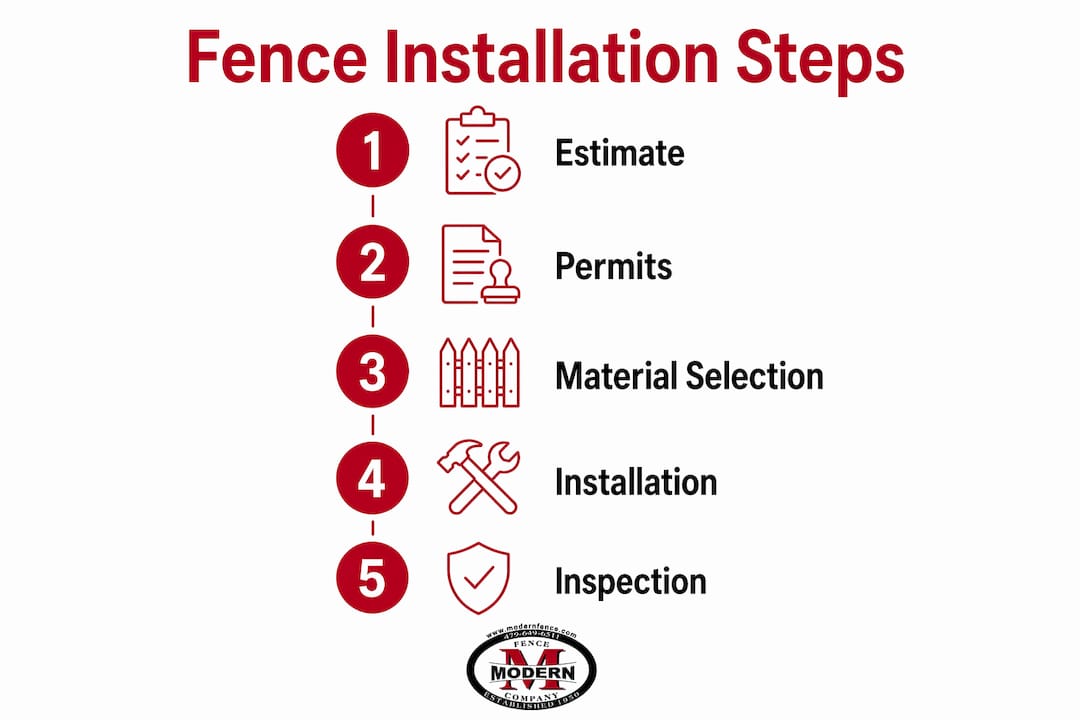
Here is what the permitting and compliance process typically looks like with a professional contractor:
- Utility locating: The contractor calls 811 or the local equivalent before any digging begins. Calling 811 is a legal requirement in most states and protects underground gas, water, and electrical lines from damage.
- Permit application: The contractor submits site plans, fence dimensions, and material specs to your local building department. Permit fees vary by municipality. As a reference point, Raleigh, NC charges $264 for a zoning permit with a one to two week approval window. Oklahoma cities follow similar processes.
- HOA architectural review: If your property falls under an HOA, your contractor prepares an architectural review packet that includes site diagrams, material samples, and color specifications. This packet goes to the HOA board before any scheduling happens.
- Code compliance review: Local codes govern fence height, setback distance from property lines, and visibility requirements near driveways and intersections. Your contractor confirms the design meets all of these before breaking ground.
- Final inspection: Many municipalities require a post-installation inspection to confirm the fence meets the approved permit. Your contractor schedules and attends this on your behalf.
Working with a contractor who manages all five steps protects you from the most common and costly fencing mistakes. Homeowners who handle permits themselves often miss setback requirements or submit incomplete HOA packets, both of which cause delays and added expense.
How do you choose the right fence material with contractor help?
Material choice shapes every other decision in a fence project, from cost and timeline to long-term maintenance. The right material depends on your property’s purpose, your terrain, and how much upkeep you want to do in five years.
Here is a practical breakdown of the most common options:
- Wood: Cedar and pine are the most popular choices in Oklahoma. Wood offers a natural look and strong privacy, but it requires staining or sealing every few years to resist moisture and UV damage. Modernfence offers wood fence installation and staining as a combined service.
- Vinyl: Vinyl holds up well against Oklahoma’s temperature swings and does not rot, warp, or need painting. The upfront cost is higher than wood, but the long-term maintenance cost is lower.
- Chain link: Chain link is the most cost-effective option for large perimeters. It works well for commercial properties, dog runs, and utility areas where visibility is acceptable. Modernfence’s chain link installation covers both residential and commercial applications.
- Aluminum: Aluminum suits decorative applications around pools and front yards. It does not rust and holds paint well, making it a low-maintenance choice for properties where appearance matters.
- Iron: Wrought iron and steel deliver the strongest perimeter security. Modernfence specializes in iron fence installation for both residential estates and commercial properties that need a durable, long-lasting barrier.
A good contractor evaluates your property before recommending a material. Factors like soil type, slope, wind exposure, and proximity to trees all affect which material performs best over time. Eastern Oklahoma’s red clay soil, for example, expands when wet and can shift fence posts set without adequate concrete depth. A contractor with local experience accounts for that before the first post goes in.
Key Takeaways
Choosing a qualified local fence contractor protects your investment, keeps your project code-compliant, and produces a fence that holds up through Oklahoma’s demanding weather cycles.
| Point | Details |
|---|---|
| Verify license and insurance | Always confirm credentials before signing a contract to avoid legal and financial exposure. |
| Get a written, on-site estimate | A 10–15 minute site visit produces accurate quotes that account for terrain and access costs. |
| Budget $1,760–$4,500 for most projects | Labor runs around $50 per hour for 24–72 hours; material and permit costs add to the total. |
| Let your contractor handle permits | Professional contractors manage 811 calls, permit applications, and HOA packets as standard service. |
| Match material to your property’s needs | Soil type, slope, and intended use determine which fence material performs best long-term. |
What I’ve learned after years of watching fence projects go wrong
The most expensive mistake homeowners make is choosing a contractor based on the lowest bid. I have seen it play out the same way every time. The low-bid installer skips the permit, sets posts too shallow, and disappears when the fence starts leaning six months later. The homeowner ends up paying twice: once for the original job and again to fix it.
The contractors worth hiring are the ones who slow down before they start. They walk your property. They ask about your HOA rules. They tell you about the permit timeline before you ask. That kind of thoroughness is not a sales tactic. It reflects how they actually run their projects.
Written agreements matter more than most homeowners realize. A verbal promise that the contractor will “handle everything” is worth nothing if the permit gets missed or the wrong material gets ordered. Every detail, post depth, gate placement, material grade, and cleanup responsibility, should appear in writing before work begins.
Local knowledge is genuinely valuable in this trade. A contractor who has worked Eastern Oklahoma soil for years knows which post depths hold in clay, which neighborhoods have strict HOA review timelines, and which municipalities process permits faster than others. That knowledge saves time and money in ways that no out-of-state or newly established installer can replicate.
My honest recommendation: prioritize longevity and local reputation over price. Request a site visit, get everything in writing, and choose a contractor who treats the permit process as their responsibility, not yours.
— mark
Modernfence: professional fence installation for Oklahoma properties
Modernfence brings over 70 years of licensed, insured fence installation experience to homeowners and property managers across Eastern Oklahoma and Western Arkansas. Whether you need a wood privacy fence for your backyard, a chain link perimeter for a commercial lot, or a custom iron gate, Modernfence handles the full project from permit to final inspection.
The team manages utility locating, permit applications, and HOA architectural review packets as part of every installation. That means fewer delays and no surprises on your end. Modernfence also stocks materials locally, which keeps project timelines shorter than contractors who rely on outside suppliers. Read the complete fence installation guide to understand what a well-run project looks like from start to finish, then contact Modernfence directly for a free, written estimate on your property.
FAQ
What does a fencing contractor near me actually do?
A local fencing contractor installs, repairs, and customizes residential and commercial fences. Professional contractors also handle permits, utility locating, and HOA compliance as part of the service.
How much does fence installation cost in Oklahoma?
Most residential fence projects cost between $1,760 and $4,500, depending on materials, fence length, and terrain. Labor runs around $50 per hour for 24–72 hours of active work.
Do I need a permit to install a fence in Oklahoma?
Most Oklahoma municipalities require a permit for fence installation. A licensed contractor submits the application and manages the approval process, which typically takes one to two weeks.
How do I know if a fence contractor is qualified?
Ask for proof of a current license and insurance, request a written on-site estimate, and check online reviews and BBB standing. Contractors with long-tenured staff consistently produce better results than those using variable third-party labor.
How long does a fence installation project take?
Active installation takes 24–72 hours of labor. Total project duration depends on permit approval timelines, material availability, and site preparation requirements.