
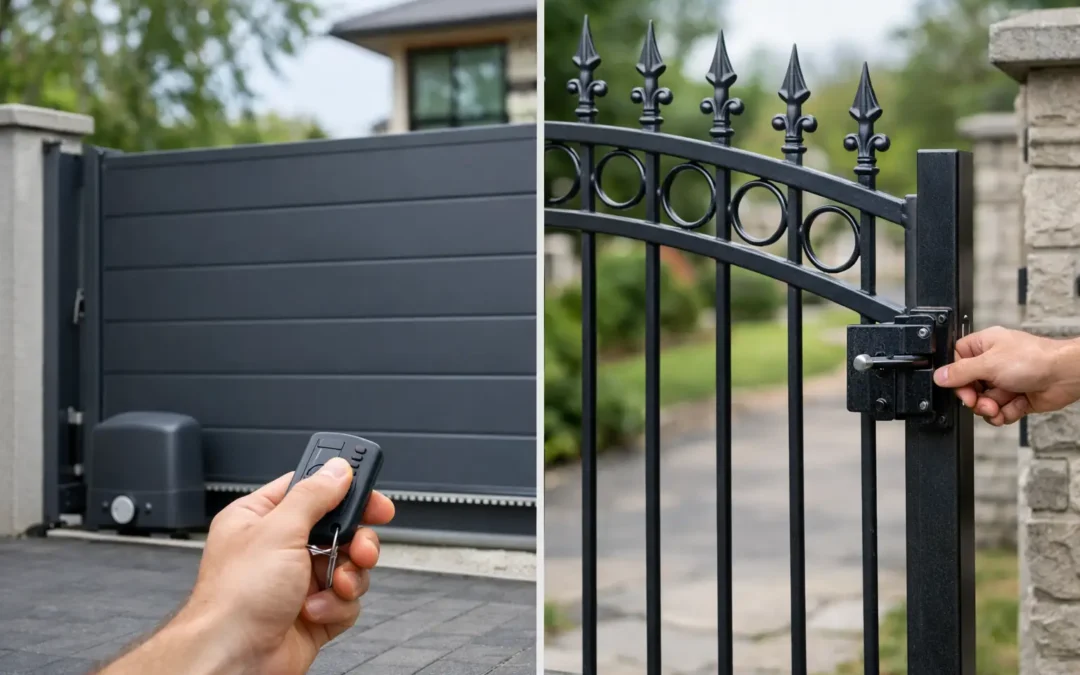
A gate should do more than mark the edge of a driveway or property line. It should make daily access easier, support the level of security you need, and hold up to regular use. When comparing an automatic gate vs manual gate, the better choice depends on how the property operates, who needs access, and what you expect from the entrance over time.
For a quiet residential driveway, a manual gate can be a practical, attractive solution. For a busy business entrance, rental property, or home where convenience and controlled access matter, an automatic system may quickly prove its value. The right answer is not always the most expensive option. It is the gate that fits your property, traffic patterns, and long-term priorities.
Automatic Gate vs Manual: The Main Difference
A manual gate is opened and closed by hand. It may use a latch, lock, drop rod, or chain depending on the gate design and security needs. Manual gates are common on farm entrances, side yards, private driveways with limited traffic, and locations where power is not readily available.
An automatic gate uses an operator to open and close the gate by remote control, keypad, card reader, telephone entry system, or other access-control method. Swing gates and slide gates can both be automated when the layout, weight, and gate construction are appropriate. These systems are often chosen for homes with long driveways, commercial sites, storage yards, and properties that need to manage visitor or employee access.
The difference is simple at the gate, but the decision involves more than pushing a button. Security, installation conditions, maintenance, safety features, and budget all deserve consideration.
Convenience Matters More Than Many Owners Expect
The strongest argument for an automatic gate is convenience. On a rainy evening, during a busy workday, or when drivers enter and leave frequently, getting out of a vehicle to operate a manual gate becomes a repeated interruption. An automatic operator lets authorized drivers enter without stopping outside the gate.
That convenience can also improve how a property functions. A homeowner can provide a code for a trusted visitor without handing out a physical key. A property manager can control access for tenants or vendors. A commercial operator can use keypad codes, key fobs, or card access to give employees entry while keeping the gate secured after hours.
Manual gates work well when traffic is light and users are comfortable operating the gate themselves. If the gate only opens a few times a week, automation may not be necessary. But if people regularly leave the gate open because closing it is inconvenient, a manual gate is no longer providing the control it was meant to offer.
Security Depends on the Entire Entrance
An automatic gate can strengthen property security because it makes it easier to keep the entrance closed and limit access to authorized users. It can be paired with access-control equipment, cameras, intercoms, and fencing that creates a more controlled perimeter. For commercial properties, this can help reduce casual vehicle access and create clearer entry procedures.
Still, automation alone does not make a gate impenetrable. Gate height, material, lock hardware, fence condition, sightlines, and the way visitors are admitted all affect security. A poorly built automatic gate or a gate left open for long periods will not provide the protection property owners expect.
A manual gate can also be a strong security measure when it is properly fabricated, hung, latched, and locked. It is often a good fit for locations that need a physical barrier but do not require frequent access. Heavy-duty chain link, ornamental iron, wood, or custom metal gates can all be designed to match the surrounding fence and intended use.
Upfront Cost and Long-Term Value
Manual gates usually cost less to install because they do not require an operator, controls, safety devices, power planning, or electrical work. This makes them an appealing choice for homeowners and businesses with a straightforward need for an entrance barrier.
Automatic gates require a larger initial investment. The final cost depends on the gate style, width, weight, type of operator, power source, terrain, safety equipment, access controls, and site preparation. A sliding gate may need room for the gate to travel beside the opening. A swing gate needs enough clearance to open without interfering with vehicles, slopes, landscaping, or nearby structures.
The higher price can make sense when an automatic gate saves time, supports security procedures, or improves the use of a busy entrance. For a business with multiple employees arriving every day, the value is easy to see. For a homeowner planning to stay on the property for years, the added convenience and curb appeal may also justify the investment.
It helps to think beyond the installation day. A well-built gate and correctly matched operator are more likely to deliver dependable service than a system chosen solely for the lowest initial price.
Power, Safety, and Maintenance Considerations
A manual gate does not depend on electricity. That is an advantage in remote areas and during power outages. Its maintenance needs are generally limited to checking hinges, latches, posts, hardware, and any signs of sagging, rust, rot, or ground movement.
Automatic systems need a reliable power plan. Depending on the site, that may involve electrical service or solar power. Battery backup can keep certain systems operating when utility power is interrupted, but owners should understand how their specific gate will function during an outage.
Safety is also essential with automatic gates. Modern systems should include properly installed safety devices designed to detect vehicles, people, and obstructions in the gate path. Gates should never be treated as play equipment, and children should not be allowed to climb, ride on, or operate them. A professional installation considers the gate’s movement, pinch points, visibility, and the hardware needed for safe daily use.
Automatic gates require periodic attention. Operators, rollers, hinges, tracks, photo eyes, control components, and access devices should be inspected and maintained according to the equipment requirements. Arkansas and eastern Oklahoma weather can bring heavy rain, wind, heat, and freezing conditions, so durable materials and proper installation details matter.
Choosing the Right Gate Style for the Site
The gate style often shapes the automatic-versus-manual decision. Swing gates create a classic appearance and can work well at residential entrances with enough level space for the leaves to open. They are available as single- or double-leaf designs and can complement wood, vinyl, iron, or custom metal fencing.
Sliding gates are often preferred where a driveway slopes, space behind the gate is limited, or a wider opening is needed. They can be especially useful for commercial facilities, equipment yards, and properties with frequent vehicle traffic. The site needs adequate room along the fence line for the gate to slide open, along with a stable base and properly planned hardware.
Material matters as well. Ornamental iron and fabricated metal gates offer a durable, professional look. Chain link gates are practical for commercial and security-focused applications. Wood and vinyl can provide privacy and coordinate with a residential fence, although the gate frame and hardware must be built to handle the gate’s size and weight.
When a Manual Gate Is the Better Choice
A manual gate is often the right choice when the entrance sees limited use, the budget is tight, or electrical service would be difficult to provide. It also makes sense for secondary entrances, pasture access, and properties where the owner prefers a simple mechanical solution.
The key is not to underbuild it. A wide or heavy gate needs strong posts, quality hinges, appropriate bracing, and reliable latching hardware. Poor installation can cause a manual gate to drag, sag, bind, or become difficult to secure. Those frustrations often lead to a gate being left open, which defeats the purpose.
When an Automatic Gate Is Worth It
Automatic operation is usually worth considering when access is frequent, security is a priority, or multiple people need controlled entry. It is especially useful for gated driveways, apartment communities, contractor yards, warehouses, private facilities, and commercial properties that need after-hours control.
For homeowners, automation can be a practical upgrade rather than a luxury. It keeps drivers inside the vehicle, offers more control over visitors, and helps ensure the entrance is closed after each use. For businesses, it can create a more organized arrival process and reduce reliance on keys that can be copied or misplaced.
A site evaluation can identify concerns before work begins, including utility locations, drainage, driveway slope, gate travel, post placement, and the type of access control that best serves the property. Modern Fence Company helps property owners throughout the Fort Smith area evaluate these details and build gate systems designed for dependable use.
A gate should feel like a dependable part of the property, not another daily chore. Whether that means a carefully built manual gate or an automated entry system, choose a solution that makes access safer, simpler, and easier to manage for years ahead.