
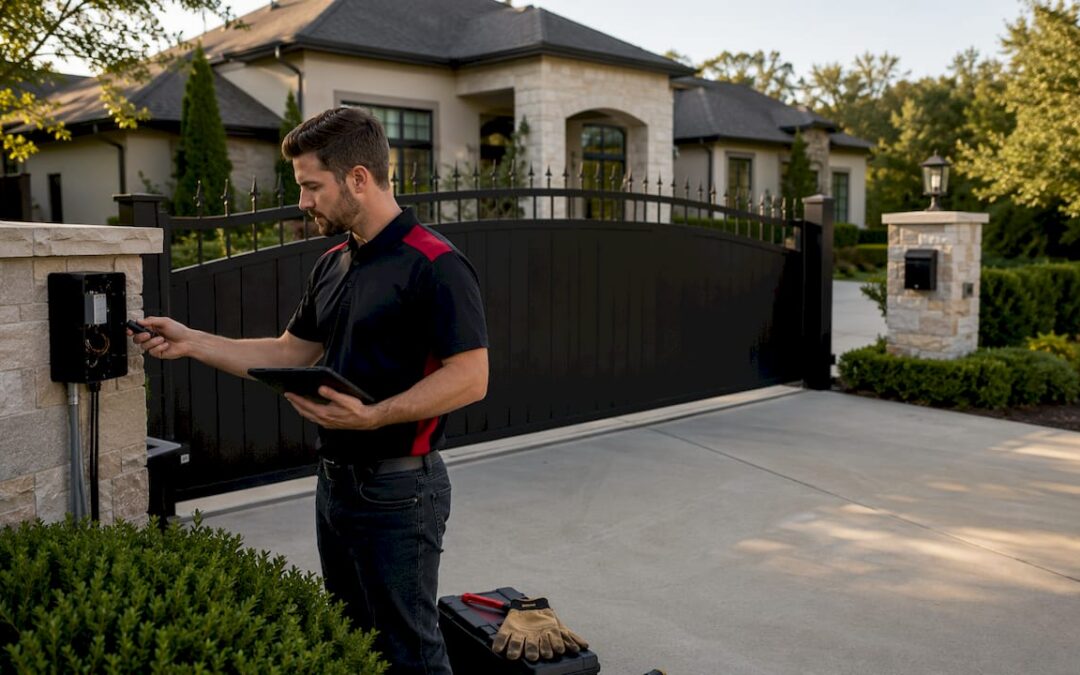
Automatic gate companies near me are professional service providers that design, install, and maintain motorized gate systems for residential and commercial properties. The industry term for this work is automated entry systems, covering everything from basic electric gate openers to full access control integration with video intercoms and smartphone apps. In Arkansas, where properties range from rural acreages in the River Valley to suburban neighborhoods in Fort Smith and beyond, the right automated gate system delivers real security, daily convenience, and lasting curb appeal. Modernfence has served Western Arkansas and Eastern Oklahoma for over 70 years, making it one of the most experienced local providers in the region.
How to choose the right automatic gate company near you
The single most important factor in choosing an automatic gate company is whether they handle the full project in-house. Full-service capabilities covering design, fabrication, installation, and ongoing maintenance keep accountability in one place. When a company subcontracts any phase, you lose direct control over quality and scheduling.
Licensing and insurance are non-negotiable. A licensed contractor carries liability coverage that protects your property if something goes wrong during installation. Ask for proof of both before signing any agreement.
Here are the key criteria to evaluate when comparing local providers:
- Full-service scope: Confirm the company designs, builds, installs, and services gates without outsourcing.
- Licensing and insurance: Verify current state contractor license and general liability coverage.
- Emergency repair availability: 24/7 emergency repair prevents property lockouts caused by mechanical failure or power outages.
- Local reputation: Check Google reviews, Better Business Bureau ratings, and ask for local references.
- Experience with your property type: Residential driveways, commercial lots, and rural ranch gates each require different expertise.
- Response time: A company that takes days to return a call will likely take weeks to respond to a service issue.
Pro Tip: Ask specifically whether the company stocks common replacement parts locally. A provider who orders parts from out of state adds days to every repair call.
The best providers handle the entire project from site assessment through long-term maintenance, which means one point of contact for every question and every problem. That accountability is worth more than a lower bid from a company that disappears after installation day.
What types of automatic gates and technology options are available?
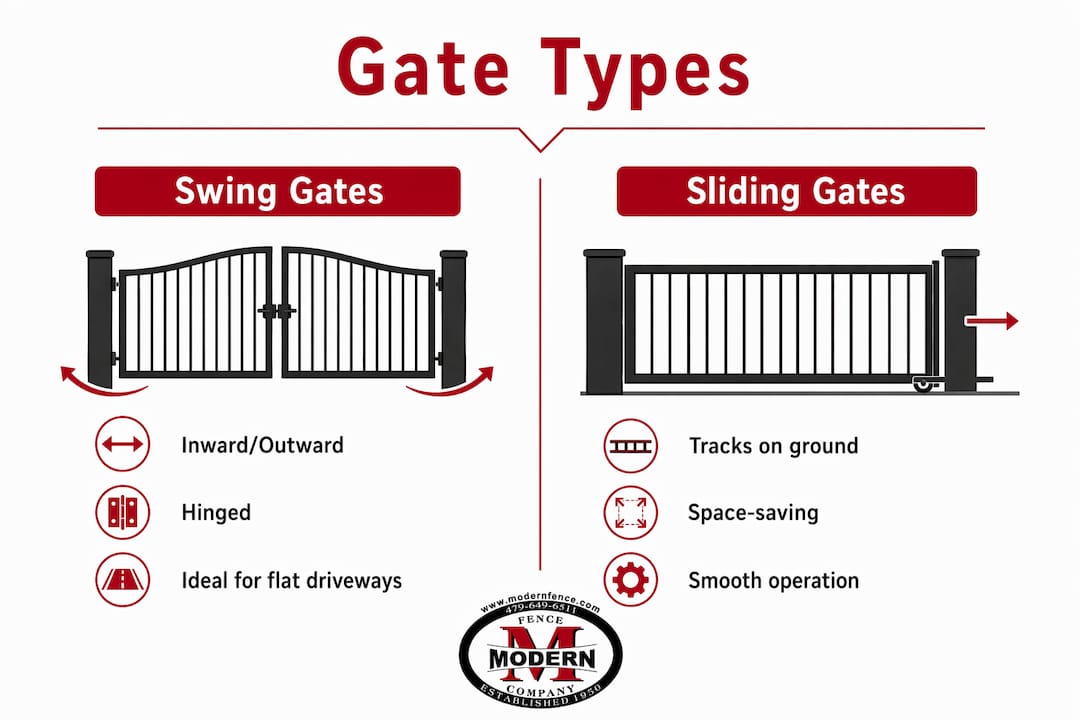
Automated gate systems fall into three main categories based on how they move.
Swing gates open inward or outward on hinges, similar to a traditional door. They work well on flat driveways with adequate clearance in front of or behind the gate. Sliding gates roll horizontally along a track, making them the right choice when driveway topography includes a slope that would prevent a swing gate from operating safely. Barrier arm systems are common in commercial parking lots and gated communities where high traffic volume requires fast, frequent cycling.
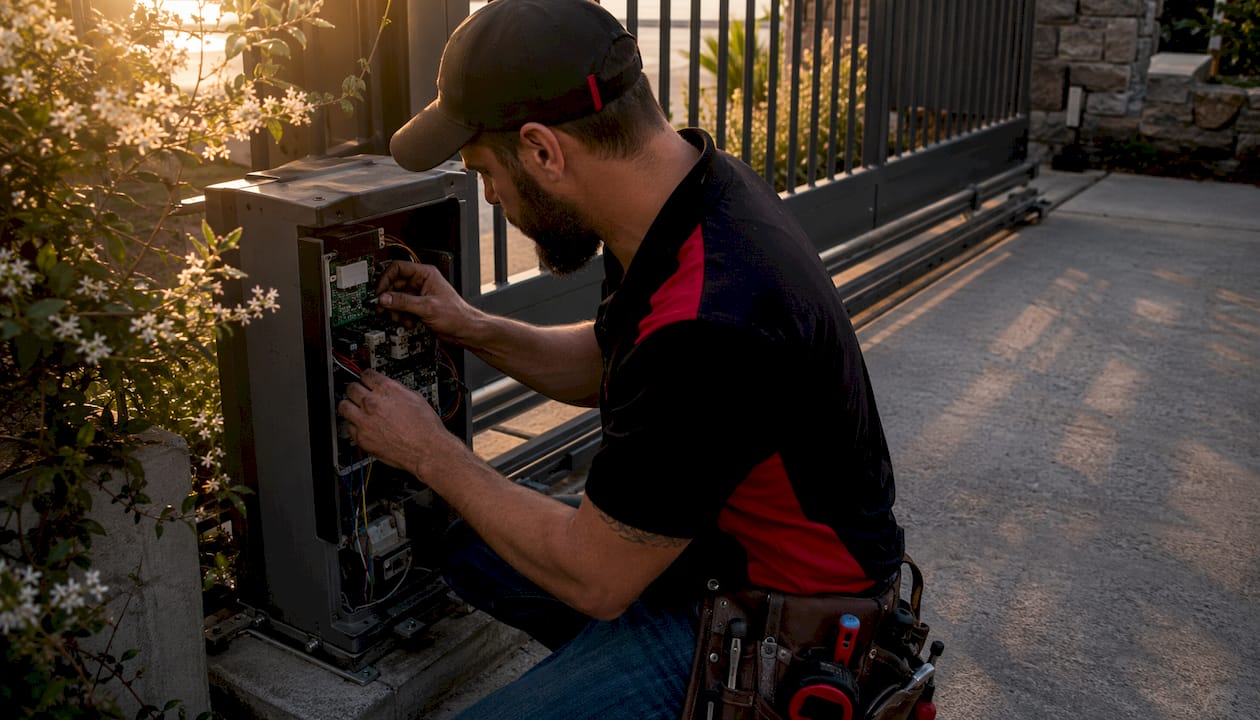
Gate operator selection is where many installations go wrong. Matching the operator to gate weight, material, and expected daily cycles is critical to prevent premature failure. A residential operator rated for 20 cycles per day will wear out quickly on a commercial property running 200 cycles. Operators are classified by duty cycle, and choosing the wrong class shortens system life significantly.
Access control options include:
- Remote controls: Simple and reliable for single-family homes with limited users.
- Keypads: Allow entry without a physical remote; useful for service providers and guests.
- Video intercoms: Let you see and speak with visitors before granting access, adding a security layer.
- Smartphone integration: Lets you open, close, and monitor your gate from anywhere with a cellular signal.
For access control systems that fit your specific property layout, the technology choice should match how many people need access and how often the gate operates daily.
Industry guidelines recommend driveway gates be 10–12 feet wide for standard vehicle access and maneuverability. Wider openings for trucks or farm equipment require heavier-duty operators and stronger gate frames.
Arkansas weather adds another variable. Humidity, summer heat, and occasional ice storms mean that weather-sealed components and anti-corrosion finishes are not optional extras. They are the baseline for any gate expected to last more than a few years in this climate.
What does it cost to hire an automatic gate company near you?
The average cost to install a driveway gate is approximately $3,500, with most projects falling between $1,900 and $6,000. High-end installations with custom fabrication and advanced access control can reach $12,000 or more. That range reflects real variation in materials, gate size, and system complexity.
Here is how costs break down by component:
| Component | Typical Cost Range |
|---|---|
| Opener installation | $2,500–$6,000 |
| Custom gate fabrication | $5,000–$12,000 |
| Access control integration | $2,500–$5,000 |
| Commercial-grade systems | $5,000–$20,000+ |
These figures come from professional installation data and reflect the full scope of work, not just parts. Labor, electrical wiring, concrete work for posts, and permit fees all contribute to the final number.
Several factors push costs higher. Iron and steel gates cost more than aluminum but last significantly longer. Adding video intercoms or smartphone-connected access control adds to the total but also adds daily value. Properties with sloped driveways or limited clearance require more site preparation, which increases labor time.
DIY installation is technically possible for basic swing gates with off-the-shelf openers, but professional installation is the right choice for long-term reliability. Improper wiring, incorrect operator sizing, and missed safety sensor calibration are the three most common causes of early system failure. A professional installation done right the first time costs less over ten years than repeated DIY repairs.
What does the installation process involve?
A professional automatic gate installation follows a clear sequence of steps. Knowing what to expect helps you prepare your property and avoid delays.
- Site assessment: The installer measures driveway width, checks slope and drainage, confirms clearance for the gate swing or slide path, and identifies the electrical supply point.
- Permit application: Many Arkansas municipalities require a permit for gate installation, particularly when electrical work is involved. Your contractor handles this, but you should confirm it is included in the scope.
- Gate fabrication or selection: Custom gates are fabricated to your driveway dimensions. Pre-built gates are ordered to size. Iron gate installation typically involves custom fabrication for a precise fit.
- Operator and electrical installation: The gate operator is mounted, wired to a dedicated electrical circuit, and connected to the access control system.
- Sensor calibration: Safety sensors, including photo-eye sensors that stop the gate if an obstruction is detected, are calibrated and tested.
- Safety testing and walkthrough: Professional installers conduct full safety testing and walk you through every function of the system before the job is complete.
Pro Tip: Before your installation date, clear a 10-foot work zone on both sides of the gate opening and confirm your electrical panel has an available circuit. Both steps prevent common day-of delays.
After installation, schedule a maintenance check at six months and annually after that. Lubricate hinges and rollers, inspect wiring connections, and test safety sensors at each visit. A well-maintained gate system in Arkansas should operate reliably for 10–15 years before major component replacement is needed.
How to maintain your gate and what emergency services to look for
Regular maintenance prevents the majority of automatic gate failures. The most common failure points are operator wear from mismatched duty cycles, corroded hardware from moisture exposure, and sensor misalignment from ground movement or impact.
Signs your gate needs professional service:
- The gate moves slower than normal or hesitates mid-cycle.
- You hear grinding, clicking, or scraping sounds during operation.
- The gate reverses unexpectedly or fails to close fully.
- The access control system stops responding to remotes or keypads.
- Visible rust, cracked welds, or bent frame components appear.
Scheduled maintenance tasks should include lubricating all moving parts, testing the battery backup, inspecting electrical connections for corrosion, and verifying that safety sensors are aligned and clean. Most providers recommend a full service visit once per year for residential gates and twice per year for commercial systems with high daily cycle counts.
Selecting a company that offers 24/7 emergency repair matters most when your gate fails in a closed position, locking you in or out of your property. That scenario is not rare. Power outages, storm damage, and mechanical failures happen without warning. A provider without after-hours service leaves you waiting until the next business day. For long-term service agreements that cover both scheduled maintenance and emergency response, ask your provider to include response time guarantees in writing.
Key Takeaways
Choosing the right automated gate system requires matching gate type, operator class, and access control technology to your specific property, then selecting a local provider with full-service capabilities and emergency repair availability.
| Point | Details |
|---|---|
| Choose full-service providers | Companies that handle design through maintenance keep accountability in one place. |
| Match operator to gate specs | Gate weight, material, and daily cycle count determine the correct operator class. |
| Budget realistically | Most residential installations cost $1,900–$6,000; custom or commercial work runs higher. |
| Plan for Arkansas weather | Humid summers and ice storms require weather-sealed, anti-corrosion hardware. |
| Prioritize emergency availability | A provider with 24/7 repair service prevents costly lockouts from unexpected failures. |
What I’ve learned from watching homeowners choose gate companies
The biggest mistake I see property owners make is treating an automatic gate installation like a commodity purchase. They collect three bids, pick the lowest number, and assume the results will be roughly equivalent. They are not.
The gap between a properly specified system and a cheaply installed one shows up within the first two years. Operators sized for the wrong duty cycle fail early. Gates fabricated without proper weatherproofing rust through in three Arkansas summers. Access control systems wired by someone unfamiliar with the technology stop working the first time there is a power surge.
What actually matters is whether the company can answer detailed questions about operator classification, gate weight calculations, and local permit requirements without hesitation. If they cannot, they are guessing. You want a provider who has installed hundreds of systems in your climate and your soil conditions, not one who learned on your project.
The walkthrough after installation is also undervalued. A good installer spends 20–30 minutes showing you every function, every override, and every maintenance point on the system. That time saves you from panicking the first time the gate stops mid-cycle and you do not know where the manual release is. Local providers with real accountability deliver that experience. Out-of-area contractors rarely do.
— mark
Modernfence: full-service gate installation in Western Arkansas
Modernfence brings over 70 years of experience to every automatic gate project in Western Arkansas and Eastern Oklahoma. The company handles the full scope in-house, from initial site assessment and custom fabrication through installation, access control setup, and ongoing maintenance.
Whether you need an iron gate with access control for a residential driveway or a commercial entry system for a business property, Modernfence delivers licensed, insured work with a focus on durability and craftsmanship. The team offers free estimates and customized solutions matched to your property layout, security needs, and budget. For a detailed look at what a professional installation involves from start to finish, the fence installation guide covers every phase of the process. Call Modernfence today for your FREE estimate and get a system built to last in the Arkansas climate.
FAQ
What do automatic gate companies near me typically install?
Local automatic gate companies install swing gates, sliding gates, and barrier arm systems with electric openers and access control options including keypads, remote controls, and video intercoms. Full-service providers handle fabrication, electrical wiring, and safety sensor calibration as part of the installation.
How much does an automatic gate system cost in Arkansas?
Most residential driveway gate installations cost between $1,900 and $6,000, with an average around $3,500. Custom fabrication and advanced access control systems can push the total to $12,000 or higher.
How wide should a driveway gate be?
Industry guidelines recommend a gate width of 10–12 feet for standard vehicle access and maneuverability. Properties with trucks, farm equipment, or commercial vehicles may require wider openings with heavier-duty operators.
How often does an automatic gate need maintenance?
Residential gates need a professional service visit once per year. Commercial gates with high daily cycle counts require service twice per year. Lubrication, sensor alignment, and electrical inspection are the core tasks at each visit.
What should I ask before hiring an electric gates company near me?
Ask whether the company handles design, fabrication, installation, and repairs in-house, whether they are licensed and insured, and whether they offer 24/7 emergency repair service. Also confirm they will pull any required permits and conduct a full safety walkthrough after installation.