
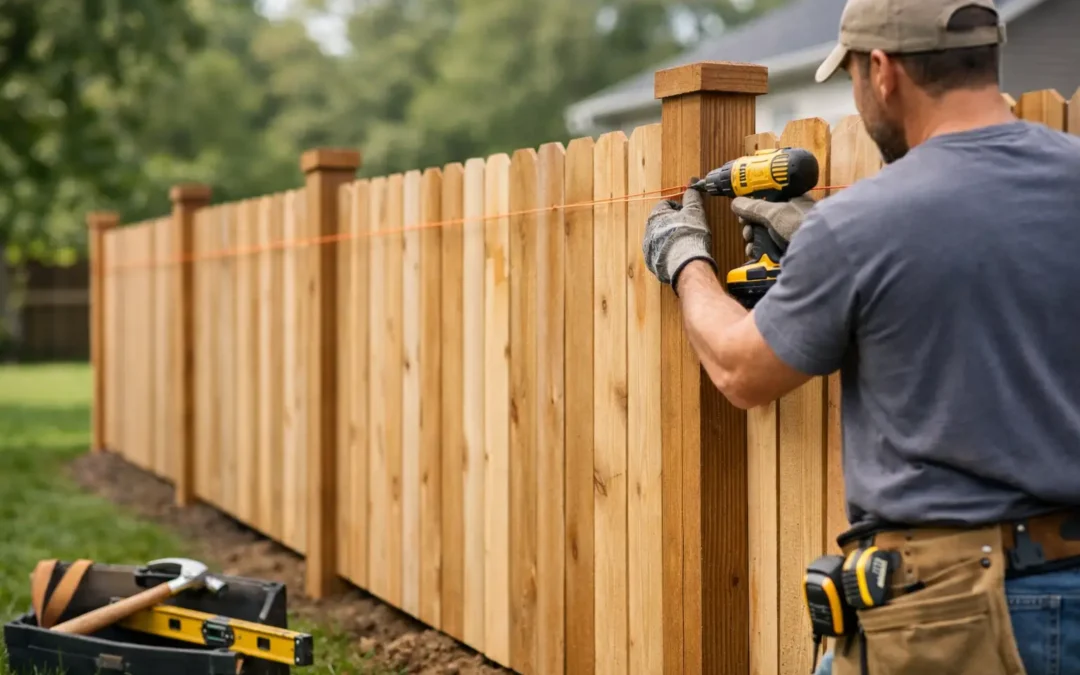
A fence project usually looks simple until the first corner goes out of square, a post hole fills with water, or the property line turns out to be somewhere else. If you want to know how to build a residential fence the right way, the real work starts before the first post goes in. Good planning, careful layout, and the right materials matter just as much as the installation itself.
For homeowners in Arkansas and Oklahoma, that matters even more. Soil conditions, drainage, slope, wind exposure, and local regulations can all affect how a fence performs over time. A fence should do more than mark a boundary. It should add privacy, improve security, support curb appeal, and hold up season after season.
How to build a residential fence starts with planning
The first decision is not style. It is purpose. Some homeowners want backyard privacy, while others need a safer space for children and pets. In other cases, the goal is decorative curb appeal or a stronger perimeter around a larger property. Your reason for building the fence will shape the height, spacing, material, and gate placement.
Before you buy materials, confirm the property line and review any neighborhood or municipal requirements. Setback rules, height limits, and gate requirements vary by location. If you build in the wrong spot, even a well-built fence can become an expensive problem.
Utility locating is another step you should never skip. Underground lines for power, gas, water, cable, or irrigation can run exactly where you plan to dig. Marking those lines in advance protects your property, your safety, and your schedule.
At this stage, it also helps to think honestly about maintenance. Wood offers a classic look and strong privacy, but it needs staining or sealing to keep its appearance and durability. Vinyl is low maintenance and clean-looking, but not every homeowner likes its appearance as much as natural wood. Chain link is practical and cost-effective, though it provides less privacy unless you add slats or landscaping. Ornamental iron or metal fencing brings security and style, but usually at a higher price point.
Choosing the right fence material for your property
A fence should fit the house, the lot, and the way you use the space. That sounds obvious, but many fence problems start with choosing a material based only on initial cost.
Wood remains one of the most popular options for residential fencing because it looks natural and can be customized in height, picket style, and finish. It works especially well for privacy fences, but wood performance depends heavily on proper installation and ongoing care. Posts, rails, and pickets all need to be suited for outdoor exposure.
Vinyl makes sense for homeowners who want a polished appearance with less upkeep. It does not require painting or staining, and it resists many common weather issues. Still, vinyl quality varies, and cheaper products may become brittle or look worn sooner than expected.
Chain link works well when function comes first. It is often the practical choice for pet containment, larger yards, and straightforward perimeter definition. For some homes, especially side or backyard applications, it provides solid value.
Metal fencing, including ornamental iron or custom fabricated options, is often chosen when appearance and security both matter. It creates a more open look than privacy fencing and can complement traditional or upscale home styles.
Layout is where good fences are won or lost
Once the plan and material are set, layout becomes the next critical step. Fence lines need to be straight where they should be straight, corners need to be square, and gate openings need enough clearance to function properly over time.
Start by marking the fence line with stakes and string. Measure carefully, then measure again. It is much easier to adjust layout with string than after concrete has cured around a post. If your property has slope, decide early whether the fence will follow the grade or step down in sections. A smooth contour can look more natural, while stepped panels may be cleaner for certain materials and designs.
Post spacing depends on the fence type, but consistency matters. Uneven spacing can make even high-quality materials look off. Gate openings deserve extra attention because gates put more stress on posts than standard sections do. That means the hinge and latch posts must be especially well set.
Drainage also deserves a look before digging begins. Low spots and areas with standing water can shorten the life of posts and create movement over time. If the yard has drainage issues, they should be addressed as part of the fence plan, not after the problem shows up.
Setting posts the right way
If there is one step that determines how long a fence lasts, it is post installation. Panels and pickets are visible, but posts do the real structural work. When posts are shallow, misaligned, or poorly anchored, the fence will eventually lean, sag, or fail.
Post hole depth depends on fence height, soil conditions, and local standards, but deeper is often necessary for long-term stability, especially in wind-prone areas or on uneven terrain. The post should be plumb in every direction before the concrete sets. Rushing this part creates problems that carry through the entire fence line.
Concrete is commonly used to secure posts, but proper installation still matters. Hole size, base preparation, drainage, and cure time all affect the final result. In some cases, moisture and soil movement can be hard on wooden posts, so product selection and installation method should match site conditions.
This is also the point where experience makes a visible difference. On paper, setting posts sounds straightforward. In practice, rocky ground, roots, slope changes, and wet soil can turn it into the most difficult part of the project.
Building rails, panels, and pickets
After the posts are set and cured, the next phase is connecting the structure. For wood fencing, that usually means attaching rails first and then installing pickets. For vinyl, chain link, or metal systems, the sequence may vary based on the product design.
Consistency is the goal here. Rail height, picket spacing, top lines, and panel alignment all affect appearance. A fence can be structurally sound and still look poorly built if the reveal is uneven or the line wanders across the yard.
For privacy fences, small spacing and a clean top profile create a finished look. For decorative fences, symmetry matters more. If the yard slopes, each section should be adjusted with a plan rather than improvised as you go. That helps the whole fence feel intentional.
Fasteners matter too. Exterior-rated screws, brackets, and hardware should match the material and exposure conditions. Using the wrong hardware may not cause immediate failure, but it often shows up later as rust, staining, or loose sections.
Gates need extra attention
Homeowners often focus on the main fence line and treat the gate as an afterthought. That usually leads to the first callback. Gates get used every day, and they have to deal with repeated movement, weight, and weather.
A gate should be framed for strength, hung level, and matched with hardware that can handle regular use. Width matters. A narrow walk gate may work for foot traffic, but if you need mower access, trailer clearance, or equipment entry, plan for that upfront.
The posts supporting a gate usually need more reinforcement than standard line posts. If those posts shift, the gate will sag and stop latching correctly. Good gate construction is part carpentry, part long-term problem prevention.
When DIY works and when it does not
Learning how to build a residential fence can help you decide whether to tackle the project yourself or call a professional. For short, simple runs on level ground, a capable homeowner may be able to build a solid fence with enough time and the right tools.
But there are trade-offs. Sloped lots, long fence lines, difficult soil, custom gates, utility concerns, and higher-end materials all increase the chance of costly mistakes. A fence that looks fine on install day can start leaning or warping months later if the foundation work was not done right.
That is why many homeowners choose an experienced contractor for residential fencing. A seasoned crew can spot issues before they become delays, recommend materials that fit the property, and build with long-term performance in mind. Companies like Modern Fence Company have also seen the local conditions that affect installation in Western Arkansas and Eastern Oklahoma, which helps avoid surprises.
A well-built fence should still look good years later
The best fence is not just one that goes up quickly. It is one that still stands straight, operates properly, and fits the property after years of weather and use. That comes down to details most people never notice until something goes wrong – post depth, drainage, alignment, hardware, and material quality.
If you are planning a new fence, start with a clear purpose and a realistic view of your property conditions. Build for the long term, not just the weekend. A residential fence should give you privacy, security, and a finished look you can count on every day.